
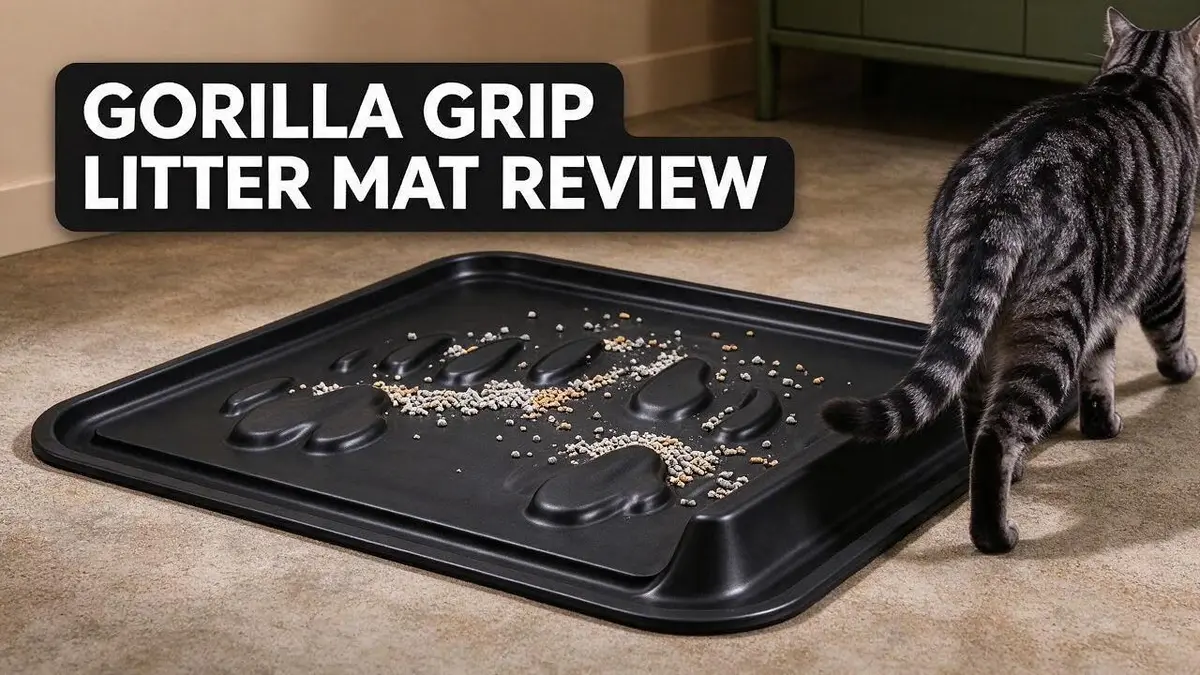
Gorilla Grip Litter Mat Review: Does the Coil Design Really Trap Litter?
Tired of litter scattered across your floor? You are not alone. Many cat owners search for a simple way to keep their home clean.
A good litter mat can help a lot. It catches stray granules before they spread through your house.
The Gorilla Grip litter mat is one popular option. It measures 35 by 23 inches and uses a coil design that traps litter kicked out by your cat.
Its water resistant surface and textured backing help it stay put. Many shoppers say it is easy to clean, and one reviewer gave it 4.5 out of 5 on Walmart.
Here, you will learn what works, what to watch for, and if this mat suits your cat.
In a Nutshell
-
Size: The mat measures 35 by 23 inches. Measure your litter box first so it fits fully on the mat.
-
Trapping power: The coil design catches litter that your cat kicks out of the box.
-
Easy cleaning: One reviewer on Walmart rated it 4.5 out of 5 for build quality and cleaning ease.
-
Paw comfort: Some owners say the surface feels gentle on a cat’s paws.
-
Texture check: Textured surfaces are not always practical. Some cats may not like how they feel underfoot.
-
Compatibility: Many buyers skip this step. Check that the mat works with your box type and litter before you order.
-
Limited proof: Gorilla Grip placed second in a December 2022 roundup of litter mats. No independent testing results are available yet.
Coil Design and Litter Trapping

- THE ORIGINAL LITTER TRAPPER: the cat mat is constructed from durable long lasting materials; topside...
Last update on 2026-11-27 / Affiliate links / Images from Amazon Product Advertising API
Most cats kick litter with strong back legs. That habit sends granules flying across the room. A coil surface gives those pieces a place to land and stay.
The raised loops work like a net. Loose grains drop between the coils, so they stop sliding off the edge. Small bits get caught before they reach your hallway.
Kickers and diggers create different messes. Diggers scatter litter with their front paws. Kickers send it backward in a wide spray.
A coil mat can catch both patterns, though heavy kickers may still leave a few stray pieces.
Trapping works best with the right box placement. Place the mat directly under the litter box exit. Cats step off and shake their paws there. Position matters more than size alone.
Litter tends to collect in the coil gaps over time. Those trapped pieces can build up quickly. Shake the mat outside every few days to clear it.
Think about your cat’s walking path. Cats often leave the box in the same direction each visit. Extend the mat slightly in that direction. Give your cat room to step on it fully.
Coils also help with floor protection. Litter that stays on the mat never reaches hardwood or carpet. Fewer grains on the floor means less sweeping. Your vacuum will thank you.
Coil gaps need a quick check. Look for small clumps in the grooves. Use a stiff brush or a hand vacuum to clear them out.
Watch for worn coils. Over months, coils may flatten or loosen. A flattened coil traps less litter. Check the surface during regular cleaning and replace the mat when trapping drops.
The bottom line on trapping is simple. The coil design targets the main source of mess, which is kicked litter. It works best when placed under the exit and cleaned often.
Size and Fit for Your Litter Box
Before you buy any mat, measure your litter box footprint. Use a tape measure on the outside edges. Write down the length and width.
Next, compare those numbers with the mat size. A mat that is too small leaves gaps where litter can slip through. A mat that is too large may bunch up against a wall.
Check the box shape first. Many boxes are round, rectangular, or covered with a hood. Measure the exit door too, since the mat should sit right where your cat steps out.
Think about the room layout as well. Look at the space around the box. Make sure the mat does not block a door, a food bowl, or a walkway.
Leave a little room for your cat to turn. Some cats like to spin or pause after leaving the box. A cramped mat can feel uncomfortable underfoot.
Consider the floor under the mat. Hard floors like tile or laminate let the mat slide more easily. Carpet may hold it in place, but it can also trap moisture underneath.
Hooded boxes need extra care. The hood may stop the mat from lying flat near the entrance. Measure the height of the opening too, so you know whether your cat must step up or down.
Try a dry run. Place a towel or a sheet of cardboard in the spot first. Walk your cat to the box and watch the path. This simple test shows whether the space works.
Finally, look at the edges. A mat with raised sides may need more floor room than a flat one. Measure with those edges in mind.
Plan for the box to shift over time. Some cats push boxes or stir litter, and the mat may slide with it. Leave a small gap so you can clean the area without moving furniture.
Keep a note of your numbers. Save the box size, door height, and free floor space in your phone. This makes shopping faster and helps you avoid guesswork later.
Cleaning and Maintenance
Keeping your mat clean helps it work well for longer. A quick routine saves time and keeps your home fresh.
Start with a daily shake. Lift the mat once a day and tip it over a trash bag or outdoor area. This removes loose granules before they settle deep into the gaps.
Next, sweep or vacuum the mat weekly. Use a soft brush attachment so the coils do not get bent. Run the brush in the direction of the texture to lift litter from the low spots.
Wet litter needs fast action. Wipe any damp spots right away. Moisture can seep under the mat and reach the floor, so check the underside too.
Deep cleaning should happen every few weeks. Take the mat outside and rinse it with warm water. Use mild soap, then rinse again so no residue stays behind. Scrub the coil gaps with an old toothbrush.
Always check the care label first. Some mats may need hand washing, while others handle gentle machine cycles. Following the label protects the backing and the coil shape.
Let the mat dry fully before putting it back. Air drying in a shady spot is safest. Trapped water can cause odors or mildew, so give it several hours.
Watch for wear signs. Look for bent coils, cracked backing, or a sticky feel. These problems mean the mat may trap less litter, so replacing it is a wise move. Check the mat every month.
Keep a small cleaning kit nearby. Store a brush, a bucket, mild soap, and paper towels in one spot. Having everything ready makes each cleaning session quick.
Clean the litter box area too. A tidy floor under the mat makes cleaning easier. Sweep the surrounding floor and check for stray pieces near the walls.
Set a simple calendar reminder. Consistent care keeps the mat fresh, and your cat will notice the difference underfoot.
Top 3 Alternatives
Drymate Cat Mat

- CONTAINS LITTER & MESS, REDUCES TRACKING (KEEPS FLOORS CLEAN): The Drymate Original Cat Litter Mat...
Last update on 2026-11-27 / Affiliate links / Images from Amazon Product Advertising API
The Drymate Cat Mat catches litter before it spreads across your floor. Its textured surface feels soft on your cat’s paws. Many owners like how it traps moisture and keeps the area clean.
Cats love the wide size. It gives plenty of room for scratching and digging. The bottom side grips the floor well, so the mat stays in place. Simple cleanup is another win. You can shake out loose litter or rinse the mat with water. It dries quickly, so it stays fresh between uses.
PetFusion Litter Mat

- PREMIUM GRADE SILICONE: Non-porous & waterproof, silicone prevents absorption & lingering odors. Durable...

Last update on 2026-11-27 / Affiliate links / Images from Amazon Product Advertising API
The PetFusion Litter Mat has a large catching area for messy paws. Its raised edges help keep stray granules inside the mat.
Cats often kick litter over the sides, so this feature matters. Just sweep the top surface and rinse when needed. The material dries fast, which helps prevent odors. This mat suits homes with multiple cats because it gives a solid base under the litter box.
Petmate Litter Mat

- Captures litter dust & scatter to keep floors clean
Last update on 2026-11-27 / Affiliate links / Images from Amazon Product Advertising API
The Petmate Litter Mat offers a simple design that many people trust. It has a flat top that works well for daily use.
Pet owners often praise its durability. The mat handles regular scrubbing without losing its shape. Its grooves trap litter so it stays off the floor. The flat top feels stable under the box. Setup takes only a minute. Place the mat under the box and you are ready to go. It is a good choice for busy households that want a simple routine.
Paw Comfort and Texture
Paw comfort matters more than many owners expect. Cats stand on the mat several times each day, so the surface needs to feel right.
The Gorilla Grip litter mat uses a textured backing and a coil design. Reviewers describe it as gentle on a cat’s paws, which is a good sign for sensitive cats.
Soft coils give a cushioned step. Each coil gives slightly under weight, so the paw sinks in a little instead of pressing on a hard surface.
Texture plays a big role in comfort too. A surface with some give often feels more natural to cats than a flat plastic tray or bare floor.
Some cats prefer firm footing, though. A cat that likes to stand still while it balances may find the loops uneven at first. Watch how your cat reacts during the first few visits.
Grip matters as much as softness. Cats need solid footing when they dig, turn, or hop out of the box. The raised loops offer some traction, which helps a cat feel secure.
Practical texture has limits. Textured surfaces are not always practical in every home. Very deep loops may bother a cat with tender pads, so look closely at the feel before you commit.
Watch for signs of discomfort. A cat that avoids the mat, paws at the edges, or sits just outside the box may dislike the feel. Note these habits early, because a cat rarely complains out loud.
Older cats and kittens often need extra comfort. Stiff joints can make hard steps tiring for seniors, while young paws are still tender. A softer, springy surface can suit both groups well.
Comfort and grip work together. A mat that feels good and holds firm keeps a cat relaxed in its litter area. Check your cat’s comfort first, then judge the mat by how it performs.
Moisture Protection and Floor Safety
Moisture is a big concern under any litter box. The Gorilla Grip mat is water resistant, which gives your floor an extra layer of protection.
Liquid can seep through small cracks in a mat, so check the underside often. Damp spots that sit too long can harm wood, laminate, and subfloors.
The mat catches small splashes and spills. It does not replace a good floor cover, though, especially in rooms with hardwood.
Floor safety starts with stability. A mat that slides can throw off your cat and create a trip hazard for people in the home.
The textured backing helps the mat hold its spot. Still, it works best on a flat surface.
Place the mat on a level floor. Rugs and uneven tiles can lift the edges, which lets litter and moisture slip underneath.
Older floors need extra attention. An old finish or worn sealant can react to repeated wet spots over time.
Watch the area near the mat. Some cats step off the mat and walk through wet or dusty spots on the floor.
Pet owners often overlook the subfloor. A quick check under the mat every few weeks can reveal early damage before it spreads.
Think about your household too. Kids, older adults, and guests may walk near the box, so a flat and stable mat matters.
Keep the surrounding floor dry. A small towel or washable rug near the mat can soak up stray drops quickly.
The Gorilla Grip mat offers a helpful start for moisture control. It works best when you pair it with regular floor checks and a flat, stable spot.
Moisture and floor safety work together. A dry, stable mat keeps both your cat and your floor happy for longer.
Check the mat edges after each big cleanup. Lift any corner that has curled, and press it flat before your cat steps on it.
Pros and Cons
Pros
- Reviewers rate the build quality highly.
- One reviewer gave it 4.5 out of 5 on Walmart.
- The coils trap kicked litter inside the mat.
- It keeps stray litter from spreading across the room.
- It earned runner-up status in a 2022 cat litter mat roundup.
Cons
- Compatibility with your litter box may not be a perfect match.
- Long term durability lacks independent testing data.
- Few independent reviews make direct comparisons difficult.
Who Should Buy It
This mat suits some homes better than others. Take a moment to think about your daily routine before you buy.
Busy households with one or two cats often benefit most. A heavy digger can scatter litter across a room by lunchtime. This mat gives that mess a clear boundary.
Shoppers with hardwood or laminate floors should take a close look. These surfaces show every stray crumb. A mat that catches debris helps keep the finish looking clean.
Renters may appreciate the simple setup. There is no need to drill, move furniture, or change the floor. You place it down and get started.
Households with dogs need extra planning. A curious dog may sniff the box all day or chew the edges. Keep the box area out of reach and supervise your pet.
Families with small children can use the mat as a clear rule. Kids learn that the box area ends at the mat edge. Keep little hands away from the box itself.
Cat owners who clean often will enjoy the routine. Lift, shake, and wipe the mat during your regular cleaning. It fits neatly into a weekly habit.
Owners who work long hours may find this helpful. Litter can spread while nobody watches the box. A mat keeps stray pieces from drifting far.
Households with senior cats should also consider it. Older cats may need an easy entry and exit. Think about the box height as well.
Skip this mat if your cat has a very large or unusual box. Measure your setup first so the fit works. A quick check can save you from frustration later.
Your home, pets, and cleaning habits shape the best choice. Review each point above before you decide. A confident choice starts with honest answers.
Final Verdict
The short answer is yes, this mat is a solid choice for most cat owners. It does its main job well. It keeps stray litter from spreading and helps protect your floor.
Still, no product fits every home. Your cat, your floor, and your cleaning habits matter most. Think of this verdict as a starting point, not a final rule.
Before you buy, measure your litter box and your floor space. Make sure the mat leaves room for your box to sit fully on it. Then look at where the mat will go, since a clear spot near the box makes the biggest difference.
Read the return policy before you order. A clear return window gives you room to test the mat at home. This small step lowers the risk of a poor fit.
Try a simple first week test. Watch your cat closely for a few days. Notice whether your cat steps onto the mat and uses the box as normal. If your cat seems happy, the mat is working for you.
Plan a cleaning routine too. Shake or vacuum the mat often. Wipe the surface when it looks dusty or wet. A quick habit keeps the mat fresh and extends its useful life.
Keep your expectations realistic. No mat stops every grain of litter. It reduces the mess, but it will not replace regular scooping. Pair the mat with a good scooping schedule for the best results. Stay patient during the first few days. Small changes can make a big difference in how the mat performs.
Our final take is simple. Gorilla Grip offers a practical, easy option for everyday litter mess. It works best for owners who want a clean and simple fix. If you value a tidy floor and a calm cat, this mat deserves a spot on your list.
Your next step is simple. Measure, test, and clean on a steady schedule. Then decide with confidence.
Frequently Asked Questions
Does this mat help with litter odor?
The research does not test odor control. The mat catches scattered litter, but it does not remove smells. Scoop daily and change the litter on schedule for the best results.
Is the mat gentle on my cat’s paws?
One source describes it as gentle on a cat’s paws. Every cat feels textures differently, though. Watch your cat walk across the mat during the first few days to see how they react.
How often should I clean the mat?
Shake out loose litter outside, then wipe the surface. Reviewers call the mat easy to clean, so a weekly routine works for most homes. Let it dry completely before you set it back down.
Does the mat work on carpet?
The sources do not test carpet. Check how the textured backing sits on your floor before you rely on it. Lay the mat on a small area first to confirm it stays in place.