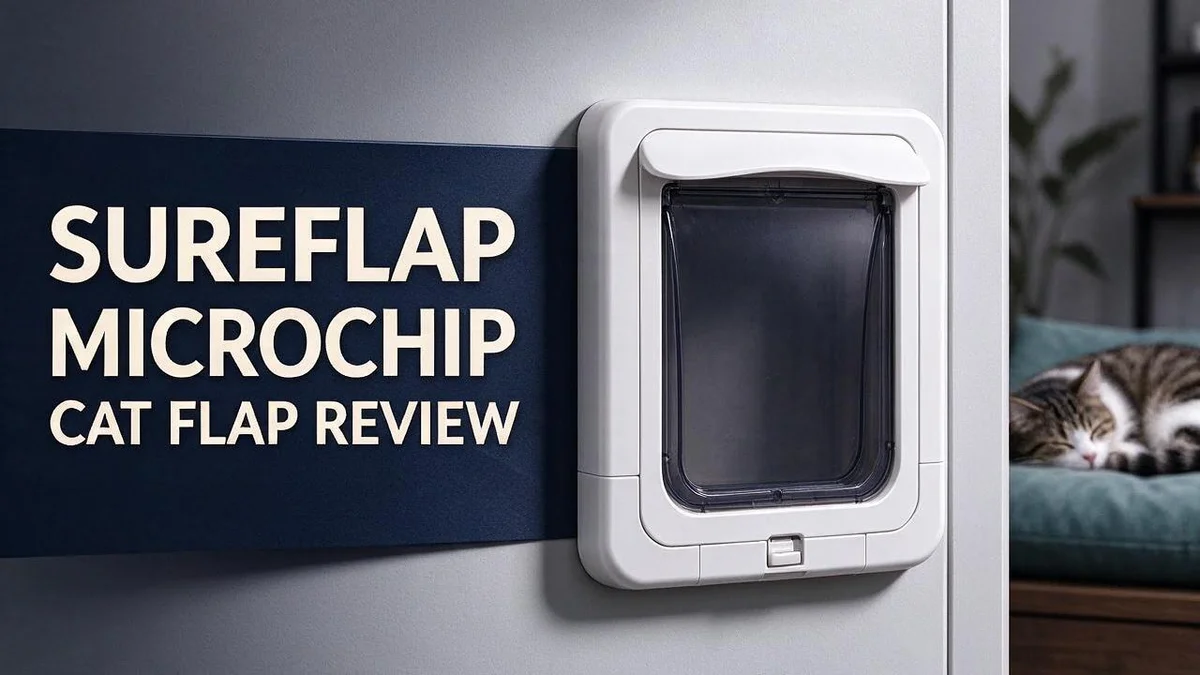
SureFlap Microchip Cat Flap Review: Is It Right for Your Cat?
Tired of your cat bringing home unwanted guests? A microchip cat flap can solve that problem. This type of pet door opens only for your own cat. Simple, right?
The SureFlap microchip cat flap is a popular choice for many pet owners. It reads your cat’s unique microchip code and unlocks when your pet walks up. Other animals stay out, and your cat can still come and go freely.
Many owners also want a door that keeps wildlife out. This guide explains how the SureFlap works. You will also see its key strengths and a few drawbacks to consider.
Let’s dig in and find out if this smart cat door fits your home.
In a Nutshell
-
Long battery life: The flap runs on four AA batteries for up to 12 months. You can count on it for a full year before a change.
-
Cable free setup: The unit is wireless, so you can install it without running power lines to the door.
-
Households with several cats: The DualScan model stores up to 32 pet identities. You can set exit permissions for each pet separately.
-
Scheduled access: The large cat and small dog model offers curfew mode. It locks and unlocks on a timetable, which helps if you want your pet home at night.
-
Treat based training: The official setup guide uses treats to teach your cat the new routine. Many pet owners find this makes the transition much smoother.
-
Points to weigh: One user reported that the flap stopped reading their pet’s chip after a few days. It also lacks selective exit control, so any animal can leave freely. Pet Porte is a direct rival, though one source says it offers more functions. Sash window pet doors and door latches are non electronic options.
Installation and Fitting

- SELECTIVE ENTRY CAT DOOR (Screens on Entry only): Uses RFID to read your cat’s implanted ID microchip...
Last update on 2026-11-27 / Affiliate links / Images from Amazon Product Advertising API
Fitting a microchip cat flap is simpler than many owners expect. Most people finish the job in one afternoon with basic tools. Good planning makes the whole process smoother.
Start by measuring the flap opening. Measure your cat’s shoulder width and height first. Then compare those numbers with the flap size you plan to buy.
Choose the right spot for the flap. Pick a door that leads to the garden or a quiet room. Avoid doors that face busy roads. Your cat should feel safe while using it.
Check the height too. Position the opening so your cat can walk through without ducking or jumping.
Mark the cut lines carefully. Use a pencil and a spirit level. Double check every line before you drill. A straight line gives a neat finish.
Use the right tools for your door type. A wooden door usually needs a jigsaw or a hole saw. A glass door needs an adaptor panel instead. Never cut glass at home.
Drill the corner holes first. Then cut between them with a jigsaw. Sand the edges so they feel smooth against your cat’s fur.
Fit the frame and the flap. Slide the frame into the opening. Secure it with the screws supplied. Tighten each screw evenly so the frame sits flat.
Next, pair the chip reader with the flap. Hold your cat’s chip near the sensor and follow the on-screen steps. Test the flap several times from both sides before you leave it alone.
Watch for drafts and gaps. Seal any gaps with foam strip or silicone. Cold air can sneak through a poorly fitted frame. A snug fit keeps your home warm.
Plan for the first week. Keep the flap unlocked for a day or two. Then test the locking mode with your cat nearby. Watch how your cat reacts to the sound and movement.
If the flap sticks, check the screws and the door edge. Small adjustments often fix the problem. Contact the maker if the fault continues.
Microchip Recognition Reliability
Reliability matters most on busy mornings. When your cat rushes to the door, the flap must read the chip fast. A short pause can frustrate both of you.
Keep your cat’s approach steady and calm. Many owners find that a slow walk up to the flap gives the reader time to work.
Think about your cat’s size and habits too. A cat that jumps or sprints may need a different routine than one that walks slowly. Watch how your cat moves and adjust your setup to match.
Metal objects near the flap can interfere with the signal. Keep bins, metal shelving, and large appliances away from the door.
Keep the area in front of the flap clear. Shelves or pet bowls placed right outside can block your cat’s path and slow the reader down.
Chip placement also matters. Most chips sit under the skin between the shoulder blades. Ask your vet to confirm that the chip is still in place.
Test the flap before you leave it alone. Walk your cat through several entries over a few days. Watch whether it unlocks every single time.
Keep a simple log of entries and failures. Patterns often show whether the problem comes from distance, timing, or battery power.
Check the battery level every few weeks. Weak power can slow the reader, so replace all four cells at the same time.
Dust and smudges can block the sensor area too. Wipe the panel and the surrounding frame with a soft, dry cloth.
Confirm the chip code during setup. Make sure the code saves to the correct flap. A simple mistake here can look like a faulty unit.
If problems continue, contact the manufacturer support team. Have your model number and serial number ready before you call.
One reviewer found the flap reliable day to day. With careful setup and regular checks, most owners can enjoy steady access for their cat.
Multi-Pet Households and Access Control
Homes with more than one pet need a clear plan for the flap. Each animal has its own habits, so access rules should fit every member of the household.
Plan around free exits. Any chipped animal can leave through the flap at any time. If one pet must stay inside, a closed door or crate works better.
Keep food bowls away from the flap. A shy pet needs space to eat without a bigger pet blocking the way. Place bowls in a quiet corner of the kitchen.
Give a timid pet a quiet route. Some households have a nervous cat and a confident dog. The shy pet may avoid the flap when a larger animal sits nearby. Consider a second entrance or a quiet room for that pet.
Watch for guarding at the door. A dominant animal may sit by the flap and block others. If you notice this, change the time you open the flap or move it to another door. Short daily checks help you spot tension early.
Share the rules with everyone. Children and visiting adults may open doors or lock the flap by mistake. Write a short note with the lock settings and the reason for each one. This keeps access control clear for the whole family.
Adjust as your pets change. A new kitten or an older pet can change the flow of traffic. Review the setup every few months and update who can enter. Keep notes on any changes in behavior. Small changes keep the household calm.
Some owners compare this flap with Pet Porte. The research notes that SureFlap offers fewer functions, so list the features your pets truly need. That list helps you decide which product fits your home.
Think about the whole household. Your choice should suit the quietest pet and the most active one. Watch how each animal behaves over a week before you settle on a final routine. A fair setup keeps every animal safe and calm.
Top 3 Alternatives
PetSafe Microchip Pet Door

- Control Through Your Phone: App enabled pet door that gives your pets the freedom to come and go

Last update on 2026-11-27 / Affiliate links / Images from Amazon Product Advertising API
This microchip cat flap opens only for your cat. It reads the chip in your pet’s body and keeps strays out. Many owners like how simple the setup feels. You can program it in minutes, and it fits most standard doors and walls.
Cat Mate Electronic Cat Flap

- ELECTRONIC I.D. DISC ENTRY/EXIT: Operates with unique Pet Mate I.D. discs, allowing access for up to...
Last update on 2026-11-27 / Affiliate links / Images from Amazon Product Advertising API
The Cat Mate uses a key on your cat’s collar. It opens for your cat and stays shut for other animals. It runs on batteries, so check them often. This model suits busy homes with several pets, since it can learn more than one key.
Staywell Magnetic Cat Flap

- KEEP WILD ANIMALS OUT: Let you cat let herself in while keeping other pets or wild animals out of your...
Last update on 2026-11-27 / Affiliate links / Images from Amazon Product Advertising API
This flap uses a magnet on your cat’s collar to unlock. It works quietly and opens fast. It is a good pick for cats that are calm around doors. You can install it in a few steps, and it fits many doors and walls with ease.
Training Your Cat to Use It
Treats make the first lessons fun. Your cat needs a clear reason to walk through the flap. Place a few small treats just inside the opening so your cat can reach them.
Move the treats further each day. Slowly place the snacks deeper into the tunnel. Your cat will learn to push through on its own. Keep each session short so your cat stays keen.
Keep the flap unlocked at first. Let the flap swing freely during early lessons. This removes any fear of a hard push. Once your cat feels calm, you can add the chip step.
Pick the right time for practice. Many cats feel hungry before meals. Try a short session just before feeding time. A hungry cat often feels more eager to explore.
Use a calm voice and gentle praise. Speak softly when your cat gets through. Offer a quick stroke or a kind word. Positive feelings help the habit stick.
Use a favourite toy as a lure. Wiggle a feather wand near the flap. Many cats follow the movement straight through. Give a treat once your cat clears the opening.
Try a second helper. Some owners ask a family member to hold a toy on the other side. The cat then sees a reason to come through. This works well for playful cats that love a chase game.
Never force your cat through the flap. Pushing or lifting can cause fear. A scared cat may avoid the flap for weeks. Patience works better than pressure.
Watch for signs of stress. Flattened ears, a crouched body, or a fast tail flick all show discomfort. If you see these signs, pause the training. Return to the treats later when your cat feels calmer.
Finish each session on a happy note. End when your cat still wants more. Your cat will look forward to the next lesson. Short wins build lasting confidence.
Know when to get help. If your cat refuses for more than two weeks, speak with a vet. Some cats feel unwell or stressed by changes at home. A quick check can reveal the cause.
Pros and Cons
Pros
– Keeps stray cats and wildlife out of the home.
– The DualScan model stores up to 32 pet identities.
– Wireless setup means no wiring through walls.
– One reviewer found it reliable day to day.
– The battery can last up to 12 months on four AA cells.
Cons
– One user saw it stop reading the chip after a few days.
– Exits stay open to any chipped animal.
– It offers fewer functions than the Pet Porte in a direct comparison.
– Some owners may want more control over who leaves.
Who Should Buy It
This flap suits owners who already microchip their pets. Without a chip, the door will not open for that animal. Check every pet before you buy. Make sure each one has a chip that a scanner can read.
Night-time routines can benefit from the curfew feature. The large-cat and small-dog model can lock and unlock on a set schedule. A curfew helps owners of a cat that roams after dark. It also gives peace of mind when the house needs to stay closed overnight.
Owners of a larger pet will appreciate the extra room. A broad cat or a small dog may feel squeezed through a standard opening. Measure your pet before you choose a size.
Rural homes often see more foxes and hedgehogs than city flats do. Owners in these areas may value a flap that stays locked to unknown visitors. The flap helps keep the house calm and quiet.
Indoor cats that rarely go outside may not need an electronic flap at all. Their needs differ from those of a cat that roams widely. Think about how your pet spends its day before you decide.
People who want a low-tech option can look at sash window pet doors. These need no battery and no chip. Simple door and window latches can also suit some homes.
Renters and new pet owners can start small. A single pet and a basic setup keep the process simple. Start with one flap and one clear routine. Add more features later if your needs change.
Shoppers should compare features before they decide. Read the specs, check the pet sizes, and confirm each chip works with the flap. Look at how each model handles the daily routine of your household.
Every animal in the home has its own habits. A flap that suits one pet may not suit the whole family. Watch how each pet behaves during the first week.
This product is a good fit for many homes, but not all. Pet owners who want total control over exits should explore other options first. Choose the design that matches your pet, your home, and your daily life.
Final Verdict
In short, the SureFlap earns a strong place on your shortlist. It suits households that want simple control over who comes and goes.
Think about your daily routine first. A cat that roams freely in the evening needs a flap that reads its chip quickly. Watch how your pet moves through doors before you commit.
Measure your door before you order anything. Check the width and height of your pet’s body. A snug fit keeps drafts out and stops small visitors from squeezing through.
Ask your vet to confirm that the chip reads on a standard scanner. A quick check today saves frustration later.
Pick a spot with a calm entry point. Busy hallways and noisy appliances can startle a cat. A quiet wall or a side door often works best.
Test the flap with your pet for one full week. Keep notes on each entry and exit. If the flap misses a read, you will spot the pattern early.
Plan for a backup route. Keep a spare key or manual override close at hand. Power cuts and dead batteries happen, so a plan keeps your cat safe.
Consider the people and animals in your home too. Shared homes with several pets or frequent visitors may need more flexibility. A single cat on a quiet street may need far less.
Age and health matter as well. Older cats may find a heavy flap hard to push. Nervous cats often need extra time to feel safe near a new door.
Kittens grow quickly, so think ahead. A flap that fits a small kitten may feel tight within a year. Choose a size that suits the adult cat you will own.
Write down your main goal before you buy. Ask yourself whether you want to keep out strays, control nighttime access, or simply give your cat freedom. Your answer will point you to the right model.
Overall, the SureFlap works best for owners who plan with care. It rewards slow training, regular checks, and a clear routine. With the right setup, it can give you lasting peace of mind.
Frequently Asked Questions
Will my cat learn to use the flap quickly?
Most cats need a few days to get used to a new flap. The official setup guide suggests using treats to encourage your cat. Start with the flap unlocked so your cat can push through easily. Once your cat moves through without hesitation, you can switch to the normal mode.
How do I know the flap is reading the chip?
Watch your cat walk up to the flap. A short pause and a soft click usually mean the flap has read the chip. If the flap stays shut, check the battery first. Low power can cause missed reads, so replacing the four AA cells often solves the problem.
Can a closed flap help with draughts?
Yes, a closed flap blocks the opening, so less cold air can enter the room. Check the frame for gaps around the edges too. You can seal small gaps with foam strips to keep your home warm during winter months.
What if my cat seems nervous about the noise?
Some cats dislike the small sound the flap makes when it locks or unlocks. Sit nearby during the first few visits and speak softly. Reward calm behavior with a favorite treat. Over time, most cats stop reacting to the sound.