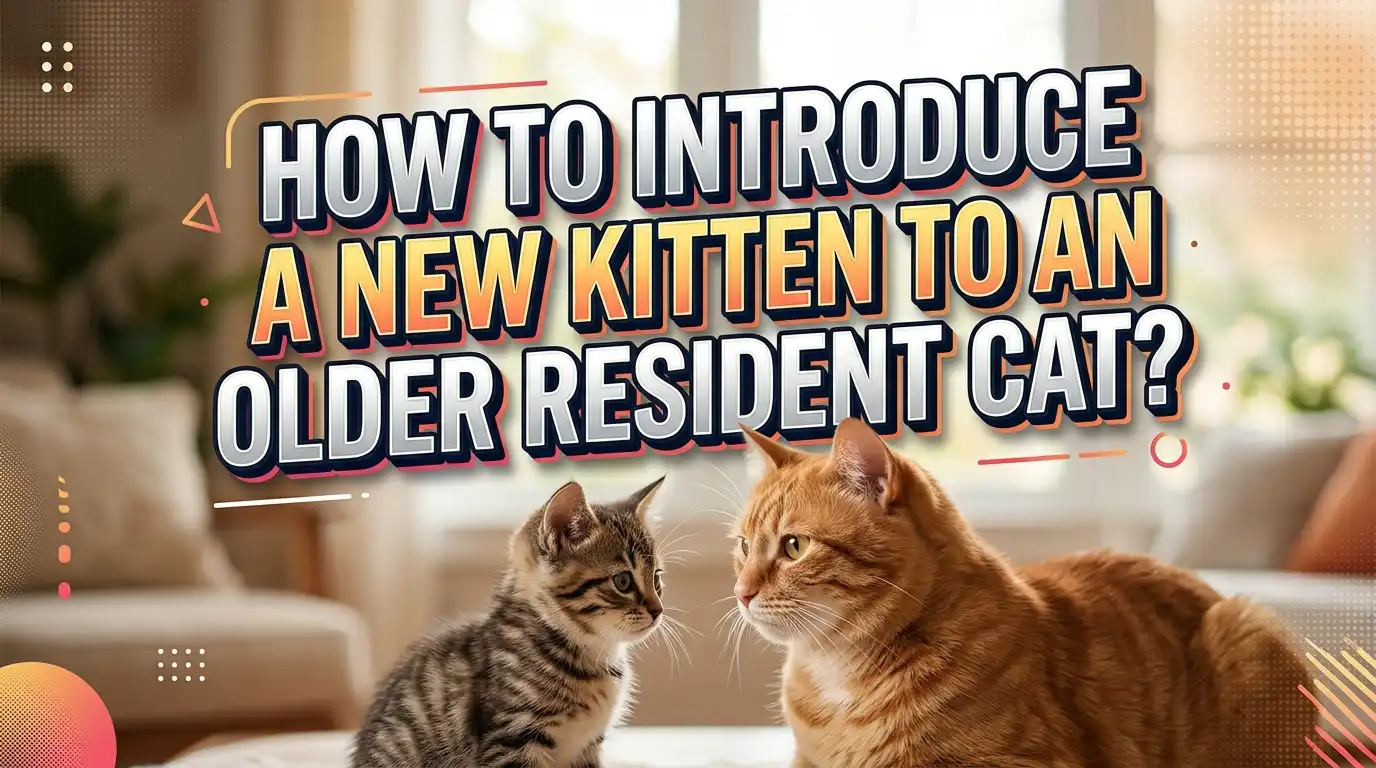
How to Introduce a New Kitten to an Older Resident Cat?
Bringing home a new kitten feels exciting. Your older cat may not share that joy at first. Cats love routine, and a new face in the house can shake their world.
The good news is simple. With patience and the right plan, your older cat can learn to accept and even enjoy the new kitten. This guide walks you through every step.
You will learn how to prepare your home, manage first meetings, and read body language. You will also find fixes for common problems many cat owners face during this transition.
Key Takeaways
- Go slow and steady. A proper introduction takes one to four weeks on average, sometimes longer. Rushing this step often leads to fighting, hiding, or lasting tension between the cats.
- Start with separate rooms. Your new kitten needs a safe base camp with food, water, a litter box, and toys. Keep the door closed during the first few days.
- Use scent before sight. Cats rely on smell more than vision. Swap blankets, towels, or socks between the two cats before they ever see each other face to face.
- Feed near the door. Pair the smell of the other cat with something positive like food or treats. This builds a happy link in your older cat’s mind.
- Watch the body language. Flat ears, puffed tails, growling, and hissing are warning signs. Relaxed posture, slow blinks, and curious sniffs show real progress.
- Give your older cat extra love. Your senior cat was there first. Spend one on one time with her so she does not feel pushed aside by the new arrival.
Why Older Cats Often Struggle With New Kittens
Older cats build strong habits over the years. They know their favorite nap spots, feeding times, and quiet corners. A bouncy kitten breaks all of that in a single day.
Senior cats also feel pain or stiffness more than younger cats. A kitten that pounces on their tail can hurt them. This makes them grumpy and defensive.
Cats are also territorial by nature. Your home is your older cat’s kingdom. A new cat looks like an invader, not a friend, at first sight.
Age gap plays a big role too. A two year old cat may bounce back fast. A twelve year old cat may take months to feel safe again. Health issues like arthritis or vision loss can slow the process.
Your older cat may also feel jealous. If she sees you holding the kitten, petting it, and talking sweetly, she may sulk or act out. Some cats stop eating or hide under the bed.
Knowing these reasons helps you plan better. You are not dealing with a mean cat. You are dealing with a worried one. When you treat the older cat with care, the introduction goes much smoother.
Prepare Your Home Before the Kitten Arrives
Set up your home a few days before kitten day. This gives your older cat time to notice changes without panic.
Pick a small room for the kitten. A spare bedroom, bathroom, or office works well. This room becomes the kitten’s base camp for the first week or two.
Put these items in the base camp room:
- A small litter box and litter
- Food and water bowls
- A cozy bed or blanket
- Two or three safe toys
- A scratching post or pad
Keep your older cat’s setup exactly the same. Do not move her food bowls or litter box. Do not rearrange the furniture. Stability helps her stay calm.
Buy extra litter boxes. The rule is one box per cat plus one extra. So two cats need three litter boxes spread across the home.
Add vertical space if you can. Cat trees, shelves, and window perches give cats room to escape each other. Older cats love being up high where kittens cannot reach.
Plug in a calming pheromone diffuser a few days early. These products copy the friendly scent cats give off when they feel safe. They can take the edge off the stress for both cats.
Bringing the Kitten Home: The First Day
The first day sets the mood. Keep it boring and quiet. Skip the welcome party.
Carry the kitten straight to the base camp room in a carrier. Do not let the cats meet face to face yet. Close the door behind you and let the kitten explore the room.
Your older cat will know something is up. She will sniff the door and may meow or hiss. This is normal. Let her sniff but do not force her near the door.
Sit with the kitten for short visits. Let her settle into the new smells and sounds. A scared kitten may hide for hours. Give her space and food, then leave her alone.
Keep your normal routine with your older cat. Feed her at the same time. Play with her at the same time. Pet her in her favorite spot.
Do not wash your hands between cats every single time. Their smells should start to mix on your clothes and skin. This is part of the introduction.
Watch both cats for stress signs that night. The older cat may pace, growl at the door, or refuse food. If she eats and sleeps as usual, you are off to a great start.
Scent Swapping: The Most Important Step
Cats meet through their noses first. Scent swapping lets them get to know each other without any risk of a fight.
Take a clean soft cloth or sock. Gently rub it on the kitten’s cheeks and forehead. These spots hold the friendly facial pheromones.
Place that cloth near your older cat’s food bowl or favorite resting spot. Do not shove it in her face. Let her choose to sniff it on her own.
Do the same in reverse. Rub a different cloth on your older cat and place it in the kitten’s room.
Repeat this swap every day for at least three to five days. Watch how each cat reacts to the smell. Hissing or backing away means you need more time. Sniffing and walking away calmly means progress.
You can also swap bedding between rooms. Move the kitten’s blanket to the living room and your older cat’s blanket to the base camp.
Try mixing scents on yourself too. Pet the kitten, then pet the older cat without washing your hands. Your scent becomes the bridge between the two cats.
Some owners use a damp towel to wipe both cats, then wipe down door frames and corners. This spreads a shared house scent. Over time, both cats start to smell like family.
Room Swapping to Build Familiarity
After three to five days of scent swapping, move to room swapping. This step lets each cat explore the other’s space without meeting.
Put your older cat in a closed room with food, water, and a litter box. Then open the kitten’s base camp door. Let the kitten roam the house freely.
The kitten will sniff every corner, couch, and shoe. She will leave her scent across the home. She will also pick up your older cat’s scent from furniture and rugs.
After an hour or two, switch them. Put the kitten back in her base camp. Then let your older cat out to explore the kitten’s room.
Your older cat will sniff everything the kitten touched. She may growl, hiss, or rub her cheeks on items to mark them. All of this is healthy behavior.
Do room swaps once or twice a day for several days. Each swap teaches both cats that the other one is real but not a threat.
Look for relaxed body language during these sessions. A swishing tail or pinned ears means stop and slow down. A loose tail and curious sniffing means keep going.
This step builds confidence. Your older cat learns the kitten’s smell is now part of her home. The kitten learns the older cat without seeing her sharp claws.
The First Visual Meeting Through a Barrier
Now it is time for the cats to see each other. Keep a barrier between them for safety. A baby gate, screen door, or cracked door with a doorstop works well.
Pick a calm time of day. Both cats should be a little hungry but not starving. Hunger keeps them focused on food, not each other.
Place food bowls on each side of the barrier. Start with the bowls far apart, maybe ten feet away from the gate. Let each cat eat in sight of the other.
Watch closely the whole time. If either cat hisses, growls, or refuses to eat, move the bowls farther apart. If both eat calmly, you have made big progress.
Repeat this meal time setup two or three times a day. Slowly move the bowls closer to the gate over several days. End each session before tension starts.
You can also play with toys near the barrier. A feather wand on each side lets both cats focus on fun instead of each other. Play turns the meeting into a positive event.
End every session on a good note. Close the door or block the view before either cat gets upset. Short, happy meetings work better than long, tense ones.
If progress stalls, go back to scent swapping for a few days. There is no shame in stepping back. Cats remember bad meetings for a long time.
The First Face to Face Meeting
When both cats eat and play calmly near the barrier, you can try a full meeting. Choose a large open room with escape routes.
Open the door or remove the gate. Stay nearby but do not hover. Let the cats approach each other on their own terms.
Keep the first meeting short. Five to ten minutes is enough. Have treats ready to reward calm behavior.
Do not pick up either cat during the meeting. Holding a cat near another cat traps her. A trapped cat may scratch or bite out of fear.
Watch for these good signs:
- Slow blinks at each other
- Sniffing nose to nose, then walking away
- Sitting in the same room without staring
- Grooming themselves while the other watches
Watch for these bad signs and step in if you see them:
- Flat or pinned ears
- Puffed up fur or tail
- Crouched bodies with locked stares
- Growling or low yowls
If a fight starts, do not use your hands. Drop a towel between them or clap loudly. Then send each cat back to a safe space and try again the next day.
Repeat short meetings every day. Stretch them longer as the cats relax. Most pairs take one to three weeks of meetings before they share space all day.
How to Read Cat Body Language Correctly
Body language tells you what words cannot. Learning the basics saves you from many mistakes during introductions.
A relaxed cat has soft eyes, ears facing forward, and a loose tail. She may stretch out on her side or sit with paws tucked. This cat feels safe.
A nervous cat crouches low. Her ears swivel sideways or back. Her tail twitches at the tip or wraps around her body. She may lick her lips or yawn out of stress.
An angry cat looks bigger on purpose. Her fur stands up. Her tail puffs out. She arches her back or stands stiff legged. She may growl, hiss, or spit.
A scared cat tries to look smaller. She tucks her tail under her body. She may flatten against the floor or hide. Her pupils grow wide and black.
Look at the tail first. A tail held high with a small curl at the tip means friendly. A flicking, lashing tail means stop right now.
Slow blinks are cat kisses. If your older cat slow blinks at the kitten, she is showing trust. Try slow blinking back at both cats during meetings.
Watch the ears too. Forward ears mean interest. Sideways ears mean worry. Flat back ears mean attack mode. Adjust your plan based on what you see.
Giving Your Older Cat Extra Attention
Your older cat may feel pushed aside. She was the queen of the house for years. Now there is a tiny invader stealing her people.
Make her feel like the queen still. Greet her first when you come home. Feed her first at meal times. These small acts mean a lot to a senior cat.
Spend one on one time with her every day. Brush her, play with her favorite toy, or just sit and pet her. Pick the activities she loved before the kitten came.
Keep her routines exactly the same. Same food, same bowl, same spot, same time. Cats find comfort in patterns.
Watch her appetite, litter box use, and sleep. A stressed senior cat may stop eating or hide for hours. These signs need quick action.
Talk to her in a soft voice. Use her name often. Cats know their names and the tone of love behind them.
If she avoids you, do not chase her. Let her come to you when she is ready. Sit on the floor and wait. Curiosity often wins.
Give her a quiet room or high perch that the kitten cannot reach. Every cat needs a private space. Senior cats need this even more.
Some senior cats bond faster when they feel respected. Show her that her place in the family has not changed. The kitten is an addition, not a replacement.
Feeding Two Cats Without Conflict
Food can spark fights between cats. Smart feeding habits keep peace in the home.
Feed both cats at the same time. This stops one cat from guarding the other’s bowl. Two cats eating side by side learn to share space without stress.
Use separate bowls placed a few feet apart. Cats do not like sharing dishes. Each cat needs her own clean bowl.
Match the food to each cat’s age. Kittens need kitten food with extra protein and fat. Older cats need adult or senior food. Mixing them up can cause health issues over time.
If your older cat eats slowly, the kitten may steal her food. Stand near the bowls during meals. Block the kitten if she tries to swap bowls.
For free feeders, this gets tricky. You may need to switch to scheduled meals. Two or three set meal times work for most homes.
Watch the weight of both cats. Stress can make a cat eat less or more. Sudden weight loss in your older cat needs a vet visit.
Treats are great training tools. Toss a treat to each cat when they are calm near each other. This builds a happy link to being in the same room.
Keep water bowls in more than one spot. Cats prefer fresh water away from food. Multiple water stations also reduce competition.
Litter Box Setup for Two Cats
Litter box drama causes many cat fights. Get this right from the start and you save yourself big problems.
Follow the simple rule: one box per cat plus one extra. Two cats need three litter boxes in total.
Place the boxes in different rooms. Do not line them up in one spot. A cat blocked from one box should be able to walk to another easily.
Keep one litter box on each floor of your home. Older cats may struggle with stairs. Multiple floors mean easy access for everyone.
Use low sided boxes for senior cats with stiff joints. High walls hurt cats with arthritis. Kittens also need low sides to climb in safely.
Scoop the boxes at least once a day, twice if you can. Cats avoid dirty boxes. A clean box means a happy cat and no accidents on the carpet.
Watch who uses which box. Some cats claim one box as their own. That is fine as long as there are enough boxes for both to feel safe.
If your older cat starts peeing outside the box, take it seriously. Stress and territory worry are common causes. So are health issues like urinary tract problems. A vet visit rules out the medical side.
Use the same litter both cats like. Sudden changes in litter brand or scent can upset a cat. Stick with what works.
Playtime Strategies for Both Cats
Play burns energy and builds bonds. The trick is matching play to each cat’s age and style.
Kittens have endless energy. They need short, intense play sessions many times a day. Without play, they bother the older cat for fun.
Tire out the kitten before joint meetings. A wand toy, ball, or feather chase for fifteen minutes works wonders. A tired kitten is a calm kitten.
Older cats play differently. They prefer slower, shorter sessions. A wand toy that mimics a mouse on the ground often beats fast flying feathers.
Play with each cat alone at first. Use the same toy for both, but keep sessions in different rooms. This builds shared toy scents.
When the cats can be together, try parallel play. Use two wand toys at once. Stand between them and engage both cats at the same time.
Praise calm behavior with treats. Reward the moment they play near each other without fighting. Small wins add up to big change.
End play before either cat gets bored or rough. A tired but happy cat is the goal. An overtired kitten gets nippy and may pick on the older cat.
Rotate toys every few days. Cats lose interest in toys they see all the time. Fresh toys spark new energy and joint interest.
Common Problems and How to Fix Them
Even with a good plan, you may hit bumps. Here are the most common issues and quick fixes.
Problem: The older cat hisses every time she sees the kitten.
Hissing is a warning, not an attack. Go back to barrier meetings for a few more days. Use food and treats to build a positive link.
Problem: The kitten chases the older cat everywhere.
The kitten sees a fun game. The older cat sees a threat. Burn off kitten energy with play before they meet. Use baby gates to give the older cat kitten free zones.
Problem: One cat stops eating.
Stress kills appetite. Move the bowls farther apart. Feed them in separate rooms for a few days. If the cat skips meals for more than a day or two, call your vet.
Problem: The older cat hides all day.
Give her a safe high spot. Spend extra one on one time with her. Do not drag her out of hiding. Let her come out on her own schedule.
Problem: They fight badly during a meeting.
Separate them right away. Do not punish either cat. Go back two or three steps in the introduction process. Take it even slower next time.
Problem: Litter box accidents start.
Add more boxes. Clean them more often. Rule out health issues with a vet check. Stress alone can cause this in any cat.
If problems last more than a few weeks, talk to your vet or a cat behavior expert. Some cats need extra help to adjust.
How Long the Process Really Takes
Most owners want a quick answer. The truth is that every cat pair is different.
Some easy going cats accept a new kitten in a few days. Most pairs need two to four weeks of slow steps. Some take two to six months to truly bond.
Age and personality matter. A young, social adult cat often warms up fast. A senior cat with strong territory habits may need much longer.
The first two weeks are the hardest. Hissing, growling, and hiding are common. This does not mean failure. It means your cats are still working it out.
Watch for these signs of real progress over time:
- Sleeping in the same room
- Eating near each other without stress
- Touching noses without hissing
- Grooming each other or playing gently
- Choosing to be near each other
Full friendship is not always the goal. Many cats settle into peaceful coexistence instead of best friend status. That is a totally fine outcome.
If after two months you see no progress, get help. A vet visit rules out pain or illness. A cat behaviorist can spot what you might be missing.
Be patient with yourself too. You are learning a new skill. The cats are learning to live together. Time, love, and a steady plan win in the end.
Frequently Asked Questions
How long should I keep the new kitten in a separate room?
Plan for at least three to seven days of full separation. Some cats need two weeks. Watch the body language of both cats before opening the door for visual meetings.
Should I let my cats fight it out?
No, never let cats fight it out. Cat fights can cause serious injuries and lasting fear. Always separate them right away and go back a few steps in the introduction plan.
Can I introduce them on the first day if they seem friendly?
It is risky. A calm first sniff can turn into a fight quickly. Stick to the slow plan even if both cats seem fine. You only get one first meeting, so make it count.
What if my older cat never accepts the new kitten?
Some cats prefer to live alone. If after months of trying they still cannot share space, you may need to keep them in separate parts of the home. A cat behaviorist can offer custom advice.
Should the kitten and older cat share food bowls?
No, give each cat her own bowl. Cats do not like sharing food dishes. Separate bowls a few feet apart reduce stress and prevent food guarding.
Is it better to get two kittens instead of one?
Two kittens often entertain each other and bother the older cat less. But this is a personal choice. Two kittens mean double the cost, vet visits, and energy in the home.
My older cat is twelve years old. Is she too old for a new kitten?
Senior cats can accept new kittens, but it takes longer. Go extra slow and protect her from rough kitten play. Talk to your vet first to check her overall health and stress levels.
When should I call a vet or cat behaviorist?
Call if a cat stops eating for more than a day, hides for days, attacks the other cat badly, or shows ongoing fear. Health checks rule out medical causes. A behaviorist helps with stubborn cases.