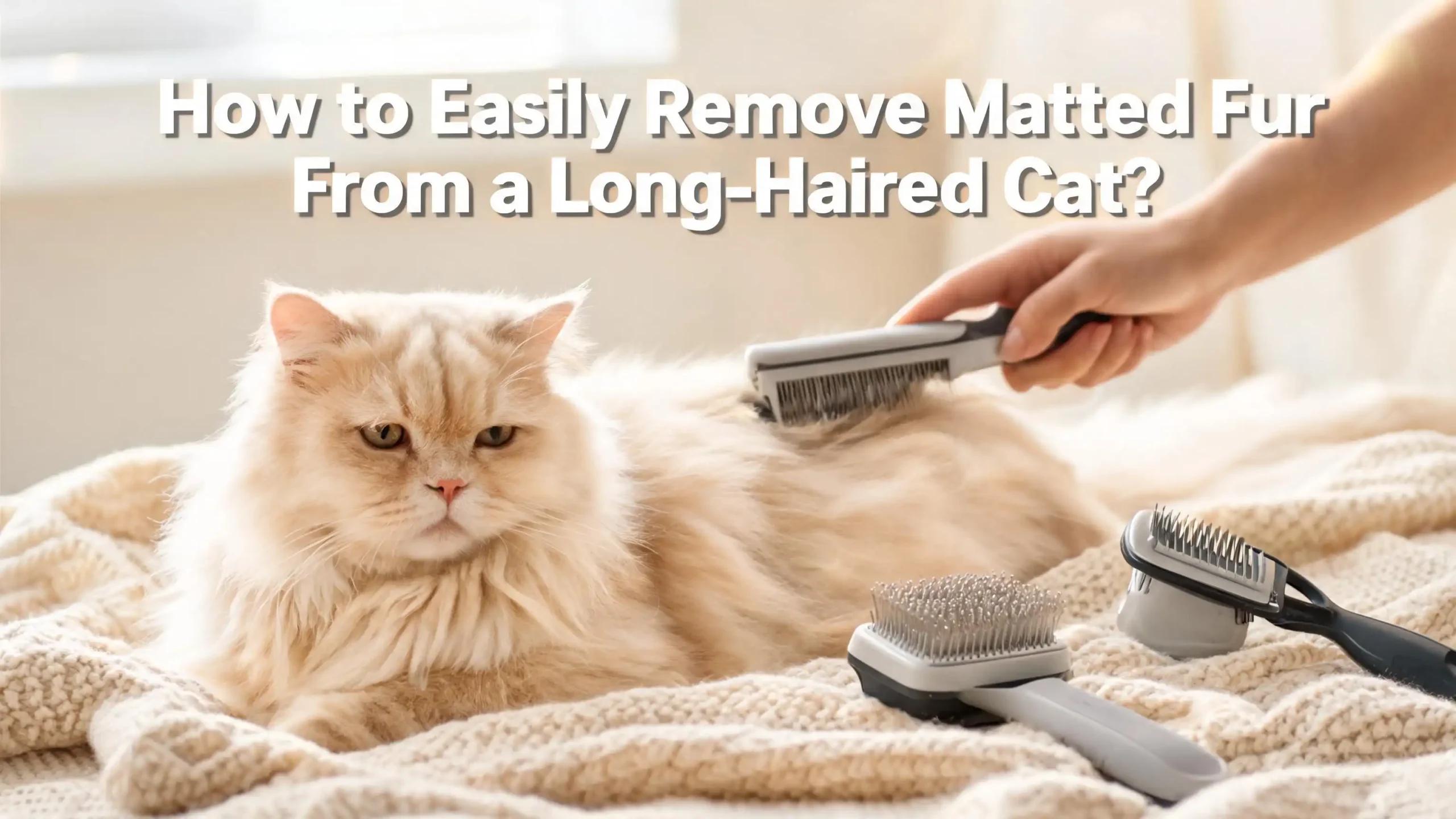
How to Easily Remove Matted Fur From a Long-Haired Cat?
If you own a long-haired cat, you have probably discovered a thick, tangled clump of fur hiding under all that fluffiness. Matted fur is one of the most common and frustrating problems that owners of long-haired cats face. It looks uncomfortable, it feels uncomfortable, and left alone, it can actually become a serious health issue for your feline friend.
The good news is that you do not need to panic. And if things have gone further than a quick brush can fix, this guide will also tell you exactly when to call in a professional.
This post walks you through everything you need to know, from understanding why mats form to safely removing them and keeping them from coming back. No fluff, no filler, just clear and helpful steps you can start using today.
Key Takeaways
- Matted fur is more than a cosmetic issue. It can cause real pain, skin infections, trapped parasites, and even restrict your cat’s movement if left untreated.
- Long-haired breeds like Persians, Maine Coons, and Ragdolls are the most prone to matting because of the thickness and length of their coats.
- The right tools make all the difference. A wide-tooth comb, a dematting comb, and a slicker brush are the three key items every long-haired cat owner should own.
- Home remedies like cornstarch can help loosen small mats before you begin brushing or combing, making the process gentler and less stressful for your cat.
- You should never use scissors to cut out mats at home. Cat skin is very thin and tears easily, and the risk of an accidental cut is very high, especially when the skin is pulled tight by a mat.
- Prevention is always easier than treatment. Daily brushing, regular grooming sessions, and a healthy diet rich in omega-3 fatty acids go a long way in keeping your cat’s coat mat-free year-round.
Why Long-Haired Cats Are So Prone to Matting?
Long-haired cats are simply more vulnerable to matted fur than their short-haired counterparts, and the reason comes down to the structure and volume of their coat. Breeds like Persians, Maine Coons, Ragdolls, Norwegian Forest Cats, and Himalayans carry a thick double coat that requires consistent attention to stay tangle-free.
When a cat sheds its undercoat, the loose hairs do not always fall away cleanly. Instead, they can get caught in the outer layer of fur and begin to twist around each other. Over time, these twisted hairs tighten and form a knot, and that knot becomes a mat.
Certain areas of a cat’s body are especially prone to matting because of constant friction and movement. The belly, behind the ears, under the armpits, around the collar area, and between the hind legs are the hotspots where mats form most frequently. If your cat wears a collar, fur under and around the collar is almost always the first place you will notice tangling.
Outdoor cats face an added challenge because dirt, debris, burrs, and moisture from the environment get caught in the fur and speed up the matting process. Even indoor cats are not immune, especially if they tend to rub against furniture, carpets, or bedding regularly.
Understanding this helps you know exactly where to look and why prevention through regular grooming is so much easier than tackling a full mat once it has formed.
What Actually Causes Matted Fur in Cats?
Matting does not happen overnight. It is usually the result of one or more contributing factors that build up gradually. Knowing the cause helps you address the root of the problem rather than just treating the symptom.
The most common cause is simply a lack of regular grooming. Cats are excellent self-groomers, but even the most dedicated groomer cannot keep every part of a long, thick coat tangle-free without some help from their owner. When loose fur is not brushed away, it stays in the coat and begins to interlock with other hairs.
Health problems are another major cause. Older cats, overweight cats, and cats with arthritis often struggle to reach certain parts of their body, particularly the lower back, belly, and tail base. If grooming becomes painful or physically difficult, mats will form in those neglected areas quickly. Dental problems can also reduce grooming, since a sore mouth makes licking uncomfortable.
A buildup of natural skin oils is also a factor. These oils are normally distributed across the coat through grooming. When that process is disrupted, the oils accumulate and cause fur to clump together into greasy, matted masses.
Finally, seasonal shedding periods increase the risk significantly. During heavy shedding seasons in spring and fall, loose fur builds up in the coat faster than a cat can remove it on its own, making matting far more likely without extra brushing from you.
Why Matted Fur Is a Serious Health Problem?
Many cat owners look at a mat and think it is just an aesthetic issue, but matted fur is actually a medical concern that vets and groomers take very seriously. Ignoring mats can lead to a cascade of painful and harmful problems for your cat.
Mats pull tightly on the skin beneath them. As they grow and tighten, they create constant pressure and tension on the skin, which can cause bruising and significant pain. The skin under a mat becomes stretched, delicate, and thin, making it vulnerable to tearing even from gentle handling.
Mats trap dirt, bacteria, moisture, and parasites against the skin. Fleas and ticks love to hide in mats because they are nearly impossible to detect or treat without removing the mat first. The trapped bacteria and moisture create the perfect environment for skin infections, hot spots, and fungal issues to develop.
A mat also prevents proper airflow to the skin beneath it. Skin that cannot breathe properly becomes irritated, inflamed, and prone to infection. Cats with severe matting may develop open sores under the mat without their owners even realizing it.
Restricted movement is another real risk. Large mats near the legs, armpits, or belly can physically pull on the skin during movement, making walking, jumping, and stretching painful. This can cause a cat to become less active and even depressed.
The bottom line is clear: matted fur is painful, and it gets worse over time if not addressed. Taking action early is always the kindest choice for your cat.
How to Tell If Your Cat Has Mats?
Spotting mats early is key to making removal easier and less stressful for both you and your cat. Small, soft mats are much easier to remove than large, tight ones, so regular checks are a great habit to develop.
The easiest way to check is to run your fingers slowly and gently through your cat’s fur, section by section. If your fingers catch on a hard, lumpy, or dense area that does not loosen when you gently tug at it, that is a mat. Pay special attention to the belly, armpits, behind the ears, under the collar, and at the base of the tail, as these are the areas where mats form first.
Visually, mats look like compressed or matted sections of fur that lie flat against the skin in an irregular shape. In severe cases, large sections of fur can become pelted, meaning the mat covers a wide area and sits tightly against the skin like a solid sheet.
Watch for behavioral signs too. If your cat reacts with irritation, hissing, or pulling away when you touch a particular area, that area likely has a mat that is causing discomfort. A sudden change in how your cat holds itself, grooms itself, or moves can also indicate that mats are causing pain.
Checking your cat for mats during your regular petting sessions makes detection easy and helps you catch small tangles before they become big problems.
Tools You Need Before You Start
Having the right tools ready before you begin makes the dematting process safer and more effective. Trying to remove mats with the wrong tools can cause pain and even injure your cat, so it is worth knowing what each tool is for.
A wide-tooth comb is your starting point for most mat removal. It allows you to work through the outer edges of a mat gently without pulling the whole clump at once. A wide-tooth comb is ideal for cats with very long fur because it slides through the layers without catching and tearing.
A dematting comb or mat splitter has small, sharp blades or tines designed to slide into a mat and break it apart from the inside out. This tool is particularly useful for medium to large mats that a regular comb cannot work through. It cuts the mat into smaller sections rather than pulling it, which is much less painful for your cat.
A slicker brush with fine, short wires is excellent for finishing work after a mat has been broken apart. It smooths the coat and removes any remaining loose fur.
You will also want cornstarch or a cat-safe detangling spray to loosen mats before you begin working on them. Cornstarch is a safe, non-toxic option that helps reduce friction between tangled hairs, making them easier to separate.
Finally, keep cat treats on hand throughout the session. Positive reinforcement helps your cat stay calm and builds a positive association with grooming.
Step-by-Step Guide to Removing a Small Mat at Home
For small to medium mats that have not yet tightened against the skin, home removal is very manageable if you follow the right steps. Take your time, stay calm, and stop if your cat becomes distressed.
Step 1: Choose a calm moment. Pick a time when your cat is relaxed, perhaps after a meal or a nap. Sit in a quiet room with minimal distractions and let your cat settle on your lap or a flat surface.
Step 2: Apply cornstarch to the mat. Sprinkle a small amount of cornstarch directly onto the matted area and gently work it in with your fingers. Cornstarch reduces the friction between tangled hairs and makes it much easier to separate them without pulling.
Step 3: Hold the base of the mat. Before you do any combing, place your fingers firmly between the mat and the skin. This is the most important step. Holding the base prevents the comb from tugging directly on the skin, which is what causes pain.
Step 4: Work from the outside in. Start combing or picking at the outer edges of the mat using a wide-tooth comb or your fingers. Never pull from the top of the mat downward toward the skin. Work gently in small sections, loosening the outer layers first before working deeper into the mat.
Step 5: Use the dematting comb for stubborn sections. If part of the mat will not loosen with a regular comb, gently insert the dematting comb into the mat and work it back and forth. The goal is to split the mat into smaller sections, not to yank it out in one piece.
Step 6: Brush and reward. Once the mat is removed, use the slicker brush to smooth the area. Give your cat a treat and plenty of praise. Ending the session on a positive note helps your cat accept future grooming more easily.
How to Handle Large or Severely Matted Fur?
Large, tightly packed mats that sit flat against the skin are a different situation from small tangles, and they require a different approach. Attempting to comb out a large, tight mat at home is likely to cause pain and stress and may injure your cat’s skin.
The safest approach for severe mats is to visit a professional groomer or your veterinarian. A professional groomer has specialized tools, including electric clippers, that can safely shave the mat away without pulling on the skin. Shaving is often the kindest option for large mats because it removes the problem quickly and without the prolonged stress of repeated combing attempts.
For very severe cases where a cat has multiple large mats or entire sections of pelted fur, a veterinarian may need to be involved. In some cases, sedation is needed to allow safe and painless removal of extreme matting, especially in cats that are very anxious, in significant pain, or elderly.
Do not try to cut a large mat out with household scissors. Cat skin is extremely thin and elastic, and it can be pulled upward inside the mat without you realizing it. Many cats have been accidentally cut this way, even by experienced owners. If scissors must be used at all, only blunt-tipped grooming scissors should be used, and only by someone who has experience with the technique.
The key message is this: when in doubt, call a professional. The cost of a grooming appointment is far less than the cost of treating an infected wound or a skin injury.
Safe Home Remedies That Actually Work
There are a few safe, practical home remedies that cat owners have used successfully to loosen mats before grooming. These are especially helpful for small to medium mats or for cats that become anxious during grooming sessions.
Cornstarch is the most widely recommended home remedy for matted cat fur. It is completely non-toxic and safe for cats to groom off their fur. Simply sprinkle it onto the mat, work it in gently with your fingers, and then begin combing from the outside edges in. The cornstarch acts as a dry lubricant, reducing friction between tangled fur strands and making them easier to separate.
Olive oil is another option that has been used by pet owners and pet sitters for years. Applying a small amount of olive oil to the base of the mat can help loosen it over time. However, olive oil should be used very sparingly because too much can leave the coat greasy and may attract more dirt, which could lead to further matting. After using olive oil, the area should be cleaned with a gentle cat-safe shampoo.
Cat-safe detangling spray is a commercially available option that works by coating the fur strands and reducing the grip they have on each other. Look for a product specifically formulated for cats, as products designed for humans or dogs may contain ingredients that are harmful to felines.
Avoid using products like coconut oil in large amounts or anything containing essential oils, tea tree oil, or fragrances, as these can be toxic to cats, especially if ingested during self-grooming.
How to Calm Your Cat Before and During Grooming?
A calm cat makes the entire mat removal process safer and easier. A stressed or frightened cat will resist grooming, making it harder for you to work and increasing the risk of accidental injury to both of you.
Start by creating a calm environment. Choose a quiet room, minimize noise, and avoid rushing. Never try to groom a cat that is already agitated or upset. Wait until your cat is in a relaxed, settled mood, such as after eating or during a favorite rest time.
Gentle petting and soft talking before you begin helps your cat feel safe. Let your cat sniff the tools before you use them so the objects feel familiar rather than threatening.
Take breaks during the grooming session if your cat starts to show signs of stress. Signs that your cat needs a break include flicking the tail, flattening the ears, tensing the body, growling, or attempting to bite or scratch. Pushing through these signals usually makes things worse. A short break followed by a treat often resets the situation effectively.
Treats used as positive reinforcement throughout the process help your cat build a positive association with grooming over time. Each session that ends with a treat and praise teaches your cat that grooming is safe and rewarding, making every future session a little bit easier.
For extremely anxious cats, your vet may be able to suggest a safe, short-term calming option to make grooming possible without causing excessive stress.
The Role of Diet in Coat Health
What your cat eats has a direct impact on the health, texture, and manageability of its coat. A poor diet often results in dry, brittle, or oily fur that is far more prone to tangling and matting than a healthy coat.
Cats need adequate levels of protein, healthy fats, and key nutrients to maintain a coat that sheds cleanly and stays smooth. Omega-3 and omega-6 fatty acids are particularly important for coat health. These essential fatty acids support skin hydration, reduce inflammation, and help produce the natural oils that keep fur soft and tangle-resistant.
Talk to your vet about whether your cat’s current diet meets its nutritional needs. Some cats benefit from a dietary supplement of fish oil or a food that is specifically formulated for skin and coat health. Even small improvements in diet can make a noticeable difference in how easy a coat is to manage.
Dehydration also affects coat quality. Make sure your cat has constant access to fresh water, and consider a wet food component in the diet if your cat tends to drink very little, since moisture intake supports skin and coat health from the inside out.
Vitamin E is another nutrient that supports coat health. It acts as an antioxidant that protects skin cells and promotes healing. A vet can recommend the appropriate dosage if your cat’s coat appears dry or damaged.
Building a Regular Grooming Routine
The single most effective thing you can do for your long-haired cat’s coat is to establish a consistent daily grooming routine. Daily brushing takes only a few minutes but prevents the vast majority of matting issues before they even begin.
For long-haired cats, the recommended grooming schedule is as follows: Daily brushing is ideal, especially during shedding seasons. If daily brushing is not possible, aim for at least four to five times per week. Even a two-minute brush session is enough to remove loose fur and prevent early tangles from tightening into mats.
Weekly deeper grooming should include a thorough comb-through of all areas, including the belly, armpits, and behind the ears. This is also a good time to check for any new mats forming.
Monthly bathing can help remove accumulated oils and dirt that contribute to matting. Use a cat-safe shampoo followed by a conditioner designed for cats. A post-bath blow-dry on a low heat setting while brushing helps separate fur strands and prevents them from clumping together as the coat dries.
Professional grooming every six to eight weeks is highly recommended for long-haired breeds. A professional groomer can address any areas you might have missed, trim the coat if needed, and provide treatments that maintain overall coat health.
Consistency is the key. A cat that is groomed regularly will have a coat that is easy to maintain, and grooming sessions will become a bonding experience rather than a battle.
When to See a Vet About Matted Fur
While many matting situations can be handled with home grooming or a professional groomer, there are circumstances where a visit to the vet is the right call. Knowing the difference could prevent your cat from unnecessary pain or a missed health problem.
See a vet immediately if:
- The skin under the mat looks red, raw, inflamed, or has open sores or discharge.
- Your cat has suddenly developed many mats in a short period of time, which can signal an underlying health problem.
- Your cat is in significant pain when you touch the matted area and will not allow any handling.
- The mats are so large and tight that they appear to restrict your cat’s movement.
- Your cat is elderly, very young, or has a known health condition that makes sedation a concern.
Sudden or rapid matting in a cat that has previously groomed well is a red flag. It often signals that something is wrong internally, such as arthritis, dental pain, obesity, kidney disease, or another condition that is making it difficult or painful to groom. A vet can identify and address the underlying cause.
For extreme matting, a vet can sedate your cat safely and have the fur removed professionally without causing trauma. This is the kindest and safest option for cats in serious distress.
How to Prevent Matted Fur From Coming Back?
Once you have successfully dealt with your cat’s mats, the priority becomes making sure they do not come back. Prevention is significantly easier than removal, and a few simple habits will keep your long-haired cat’s coat in great shape long-term.
Make daily brushing a non-negotiable part of your routine. Use a wide-tooth comb first to work through the layers, followed by a slicker brush to smooth the topcoat. Always brush in the direction of hair growth and give extra attention to the high-friction areas where mats tend to form.
Remove your cat’s collar regularly to allow the fur underneath to recover and be properly brushed. Collars are one of the most common causes of recurring mats because they press against the fur constantly.
Schedule professional grooming appointments every six to eight weeks for maintenance. Some owners of very long-haired breeds opt for a practical haircut such as a lion cut, which keeps the fur shorter and dramatically reduces the risk of matting while remaining comfortable for the cat.
Keep up with your cat’s health checks, as any change in your cat’s ability to self-groom is worth investigating. Arthritis, weight gain, and other health changes all affect grooming ability.
Finally, feed your cat a high-quality diet with enough healthy fats to support coat health. A well-nourished coat sheds cleanly and resists tangling far better than a dry, brittle one.
Special Considerations for Senior Cats
Senior cats have specific needs when it comes to matted fur, and their age means that both the causes and the solutions are a little different from those of younger cats. Older cats are among the most common victims of severe matting, and the reasons are deeply connected to the natural aging process.
As cats age, they become less flexible. Arthritis and joint stiffness make it physically painful or impossible for an older cat to reach its back, tail base, and lower abdomen for grooming. These areas quickly develop mats when they are no longer accessible to the cat.
Older cats may also groom less frequently due to cognitive changes, reduced energy levels, or general discomfort. Their skin tends to be thinner and more delicate, which means mats can cause bruising and injury faster than in younger cats.
When grooming a senior cat, be exceptionally gentle. Use only soft tools, apply light pressure, and keep sessions very short to avoid tiring or distressing the cat. If a senior cat has significant matting, it is almost always better to visit the vet rather than attempt home removal.
A vet can also evaluate whether your senior cat’s reduced grooming is related to a treatable condition. Addressing pain, dental issues, or thyroid problems in older cats can sometimes restore partial grooming ability and reduce the frequency of matting significantly.
FAQs
Does matted fur hurt a cat?
Yes, matted fur is genuinely painful for cats. As a mat tightens over time, it pulls continuously on the skin beneath it, causing pressure, bruising, and irritation. The skin under a mat becomes stretched and thin, making it vulnerable to tearing. Cats often hide their pain instinctively, so even if your cat seems unbothered, a tight mat is very likely causing discomfort.
Can I use scissors to cut out my cat’s mats?
It is strongly advised not to use regular scissors to cut out mats at home. Cat skin is very thin and elastic, and it can be pulled up inside the mat without you realizing it, putting the skin directly in the path of the scissors blade. Accidental cuts are extremely common when scissors are used on mats. If cutting is necessary, only blunt-tipped grooming scissors should be used, and only by someone trained in the technique.
How often should I brush my long-haired cat?
Long-haired cats should ideally be brushed daily or at least four to five times per week. This is especially important during heavy shedding seasons in spring and fall when loose fur builds up in the coat quickly. Even a short two to three minute brush session every day is enough to prevent the majority of matting.
What is the best home remedy for loosening cat mats?
Cornstarch is one of the safest and most effective home remedies for loosening cat mats. Sprinkle it onto the mat, work it in gently with your fingers, and then begin combing from the outside edges inward. Cornstarch is non-toxic, safe if ingested by your cat during grooming, and works by reducing friction between tangled fur strands.
When should I take my cat to a vet for matted fur?
You should visit a vet if the skin under the mat is red, raw, or infected, if your cat is in significant pain and will not allow handling, if matting is widespread and severe, if your cat has suddenly developed many mats without explanation, or if your cat is elderly or has a health condition. A vet can safely sedate the cat if needed for mat removal and can identify any underlying health issue causing the matting.
Can diet affect how much my cat’s fur mats?
Absolutely. A diet lacking in essential fatty acids, protein, and key nutrients results in dry, brittle, or oily fur that is much more prone to tangling and matting. Feeding your cat a high-quality diet and considering omega-3 fatty acid supplementation after consulting your vet can significantly improve coat texture and make regular grooming much easier.
What is a lion cut and is it good for cats with matted fur?
A lion cut is a grooming style where most of the body fur is clipped short, leaving fur only on the face, paws, and tail tip, similar in appearance to a lion’s mane. It is a practical option for cats with severe or recurring matting because the shorter coat is much easier to maintain and far less likely to mat. It is done by a professional groomer and is safe for cats, though some cats may need time to adjust to the change.