
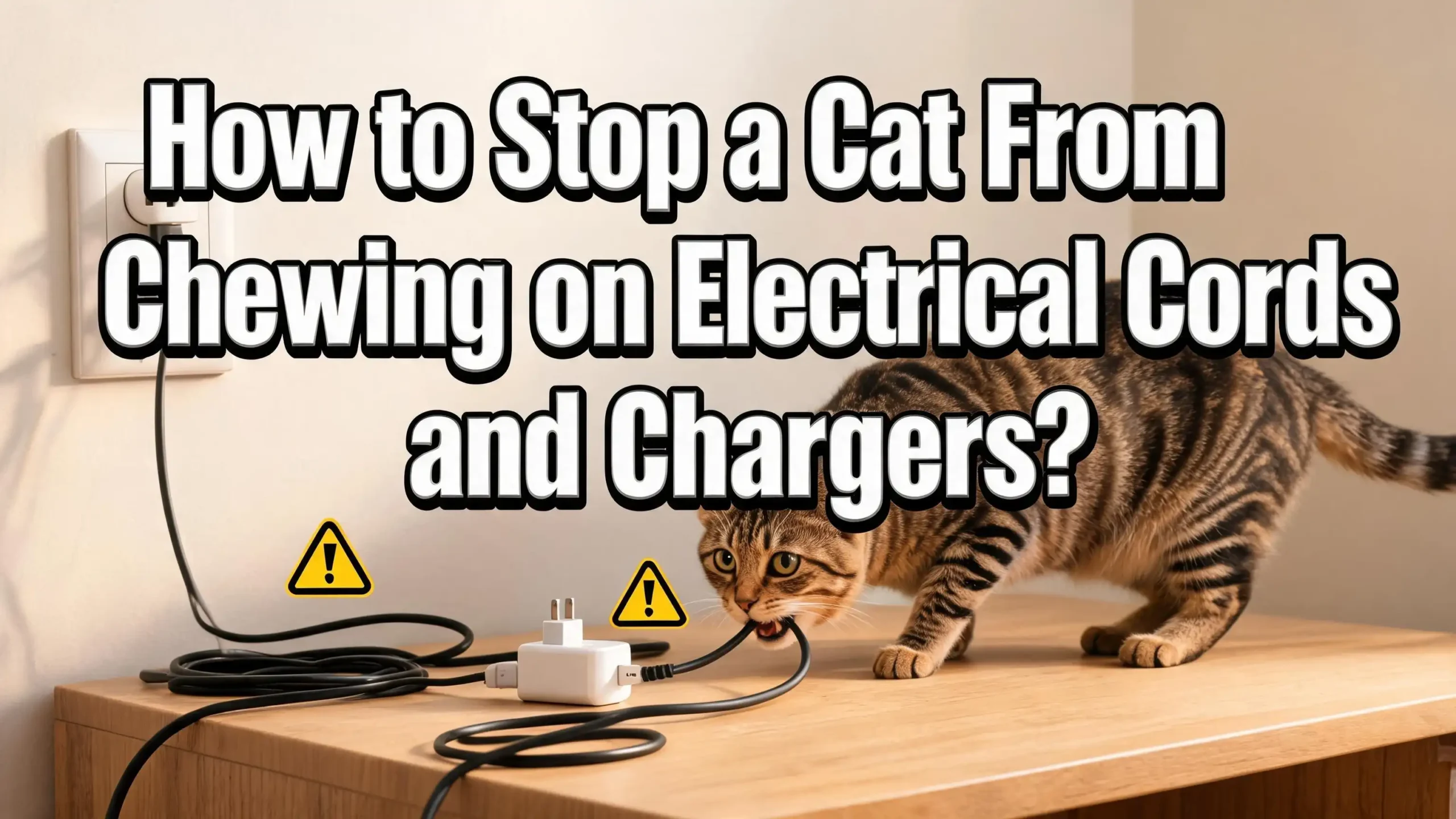
How to Stop a Cat From Chewing on Electrical Cords and Chargers?
If you have ever walked into a room and found your phone charger in two pieces, you already know how stressful this problem is. Cats that chew on electrical cords and chargers are not just destroying your expensive belongings.
This is one of the most common safety concerns among cat owners, and the frustrating part is that cats rarely stop on their own. Whether your cat is a curious kitten or a full-grown adult with a stubborn habit, this guide will walk you through every step you need to take.
From understanding why cats chew on wires to using physical barriers, taste deterrents, behavioral training, and veterinary support, you will find every practical solution here.
Keep reading. By the end of this post, you will know exactly what to do to protect both your cat and your cords.
Key Takeaways
- Chewing on electrical cords is a serious safety hazard that can cause burns, lung damage (pulmonary edema), electric shock, or fatal electrocution in cats. Thousands of cats are injured this way every year, which makes prevention an urgent priority, not just a convenience issue.
- Cats chew cords for many reasons, including boredom, anxiety, teething (especially in kittens between 3 to 6 months old), curiosity about textures, dental discomfort, and a compulsive condition called pica. Understanding the root cause helps you choose the right solution for your specific cat.
- Physical barriers are your first line of defense. Wrapping cords in cord covers, split loom tubing, or cable management sleeves makes cords physically harder and less satisfying to chew. Hiding cords behind furniture or inside cable boxes removes access entirely.
- Taste deterrents like bitter apple spray, citrus sprays, and menthol solutions make cords unappealing to chew. These are safe, non-toxic options that work well when combined with physical cord protection.
- Behavioral solutions matter just as much as physical ones. Providing your cat with appropriate chew toys, increasing daily playtime, and reducing stress in the home addresses the root cause of the behavior rather than just blocking access to cords.
- When chewing is compulsive or excessive, a vet visit is essential. Conditions like pica, dental disease, hyperthyroidism, or anxiety disorders require professional diagnosis and treatment. Do not delay a vet visit if your cat seems driven to chew non-stop despite your best efforts.
Why Do Cats Chew on Electrical Cords in the First Place?
Before you can stop the behavior, you need to understand it. Cats do not chew on cords because they are misbehaving or trying to frustrate you. There are real, identifiable reasons behind this habit, and recognizing which one applies to your cat makes all the difference.
Boredom is one of the most common triggers. Indoor cats especially can develop destructive habits when they do not have enough mental or physical stimulation throughout the day. Chewing on a cord is a form of self-entertainment for a cat that has nothing better to do.
Curiosity about texture and movement also plays a big role. Cords and chargers are thin, flexible, and snake-like in appearance. For a cat with strong predatory instincts, a dangling charger cord on the floor can look like prey. The urge to pounce, grab, and bite it is deeply instinctive.
Teething is another significant factor, particularly in kittens. Between the ages of 3 and 6 months, kittens go through a teething phase where their baby teeth fall out and adult teeth grow in. During this period, chewing relieves gum discomfort, and cords often become unfortunate targets.
Anxiety and stress can also drive chewing behavior. Major changes in the home, such as a new pet, a new baby, moving to a different house, or even a change in daily routine, can make cats anxious. Chewing becomes a coping mechanism, much like how some people bite their nails when stressed.
Finally, some cats develop a condition called pica, which is a compulsive urge to chew and sometimes swallow non-food items. Pica can be linked to early weaning, nutritional deficiencies, obsessive-compulsive tendencies, or underlying health problems. If your cat seems driven to chew no matter what you do, pica may be the underlying issue.
Understanding the Dangers: Why You Must Act Fast
The risks involved in letting a cat chew on electrical cords are severe. This is not a behavior you can let slide hoping it will resolve itself. The consequences can happen in seconds and can be life-threatening.
When a cat bites through a live cord, they receive an electric shock. This can cause burns on the tongue, lips, and inside the mouth. It can also cause the cat to convulse, lose consciousness, or go into cardiac arrest. One of the most dangerous outcomes that many pet owners do not know about is pulmonary edema, which is a buildup of fluid in the lungs. This condition can develop within 24 to 36 hours after the initial shock, meaning a cat that appears to walk away unharmed could still be in serious danger.
Beyond electrocution, there is the risk of your cat ingesting pieces of plastic wire coating. These plastic fragments can cause intestinal blockages, which are life-threatening emergencies that often require surgery.
From a household safety standpoint, a chewed cord can also cause electrical fires, short circuits, and damage to expensive electronics. Charger cords in particular are very commonly targeted and very expensive to replace repeatedly.
The bottom line is this: chewing on electrical cords is a genuine medical emergency waiting to happen. Act before it does.
Step One: Physically Protect Your Cords Immediately
The fastest and most reliable first step is to make your cords physically inaccessible or much harder to chew. This does not require any training or behavioral change from your cat. You are simply removing the opportunity.
Split loom tubing is one of the most popular solutions among cat owners. This is a flexible plastic tube with a slit running along its length that allows you to insert your existing cords inside it. The hard plastic exterior is difficult for cats to bite through and creates an unpleasant texture that most cats quickly lose interest in. You can find this tubing at hardware stores in various diameters to fit different cord sizes.
Cable management sleeves made of braided nylon are another excellent option. These wrap around bundles of cords and give them a protective outer layer. They also help organize your cords, which reduces the chances of loose, dangling cords catching your cat’s attention in the first place.
For individual charger cords, spiral cable wrap is an affordable and easy solution. You simply wind it around the cord from end to end. The spiral texture is unappealing to cats and adds a layer of protection against biting.
If you want to go a step further, run your cords through cable raceways, which are flat plastic channels that mount along baseboards or walls. This keeps cords completely off the floor and out of your cat’s reach entirely. Many cat owners report that this simple change alone resolves the problem immediately.
Always secure loose cords with cable ties or velcro straps to prevent them from hanging freely or lying across the floor. A cord that is tidy, bundled, and managed is far less interesting to a curious cat than one that is sprawled loosely across the ground.
Step Two: Use Taste Deterrents on Your Cords
Once you have covered your cords physically, you can add an additional layer of protection using taste deterrents. These are substances that taste terrible to cats and discourage them from putting the cord in their mouth at all.
Bitter apple spray is the most widely recommended option by veterinarians and cat behavior experts. It is non-toxic and safe for cats, but the intensely bitter taste is highly unpleasant for them. You can spray it directly onto the cord covers or lightly onto the cords themselves. Reapply every few days since the taste fades over time.
Citrus is another powerful natural deterrent. Cats have a strong aversion to citrus scents and flavors. You can rub a small amount of lemon or orange juice onto your cords using a cotton ball, or mix citrus essential oil with water and use it as a light spray. Many cat owners have reported excellent results with this simple approach.
Menthol or Vicks VapoRub applied lightly to cord surfaces can also work. The strong scent and taste is overwhelming for cats and is a very effective discouragement. Use only a tiny amount, since you do not want strong chemical smells filling your home.
Some cat owners have also reported success with white vinegar diluted with water as a spray applied to cord surfaces. The sharp acidic taste is unpleasant to most cats and evaporates within an hour or so, leaving no strong lingering smell for humans while remaining detectable to cats with their sensitive noses.
One important tip: always test any spray or solution on a small, hidden area of the cord cover first to make sure it does not degrade the plastic. Also, never apply anything directly to a live, uncovered wire. Always apply deterrents to the outer covering only.
Step Three: Remove Access to Cords Whenever Possible
The most foolproof strategy is to completely remove access to cords when you are not actively using them. Cats cannot chew cords they cannot reach, and making cords inaccessible is a fully reliable preventive measure.
Unplug chargers when they are not in use and store them in a drawer or a closed bag. This simple habit can eliminate a huge portion of the problem. Phone chargers and laptop chargers are among the most commonly chewed items simply because people leave them plugged in and draped across desks or floors at all times.
Run cords behind furniture whenever possible. Tuck cords behind bookshelves, desks, entertainment centers, and TV cabinets so they are completely hidden from view. What your cat cannot see, your cat cannot be tempted by.
Use cable management boxes to contain power strips and the cluster of cords that typically accumulates behind electronics. These boxes have openings that allow cords to pass through while keeping the bulk of the cord safely enclosed. They also eliminate the messy, tangled cord piles that are so visually attractive to cats.
Consider using wireless alternatives where practical. Many devices now have wireless charging options or Bluetooth connectivity that reduces the number of cords in your home significantly. Fewer cords mean fewer targets for your cat.
If your cat has already shown interest in a specific cord, that cord should be treated as the highest priority and either completely hidden, covered, or removed from your cat’s environment until the behavior is addressed.
Step Four: Train Your Cat to Avoid Cords
Physical barriers protect your cords, but training helps modify your cat’s behavior for the long term. Training takes patience and consistency, but it is very effective when done correctly.
The most straightforward training approach is redirection. Every time you see your cat approaching or sniffing a cord, calmly but firmly redirect their attention to an appropriate toy. Use a wand toy, a crinkle ball, or any toy your cat loves. The goal is to teach your cat that there are far more rewarding things to play with than cords.
Never yell at or punish your cat physically for chewing on cords. Punishment causes stress and fear, which can actually worsen chewing behavior in some cats. Instead, use a calm, neutral sound, such as a sharp clap or a firm “no,” to interrupt the behavior, and then immediately offer an alternative.
Positive reinforcement works very well with cats. When your cat walks past cords without engaging with them, offer a small treat or warm praise. Cats repeat behaviors that are rewarded, so consistently rewarding cord-ignoring behavior will gradually reinforce it.
Consistency is the key to making training work. Every person in the household needs to respond to cord-chewing the same way. If one family member redirects the cat while another ignores the behavior or laughs at it, the training will not stick.
Using a motion-activated deterrent device near your cords is another training aid worth considering. These small devices detect movement and release a brief puff of compressed air when triggered. Cats find the sudden puff startling and quickly learn to avoid the area near the device. This works particularly well when you are not in the room to catch the behavior yourself.
Step Five: Provide Your Cat With Safe Chewing Alternatives
A cat that chews on cords is a cat with a strong need to chew. Rather than just blocking the behavior, give your cat satisfying alternatives. When your cat has great things to chew on, cords become much less interesting.
Cat grass and wheat grass are excellent natural chewing options. Many cats love to chew on fresh grass, and it is actually beneficial for their digestion. You can grow small trays of cat grass or wheat grass on a windowsill and let your cat graze freely. This satisfies the chewing urge in a completely safe and healthy way.
Dental chew toys designed specifically for cats give cats something tough and satisfying to bite into. Look for toys made from natural rubber or food-grade materials that can withstand aggressive chewing. The texture of these toys can be far more satisfying to a chewing-inclined cat than a plastic cord cover.
Puzzle feeders and lick mats are another excellent option. These feeding tools require cats to work for their food by licking, pawing, or problem-solving. They keep the mouth busy and the brain engaged, which reduces the urge to seek out inappropriate chewing targets.
Sisal rope toys and heavy-duty knotted rope toys also work well for cats that enjoy the sensation of biting and pulling. Place these in areas where your cat most often goes for cords. Over time, the cat will begin to associate those spots with the rope toy rather than with cord-chewing.
Rotate your cat’s toys regularly so they always feel novel and interesting. A cat that gets the same toy every day will get bored with it, but a cat that gets a different toy every few days stays engaged and stimulated.
Step Six: Increase Playtime and Mental Stimulation
Boredom is one of the biggest drivers of cord-chewing, especially in indoor cats that spend long hours alone at home. One of the most effective long-term solutions to this problem is simply giving your cat more to do.
Interactive play sessions of at least 15 to 20 minutes twice a day can dramatically reduce destructive chewing behavior. Use wand toys, laser pointers, or feather teasers to mimic the kind of hunting behavior that naturally engages your cat’s instincts. A cat that has had a good play session is a tired, satisfied cat who is much less likely to go looking for trouble.
Cat trees and wall-mounted climbing structures give cats a vertical world to explore. Cats are natural climbers and feel most secure when they have elevated spaces to rest and observe their surroundings. Adding a cat tree near a window where your cat can watch birds and outdoor activity provides hours of passive stimulation.
Window bird feeders attract birds and squirrels that give indoor cats something fascinating to watch. This kind of environmental enrichment keeps cats mentally occupied and reduces the restlessness that leads to destructive behavior.
Puzzle feeders at meal times turn eating into a mentally stimulating activity. Instead of serving food in a regular bowl, place it in a puzzle feeder that requires your cat to work out how to access the food. This slows down eating and keeps the brain active.
For cats that spend long hours alone while their owners are at work, consider leaving a cat-safe video on a television or tablet. There are videos specifically made for cats that show birds, fish, and small animals moving across the screen. Many cats find these highly engaging.
Step Seven: Reduce Stress and Anxiety in Your Cat’s Environment
If your cat is chewing on cords as a stress response, addressing the source of anxiety is a critical part of solving the problem. A stressed cat will keep finding ways to self-soothe, and if cords are accessible, they will remain a target.
Identify recent changes in your home that might be causing stress. A new pet, a new baby, construction noise, changes in work schedules, or even a new piece of furniture can all trigger anxiety in sensitive cats. Once you identify the stressor, you can take steps to minimize its impact.
Feliway diffusers, which release synthetic cat pheromones, are widely recommended by veterinarians for reducing feline anxiety. The pheromones mimic the natural calming scent cats produce when they rub their face on objects to mark them as safe. Plugging one of these diffusers into a room where your cat spends most of its time can significantly reduce stress-related behaviors.
Create safe, quiet spaces where your cat can retreat when feeling overwhelmed. A cozy bed inside a box, a hideaway cat cave, or a quiet room away from household activity gives your cat a place to decompress. Cats that have predictable safe spots are generally less anxious overall.
Maintaining a consistent daily routine is also very helpful. Feed your cat at the same time every day, play at consistent times, and try to keep major household activities predictable. Cats thrive on routine and feel calmer when their environment is stable.
If your cat’s anxiety appears severe, your veterinarian can discuss calming supplements or prescribe anti-anxiety medication to help manage the condition while you work on environmental modifications.
Step Eight: Address Teething in Kittens
If you have a young kitten between 3 and 6 months of age, teething is very likely playing a major role in the cord-chewing problem. Kittens need to chew during this stage, and they will chew on anything they can find if you do not give them better options.
Rubber teething toys designed for kittens are a great investment. These toys are soft enough to soothe sore gums but durable enough to hold up to aggressive chewing. Chill one in the refrigerator for extra soothing effect on inflamed gums.
Frozen treats in a lick mat or ice cube tray can also soothe teething discomfort. Freeze small portions of kitten-safe broth or wet food and let your kitten lick and gnaw on them. The cold helps reduce gum inflammation and keeps your kitten happily occupied.
Redirect teething kittens immediately and consistently. Every single time you see your kitten going for a cord, remove them gently and replace the cord with an appropriate chew toy. Because kittens learn very quickly, consistent redirection during this stage can prevent the habit from carrying over into adulthood.
Be aware that teething is temporary. Most kittens complete the teething process by 6 to 7 months of age, and chewing behavior often decreases significantly afterward. However, if the chewing habit was reinforced during teething by not being redirected, it can persist as a learned behavior into adulthood.
Step Nine: Check for Dental or Medical Issues
Sometimes cats chew on cords and other non-food objects because something is wrong physically. Dental pain, tooth resorption, inflamed gums, or mouth infections can all make a cat seek out hard surfaces to chew or rub against to relieve discomfort.
Schedule a veterinary dental examination if you notice your cat chewing more intensely than usual, drooling, pawing at the mouth, dropping food while eating, or showing reluctance to eat hard kibble. These are all signs of potential dental pain.
Hyperthyroidism in older cats can also increase restlessness, appetite, and compulsive behaviors like excessive chewing. If your older cat has suddenly developed a cord-chewing habit alongside weight loss, increased appetite, and hyperactivity, have your vet run thyroid panel tests.
Nutritional deficiencies are another potential root cause. Cats that are not getting all the nutrients they need from their diet may develop cravings for non-food items. This is particularly common in cats fed low-quality food that lacks essential minerals. Switching to a high-quality, nutritionally complete diet can sometimes resolve chewing issues entirely.
If your cat swallows pieces of plastic coating or any part of a cord, treat this as an emergency. Contact your veterinarian immediately. Ingested plastic can cause intestinal obstruction, which is extremely dangerous and requires urgent veterinary attention.
Step Ten: Talk to Your Vet About Pica
If your cat’s chewing behavior is extreme, persistent, and seems compulsive despite all your efforts, the issue may be pica. Pica is a behavioral condition where cats feel an intense, uncontrollable urge to chew and swallow non-food objects. It is not just a quirky habit. It is a recognized medical condition that requires professional diagnosis.
Cats with pica often show a strong preference for specific textures. Some cats target plastic, some target rubber, and others target fabric. Cords often appeal to cats with pica because of their thin, flexible, snake-like texture and the faint smell that insulating materials can emit.
Pica in cats has been linked to early weaning, genetic predisposition, chronic stress, boredom, and obsessive-compulsive tendencies. Some studies have also found that certain breeds, including Siamese and Burmese cats, may be more predisposed to pica-like behaviors.
Your vet may recommend blood work, dietary changes, environmental enrichment plans, behavioral therapy, or in some cases, anti-anxiety medication to manage the compulsive aspect of the behavior. Do not attempt to diagnose or treat pica on your own. Getting professional help early improves outcomes significantly.
The goal with pica treatment is to address the underlying trigger, reduce the compulsive drive, and provide appropriate substitutes that satisfy the chewing need without endangering your cat.
Step Eleven: Make Your Home Cord-Safe as a Long-Term Habit
Getting your cat to stop chewing on cords is not a one-time fix. It requires building new habits in how you manage cords and your cat’s environment over the long term. Think of cord safety the same way you think about childproofing a home.
Do a full audit of your home and identify every cord that is currently accessible to your cat. This includes cords behind the TV, charger cords on nightstands, computer cords under desks, lamp cords along baseboards, and appliance cords in the kitchen. Cover, hide, or manage each one systematically.
Establish a habit of unplugging and storing chargers whenever you are not actively using them. This is the single most effective daily habit you can develop as a cat owner. Chargers left plugged in and dangling are the number one most commonly chewed item in households with cats.
Install surge protectors with built-in cord management to reduce the number of loose cords in any given area. Fewer cords on the floor mean fewer temptations for your cat.
Revisit your cord-proofing setup every few months. As you get new electronics or move furniture, new cords may become exposed. Staying proactive means staying safe. A cord that was well-hidden last year might be dangling loose today after a furniture rearrangement.
Share cord safety habits with everyone in your household. Guests, house sitters, and family members should all know to keep chargers put away and to not leave cords dangling where your cat can access them.
What to Do If Your Cat Has Already Chewed a Live Cord
If you discover that your cat has bitten through or chewed on a live electrical cord, your first priority is to assess your cat’s condition immediately. Do not touch your cat until you are sure the power to the cord has been turned off. Unplug the device or flip the circuit breaker first to eliminate the live current.
Look for these warning signs of electric shock: burns around the mouth or nose, drooling, difficulty breathing, unconsciousness, muscle tremors, or crying out in pain. Even if your cat appears to be walking around normally and acting fine, do not assume they are uninjured.
Call your veterinarian or an emergency animal hospital immediately, even if your cat seems okay. Pulmonary edema, which is fluid in the lungs caused by the shock, can develop up to 36 hours after the initial injury. Cats can appear normal and then deteriorate rapidly. Early veterinary intervention is critical.
While transporting your cat to the vet, keep them warm and calm. Do not give them food, water, or any medication before getting veterinary guidance. Let the vet perform a full examination including chest X-rays and blood tests to evaluate internal damage.
Once your cat has received treatment and recovered, use the incident as a firm motivator to fully cat-proof every cord in your home. A second electric shock could be fatal.
Frequently Asked Questions
Why does my cat chew on cords even though they have plenty of toys?
Cords have a specific texture and movement quality that certain cats find irresistible, even when toys are available. The thin, snake-like shape of cords triggers strong predatory instincts. Additionally, if your cat has pica, anxiety, or dental discomfort, the urge to chew cords can feel more compelling than playing with toys. Make sure your toys offer a variety of textures and that interactive play sessions happen daily to give your cat sufficient physical and mental engagement.
Is it safe to use bitter apple spray on all types of electrical cords?
Bitter apple spray is generally safe to apply to cord covers and cable sleeves, but you should never spray it directly onto an exposed or uncovered live wire. Always apply deterrents to the outer protective covering only. Test the spray on a small, hidden section of cord cover first to ensure it does not degrade the plastic. Reapply every two to three days as the taste fades over time.
At what age do cats stop chewing on cords?
If cord-chewing starts during the teething phase (3 to 6 months), it often reduces significantly once teething is complete around 6 to 7 months. However, if the behavior was not redirected during that period, it can persist as a learned habit into adulthood. Adult cats that chew on cords due to boredom, anxiety, or pica will not simply outgrow the habit without intervention and environmental changes.
How do I stop my cat from chewing on cords at night when I am asleep?
At night, the most reliable solution is to physically restrict your cat’s access to any room that has exposed cords, or to ensure every cord in your cat’s sleeping area is fully covered and managed. You can also use motion-activated deterrent devices near cord-heavy areas that will respond automatically when your cat approaches. Unplugging all chargers before bed is an essential nightly habit for cat owners.
Can chewing on a charger cord harm my cat even if it is not plugged in?
Yes, even an unplugged charger cord poses some risk. Cats that chew through the plastic insulation and ingest pieces of plastic can develop intestinal blockages, which are medical emergencies requiring surgery. Additionally, getting into the habit of chewing charger cords means your cat will also chew them when they are plugged in, which is the truly dangerous scenario. Prevent access to all charger cords regardless of whether they are plugged in.
Should I see a vet if my cat chews on cords every day?
Yes, absolutely. Daily or compulsive cord-chewing that does not respond to deterrents, barriers, or enrichment strategies warrants a veterinary visit. Your vet can rule out dental disease, nutritional deficiencies, hyperthyroidism, and pica. If the behavior is behavioral or anxiety-driven, your vet can recommend a behavioral plan or refer you to a veterinary behaviorist. Do not wait until an injury occurs to seek professional help.
What is the fastest way to stop a cat from chewing on cords?
The fastest immediate solution is to physically cover all exposed cords with split loom tubing or cable sleeves and simultaneously apply bitter apple spray to the cord covers. This combination creates both a physical and taste barrier that most cats respond to within days. For a long-term solution, you also need to address the underlying reason your cat is chewing, whether that is boredom, teething, anxiety, or a medical condition.