How to Stop a Dog From Chasing Cars and Bicycles?
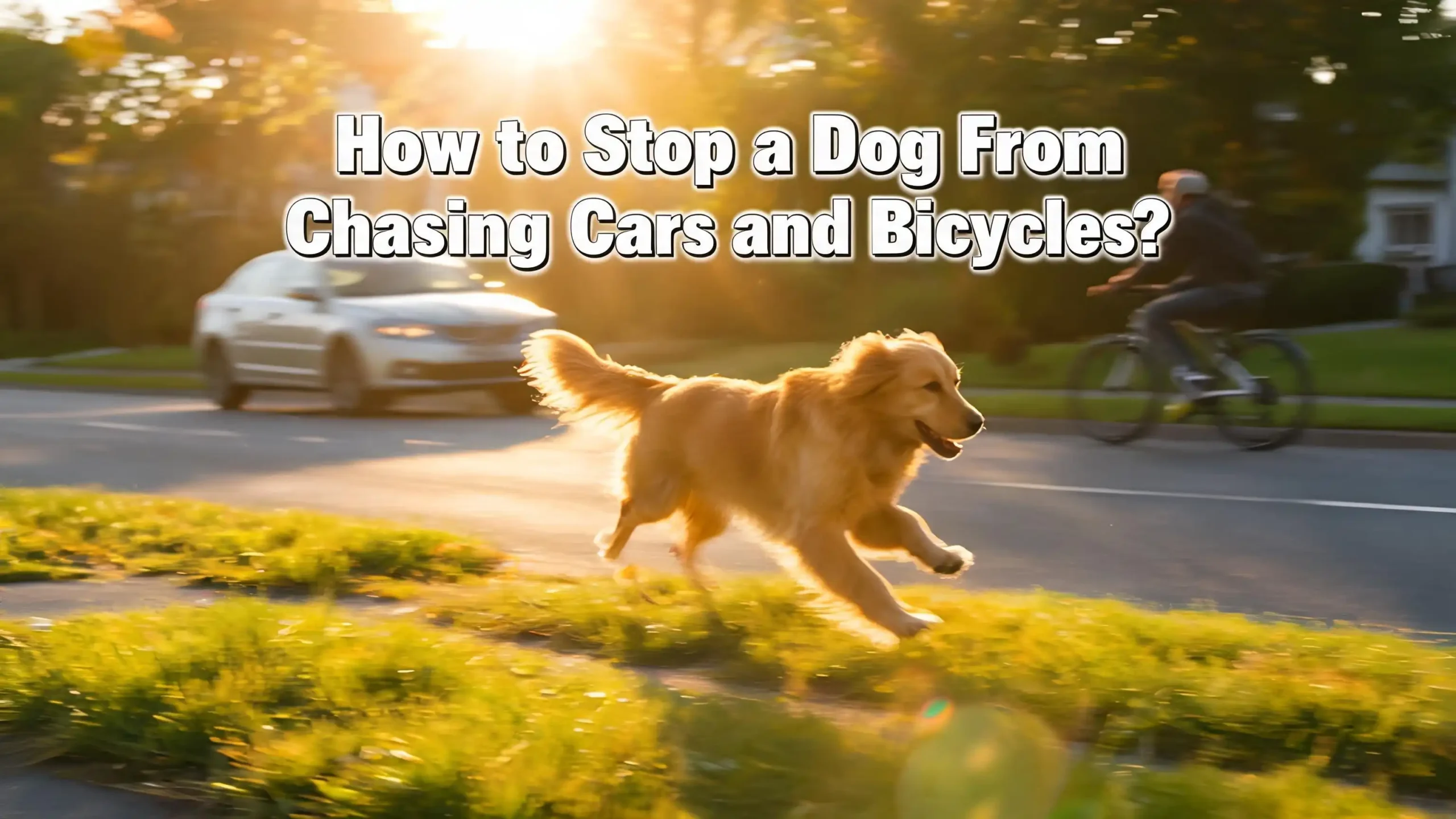
Does your dog lunge, bark, or bolt after every car or bicycle that passes by? You are not alone. Thousands of dog owners deal with this stressful and dangerous behavior every single day. A dog that chases moving vehicles puts itself, drivers, cyclists, and even you at serious risk of injury.
The good news is this behavior is very trainable, and with the right steps, you can teach your dog to stay calm around moving vehicles.
This guide covers exactly why dogs chase cars and bikes, how the behavior works in the dog’s brain, and most importantly, a clear and proven step-by-step plan to stop it for good.
Keep reading because by the end, you will have everything you need to walk your dog safely near any road or bike path.
Key Takeaways
- Chasing is a natural instinct, not a sign that your dog is bad or aggressive. It is driven by prey drive, territorial instincts, or excitement, and almost any breed can develop this habit.
- The behavior is genuinely dangerous. A dog that chases cars can be hit by a vehicle, cause a road accident, or pull you off your feet. A dog that chases cyclists can cause a serious crash or bite someone in the heat of the moment.
- Punishment does not work and can actually make things worse. Yelling at or physically correcting your dog while it is mid-chase increases anxiety and does not address the root cause of the behavior.
- Counterconditioning and response substitution are the most effective methods. These science-backed techniques rewire your dog’s emotional response to moving vehicles so that instead of chasing, your dog looks to you for a reward.
- Management and training must work together. While you are teaching your dog new behaviors, you must also prevent opportunities for the dog to rehearse chasing. Every chase your dog completes makes the habit stronger.
- Consistency is everything. Short, daily training sessions done consistently over weeks produce far better results than occasional long sessions. Patience and repetition are your most powerful tools.
Why Do Dogs Chase Cars and Bicycles?
Before you can fix a problem, you need to understand where it comes from. Dogs do not chase cars and bicycles out of spite or stubbornness. The behavior is hardwired into their biology. Every dog carries a predatory sequence in its genetics, a series of instinctive behaviors that include searching, stalking, chasing, grabbing, and biting. In domesticated dogs, this sequence is often incomplete, but the chasing part remains very much alive.
When a car speeds past or a cyclist whizzes by, the fast movement triggers your dog’s prey drive automatically. The brain registers a fast-moving object and sends a simple signal: chase it. This happens faster than your dog can think about it, which is why commands like “no” often fail in the moment. The reaction is reflexive before it is rational.
Certain breeds are especially prone to this behavior. Sighthounds like Greyhounds and Whippets were bred specifically to chase fast-moving targets. Herding breeds like Border Collies, Australian Shepherds, and German Shepherds have sharp, motion-triggered vision that makes them hyper-aware of anything that moves. Terriers, bred for high prey drive, also struggle intensely with this behavior. However, it is important to understand that any dog, regardless of breed, can develop car or bicycle chasing habits, especially if the behavior has been allowed to continue unchecked.
Another contributing factor is territorial instinct. Some dogs chase cars not because they see them as prey, but because they see them as intruders entering or passing through their territory. When the car drives away and disappears, the dog’s brain registers this as a victory. It “worked.” The dog successfully chased the intruder away, which makes it more likely to repeat the behavior next time.
Understanding the Real Dangers of This Behavior
It is easy to brush off car chasing as an annoying habit, but the risks are very real and very serious. A dog that chases cars or bicycles is a danger to itself and to the people around it. Understanding exactly what can go wrong is an important step in motivating yourself to address the problem seriously.
The most obvious danger is physical injury or death. If a dog breaks free from a leash or escapes a yard and runs into traffic, the outcome can be fatal. Even a car traveling at a low speed can cause life-threatening injuries to a dog. Drivers may swerve suddenly to avoid hitting the dog, creating the risk of a road accident that injures people in vehicles or nearby pedestrians.
The danger to cyclists is equally serious. A dog running at a bicycle can cause the rider to crash, especially if the dog gets close to the wheels. Cyclists have been thrown from their bikes, suffered road rash, broken bones, and worse, as a result of dogs charging at them. In some cases, a dog mid-chase can bite the cyclist’s leg or ankle. This creates legal liability for the dog’s owner and trauma for everyone involved.
There is also a physical danger to you as the handler. Large dogs that lunge hard can pull you off balance and onto the ground. Shoulder injuries, wrist sprains, and falls are common injuries reported by owners of dogs that lunge after vehicles. Even with a smaller dog, an unexpected lunge near a busy road is a dangerous situation for both of you.
Beyond physical harm, a dog that repeatedly practices chasing will become harder and harder to manage over time. The behavior intensifies with each repetition. Every single successful chase reinforces the habit. This is why early intervention matters so much.
Safety Rules to Follow While Training
Before you start any formal training, you need to put some immediate safety measures in place. Training takes time, and you cannot allow your dog to practice chasing while you are working on stopping it. Safety management protects your dog, other people, and you during the training period.
The first rule is to always use a leash outdoors. This may seem obvious, but it is non-negotiable. Even in areas where off-leash walking is permitted, a dog that chases vehicles must stay leashed until the behavior is fully resolved. Use a standard six-foot flat leash, not a retractable leash. Retractable leashes give your dog too much freedom and too much momentum to build before you can react.
Choose the right walking routes during training. Avoid high-traffic roads and popular cycling paths when you first start working with your dog. Walk in quieter areas where exposure to cars and bikes is limited and predictable. This gives you control over how and when your dog encounters the trigger.
Consider using a front-clip harness or a head halter during training sessions. These tools give you better physical control than a collar and reduce the risk of your dog breaking free during a lunge. A front-clip harness redirects your dog’s momentum toward you rather than away from you when it pulls forward.
Secure your yard. If your dog has been chasing cars from behind a fence, it has already been rehearsing the behavior and getting rewarded by the feeling of “chasing off” each vehicle. A privacy fence that blocks the dog’s view of the road is helpful. Do not leave your dog unsupervised in a yard that offers a clear view of traffic.
Build Basic Obedience First
Strong training results depend on a foundation of basic obedience. You cannot expect your dog to listen to a complex cue near a busy road if it has not mastered simple commands in a calm environment first. Before moving into car or bicycle specific training, make sure your dog reliably knows a few key commands.
Start with sit and stay. Your dog should be able to sit and hold the position for at least 30 seconds without breaking, even when mildly distracted. Practice this inside the house, then in the yard, and then on short walks before adding the challenge of traffic.
Teach your dog to walk on a loose leash. A dog that constantly pulls on the leash is already in a state of arousal during walks, which makes it more reactive to everything it sees. Work on leash manners every single day. Reward your dog generously for walking calmly beside you.
The “Look at Me” or “Watch Me” command is especially important for this situation. This command teaches your dog to make eye contact with you on cue. It is a powerful tool because a dog that is looking at your face cannot simultaneously be fixated on a passing car. Practice this command by holding a treat near your face, saying “watch me,” and rewarding immediately when your dog makes eye contact. Build up to longer durations over time.
The “Let’s Go” redirect command is also useful. This teaches your dog to turn around and walk in the opposite direction with you. Practice this until your dog responds immediately and cheerfully. This command gives you an exit strategy when a trigger appears before your dog has a chance to react.
Step-by-Step: The Counterconditioning Method
Counterconditioning is the gold standard technique for changing how a dog feels about a trigger. Instead of just stopping the chasing behavior, counterconditioning changes the emotional response underneath it. Your goal is for your dog to associate passing cars and bikes with something positive, specifically high-value treats and praise from you.
Step 1: Find your dog’s threshold distance. Take your dog to a location where cars pass but start far enough away that your dog notices the car without reacting to it. This is called working “below threshold.” Your dog might glance at the car and then look back at you. That is the sweet spot. If your dog stiffens, fixates, or lunges, you are too close. Move farther back.
Step 2: Pair each car with a high-value treat. The moment a car appears in your dog’s view, deliver a small, delicious treat. Use something your dog absolutely loves such as small pieces of cooked chicken, hot dog, or cheese. Do not wait for your dog to react. The treat comes the instant the car appears and stops when the car passes out of sight. The sequence is: car appears, treat appears. Car disappears, treats stop.
Step 3: Watch for the “look back.” After a few repetitions, your dog will begin to look at you when it hears or sees a car approach. This is the moment you have been working toward. Your dog is now connecting cars with good things from you rather than something to chase. Reward this look back enthusiastically.
Step 4: Slowly decrease the distance. Once your dog is reliably looking back at you from a comfortable distance, very gradually move a little closer to the road. Go slowly. If your dog starts to react again, you have moved too fast. Take a step back and practice at the greater distance for a few more sessions first.
Step 5: Repeat with bicycles using the same process. Start at a distance where your dog notices the bike without reacting. Treat the appearance of the bicycle heavily. Build up slowly. Do not rush this process.
Teaching the “Leave It” Command
The “leave it” command is one of the most practical tools in your training kit for this situation. It teaches your dog to stop giving attention to something and redirect its focus to you instead. When trained well, “leave it” can interrupt the very beginning of a chase response before it builds into a full lunge.
Step 1: Start with a treat in your fist. Hold a treat in a closed fist and present it to your dog. Your dog will sniff, lick, and paw at your hand trying to get the treat. Say “leave it” calmly. Wait. The moment your dog pulls back and stops trying, even for just a split second, open your other hand and give a different, better treat from that hand. The message is: stop trying to get that thing, and something better will come from me.
Step 2: Progress to a treat on the floor. Place a treat on the floor and cover it with your foot. Say “leave it.” Reward with a treat from your hand when your dog stops trying to get it. Gradually move to placing the treat uncovered and rewarding your dog for looking away from it on the “leave it” cue.
Step 3: Practice with real-world distractions. Once your dog understands the concept, practice “leave it” with increasingly interesting items and eventually use it outdoors when a car or bicycle is at a comfortable distance. The goal is for your dog to hear “leave it” and immediately turn its attention to you.
Keep training sessions short, no more than five to ten minutes at a time. End every session on a success. Repetition builds reliability, and reliability builds safety.
Using Response Substitution to Replace Chasing
Response substitution takes counterconditioning one step further. Instead of simply changing your dog’s emotional response, you give your dog a specific alternative behavior to perform when it sees a car or bicycle. You are essentially replacing the chasing behavior with a behavior that is incompatible with chasing.
The most effective replacement behavior is sitting and maintaining eye contact with you while the trigger passes. A dog that is sitting and looking at your face cannot simultaneously be running after a car. The two behaviors cannot happen at the same time.
To train this, you use the same threshold-distance approach as counterconditioning. When a car or bike appears at a manageable distance, ask your dog to sit. Keep its attention with high-value treats. Reward generously while the trigger passes. Then release your dog and celebrate.
Gradually increase difficulty. Start with slow-moving or distant vehicles. Progress to faster cars, closer distances, and eventually bicycles which often trigger a stronger response. Never push your dog into a situation where it is already over threshold. Training only works when the dog is calm enough to think and respond.
This method is particularly powerful because it gives your dog a job to do. Dogs respond well to having a clear expectation. Rather than just being told to suppress an urge, your dog learns that there is a correct, rewarding thing to do when a vehicle appears.
Managing High Prey Drive Breeds
If you own a breed with a particularly strong prey drive, such as a Greyhound, Belgian Malinois, Siberian Husky, Jack Russell Terrier, Australian Cattle Dog, or German Shepherd, you need to approach training with some extra consideration. High prey drive does not mean your dog cannot be trained. It simply means the instinct is stronger and requires more consistent management.
For these breeds, mental and physical exercise before training sessions is very important. A dog that has been running, playing fetch, or working through a puzzle feeder comes to a training session less wired and more able to focus. Chasing behavior is often amplified by under-stimulation and pent-up energy.
Channel prey drive into legal, safe outlets. Fetch, flirt pole games, lure coursing, scent work, and treibball are all activities that give high-drive dogs a way to express their instincts constructively. When the prey drive gets a healthy outlet, your dog has less pressure building up that might explode when a bicycle zooms by.
Be realistic about your expectations for off-leash time with high-prey-drive breeds. Even a very well-trained dog from a prey-driven breed may never be 100% reliable off leash near traffic. This is not a training failure. It is a breed reality. Keeping a high-drive dog leashed near roads is the responsible, safety-first choice.
Work with a professional trainer if you have a high-drive breed that is reactive to vehicles. These dogs respond well to structured training programs and benefit enormously from the guidance of someone experienced with their specific instincts.
The Role of Desensitization in Stopping Chasing
Desensitization is a process of gradually exposing your dog to the thing that triggers it, at such a low intensity that no stress or reaction occurs. When used alongside counterconditioning, desensitization is one of the most effective behavior-change tools available. Together, these two methods are often called DS/CC by professional trainers.
The key principle of desensitization is that exposure must stay below the threshold of reaction at all times. If your dog is reacting, you have gone too far too fast. The goal is to expose your dog to the trigger at a level that it can observe calmly, pair that observation with something positive, and then very slowly increase the intensity of the trigger over many sessions.
For car chasing, this might look like: starting at 50 feet from the road where your dog notices cars but remains relaxed. Practicing there for a full week before moving to 40 feet. Practicing there for another week. The process is slow by design. Rushing desensitization causes setbacks.
For bicycle chasing, you can use a helper. Have a friend ride a bike slowly at a very long distance while you work with your dog at its threshold. Over sessions, the cyclist gradually comes closer, rides faster, or rides more frequently, but only at a pace your dog can handle.
The combination of slow exposure and positive pairing rewires the dog’s brain. What was once an automatic fear or excitement response to a moving vehicle becomes a conditioned cue to look at the owner for a treat.
Managing Triggers During Daily Walks
Real-world walks are full of unpredictable moments. Even while you are in the middle of a solid training program, a car might appear suddenly or a cyclist might zoom past before you can set up your training scenario. Having a practical plan for these moments is essential.
Practice the U-turn exit. The moment you spot a potential trigger before your dog does, calmly and cheerfully say “let’s go,” turn around, and move your dog away. You are not retreating in defeat. You are being strategic. You are preventing your dog from rehearsing the chase and setting the stage for a calmer response next time.
Increase distance proactively rather than reactively. When you see a car approaching or a cyclist in the distance, immediately start moving your dog away or to the side. Do not wait until your dog is already locked onto the target. Move early, when you can still redirect attention easily.
Use treats generously on every walk near traffic. Do not save treats only for formal training sessions. Every walk near a road is a training opportunity. Reward your dog every time it notices a car and stays calm. Reward every time it looks at you instead of lunging. Build a habit of your dog checking in with you during walks.
If your dog does lunge, stay calm. Do not yell or jerk the leash hard. Hold the leash steady, wait for your dog to stop pulling, and then redirect its attention back to you with a treat or your voice before moving away from the situation. Staying calm yourself helps your dog calm down faster.
Addressing Fence Running and Yard Chasing
Many dogs develop car and bicycle chasing habits right from their own backyard. If your dog runs along the fence and barks every time a car or cyclist goes by, it is getting highly rewarded by that behavior and bringing that habit out onto the street as well.
The first step is environmental management. Block your dog’s visual access to the road. A solid privacy fence is the most effective solution. If you have a chain-link fence, you can add privacy slats or a fence screen to reduce visibility. This is not a training fix, but it prevents the behavior from being rehearsed hundreds of times a day.
Supervise outdoor time. Do not leave your dog in the yard unattended if it fence-runs. Being present allows you to interrupt the behavior early and redirect your dog to something calmer before the excitement escalates.
Teach an incompatible behavior in the yard too. When a car passes outside, call your dog to you and reward it for coming. Practice “sit,” “down,” and “look at me” in the yard with the distraction of passing traffic in the background. This brings your indoor training skills into the outdoor environment where the behavior actually occurs.
Over time, use the same counterconditioning approach in the yard. Stand near the fence at a distance your dog can handle, reward your dog heavily every time a car passes, and gradually move closer to the fence as your dog’s reactions decrease.
When to Involve a Professional Dog Trainer
Most cases of car and bicycle chasing can be managed effectively by a committed owner following a structured training plan. However, there are situations where professional help is not just helpful but necessary.
If your dog’s chasing behavior has been ongoing for years and is deeply ingrained, a professional trainer with experience in behavior modification can help you build a realistic plan and guide you through the process. Long-standing habits are harder to change and benefit from expert oversight.
If your dog has ever bitten a cyclist or nipped at a car, this has moved beyond a nuisance behavior into a safety emergency. A certified applied animal behaviorist or a professional trainer with behavior-modification credentials should be involved immediately. Do not try to manage bite-risk behavior on your own.
If your dog becomes so reactive to vehicles that it cannot function on walks, such as spinning, screaming, or going completely over threshold at the sight of any vehicle, a consultation with a veterinarian is also a good idea. In some cases, underlying anxiety contributes significantly to reactivity, and a vet can assess whether behavioral medication would help make training more effective.
When choosing a professional, look for someone who uses positive reinforcement-based methods. Avoid trainers who rely primarily on pain or intimidation-based tools. Fear and pain can suppress a behavior temporarily but tend to create new problems and worsen anxiety over time.
Keeping Up Progress and Preventing Relapse
Stopping a dog from chasing cars and bicycles is not a one-time fix. It requires ongoing commitment, especially in the early months after behavior improvement begins. Dogs that have made great progress can experience setbacks if management drops and rehearsal opportunities creep back in.
Keep rewarding calm behavior near traffic even after your dog seems to have the habit beat. The occasional treat for staying calm near a busy road reminds your dog that the correct behavior is still worth performing. It keeps the association between vehicles and good things fresh in your dog’s memory.
Do not gradually loosen management rules too quickly. Many owners see improvement and start allowing their dog more freedom near roads before the behavior is truly stable. Stay cautious. A six-foot leash near traffic is a permanent safety habit, not a temporary training measure.
Practice maintenance sessions regularly. Take your dog to areas where cars and bikes pass and run through your counterconditioning exercises a few times a week indefinitely. Consistency over the long term is what produces a truly reliable result.
Celebrate your wins. When your dog sits calmly while a bicycle rolls past, that is a genuine achievement worth acknowledging. Training a dog out of a deeply instinctive behavior takes real effort. You and your dog deserve recognition for that progress.
Frequently Asked Questions
Why does my dog only chase bicycles and not cars?
Bicycles move at a speed and in a manner that more closely mimics prey movement compared to cars. They are quieter, move at a chase-worthy pace, and often wobble or change direction, all of which triggers a dog’s prey drive more intensely than fast-moving, loud, predictable cars. Some dogs also have a history of being chased back by a cyclist who pedaled away quickly, which reinforced the behavior. The training approach is the same regardless of the specific trigger.
Can I use a shock collar to stop my dog from chasing cars?
Most modern animal behaviorists and certified trainers do not recommend shock collars for this behavior. While aversive tools can suppress the outward chasing response in some dogs, they do not address the emotional trigger underneath the behavior. There is also a real risk that using pain-based correction while a car passes can create a negative association that increases anxiety and reactivity over time. Positive counterconditioning and response substitution are safer, more reliable, and create lasting change without fallout.
How long does it take to stop a dog from chasing vehicles?
This depends on the dog’s age, breed, how long the behavior has been happening, and how consistently you train. Some dogs show meaningful improvement within two to four weeks of daily structured training. Dogs with long-standing habits or very high prey drives may take several months of consistent work. The key is to never rush the process. Going too fast creates setbacks that cost more time in the long run.
My dog is great on a leash but chases everything off leash. Is this normal?
Yes, this is very common. The leash physically prevents the chase and also keeps your dog in a state of slight restraint that reduces its overall arousal. Off leash, the absence of that physical check allows prey drive to take over fully. This is why off-leash reliability around traffic requires far more advanced training than basic leash manners. Until your dog has a highly reinforced response-substitution behavior and a reliable recall in all conditions, keeping it leashed near roads is the safe and correct choice.
Should I punish my dog for chasing cars?
Punishing your dog for chasing is not recommended. Yelling, leash corrections, or physical punishment at the moment of a chase does not teach the dog what to do instead. It also adds fear and frustration to an already highly aroused state, which can increase anxiety and make the overall behavior worse. Dogs respond far better to being taught what the correct behavior is and then being rewarded generously for performing it.
At what age should I start training my dog not to chase vehicles?
The earlier the better. Puppies as young as eight to ten weeks old can begin learning basic focus and attention skills. If you start building positive associations with passing vehicles during puppyhood, you may prevent the chasing behavior from ever becoming established. However, it is never too late to start. Adult dogs, even seniors, are fully capable of learning new associations and behaviors with patient, consistent training.
My dog chases but never bites. Is it still dangerous?
Yes, absolutely. A dog does not need to bite to cause serious harm. A dog that runs into traffic can be killed or cause a car accident. A dog that charges at a cyclist can cause the cyclist to crash even without making contact. The lack of biting does not make chasing safe. It is still a behavior that must be addressed promptly and seriously.