
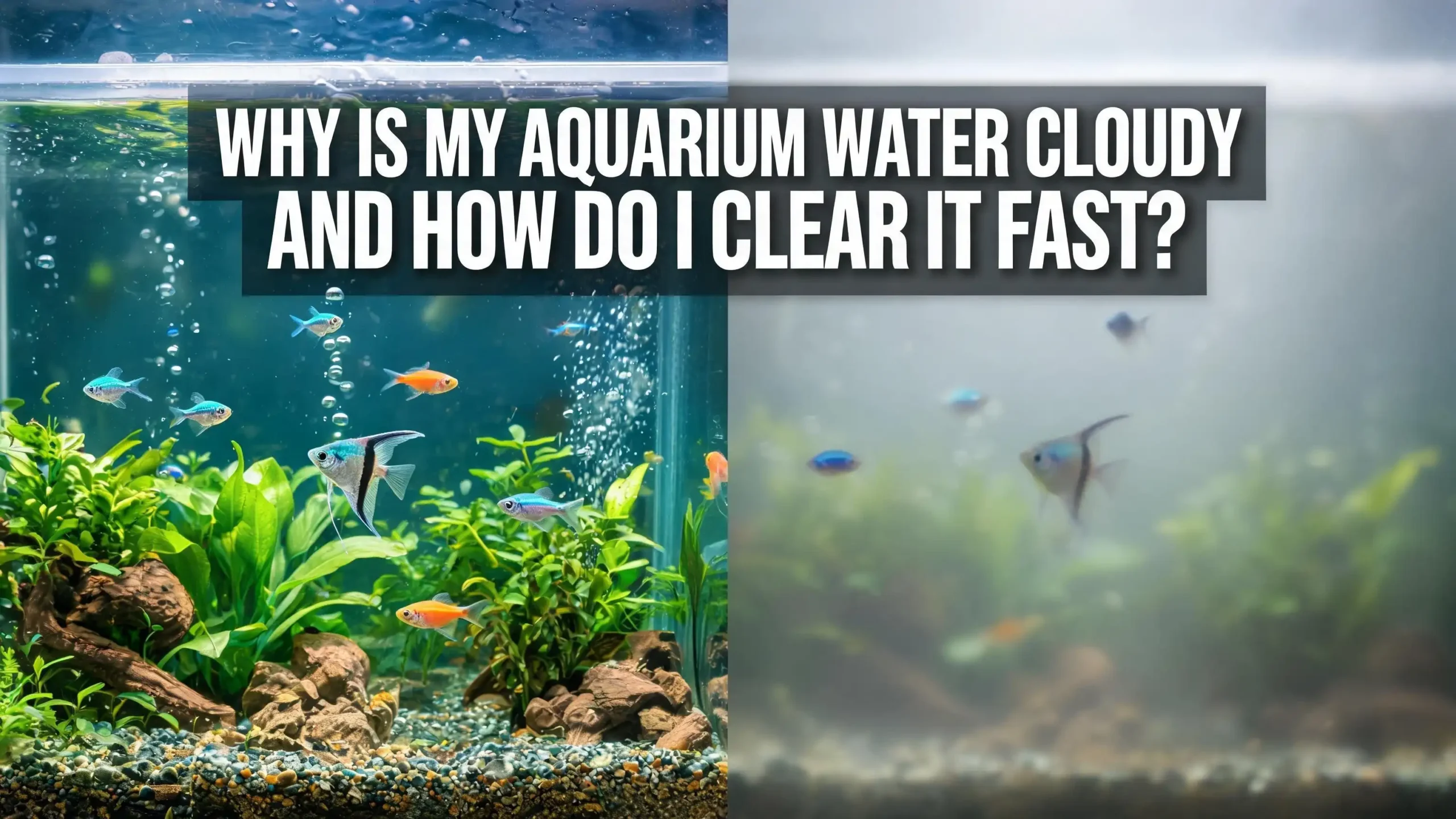
Why Is My Aquarium Water Cloudy and How Do I Clear It Fast?
You walk up to your fish tank expecting to see crystal clear water and vibrant fish. Instead, you see a foggy, milky mess. Your heart sinks. You start wondering if your fish are safe or if you did something wrong.
Cloudy aquarium water is one of the most common problems fish keepers face. It affects beginners and experienced hobbyists alike. The good news? Most causes of cloudy water are easy to identify and fix. Some require patience. Others need a quick hands on approach. Either way, your tank can look clear and beautiful again.
This guide breaks down every reason your aquarium water turns cloudy. It gives you practical, step by step solutions for each cause. You will learn what to do, what to avoid, and how to keep your water sparkling for the long term.
In a Nutshell
- Cloudy water in a new tank is usually a bacterial bloom. Millions of free floating bacteria multiply because beneficial filter bacteria have not established yet. This is normal during the nitrogen cycle and often resolves on its own within one to two weeks without intervention.
- White or grayish cloudiness points to bacteria or debris. Tiny particles from unwashed gravel, excess fish food, or fish waste can make water look hazy. A bacterial bloom produces a milky appearance with almost no visible particles floating in the water.
- Green cloudy water means an algae bloom is present. Free floating algae multiply rapidly due to excess light and high nutrient levels. A UV sterilizer or a complete blackout for seven to ten days can eliminate green water effectively.
- Overfeeding and overstocking are the top preventable causes. Too much food creates excess organic waste. Too many fish produce more ammonia and waste than the filter can handle. Both conditions fuel cloudiness in the water column.
- Your filter is the key to long term clarity. A mature filter filled with beneficial bacteria keeps water clean and clear. Avoid replacing filter media unnecessarily, and never over clean the biological media inside your filter.
- Brown or yellow water comes from tannins, not bacteria. Driftwood, leaves, and certain botanicals release natural compounds that tint the water. Activated carbon or chemical filtration media can remove tannins without harming your fish.
What Causes Cloudy Water in a Fish Tank
Cloudy aquarium water has several possible causes. Each one produces a slightly different look. Understanding the specific cause helps you pick the right fix.
Bacterial blooms are the most frequent cause, especially in new tanks. When the biological filter has not matured, free floating bacteria multiply in the water column. These bacteria feed on dissolved organic compounds from fish waste and uneaten food. The result is a milky, white haze that can appear within days of setting up a tank.
Particulate matter is another common cause. Dust from unwashed gravel, sand, or substrate can cloud the water immediately after setup. Fish waste, decaying plant matter, and leftover food also break down into tiny particles that float freely.
Algae blooms produce green cloudy water. Tiny single celled algae reproduce rapidly in tanks with too much light and excess nutrients. This type of cloudiness cannot be filtered out with standard mechanical filtration.
Finally, tannins from driftwood and botanical materials turn water brown or yellow. This is a chemical discoloration rather than a particle problem. The water may look like weak tea. Tannins are harmless to fish but reduce visual clarity.
Why New Tanks Get Cloudy (New Tank Syndrome Explained)
A freshly set up aquarium is a blank biological slate. On day one, there are virtually no beneficial bacteria present in the filter or on surfaces. This stage is often called New Tank Syndrome.
Within the first few days, microscopic organisms begin colonizing the tank. Beneficial nitrifying bacteria that process ammonia and nitrite have not had time to establish colonies yet. Meanwhile, other types of bacteria take advantage of available nutrients. They multiply rapidly in the water column, producing that familiar milky white cloudiness.
Adding too many fish at once makes this problem worse. More fish create more waste. More waste means more food for the free floating bacteria. The result is a thicker, more persistent bacterial bloom that can alarm new fish keepers.
The nitrogen cycle takes four to six weeks to complete in most aquariums. During this time, cloudiness may come and go. Many new hobbyists panic and start doing large water changes. This actually backfires because fresh water provides a new supply of minerals and nutrients that feed the bloom. The cloudiness returns, often worse than before.
The best approach for new tank cloudiness is patience. Test your water for ammonia and nitrite levels. If those readings stay safe, the bloom will resolve on its own as beneficial bacteria establish in the filter.
How to Identify the Type of Cloudiness in Your Tank
Before you fix the problem, you need to identify what type of cloudiness you have. A simple test can help you figure this out quickly.
Scoop some tank water into a clean white cup or bowl. Hold it up to a light source. Examine the color and clarity of the water carefully. The color tells you a lot about the root cause.
If the water looks milky white with no visible particles, you likely have a bacterial bloom. This is the most common type of cloudiness, especially in tanks less than three months old. The bacteria are too small to see individually, so the water just looks foggy.
If you can see tiny specks or particles floating in the water, the issue is probably debris. Unwashed substrate, fish waste, uneaten food, or stirred up sediment can all cause this. Mechanical filtration and water changes will help here.
If the water has a green tint, you have an algae bloom. Green water ranges from a slight tinge to full pea soup thickness. This type of cloudiness responds to light reduction and UV treatment.
If the water looks brownish or yellowish, tannins are the cause. Check for driftwood, catappa leaves, or other botanical materials in the tank. Tannins are completely natural and harmless but can reduce visibility.
How Overfeeding Creates Cloudy Water
Overfeeding is one of the most common mistakes aquarium owners make. It is also one of the easiest causes of cloudy water to fix.
When you add more food than your fish can eat in two to three minutes, the excess sinks to the bottom. It begins to decompose and releases dissolved organic compounds into the water. These compounds become fuel for bacteria in the water column. The bacterial population explodes, and the water turns cloudy.
New fish keepers are especially prone to overfeeding. Many beginners worry their fish will starve. In reality, most aquarium fish can go several days without food and remain perfectly healthy. Fish in the wild do not eat on a strict daily schedule.
The fix is straightforward. Feed your fish only what they can consume in two minutes. Remove any uneaten food with a net or siphon. Feed once or twice a day at most. If you have bottom feeders, use sinking pellets that reach them directly instead of dumping extra flakes into the water.
Watch for accidental overfeeding too. Children sometimes dump extra food into the tank. Pet sitters often feed far too much while you are away. If a large amount of food enters the tank at once, do an immediate large water change of 50% or more to remove the dissolved organic compounds before they trigger a severe bloom.
Why Overstocking Leads to Persistent Cloudiness
Too many fish in a tank create more waste than the filter can process. This excess waste feeds bacteria in the water column and results in chronic cloudy water.
Every fish produces ammonia through its gills and waste. Beneficial bacteria in the filter convert ammonia into nitrite and then into nitrate. This is the nitrogen cycle. But the filter can only handle a certain biological load. When the fish population exceeds that capacity, waste builds up faster than the bacteria can process it.
The outcome is a persistent haze that does not clear up no matter how many water changes you do. The excess nutrients keep feeding free floating bacteria, and the cycle of cloudiness continues. Ammonia and nitrite levels may also rise, putting your fish at risk of illness or death.
A general rule is one inch of fish per gallon of water for small community fish. This guideline is not perfect for every species, but it gives a reasonable starting point. Research the adult size and waste production of every species you keep.
If your tank is overstocked, you have two options. You can rehome some fish to reduce the bioload. Or you can upgrade your filtration to handle the extra waste. Adding a second filter or switching to a larger canister filter increases the surface area available for beneficial bacteria to colonize.
How to Fix Bacterial Bloom Cloudiness
A bacterial bloom looks alarming, but it is usually harmless. The milky white water is caused by millions of bacteria suspended in the water column. Here is how to handle it.
For new tanks, the best solution is to do nothing. Let the nitrogen cycle run its course. The beneficial bacteria in your filter will eventually outcompete the free floating bacteria for nutrients. Once the filter bacteria establish strong colonies, the water clears naturally. This process takes one to two weeks in most cases.
Resist the urge to do large water changes. Each water change introduces fresh minerals and nutrients that restart the bloom cycle. Small water changes of 10% to 15% are acceptable if ammonia or nitrite levels climb above safe thresholds.
For established tanks that suddenly develop a bacterial bloom, look for the trigger. Did you recently replace your filter media? Did you deep clean your filter? Did you add medication that killed beneficial bacteria? Did someone dump excess food into the tank? Identifying the trigger helps you prevent the bloom from returning.
Adding activated carbon to the filter can help absorb dissolved organic compounds that feed the bloom. Seeding the tank with mature filter media from a healthy established aquarium also speeds up recovery. A handful of gravel or a used sponge from a cycled tank introduces millions of beneficial bacteria immediately.
Avoid using UV sterilizers for bacterial blooms. While UV light kills the bacteria in the water, it does not address the underlying imbalance. The bloom often returns once you turn the UV off.
How to Clear Green Cloudy Water (Algae Blooms)
Green water is caused by free floating single celled algae that reproduce in the water column. These algae are too small for standard filter media to catch. Standard water changes barely make a dent because the algae multiply faster than you can remove them.
The root cause is almost always too much light combined with excess nutrients. Tanks placed near windows receive direct sunlight that fuels algae growth. Leaving aquarium lights on for more than eight to ten hours a day also promotes blooms. High levels of nitrates and phosphates from fish waste and uneaten food provide the nutrients algae need.
The blackout method is one popular fix. Turn off the aquarium light completely. Wrap the tank in blankets or towels to block all light. Keep the tank in total darkness for seven to ten days. Algae cannot photosynthesize without light, so they die off. Do a large water change before and after the blackout to remove dead algae and excess nutrients.
Be cautious with this method if you have live plants. Extended darkness can stress or kill light dependent plants. A blackout of three to four days is safer for planted tanks.
A UV sterilizer is the most effective long term solution for green water. UV light alters the DNA of algae cells so they can no longer reproduce. Run the UV sterilizer continuously. Within a few days, the green water clears dramatically. Do water changes afterward to remove the dead algae from the system.
Reduce your lighting schedule to six to eight hours daily. Move the tank away from direct sunlight. Feed less and remove excess waste regularly to cut nutrient levels.
How to Remove Brown or Yellow Water from Tannins
Brown or yellow water does not come from bacteria or algae. It comes from tannins, which are natural organic compounds found in driftwood, dried leaves, seed pods, and other botanicals.
Many fish keepers add driftwood to their tanks for a natural look. But new driftwood releases tannins into the water, sometimes for weeks or months. The water takes on a tea colored appearance. Some species of fish actually benefit from tannins. Blackwater fish like bettas, tetras, and discus thrive in tannin rich water because it mimics their natural habitat.
If you prefer clear water, several options exist. Soaking or boiling driftwood before placing it in the tank removes a large amount of tannins upfront. Change the soaking water daily until it runs clear. Boiling speeds up this process significantly.
Activated carbon placed in the filter absorbs tannins effectively. Replace the carbon every three to four weeks because it becomes saturated and stops working. Chemical filtration media designed specifically for tannin removal also works well and can be recharged with a bleach soak.
Regular partial water changes gradually dilute tannins. If the driftwood continues releasing tannins for a long period, combine water changes with carbon filtration for the best results.
The Role of Your Filter in Water Clarity
Your filter is the single most important piece of equipment for keeping water clear. It performs three types of filtration: mechanical, biological, and chemical. Each type plays a role in preventing and fixing cloudy water.
Mechanical filtration physically traps debris like fish waste, uneaten food, and substrate dust. Sponges, filter floss, and fine poly pads all serve this function. A clogged mechanical filter loses its ability to catch particles. Clean or replace mechanical media regularly.
Biological filtration is where beneficial bacteria live. These bacteria convert toxic ammonia into nitrite and then into less harmful nitrate. This process keeps the water chemistry stable and prevents bacterial blooms. The brown buildup on your filter sponges and media is actually colonies of beneficial bacteria. Never scrub this away.
Chemical filtration uses media like activated carbon to absorb dissolved substances from the water. Carbon removes tannins, odors, medications, and some dissolved organic compounds.
Clean your filter media gently. Rinse sponges and biological media in a bucket of old tank water. Never rinse them under tap water because chlorine kills beneficial bacteria instantly. Only clean the filter when water flow slows down noticeably. Over cleaning destroys the bacterial colonies that keep your water clear.
How Water Changes Help (and When They Hurt)
Water changes are a fundamental part of aquarium maintenance. They remove waste, lower nitrate levels, and replenish minerals. But the timing and size of water changes matter when dealing with cloudy water.
For cloudy water caused by debris and particulate matter, a 25% to 50% water change combined with gravel vacuuming helps immediately. The siphon removes waste sitting on the substrate. Fresh water dilutes the floating particles. Run the filter after the change to catch remaining specks.
For bacterial blooms in new tanks, water changes can actually make things worse. Fresh tap water contains minerals and nutrients that feed the free floating bacteria. The bloom clears temporarily but returns within a day or two, often thicker than before. During the cycling process, limit water changes to small amounts only when ammonia or nitrite levels become dangerous.
For green water, a large water change before and after a blackout treatment removes dead algae and excess nutrients. Do not rely on water changes alone to fix an algae bloom. The algae reproduce faster than water changes can remove them.
For brown tannin water, regular weekly water changes of 20% to 30% gradually dilute the tannins. Pair water changes with activated carbon in the filter for faster results.
Always treat new water with a dechlorinator before adding it to the tank. Chlorine and chloramine in tap water kill beneficial bacteria and can trigger new bacterial blooms.
Step by Step Plan to Clear Cloudy Water Fast
Follow this plan to diagnose and fix your cloudy water as quickly as possible. Each step builds on the previous one. Start at the top and work your way down.
Step one: Identify the type of cloudiness. Scoop water into a white cup. Check the color. White or gray means bacterial bloom or debris. Green means algae. Brown or yellow means tannins.
Step two: Test your water parameters. Check ammonia, nitrite, nitrate, and pH levels. High ammonia or nitrite requires immediate small water changes to protect your fish. Normal readings mean the cloudiness is less urgent.
Step three: Stop feeding for 24 to 48 hours. This reduces the organic waste entering the water. Your fish will be fine without food for a day or two.
Step four: Check and clean your filter if needed. Make sure water flows freely through the filter. Gently rinse mechanical media in old tank water. Do not replace biological media unless it is falling apart.
Step five: Vacuum the substrate. Use a gravel siphon to remove debris sitting on and in the substrate. Combine this with a 25% water change using dechlorinated water.
Step six: Reduce lighting. Cut your light schedule to six hours a day or less. If algae is the problem, consider a full blackout.
Step seven: Add activated carbon. Place fresh activated carbon in the filter to absorb dissolved organic compounds, tannins, and other discoloration agents.
Step eight: Wait and observe. Most cloudy water problems improve within three to seven days after taking these steps. Monitor water parameters daily during this period.
How to Prevent Cloudy Water from Coming Back
Preventing cloudy water is easier than fixing it. A few consistent habits keep your tank clear for the long term.
Feed sparingly. Give your fish only what they can eat in two to three minutes. Remove any uneaten food promptly. Consider fasting your fish one day per week to reduce waste buildup.
Maintain your filter on a regular schedule. Check filter flow every week. Clean mechanical media monthly in old tank water. Leave biological media alone unless flow is severely restricted. Never replace all filter media at once.
Perform regular water changes. A 20% to 30% water change every week removes accumulated nitrates and dissolved organic compounds. Use a gravel vacuum to clean the substrate during each change.
Do not overstock your tank. Research the adult size and bioload of every species before buying. Give your filter capacity to handle all the waste your fish produce.
Control your lighting. Use a timer to keep lights on for six to eight hours daily. Position the tank away from windows that receive direct sunlight.
Rinse new substrate thoroughly before adding it. Wash gravel, sand, or soil in a bucket until the rinse water runs clear. This prevents initial cloudiness from dust and fine particles.
Add live plants to your aquarium. Plants absorb ammonia, nitrates, and other nutrients that fuel bacterial and algae blooms. They compete directly with the organisms that cause cloudy water.
Common Mistakes That Make Cloudy Water Worse
Many fish keepers accidentally make their cloudy water problem worse. Knowing these mistakes helps you avoid them.
Replacing all filter media at once removes the entire colony of beneficial bacteria. This resets the nitrogen cycle and triggers a new bacterial bloom. If you must replace media, do it in stages over several weeks.
Over cleaning the filter has the same effect. Scrubbing sponges under running tap water kills the beneficial bacteria. Rinse gently in old tank water instead. Clean only when flow is noticeably reduced.
Doing massive water changes during a bacterial bloom feeds the bloom with fresh nutrients. The cloudiness returns within hours. Stick to small water changes only when ammonia or nitrite levels demand it.
Adding too many fish at once overwhelms the biological filter. Introduce new fish slowly. Add two or three at a time with at least two weeks between additions. This gives the filter bacteria time to grow and match the increased bioload.
Using medications without understanding their effects can kill beneficial bacteria. Some treatments wipe out the filter biology entirely. Always research medications before adding them. Run activated carbon in the filter after treatment to remove residual chemicals.
Ignoring water testing leaves you guessing about the cause. A simple test kit reveals ammonia, nitrite, and nitrate levels that point directly to the source of the problem. Test weekly and after any changes to the tank.
When Cloudy Water Becomes Dangerous for Fish
Most cloudy water is a cosmetic problem, not a health emergency. But in some situations, cloudiness signals a real threat to your fish.
High ammonia levels often accompany bacterial blooms in uncycled or crashed tanks. Ammonia burns fish gills, damages organs, and can be fatal at concentrations above 1 ppm. If your ammonia reading is elevated, perform an immediate 30% to 50% water change and add a water conditioner that detoxifies ammonia.
Nitrite spikes can occur alongside cloudiness during the nitrogen cycle. Nitrite prevents fish blood from carrying oxygen. Fish gasp at the surface and show brown or tan discolored gills. Treat with water changes and add aquarium salt at a rate of one tablespoon per five gallons to block nitrite uptake.
A sudden severe bloom after a large food spill is dangerous. Decomposing food produces ammonia rapidly. The resulting bacteria can also include pathogenic strains that overwhelm fish immune systems. Remove as much food as possible immediately. Do multiple large water changes of 50% or more.
Watch your fish behavior during any cloudy water episode. Clamped fins, lethargy, gasping at the surface, and loss of appetite are all warning signs. These symptoms indicate the water chemistry has shifted into a harmful range. Act immediately with water changes and water testing. If symptoms persist after correcting water parameters, consult an aquatic veterinarian or experienced fish keeper for guidance.
Long Term Habits for Crystal Clear Aquarium Water
Achieving consistently clear water requires a long term maintenance routine. Here are the habits that keep successful aquariums looking their best.
Build a strong biological filter. Choose filter media with high surface area like foam, sponges, or ceramic based media. Allow the brown beneficial bacteria to build up over time. A mature filter with three or more months of growth handles waste far more effectively than a new one.
Stick to a weekly maintenance schedule. Test water parameters, perform a partial water change, vacuum the substrate, and check filter flow every week. Consistency prevents small problems from becoming big ones.
Stock your tank gradually. Add fish slowly over weeks and months, not all at once. Each new addition increases the bioload. Give the filter time to adjust before adding more.
Keep live plants in your aquarium. Fast growing stem plants, floating plants, and hardy species like java fern and anubias absorb excess nutrients from the water. They reduce the fuel available for bacterial blooms and algae.
Monitor your feeding habits closely. Feed a variety of high quality foods in small portions. Alternate between flakes, pellets, frozen foods, and live foods. Observe your fish eating and adjust the amount based on how quickly they finish.
Invest in good filtration. A filter rated for a tank larger than yours provides extra capacity. Many experienced fish keepers run filters rated for double their tank size. The extra biological and mechanical filtration keeps water noticeably clearer.
Clean your aquarium glass weekly with an algae scrubber. Algae on glass panels makes the entire tank look hazy even when the water itself is clear. A quick scrub before each water change keeps your viewing panels spotless.
Frequently Asked Questions
How long does it take for cloudy aquarium water to clear up on its own?
Bacterial blooms in new tanks typically clear within one to two weeks. The water gradually becomes less milky as beneficial bacteria establish in the filter and outcompete the free floating bacteria. During this time, avoid doing large water changes. Test ammonia and nitrite levels every other day to make sure they stay within safe limits. If the bloom persists beyond three weeks, check your feeding habits and filter condition.
Can cloudy water kill my fish?
Cloudy water itself is usually not deadly. The bacteria causing the bloom are generally harmless. However, the conditions that trigger cloudiness can be dangerous. High ammonia and nitrite levels that accompany bacterial blooms can injure or kill fish. Always test your water during a cloudy episode. If ammonia exceeds 1 ppm or nitrite is above 0.5 ppm, do an immediate partial water change to protect your fish.
Should I use a water clarifier to fix cloudy water?
Water clarifiers work by clumping tiny particles together so the filter can catch them. They are effective for debris related cloudiness. They do not solve bacterial blooms or algae blooms. If you use a clarifier, make sure your filter is clean enough to handle the extra load. The water may look worse briefly before it clears as the clumped particles settle or get filtered out.
Why does my aquarium get cloudy after a water change?
This is usually caused by dissolved gases in the tap water. Water from the tap is under pressure, and dissolved air comes out of solution once it enters the low pressure environment of your aquarium. Tiny micro bubbles form and make the water look hazy. This clears on its own within a few hours. If cloudiness persists beyond 24 hours after a water change, the cause is likely biological and related to filter disruption.
How often should I clean my filter to prevent cloudy water?
Clean mechanical filter media like sponges and floss once a month. Rinse them gently in a bucket of old tank water. Biological filter media should only be cleaned when water flow slows down significantly. For most filters, this means every three to six months at most. Never clean all filter media at the same time. Stagger cleanings to preserve your colony of beneficial bacteria.
Will adding more fish make my cloudy water worse?
Yes. Adding more fish increases the amount of waste in the tank. This gives free floating bacteria more food and extends the bloom. Wait until the water is completely clear and your nitrogen cycle is stable before adding new fish. When you do add fish, introduce them slowly in small groups with at least two weeks between each addition.