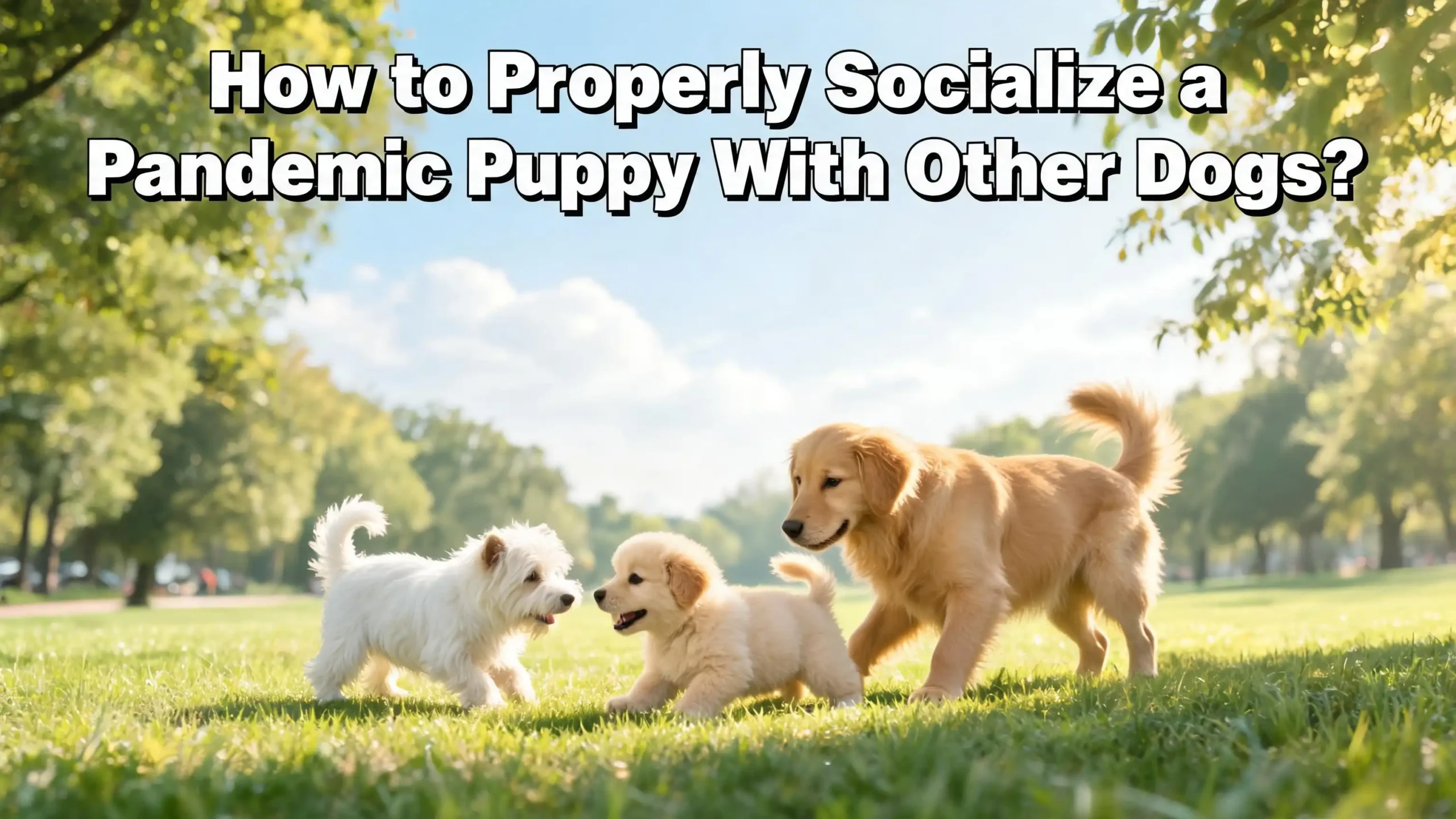
How to Properly Socialize a Pandemic Puppy With Other Dogs?
If you got a puppy during the pandemic, you are not alone. Millions of people brought home furry companions during lockdowns. But many of these puppies missed a critical window of social development.
Research shows that 97% of pandemic puppies display at least one problem behavior by 21 months of age. Fear, reactivity, and aggression around other dogs are some of the most common challenges owners now face.
The good news? It is never too late to help your dog learn how to interact safely and calmly with other dogs. The process will take patience, consistency, and the right techniques.
This guide walks you through proven, actionable strategies used by professional trainers and veterinary behaviorists.
In a Nutshell
- Pandemic puppies missed critical socialization during lockdowns, and studies confirm a significant increase in fear and aggression traits in dogs raised during this period. The first three months of a puppy’s life are the most important for social development. Dogs that missed this window often react with fear, barking, lunging, or avoidance around other dogs.
- Start with distance and observation. Do not force your dog into close contact with other dogs right away. Begin by letting your dog watch other dogs from a safe distance where they remain calm. Reward calm behavior with treats and praise.
- Use desensitization and counterconditioning. These are the two most effective methods recommended by veterinary behaviorists. Slowly decrease the distance between your dog and other dogs while pairing each exposure with something your dog loves, such as high value treats.
- One on one playdates beat dog parks for fearful dogs. Controlled introductions with a single calm, well socialized dog will give your pandemic puppy a much better experience than a chaotic dog park environment.
- Professional help is valuable and often necessary. A certified dog behaviorist or a positive reinforcement trainer can create a customized plan for your dog’s specific fears and triggers. Do not hesitate to seek expert guidance.
- Patience is everything. Socialization for an adult or adolescent dog takes weeks or months, not days. Celebrate small wins and avoid rushing the process.
Why Pandemic Puppies Struggle With Other Dogs
The COVID 19 pandemic created a unique generation of dogs. Puppies born or purchased during 2020 and 2021 grew up in homes where social distancing was the norm. Walks were shorter, visitors were rare, and trips to public places were limited or impossible. This meant these puppies missed their critical socialization period, which occurs between 3 and 16 weeks of age.
During this window, puppies are naturally open to new experiences. They learn what is safe by being gently exposed to different people, animals, sounds, and environments. When that window closes without enough positive exposure, dogs often develop fear based responses to unfamiliar things.
A study published in the journal Animals found a significant increase in personality traits related to fear and aggression in dogs who experienced lockdown restrictions. Research from the Royal Veterinary College revealed that 67% of pandemic puppies pulled on the lead, 57% jumped on people, and 31% showed separation related behaviors.
The result is a dog that may bark, growl, lunge, or shut down completely at the sight of another dog. This is not a sign of a “bad” dog. It is the direct result of a missed developmental milestone. Understanding this root cause is the first step to solving the problem. Your dog is not being defiant. Your dog is scared or overwhelmed, and they need your help to learn that other dogs are not a threat.
How to Recognize Signs Your Dog Needs Socialization Help
Before you begin working on socialization, you need to know what a poorly socialized dog looks like. Some signs are obvious, but others are easy to miss.
Fear or anxiety around other dogs is the most common sign. Your dog may tuck their tail, flatten their ears, try to hide behind you, or refuse to move. Some dogs tremble or pant heavily in the presence of other dogs. These are all fear responses.
Reactive behavior is another major red flag. Lunging, barking, growling, or snapping at dogs on walks shows your dog feels threatened. Reactive dogs are not always aggressive, but their behavior can escalate without proper intervention. Cornell University’s veterinary behavior department notes that reactivity can become aggression if left unaddressed.
Overly excited behavior also signals poor socialization. A dog that pulls wildly, whines, or cannot focus at all when another dog is nearby has not learned how to be calm in the presence of other animals. This is often mistaken for friendliness, but it usually reflects a lack of social skills.
Avoidance and shutdown can be less obvious. A dog that refuses to sniff, turns away, or seems “frozen” may be in a state of learned helplessness. They are not calm; they have given up trying to communicate discomfort.
Watch your dog’s body language carefully. Lip licking, yawning, whale eye (showing the whites of the eyes), and a stiff body are all stress signals. Recognizing these signs early lets you intervene before your dog reaches a panic point. This awareness is the foundation of every successful socialization plan.
The Critical Role of Distance in Early Socialization
Distance is the single most important tool you have when socializing a fearful or reactive pandemic puppy. The closer your dog is to another dog, the more intense their emotional response will be. The farther away they are, the easier it is for them to stay calm and learn.
Start by finding your dog’s “threshold distance.” This is the point at which your dog notices another dog but does not react with barking, lunging, or freezing. For some dogs, this might be 50 feet. For others, it could be the length of a football field. There is no wrong starting point.
Once you know this distance, position yourself and your dog at that range. Let your dog observe the other dog calmly. Reward them with high value treats like small pieces of chicken, cheese, or hot dogs every time they look at the other dog and remain calm. You are teaching your dog that seeing another dog predicts something wonderful.
Over multiple sessions, you will gradually close the distance. Reduce it by just a few feet at a time. If your dog starts reacting, you have moved too close too fast. Go back to the previous distance and work there for a few more sessions.
Pros of this method: It builds confidence slowly and safely. Your dog sets the pace, which reduces stress and prevents setbacks. It forms the basis of every professional desensitization plan.
Cons of this method: It takes time and consistency. Progress can feel slow, and you need access to spaces where you can control the distance between your dog and other dogs. Bad weather or unpredictable off leash dogs can disrupt sessions.
How Desensitization and Counterconditioning Work Together
Desensitization and counterconditioning are the gold standard techniques used by veterinary behaviorists to change how dogs feel about their triggers. They work together as a powerful pair.
Desensitization means exposing your dog to another dog at a low enough intensity that they do not react. You start below your dog’s threshold and gradually increase exposure over time. The goal is for your dog to become less sensitive to the presence of other dogs.
Counterconditioning means changing your dog’s emotional response. Instead of feeling fear at the sight of another dog, your dog learns to feel happy because that sight now predicts treats, praise, or play. You are literally rewiring the emotional association in your dog’s brain.
Here is how to use them together. Position your dog at their threshold distance from another dog. The moment your dog notices the other dog, feed them a delicious treat. Repeat this many times. Your dog sees a dog, your dog gets a treat. Over time, your dog will begin to look at another dog and then look back at you with expectation instead of fear.
Pros of desensitization and counterconditioning: This method addresses the root cause of the problem, which is the emotional response, not just the outward behavior. It is recommended by the American Kennel Club, VCA Hospitals, and veterinary behavior specialists. The results tend to last because you are changing how your dog feels, not just suppressing symptoms.
Cons of desensitization and counterconditioning: It requires precise timing. If you feed treats too late or when your dog is already over threshold, you can accidentally reinforce fear. It also requires repeated practice, and progress is not linear. You may have good days followed by setbacks.
Parallel Walking: A Safe Way to Introduce Your Dog to Another Dog
Parallel walking is one of the safest and most effective techniques for introducing a reactive or fearful dog to another dog. Professional trainers and rescue organizations use this method regularly.
The idea is simple. Two dogs walk in the same direction, side by side, but with plenty of space between them. Both dogs are on leash and both handlers maintain control. The dogs can see each other but are not facing each other or forced to interact.
Start with a large gap between the dogs, around 20 to 30 feet or more. Walk at a relaxed pace in the same direction. Let both dogs sniff the ground, look around, and settle into the walk. Over several minutes, if both dogs remain calm, you can gradually decrease the distance between them.
Do not allow the dogs to greet each other during the first few walks. The goal is neutral coexistence, not direct interaction. Sniffing face to face creates pressure and can trigger reactive behavior. Keep the walks short and positive. End on a good note while both dogs are still calm.
After multiple successful parallel walks with decreasing distance, the dogs may begin to show interest in each other with relaxed body language like loose tails, soft eyes, and playful bows. At this point, you can allow a brief, controlled sniff and then redirect the dogs back to walking.
Pros of parallel walking: It removes the pressure of direct interaction. Both dogs can acclimate at their own pace. It builds positive associations through a shared activity.
Cons of parallel walking: You need a second person with a calm, well socialized dog. It requires an open space free from surprise dogs. Weather and scheduling can make regular sessions difficult.
Setting Up One on One Playdates for Your Pandemic Puppy
One on one playdates give your pandemic puppy a controlled, low pressure opportunity to interact with another dog. These are far more effective than dog parks for fearful or undersocialized dogs because you can manage every aspect of the environment.
Choose a playmate carefully. The ideal candidate is a calm, well socialized adult dog that has a gentle play style. Avoid dogs that are overly energetic, pushy, or have a history of resource guarding. Ask a friend, family member, or neighbor who has a dog that fits this profile.
Select a neutral location. Neither dog should have a territorial advantage. A fenced backyard that belongs to neither dog, a quiet section of a park, or a rented training space all work well. Avoid introducing dogs inside a house where space is tight and territorial behavior is more likely.
Keep the first meeting short. Ten to fifteen minutes is plenty. Let the dogs sniff each other briefly, then redirect them to parallel walking or free exploration of the space. Watch both dogs closely for stress signals. If either dog shows stiff body language, lip curling, hard staring, or excessive mounting, calmly separate them and increase the distance.
Pros of one on one playdates: You have full control over the environment and the interaction. Your dog can build a positive relationship with one dog at a time, which builds general confidence. Successful playdates create a foundation for meeting additional dogs in the future.
Cons of one on one playdates: Finding the right playmate can take time. There is still a risk of a negative interaction if the other dog’s temperament is misjudged. You need to coordinate schedules with the other owner, which requires effort and commitment.
Why Dog Parks Are Risky for Pandemic Puppies
Dog parks seem like an obvious choice for socialization, but they are actually one of the worst environments for a fearful or undersocialized pandemic puppy. The lack of structure and supervision can do more harm than good.
In a dog park, you cannot control who enters. Your fearful puppy could be approached by a large, overexcited dog within seconds. This kind of overwhelming experience can set back weeks or months of careful socialization work. A single bad encounter at a dog park can create a lasting negative association with other dogs.
The energy level at dog parks is typically high. Dogs are running, barking, chasing, and wrestling. For a dog that is still learning to feel safe around other dogs, this sensory overload can trigger a full panic response or reactive outburst.
There is also the risk of injury. Without proper supervision and matched play styles, bullying and rough play can escalate quickly. Many dogs at parks have their own behavior challenges, and their owners may not intervene when they should.
That said, dog parks can serve a purpose as an observation tool early in your socialization plan. Take your dog to the outside of a dog park fence and let them watch from a safe distance. Reward calm behavior. This lets your dog see and smell other dogs without any risk of direct contact.
Pros of using a dog park as a distance observation tool: Free, accessible, and provides exposure to many different dogs at once.
Cons of entering a dog park with an undersocialized dog: Unpredictable environment, risk of traumatic encounters, no control over other dogs’ behavior, and potential for injury. For pandemic puppies, the risks almost always outweigh the benefits until the dog has developed a solid foundation of confidence.
Group Socialization Classes: What to Look For
Structured socialization classes can be an excellent resource for pandemic puppies. A well run class provides controlled exposure to other dogs in a safe, supervised setting. However, not all classes are created equal, and choosing the wrong one can cause harm.
Look for classes led by a certified trainer who uses positive reinforcement methods. The American Kennel Club and the Association of Professional Dog Trainers both recommend force free training. Avoid any class that uses prong collars, shock collars, or punishment based techniques. Research shows that aversive training methods increase fear and aggression in dogs.
A good class will keep dogs at appropriate distances. The trainer should manage the space so that no dog is forced into close contact before it is ready. Classes should be small, ideally no more than six to eight dogs. Large classes with too many dogs create chaos and stress.
Ask if the class separates dogs by temperament or confidence level. A class that groups timid dogs together and keeps them separate from highly confident dogs will give your pandemic puppy a better chance to succeed. Some trainers offer specific classes for reactive or fearful dogs, which can be ideal.
Observe a class before enrolling your dog. Watch how the trainer manages the space, how they handle reactive dogs, and whether the dogs seem relaxed or stressed. Trust your instincts. If the environment feels chaotic or the trainer seems impatient, keep looking.
Pros of socialization classes: Professional supervision, structured environment, exposure to a variety of dogs, and access to expert guidance.
Cons of socialization classes: Cost varies and can add up over time. A poorly run class can traumatize your dog. Finding the right class may take research and trial visits.
The Power of Calm Observation and Reward Based Training
Not all socialization requires direct interaction with other dogs. One of the most effective strategies is teaching your dog to calmly observe other dogs from a distance and get rewarded for doing so.
This technique reframes socialization from “your dog must play with other dogs” to “your dog must feel safe and calm around other dogs.” Many professional trainers emphasize that true socialization is about building neutrality, not forcing friendships. Your dog does not need to greet every dog they see. They need to feel okay in the presence of other dogs.
Find a bench near a walking path or sit in your car in a parking lot near a pet store. Let your dog watch other dogs walk by. Every time your dog looks at another dog without reacting, mark the behavior with a calm “yes” and offer a treat. Over time, your dog will start choosing to look at you instead of fixating on other dogs.
This builds what trainers call an “auto check in.” Your dog sees a trigger, pauses, and looks at you for guidance instead of lunging or barking. This is a major milestone in the socialization process.
Pros of calm observation training: Zero risk of negative interactions. You can practice almost anywhere. It builds impulse control and a strong communication bond between you and your dog.
Cons of calm observation training: It does not replace direct dog to dog socialization entirely. Some dogs become frustrated watching but never interacting. You still need to eventually progress to closer interactions for well rounded social skills.
Practice calm observation several times per week. Keep sessions short, around 10 to 15 minutes. End each session before your dog becomes tired or overwhelmed. Consistency matters more than session length.
How to Handle Setbacks During the Socialization Process
Setbacks are a normal and expected part of socializing a pandemic puppy. Progress is rarely a straight line. Your dog may have three excellent walks in a row and then react strongly on the fourth. This does not mean your training has failed. It means your dog is still learning.
Common causes of setbacks include fatigue, illness, a change in routine, or an unexpected close encounter with an off leash dog. Hormonal changes can also play a role, especially in adolescent dogs between 6 and 18 months old. Dogs in this age range often go through a secondary fear period where previously neutral things suddenly become scary again.
When a setback happens, go back to basics. Increase the distance between your dog and other dogs. Return to the threshold where your dog was last successful and rebuild from there. Do not punish your dog for reacting. Punishment increases fear and damages the trust between you and your dog.
Keep a log of your training sessions. Note the date, location, your dog’s distance from other dogs, and their response. Over time, this log will show you patterns and real progress that might be hard to see day to day. It will also help you identify specific triggers that cause setbacks.
Be kind to yourself during this process. Many pandemic puppy owners feel guilt or frustration. Remember that 82% of pandemic puppy owners reported challenges with their dog’s behavior, according to the Royal Veterinary College study. You are not alone, and your dog’s struggles are not your fault. What matters is that you are doing the work now.
When to Seek Professional Help
Some socialization challenges are beyond what you can safely manage on your own. If your dog has bitten another dog or person, shows severe fear that prevents them from functioning, or if their reactivity is getting worse despite your efforts, it is time to call in a professional.
Look for a Certified Applied Animal Behaviorist (CAAB) or a veterinarian who is board certified in behavior (DACVB). These professionals have advanced education in animal behavior and can diagnose underlying issues like anxiety disorders that may require medication alongside behavior modification.
A certified professional dog trainer (CPDT) who specializes in reactive or fearful dogs is another excellent option. Make sure they use force free, positive reinforcement methods. Ask for references and check credentials. Avoid anyone who guarantees results or promises to “fix” your dog in a set number of sessions. Behavior change takes time and honest trainers will tell you that.
Professional help is especially important if your dog’s reactivity puts others at risk. A behaviorist can help you create a management plan to keep everyone safe while you work on long term behavior change. They may also recommend tools like head halters, front clip harnesses, or calming supplements to support your training plan.
Pros of professional help: Expert assessment, customized plan, safety guidance, and access to techniques you may not know. A professional can catch things you might miss and help you avoid common mistakes.
Cons of professional help: Cost can be significant. Sessions typically range from $100 to $300 per hour depending on the professional. Finding a qualified, force free practitioner in your area may also require some research. But the investment almost always pays off in improved quality of life for both you and your dog.
Building Your Dog’s Confidence Through Enrichment
Socialization is easier when your dog feels confident in general. Mental enrichment and confidence building exercises strengthen your dog’s ability to cope with new experiences, including meeting other dogs.
Puzzle feeders, sniff walks, and training games all build mental resilience. A “sniff walk” lets your dog lead the walk and explore smells at their own pace. This is not about covering distance. It is about letting your dog process their environment through their strongest sense. Sniffing lowers a dog’s heart rate and reduces stress hormones, which makes them calmer and more receptive to learning.
Teach your dog new skills at home. Simple cues like “touch” (nose to your hand), “find it” (searching for hidden treats), and “place” (going to a specific mat or bed) all build confidence. Each successful learning experience tells your dog they can handle challenges. This confidence transfers to social situations.
Agility equipment, even at a beginner level, can also help. Walking over low obstacles, going through a tunnel, or stepping onto a wobble board teaches your dog to try new things and trust themselves. Pair every success with generous praise and rewards.
Pros of enrichment for socialization: Builds overall confidence that transfers to all areas of life. Reduces general anxiety. Strengthens the bond between you and your dog. Low cost and easy to do at home.
Cons of enrichment for socialization: Does not replace direct socialization work with other dogs. Some dogs with severe anxiety may not engage with enrichment activities until their baseline stress level is managed through other means.
Creating a Long Term Socialization Plan That Works
Socializing a pandemic puppy is not a one time event. It is an ongoing process that should become part of your regular routine. A structured, long term plan gives you and your dog the best chance of lasting success.
In the first two weeks, focus on observation and distance work. Walk your dog in areas where they can see other dogs from far away. Reward calm behavior. Keep a training log.
During weeks three through six, begin parallel walks with a known, calm dog. Gradually decrease the distance between the two dogs over multiple sessions. Add calm observation exercises near parks, pet stores, or walking paths.
From weeks six through twelve, introduce short, supervised one on one playdates with well socialized dogs. Start with five to ten minutes and gradually increase the duration. Continue distance work and parallel walking with new dogs to broaden your dog’s positive experiences.
After three months, evaluate your dog’s progress. Are they calmer on walks? Can they see another dog without reacting? Do they show relaxed body language during playdates? If yes, you can begin exploring structured group classes or slightly busier social environments.
This timeline is flexible. Your dog may move faster or slower. The key is to never skip steps or rush the process because you feel social pressure from other dog owners. Your dog’s emotional wellbeing comes first. Every small step forward is a victory worth celebrating.
Frequently Asked Questions
Can you socialize a pandemic puppy after the critical socialization window has closed?
Yes, you absolutely can. While the critical socialization window closes around 16 weeks of age, dogs continue to learn throughout their lives. The process takes longer and requires more patience with an older dog, but desensitization, counterconditioning, and controlled exposure can produce significant improvement. Many pandemic puppies have made remarkable progress with consistent, positive training.
How long does it take to socialize a pandemic puppy with other dogs?
There is no fixed timeline. Some dogs show improvement within a few weeks, while others need several months of consistent work. The severity of your dog’s fear, their temperament, your consistency with training, and whether you use professional guidance all affect the speed of progress. Expect the process to take at least two to three months for noticeable change, and ongoing maintenance after that.
Is it safe to take my reactive pandemic puppy to a dog park?
It is generally not recommended to take a reactive or fearful dog inside a dog park. The unpredictable environment can overwhelm your dog and create negative associations. Instead, use the dog park as a distance observation tool. Stand outside the fence with your dog and reward calm behavior. Only consider entering a dog park after your dog has demonstrated consistent calm behavior in less intense social situations.
What treats work best for socialization training?
Use high value treats that your dog finds irresistible. Small pieces of cooked chicken, cheese, hot dogs, or freeze dried liver tend to work well for most dogs. The treat needs to be special enough that it can compete with the intensity of seeing another dog. Avoid using your dog’s regular kibble for this type of training, as it may not be motivating enough.
Should I use a professional trainer or can I socialize my pandemic puppy on my own?
Many owners can make good progress on their own using the techniques described in this guide. However, if your dog shows severe reactivity, has a bite history, or if you feel unsure about reading your dog’s body language, a professional trainer or certified behaviorist is strongly recommended. A professional can help you avoid mistakes that might set back your progress and can create a plan specific to your dog’s needs.
What should I do if my dog has a bad interaction with another dog during socialization?
Stay calm. Separate the dogs safely without yelling or jerking the leash. Give your dog space and time to decompress after the incident. Do not attempt another dog interaction for at least a few days. When you resume training, go back to a distance and intensity level where your dog was previously successful. One bad interaction does not erase all your progress, but it does mean you need to rebuild slowly and carefully.