How To Stop A Puppy From Biting Using Flavored Chew Toys?
Your hands look like a battlefield. Your shoes have tiny puncture marks. Your ankles sting from surprise attacks. Puppy biting is one of the most common frustrations new dog owners face, and it can test your patience every single day.
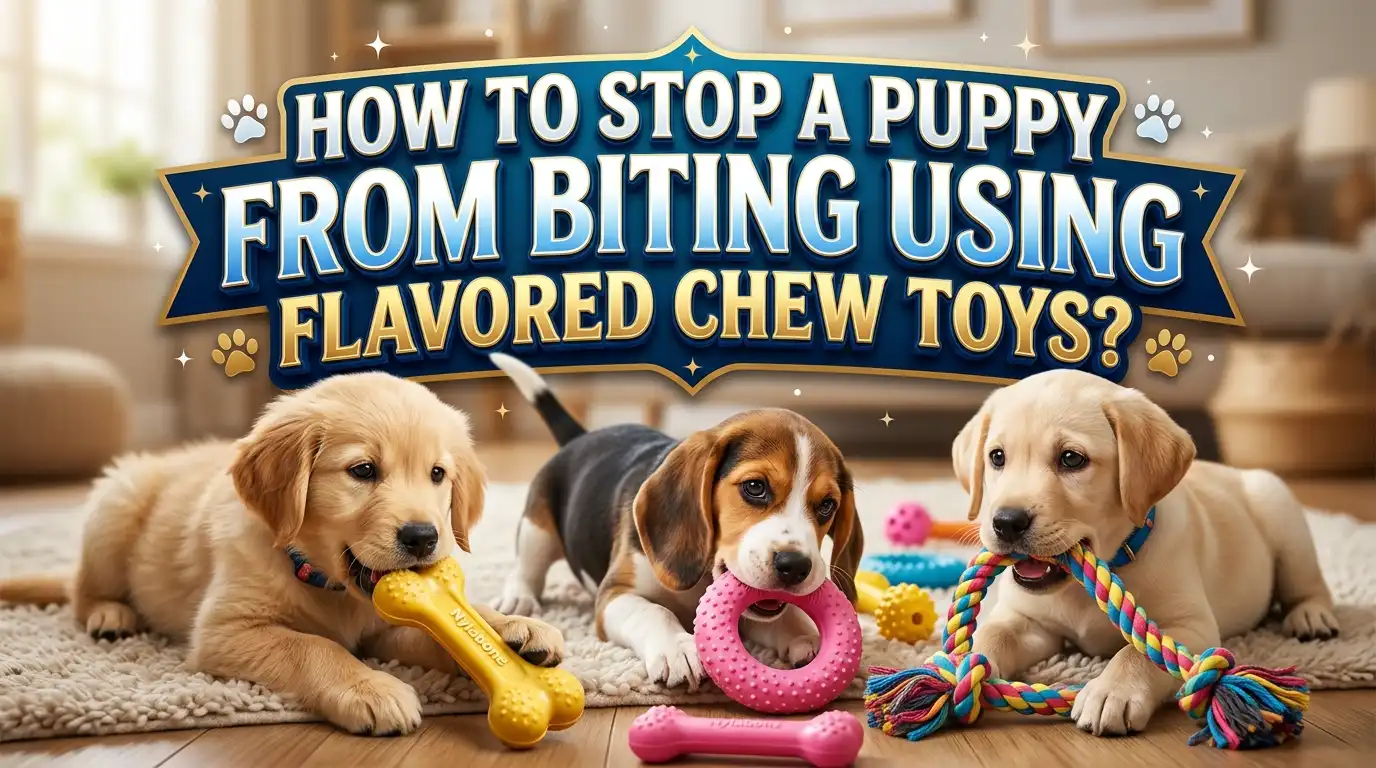
Here is the good news: flavored chew toys are one of the most effective tools you can use to redirect your puppy’s biting. These toys tap into your puppy’s natural urge to chew and give those sore gums something satisfying to sink into.
This guide will walk you through exactly how to use flavored chew toys to stop puppy biting. You will learn why puppies bite in the first place, which types of flavored toys work best, and how to pair chew toys with simple training techniques.
Key Takeaways
- Puppy biting is natural behavior tied to teething, play, and exploration. Puppies begin teething around 12 to 16 weeks of age and continue through 6 to 8 months. During this period, their gums are sore and they instinctively chew on everything within reach to ease the discomfort.
- Flavored chew toys redirect biting by offering a more attractive target than your hands, shoes, or furniture. The embedded flavor (such as chicken, bacon, or peanut butter) holds your puppy’s attention for longer periods compared to plain, unflavored toys.
- Consistency is the most important factor in stopping puppy biting. You must redirect your puppy to the flavored chew toy every single time biting occurs. Random or inconsistent responses confuse your puppy and slow the learning process.
- Choose the right size and material for your puppy’s breed, age, and chewing strength. Rubber and nylon are the two most common safe materials. Rubber works well for gentle to moderate chewers, while nylon suits stronger chewers.
- Flavored chew toys work best alongside other training methods like bite inhibition exercises, the “yelp and withdraw” technique, and structured play sessions. No single tool solves the problem alone.
- Supervision is essential any time your puppy uses a chew toy. Inspect toys regularly for damage, and replace them once they show significant wear to prevent choking hazards.
Why Do Puppies Bite in the First Place
Understanding why your puppy bites is the first step to fixing the behavior. Puppies are not biting because they are aggressive or mean. They are biting because it is hardwired into their development.
Teething is the primary driver. Puppies are born without teeth. Their 28 baby teeth start emerging around 2 to 4 weeks of age. Between 12 and 16 weeks, those baby teeth begin falling out and 42 adult teeth push through the gums. This process creates significant discomfort, pressure, and itchiness. Chewing relieves that pain, much like a teething ring helps a human baby.
Puppies also bite during play. In a litter, puppies learn social boundaries by mouthing each other. When one puppy bites too hard, the other yelps and stops playing. This teaches something called bite inhibition, the ability to control jaw pressure. Your puppy has been removed from the litter and now uses you as a play partner, which means those sharp teeth land on your skin instead.
Exploration is another reason. Puppies do not have hands. Their mouth is their primary tool for investigating the world around them. They mouth objects and people to understand texture, taste, and even social dynamics.
Finally, boredom and excess energy fuel biting. A puppy with nothing to do will create something to do, and that usually involves chomping on whatever is available. Recognizing these root causes helps you choose the right approach and set realistic expectations.
How Flavored Chew Toys Actually Work to Reduce Biting
Flavored chew toys solve the biting problem by giving your puppy a superior alternative. The concept is straightforward: if your puppy has something tastier and more satisfying to chew on, your fingers become far less interesting.
The flavor in these toys is typically infused into the material during manufacturing. Common flavors include chicken, bacon, beef, peanut butter, and even vanilla. Unlike a treat that disappears in seconds, the flavor in a well-made chew toy releases slowly over weeks or even months. This sustained taste keeps your puppy engaged with the toy repeatedly.
The texture of flavored chew toys is also important. Many are designed with ridges, bumps, or grooves that massage sore gums. This physical sensation addresses the teething discomfort directly. Your puppy quickly learns that chewing the toy feels better than chewing on your shoe or your hand.
Positive association is the underlying mechanism at work here. Every time your puppy chews the flavored toy, it experiences a reward: pleasant taste plus pain relief. Over time, the puppy’s brain builds a strong connection between the urge to chew and the toy itself. This is basic operant conditioning, and it works remarkably well with puppies.
Pros: Flavored chew toys require no advanced training skills. They work passively once your puppy is engaged. They also promote dental health by scraping plaque from teeth.
Cons: Some puppies lose interest quickly if the flavor fades. The initial cost can add up if you need multiple toys. Some low quality options may contain unsafe chemicals or artificial flavors.
Choosing the Right Flavored Chew Toy for Your Puppy
Not all flavored chew toys are created equal. Picking the wrong one can lead to frustration for both you and your puppy. Three main factors should guide your decision: material, size, and flavor.
Material comes first. Rubber chew toys, like those made from natural rubber, are soft enough for young puppies and gentle on developing teeth. They work well for puppies under 4 months old or light chewers. Nylon chew toys are harder and more durable. They suit puppies over 4 months old and breeds known for strong jaws, like Labrador Retrievers or German Shepherds. Always look for labels that say BPA free, phthalate free, or FDA compliant.
Size matters more than most owners realize. A toy that is too small presents a choking hazard. A toy that is too large may discourage your puppy from picking it up. Follow the manufacturer’s weight and breed recommendations. As a general rule, the toy should be large enough that your puppy cannot fit the entire thing in its mouth.
Flavor preference varies from puppy to puppy. Chicken and bacon flavors tend to be the most universally appealing. Peanut butter is another reliable option. Some puppies prefer beef or liver. If your puppy ignores one flavor, try another before giving up on flavored toys entirely.
Pros: A properly chosen toy matches your puppy’s specific needs and keeps engagement high. Safe materials protect your puppy’s health.
Cons: Finding the right combination may require some trial and error. Puppies outgrow toys quickly, which means you will need to buy larger sizes as they grow.
Step by Step Guide to Redirecting Biting With Flavored Chew Toys
This is the core technique. Follow these steps every time your puppy starts biting your hands, feet, clothing, or furniture.
Step 1: Stay calm. Do not yell, pull away quickly, or push your puppy. Sudden movements can excite a puppy and make biting worse. Take a breath and prepare to redirect.
Step 2: Say “no” or “ouch” in a firm but calm voice. This signals to your puppy that the biting is unwanted. Keep the tone neutral. A loud shriek can startle some puppies, while others interpret it as an exciting game sound.
Step 3: Immediately offer the flavored chew toy. Have it within arm’s reach at all times during the early training weeks. Place the toy directly in your puppy’s mouth or hold it close to their nose so they catch the scent of the flavor.
Step 4: Praise your puppy the moment it takes the toy. Use a happy voice and say something consistent like “good chew” or “yes.” This verbal praise reinforces the idea that chewing the toy is the correct choice.
Step 5: Repeat without exception. You may need to do this 20, 50, or even 100 times before the pattern becomes automatic for your puppy. Puppies learn through repetition. Every single redirect counts.
Pros: This method is gentle, effective, and builds a trusting relationship between you and your puppy. It teaches your puppy what to do instead of just punishing what not to do.
Cons: It requires patience and constant availability of the toy. Some puppies may initially spit out the toy and go right back to biting.
The Yelp and Swap Method Using Flavored Toys
This technique combines natural bite inhibition training with flavored toy redirection. It mimics what happens in a litter of puppies and is recommended by organizations like the ASPCA and Oregon Humane Society.
When your puppy bites too hard, let out a short, high pitched yelp. This sound mirrors what a littermate would do. It tells your puppy, “That hurt.” Immediately go limp with your hand. Do not pull away, because a retreating hand looks like a fun toy to chase.
After the yelp, pause all play for 5 to 10 seconds. Turn your body slightly away. This brief withdrawal of attention teaches your puppy that biting ends the fun.
Then, offer the flavored chew toy as a peace offering. When your puppy takes the toy and begins chewing, resume gentle interaction and praise. This sequence teaches two lessons at once: hard biting stops playtime, and chewing the toy restarts it.
Over several weeks, gradually lower the threshold. At first, only yelp for hard bites. Then yelp for medium bites. Eventually, yelp for any tooth contact on skin. This progressive approach teaches your puppy full bite inhibition rather than just reducing force.
Pros: This method works with your puppy’s natural instincts. It teaches gentle mouth control, which is valuable for the rest of the dog’s life. Combined with a flavored toy, the redirection has a high success rate.
Cons: Some puppies become more excited by the yelp sound instead of calming down. If your puppy escalates after the yelp, skip the sound and go straight to the silent pause and toy swap.
Setting Up a Chew Toy Station in Your Home
Strategic placement of flavored chew toys around your home makes redirection fast and easy. You should not have to run to another room to grab a toy when your puppy bites. Speed matters in redirection. The quicker you offer the toy, the clearer the lesson is for your puppy.
Place a flavored chew toy in every room where your puppy spends time. Keep one by the couch, one near the kitchen, one in the hallway, and one in the bedroom. Think of these as “chew stations.” You can use small baskets or trays to keep them visible and organized.
Keep extra toys in your pockets during the first few months. This is especially useful during walks, training sessions, and greetings with new people. When your puppy lunges to mouth a visitor’s hand, you can instantly offer the toy as a substitute.
Consider having a dedicated chew area where your puppy goes for quiet chew time. Place a comfortable mat or bed in a calm corner and introduce flavored toys there. Over time, your puppy will associate that spot with relaxation and chewing, which helps manage energy levels.
Rotate the toys across stations every few days. Puppies get bored with the same toy in the same place. Moving a chicken flavored bone from the living room to the bedroom can renew your puppy’s interest. This simple rotation trick extends the useful life of each toy.
Pros: Chew stations remove the delay between biting and redirection. They also help your puppy learn that chewing is welcome in specific areas.
Cons: Multiple toys scattered around the house can look cluttered. Some puppies may drag toys to unwanted locations.
Freezing Flavored Chew Toys for Extra Teething Relief
Frozen chew toys are a powerful upgrade for puppies in peak teething stages, typically between 4 and 6 months of age. The cold numbs sore gums and reduces inflammation, providing relief that room temperature toys cannot match.
Many rubber flavored chew toys are designed to be frozen. Simply place the toy in your freezer for two to three hours before giving it to your puppy. The cold rubber combined with the embedded flavor creates a soothing and tasty experience that keeps puppies engaged for extended periods.
You can also enhance the freezing method by stuffing hollow flavored toys with wet food, plain yogurt, or mashed banana before freezing. This adds a layer of reward that your puppy has to work for. The licking and chewing action required to extract the frozen filling gives your puppy a long lasting activity that replaces destructive biting.
This method works especially well during the late afternoon and evening, when many puppies experience peak energy and increased biting. Offering a frozen flavored toy before the “witching hour” can prevent biting episodes before they start.
Pros: Frozen toys address pain directly, which reduces the root cause of much teething related biting. They keep puppies occupied longer than room temperature alternatives. The cost is essentially zero if you already own the toys.
Cons: Some puppies dislike the cold sensation at first. Frozen toys can drip as they thaw, which may leave wet spots on floors or furniture. Not all toy materials are freezer safe, so check the packaging.
Using Flavor Variety to Maintain Your Puppy’s Interest
One of the biggest challenges with chew toys is fading interest. A puppy that was obsessed with a bacon flavored bone last week might completely ignore it today. This is normal. Puppies, much like young children, crave novelty.
The solution is simple: keep three to five different flavors available and rotate them regularly. Offer one or two flavors for a few days, then put them away and bring out different ones. When the original flavors reappear after a break, they feel new again to your puppy.
Pay attention to which flavors your puppy gravitates to most. Some puppies strongly prefer meat based flavors like chicken or beef, while others respond better to peanut butter or cheese. Knowing your puppy’s preference helps you keep a “high value” flavor in reserve for difficult moments, like when your puppy is overly excited or overtired and biting increases.
You can also increase appeal by adding a thin coat of flavored spread to the surface of an existing chew toy. A light smear of dog safe peanut butter or a small amount of freeze dried liver powder can renew a forgotten toy instantly. This trick is especially useful if you do not want to buy new toys frequently.
Pros: Flavor rotation keeps toys effective over the long term. It prevents waste by reviving toys your puppy has lost interest in. It also helps you discover your puppy’s flavor preferences.
Cons: Buying multiple flavors increases upfront cost. Adding spreads can create mess and may attract ants if left out.
Common Mistakes That Make Puppy Biting Worse
Many well meaning owners accidentally reinforce biting behavior without realizing it. Avoiding these mistakes will speed up your training progress.
Mistake 1: Using your hands as toys. Wrestling, roughhousing, or waving your fingers in front of your puppy’s face teaches them that hands are acceptable bite targets. Always use a toy as a buffer between your skin and your puppy’s teeth.
Mistake 2: Punishing your puppy for biting. Physical corrections like tapping the nose, holding the mouth shut, or alpha rolling can damage your relationship with your puppy. These methods do not teach your puppy what to do instead. They only create fear and confusion.
Mistake 3: Inconsistency across family members. If one person redirects with a chew toy and another person allows nipping during play, the puppy receives mixed signals. Everyone in the household must follow the same rules and use the same redirection technique.
Mistake 4: Giving the chew toy too late. If you wait until the biting episode is already over, the puppy does not connect the toy with the biting behavior. The redirect must happen within seconds of the bite.
Mistake 5: Ignoring overtiredness. Puppies often bite more when they are exhausted. If your puppy becomes frantic and no toy helps, it may be time for a nap, not more training. Place your puppy in its crate with a safe chew toy and let it rest.
Pairing Flavored Chew Toys With Structured Play Sessions
Flavored chew toys work even better when you integrate them into daily play routines. Structured play teaches your puppy healthy ways to burn energy and reduces the frantic biting that comes from boredom.
Start each play session by engaging your puppy with a game of gentle tug using a rope toy or a soft flavored toy. Tug games teach your puppy to put their mouth on toys rather than on people. Keep sessions short, around 5 to 10 minutes, and end the game before your puppy becomes overexcited.
After active play, transition to a calm chew session by offering a flavored chew toy. This teaches your puppy an important skill: how to settle down. The flavor motivates the puppy to lie down and work on the toy, which naturally lowers arousal levels.
A good daily schedule for a young puppy includes three to four short play sessions followed by chew time and then a nap. This cycle of activity, chewing, and rest mirrors a puppy’s natural energy patterns and dramatically reduces random biting throughout the day.
Use a consistent verbal cue like “go chew” when you hand over the flavored toy. Over time, your puppy will respond to this cue by seeking out a toy on its own. This is a powerful moment in training because your puppy is now self managing the urge to bite.
Pros: Structured play prevents boredom driven biting and strengthens the bond between you and your puppy. Adding the chew toy at the end creates a predictable wind down routine.
Cons: It requires time and planning. Busy schedules may make it hard to maintain consistency, especially during the first few months.
When to Seek Professional Help for Puppy Biting
Most puppy biting is completely normal and will resolve with consistent training and appropriate chew toys. However, there are certain situations where professional guidance becomes necessary.
Contact a certified dog trainer or veterinary behaviorist if your puppy’s biting is accompanied by stiff body language, prolonged growling, snapping at faces, or biting that draws blood regularly. These behaviors can signal fear based aggression or frustration aggression, which require a different approach than standard redirection.
You should also seek help if your puppy shows no improvement after 4 to 6 weeks of consistent redirection training with flavored chew toys. A professional can evaluate whether there is an underlying issue such as pain, anxiety, or a medical condition that makes biting worse.
Puppies that were separated from their litter before 7 to 8 weeks of age often have more severe biting problems because they missed critical socialization with siblings. These puppies never learned natural bite inhibition. A professional trainer can create a customized plan to address these gaps.
Breed specific behaviors also matter. Some breeds have higher prey drives or stronger mouths. Herding breeds like Border Collies and Australian Shepherds may nip at ankles as an instinctive herding behavior. A trainer familiar with your breed can offer targeted solutions.
Pros: Professional help provides personalized assessment and faster results for difficult cases. It also gives you peace of mind that you are handling the situation correctly.
Cons: Professional training can be expensive. Availability of qualified behaviorists varies by location.
Safety Tips for Using Flavored Chew Toys
Safety should be your top priority whenever you give your puppy a chew toy. A few simple precautions can prevent choking, digestive issues, and other hazards.
Always supervise your puppy during chew time, especially with a new toy. Watch how your puppy interacts with it. Some puppies chew gently, while others try to rip pieces off immediately. If your puppy is shredding the toy, remove it and try a more durable option.
Inspect toys daily. Look for cracks, splits, missing pieces, or sharp edges. A toy that has been worn down to a small nub becomes a choking risk. Replace toys as soon as they show significant damage. This is a non negotiable safety rule.
Check the ingredient list and country of origin before purchasing. Choose toys made from non toxic, food grade materials. Avoid toys with strong chemical odors, as these may contain harmful substances. Toys manufactured in countries with strict safety regulations (like the United States or the European Union) tend to be more reliable.
Be cautious with flavored sprays or coatings you apply yourself. Use only products specifically made for dogs. Human foods like chocolate, xylitol containing peanut butter, grapes, or onion are toxic to dogs. When in doubt, ask your veterinarian before introducing a new flavor.
Monitor your puppy’s stool for changes after introducing a new chew toy. If you notice vomiting, diarrhea, or pieces of toy material in the stool, stop using that product and consult your vet.
How Long Does It Take for Flavored Chew Toys to Stop Biting
This is the question every exhausted puppy owner wants answered. The timeline varies based on several factors, but most puppies show significant improvement within 2 to 6 weeks of consistent training.
Puppies younger than 12 weeks typically learn faster because their biting habits are less established. Puppies between 4 and 6 months, during peak teething, may take longer because the urge to chew is at its strongest. By 7 to 8 months, most puppies have their full set of 42 adult teeth and the teething driven biting naturally decreases.
Your consistency directly affects the timeline. Owners who redirect every single biting attempt with a flavored chew toy see results faster than those who redirect only sometimes. Everyone in the household must participate equally in the training for maximum effect.
The puppy’s individual temperament also plays a role. Calm, food motivated breeds often respond to flavored toys within days. High energy, mouthy breeds may need several weeks of persistent effort before the behavior changes.
Do not expect perfection. Even well trained puppies have occasional setbacks, especially during stressful events like vet visits, new environments, or the arrival of new family members. Keep your flavored chew toys ready and continue reinforcing the good habits. Progress is rarely linear, but the overall trend should be fewer and lighter bites over time.
Building Long Term Chewing Habits Beyond the Puppy Stage
The work you do now with flavored chew toys sets the foundation for lifelong good behavior. A puppy that learns to reach for a chew toy instead of your hand will carry that habit into adulthood.
As your puppy matures, gradually transition from puppy formula chew toys to adult versions. Adult flavored chew toys are typically harder and larger, matching your dog’s growing jaw strength. Continue offering flavored options to maintain interest and reward appropriate chewing.
Create a permanent chew toy routine. Even after teething ends, dogs benefit from daily chewing. It reduces stress, prevents boredom, cleans teeth, and provides mental stimulation. A 15 to 20 minute chew session each day can prevent destructive behavior throughout adulthood.
Continue rotating flavors and introducing new textures to keep things interesting. Dogs, like puppies, appreciate variety. A dog that always has access to appealing chew toys is far less likely to chew on furniture, shoes, or other household items.
Celebrate your progress. Raising a puppy through the biting phase is genuinely challenging. The fact that you are reading this guide and looking for solutions shows your commitment. With patience, the right tools, and consistent effort, your sharp toothed little tornado will grow into a well mannered dog who knows exactly what belongs in its mouth and what does not.
Frequently Asked Questions
What flavors do puppies prefer most in chew toys?
Most puppies show a strong preference for chicken and bacon flavors. These are the most popular options across multiple toy brands. Peanut butter is another widely loved flavor. However, every puppy is different. Some prefer beef or liver. The best approach is to start with chicken or bacon flavored toys and experiment from there. Watch your puppy’s reaction to each new flavor and note which ones hold attention the longest.
Are flavored chew toys safe for puppies under 8 weeks old?
Very young puppies under 8 weeks old are still with their mother and littermates in most cases and do not need chew toys yet. Once a puppy arrives in your home, typically around 8 weeks of age, you can begin introducing soft rubber flavored toys designed for small puppies. Always choose toys labeled for the appropriate age and size. Avoid hard nylon toys for very young puppies because their baby teeth and jaws are still developing.
How many flavored chew toys should I have at one time?
A good starting point is three to five toys in different flavors and textures. This gives you enough variety for rotation and ensures you always have one within reach during biting episodes. You do not need to present all toys at once. Offer one or two at a time and swap them every few days to maintain novelty.
Can flavored chew toys replace professional training for aggressive biting?
No. Flavored chew toys are excellent for normal puppy biting and teething behavior. However, if your puppy displays signs of aggression such as stiff body posture, intense growling, or biting that consistently breaks skin, you should consult a certified professional dog trainer or veterinary behaviorist. Chew toys are one tool in a larger toolkit, and aggressive behavior needs expert assessment.
How often should I replace flavored chew toys?
Replace a flavored chew toy as soon as it shows visible wear, including cracks, deep grooves, missing chunks, or reduced size. For most puppies, this means replacing nylon toys every 2 to 4 weeks and rubber toys every 4 to 8 weeks, depending on chewing intensity. Never let your puppy chew on a toy that has broken into small pieces, as these present a serious choking and intestinal blockage risk.
Do flavored chew toys help with biting during the night?
Yes. If your puppy bites or mouths during evening hours or before bed, a frozen flavored chew toy can be very effective. The cold soothes gums and the flavor holds attention. Offer the toy about 30 minutes before bedtime as part of a calm wind down routine. This helps your puppy release remaining energy and settle into sleep more easily.