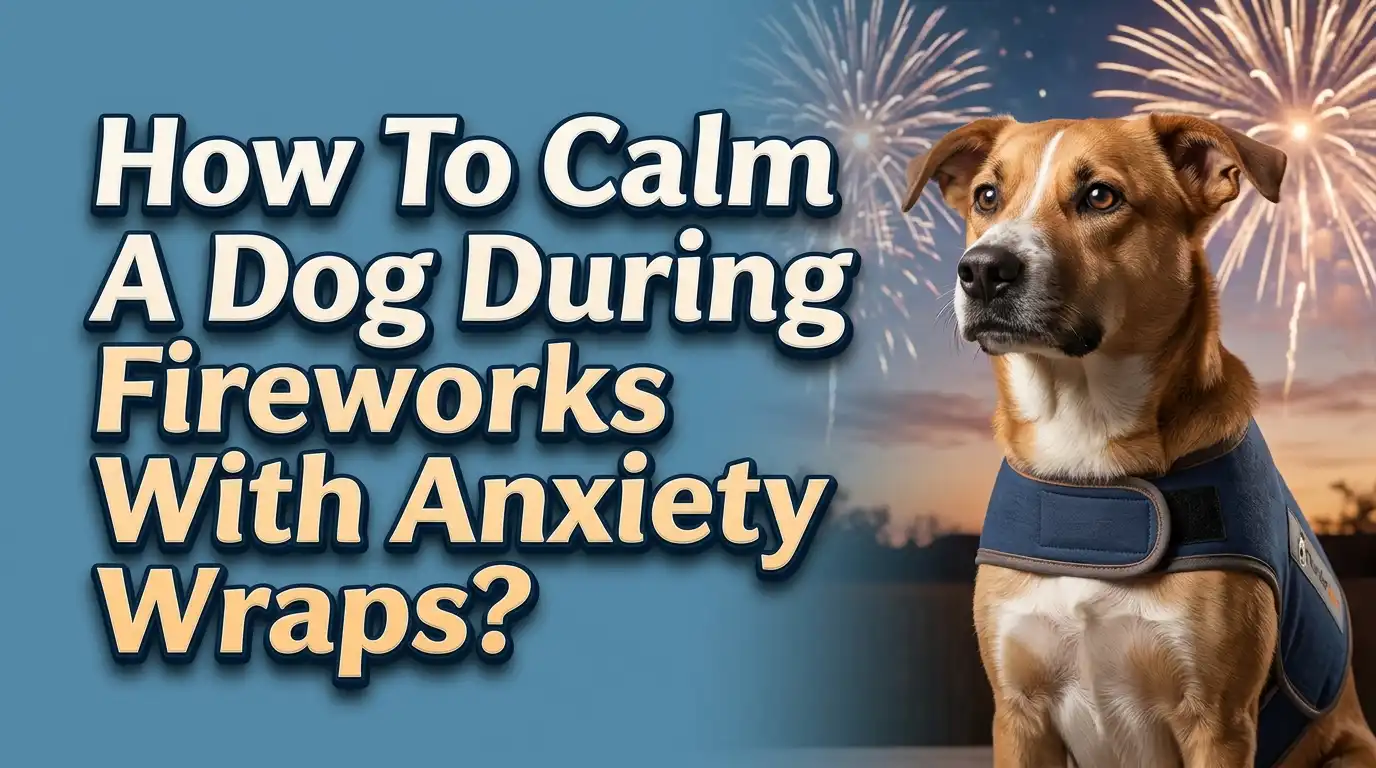
How To Calm A Dog During Fireworks With Anxiety Wraps?
Fireworks season can feel like a nightmare if you have a noise-sensitive dog. The loud booms, bright flashes, and unpredictable sounds send millions of dogs into a state of pure panic every year. Your dog may tremble, hide under furniture, bark nonstop, or even try to escape the house.
The good news is that anxiety wraps offer a simple, drug-free solution that can make a real difference. These snug-fitting garments apply gentle, constant pressure to your dog’s body. This pressure mimics the calming sensation of being held or swaddled.
But how exactly do you use an anxiety wrap the right way? Does it actually work for every dog? And what else can you do to maximize its calming effect?
This guide answers all of those questions and more. You will learn how to choose the right wrap, how to put it on correctly, and how to combine it with other strategies for the best results.
Key Takeaways
- Anxiety wraps use gentle pressure to activate your dog’s nervous system in a calming way, similar to swaddling a baby. This pressure can reduce heart rate and lower stress hormones in many dogs.
- Proper fit is critical for an anxiety wrap to work. A wrap that is too loose will have no effect, while one that is too tight can cause discomfort and increase your dog’s stress level.
- Start training your dog to wear the wrap weeks before fireworks season. Dogs that associate the wrap with positive experiences respond much better than dogs wearing one for the first time during a stressful event.
- Anxiety wraps work best as part of a broader calming strategy. Combine the wrap with a safe space, background noise, calming supplements, and your own calm behavior for maximum results.
- Not every dog responds to anxiety wraps. Research suggests they help about 60% to 70% of dogs with noise anxiety. If your dog does not improve, consult your veterinarian about additional options.
- Never leave an anxiety wrap on for extended periods without supervision. Most manufacturers recommend a maximum of one to two hours of continuous wear to prevent overheating or skin irritation.
Why Dogs Panic During Fireworks
Dogs experience fireworks very differently than humans do. Their hearing is up to four times more sensitive than ours, which means every bang and crackle hits them with intense force. Fireworks also produce sudden, unpredictable sounds. Dogs cannot understand the source of the noise, so their brains interpret it as a genuine threat.
This triggers the fight or flight response. Stress hormones like cortisol and adrenaline flood your dog’s body. Their heart rate increases, muscles tense, and breathing becomes rapid. Some dogs freeze in place while others frantically search for an escape route.
The fear often gets worse over time if left untreated. Each negative experience with fireworks strengthens the association between loud noises and danger. A dog that seemed only mildly nervous last year may show full-blown panic this year.
This is called sensitization, and it is a well-documented pattern in canine behavior science. Early action is the best way to prevent your dog’s fear from escalating into a severe phobia.
Recognizing the Signs of Firework Anxiety in Your Dog
Before you can help your dog, you need to identify the problem clearly. Some signs of firework anxiety are obvious, like trembling, barking, or hiding under furniture. But other signs are more subtle, and many dog owners miss them entirely.
Mild signs include yawning when the dog is not tired, lip licking, pinning ears back, and tucking the tail. Your dog may also become unusually clingy or follow you from room to room. These early signals mean your dog is already stressed, even if they appear outwardly calm.
Moderate signs include pacing, panting heavily, whining, drooling, and refusing to eat treats. A dog at this level is actively distressed and needs your help right away.
Severe signs include destructive behavior, attempts to escape, uncontrolled urination or defecation, and complete refusal to move. Dogs in severe panic can injure themselves by crashing through windows, jumping fences, or chewing through doors. Research from Cornell University confirms that noise phobias are one of the most common behavioral problems in dogs and can cause serious harm if ignored.
Knowing your dog’s specific anxiety signals will help you time the anxiety wrap application correctly. The wrap works best when applied before your dog reaches peak panic.
What Are Anxiety Wraps and How Do They Work
An anxiety wrap is a snug-fitting garment that applies gentle, constant pressure to your dog’s torso. The concept is based on the same principle as swaddling a baby or using a weighted blanket for humans. This steady pressure activates the autonomic nervous system and promotes the release of calming hormones like oxytocin.
According to VCA Animal Hospitals, the theory behind anxiety wraps states that maintained pressure on the body produces a calming effect similar to hugging a distressed person. The pressure targets specific areas of the body, including the chest, midsection, and back, to create a sense of security.
There are several types of anxiety wraps available. Commercial options include purpose-built garments with adjustable fasteners that let you customize the fit. You can also make a DIY version at home using an ace bandage or a stretchy scarf. Both types follow the same basic principle of applying even pressure across the torso.
A 2013 study published in the Journal of Veterinary Behavior found that 89% of dog owners reported their anxiety wrap was at least partially effective in reducing thunderstorm phobia symptoms after five uses. A 2024 systematic review confirmed that compression wraps show promise as a non-invasive intervention for canine anxiety, though researchers noted that more controlled studies are needed.
Pros of anxiety wraps: Drug-free, easy to use, affordable, no side effects for most dogs, can be combined with other calming methods.
Cons of anxiety wraps: Do not work for every dog, require proper fit, may lose effectiveness if worn too long, and are not a cure for severe phobias on their own.
Choosing the Right Size and Type of Anxiety Wrap
Getting the correct size is the single most important step in making an anxiety wrap effective. A wrap that is too loose will not apply enough pressure to trigger the calming response. A wrap that is too tight will restrict movement, cause discomfort, and potentially increase your dog’s stress.
To find the right size, measure your dog’s chest at the widest point, just behind the front legs. Most commercial wraps come with sizing charts based on chest measurements and weight ranges. If your dog falls between two sizes, choose the smaller size for a snugger fit, as most wraps have adjustable straps.
When selecting the type of wrap, consider your dog’s body shape. Barrel-chested breeds like bulldogs and pugs may need a different size than what their weight suggests. Deep-chested breeds like greyhounds and whippets often need a longer wrap to cover their torso properly.
The material also matters. Look for wraps made from breathable, stretchy fabric that allows airflow. Dogs can overheat quickly, especially during summer fireworks events. Avoid wraps made from thick or non-breathable materials. If your dog has sensitive skin, choose a wrap with soft, smooth inner lining to prevent chafing or irritation.
How to Put an Anxiety Wrap on Your Dog Step by Step
Applying the wrap correctly ensures your dog gets the full calming benefit. Follow these steps for a proper application.
Step 1: Lay the wrap flat and identify the chest panel. This is the widest section that will sit against your dog’s chest.
Step 2: Place the chest panel against your dog’s chest, centered between the front legs. Keep the wrap smooth with no bunching or folding.
Step 3: Bring the straps up and over the shoulders, crossing them over the shoulder blades. This creates the first layer of pressure across the upper body.
Step 4: Wrap the remaining fabric or straps around your dog’s midsection. Secure the fasteners firmly but not too tightly. You should be able to slide two fingers between the wrap and your dog’s body.
Step 5: Check for even pressure distribution. The wrap should feel snug like a firm hug, not constricting like a tight belt. Smooth out any wrinkles or folds that could create pressure points.
Step 6: Observe your dog for the first few minutes. Watch for signs of discomfort such as freezing, trying to remove the wrap, or excessive panting. If your dog seems distressed by the wrap itself, remove it and try again later with a looser fit.
Give your dog a treat after putting on the wrap. This builds a positive association between the wrap and good things.
Making a DIY Anxiety Wrap at Home
You do not need to buy a commercial product to try pressure therapy on your dog. A simple DIY wrap can be just as effective, and you can make one with items already in your home.
What you need: An ace bandage or a stretchy scarf that is long enough to wrap around your dog’s body. For a medium-sized dog, a standard 4-inch wide ace bandage works well. For larger dogs, use a 6-inch wide bandage or a long, stretchy fabric.
Step 1: Place the center of the bandage flat against your dog’s chest, between the front legs.
Step 2: Bring both ends up and cross them over your dog’s shoulder blades, making an X shape on the back.
Step 3: Bring the ends back down and around the belly, then cross them under the belly.
Step 4: Tie the ends securely on top of the back, away from the spine. Use a flat knot that will not dig into your dog’s skin.
The wrap should be snug but never restrictive. Your dog should be able to walk, sit, and lie down without difficulty. Always supervise your dog while wearing a DIY wrap, as bandages can loosen or shift during movement.
Pros of DIY wraps: Free or very low cost, uses common household items, easy to adjust.
Cons of DIY wraps: Can shift or come undone, harder to get a consistent fit, may not apply pressure as evenly as commercial options.
Training Your Dog to Accept the Anxiety Wrap Before Fireworks Season
The biggest mistake dog owners make is putting an anxiety wrap on their dog for the first time during a fireworks event. A stressed dog encountering an unfamiliar garment will often panic even more. The wrap becomes just another scary thing in an already scary situation.
Start the training process at least two to four weeks before fireworks season. Begin by letting your dog sniff the wrap while you offer treats. Do this for a few days until your dog shows no hesitation around the wrap.
Next, drape the wrap loosely over your dog’s back for a few seconds. Reward with treats and praise immediately. Repeat this step several times a day, gradually increasing the duration.
Once your dog is comfortable with the draped wrap, fasten it loosely. Let your dog wear it for five minutes at a time during calm, happy moments like playtime or treat time. Slowly increase the wear time over the following days.
After a week or two, your dog should associate the wrap with positive experiences. Now practice putting it on during mildly stressful situations, like when a neighbor mows the lawn or during a light rainstorm. This builds your dog’s confidence and prepares them for the more intense experience of fireworks.
Consistency is key. Dogs learn through repetition, and the more positive experiences your dog has with the wrap, the more effective it will be during the real event.
Creating a Safe Space to Use Alongside the Anxiety Wrap
An anxiety wrap works much better when combined with a safe, quiet environment. Dogs naturally seek enclosed spaces when they feel threatened. Providing a designated safe space gives your dog a place to retreat and feel protected.
Choose a small, interior room with no windows or with windows that can be fully covered. A closet, bathroom, or basement room works well. The goal is to block as much light and sound from the fireworks as possible.
Set up the space with your dog’s favorite bed, blankets, and toys. Add an item of clothing that smells like you. Your scent provides comfort and reassurance. Make this space available to your dog well before fireworks start so they can explore it and feel safe there.
On the night of fireworks, turn on white noise, a fan, or calming music to mask the sounds of the explosions. Studies show that classical music and specially composed dog relaxation tracks can reduce stress behaviors in dogs. The American Kennel Club recommends using white noise machines as a tool to help mask triggering sounds.
Close all windows and curtains. The combination of visual and sound blocking with the anxiety wrap creates a multi-layered defense against firework anxiety. Many dog owners report that this combination is far more effective than using any single method alone.
Combining Anxiety Wraps with Other Calming Strategies
Anxiety wraps are one piece of the puzzle, and they work best as part of a complete calming plan. Here are additional strategies that pair well with pressure therapy.
Desensitization training involves playing recorded firework sounds at a very low volume while your dog is relaxed and wearing the wrap. Over several weeks, you gradually increase the volume. This teaches your dog that the sounds are not dangerous. Research published in the journal Animals in 2023 confirmed that desensitization and counterconditioning remain the gold standard for treating noise phobias in dogs.
Calming supplements such as L-theanine, melatonin, and certain herbal blends can support relaxation. Always consult your veterinarian before giving your dog any supplement. Some dogs respond well to dog-appeasing pheromone (DAP) diffusers placed in their safe space.
Your own behavior matters enormously. Dogs are highly attuned to human emotions. If you act nervous, your dog will pick up on that energy. Stay calm, speak in a normal tone, and avoid excessive comforting. Overly soothing behavior can actually reinforce your dog’s fear by confirming that something is indeed wrong.
Exercise your dog earlier in the day. A tired dog has less energy for panic. Take your dog for a long walk or play session several hours before fireworks are expected. This helps burn off excess energy and promotes relaxation.
Pros of combining methods: Much higher success rate, addresses anxiety from multiple angles, reduces reliance on any single tool.
Cons of combining methods: Requires more planning and effort, can be time-consuming to implement, and some methods need weeks of preparation.
Common Mistakes to Avoid When Using Anxiety Wraps
Many dog owners try an anxiety wrap once, see limited results, and give up too quickly. Here are the most common mistakes and how to avoid them.
Mistake 1: Putting the wrap on too late. If your dog is already in full panic mode, the wrap will have little effect. Apply the wrap 30 to 60 minutes before you expect the fireworks to start. The wrap needs time to activate the calming response before the stress begins.
Mistake 2: Wrong fit. A loose wrap does nothing. A tight wrap causes pain. Take the time to measure your dog properly and adjust the wrap until it feels firmly snug without restricting breathing or movement.
Mistake 3: Leaving the wrap on too long. Most experts recommend removing the wrap every one to two hours to let your dog’s skin breathe and to prevent the body from adapting to the pressure. Extended wear can reduce the calming effect over time.
Mistake 4: Expecting instant results. Some dogs respond immediately, but many need three to five sessions before the wrap begins to show its full calming effect. The 2013 study in the Journal of Veterinary Behavior specifically noted that effectiveness improved with repeated use.
Mistake 5: Using the wrap as the only solution. An anxiety wrap alone may not be enough for dogs with severe noise phobias. Always combine it with environmental management, behavioral training, and veterinary guidance for the best outcome.
When to Consult a Veterinarian About Your Dog’s Firework Anxiety
Anxiety wraps and behavioral strategies work well for mild to moderate firework anxiety. But some dogs need professional help beyond what home remedies can provide.
See your veterinarian if your dog injures themselves during fireworks, destroys property, refuses to eat for hours after the event, or shows signs of anxiety that persist long after the noise has stopped. These are signs of a severe noise phobia that may require prescription medication.
Your vet may recommend short-acting anti-anxiety medications like sileo (dexmedetomidine) or longer-term options like fluoxetine for dogs with year-round anxiety. These medications work on brain chemistry and can be used in combination with anxiety wraps for a more complete treatment plan.
A veterinary behaviorist is another option for dogs with extreme firework fear. These specialists hold advanced training in animal behavior and can create a custom desensitization program for your dog. The investment in professional guidance often pays for itself in reduced stress for both you and your pet.
Never give your dog human anxiety medication without veterinary approval. Many common human medications are toxic to dogs and can cause serious health problems or death. Even over-the-counter options like Benadryl should only be used under your vet’s direction and at the correct dosage.
Long-Term Solutions for Dogs with Recurring Firework Anxiety
If your dog struggles with fireworks every year, it is worth investing in a long-term anxiety management plan. Short-term fixes help in the moment, but they do not address the root cause of the fear.
Systematic desensitization is the most effective long-term approach. This involves exposing your dog to recorded firework sounds at very low volumes while they are calm and comfortable. Over weeks and months, you gradually increase the volume. The goal is to teach your dog’s brain that the sounds are neutral and not dangerous.
Pair desensitization with counterconditioning. This means giving your dog something they love, like a high-value treat or a favorite toy, every time they hear the sound. Over time, the dog begins to associate firework sounds with positive outcomes rather than fear.
Start this process months before fireworks season, not days. Real behavior change takes time and patience. Work with a certified dog trainer or behaviorist if you need guidance on how to structure the sessions correctly.
Between fireworks events, continue to maintain your dog’s positive association with the anxiety wrap. Use it during mildly stressful situations throughout the year so it remains a familiar comfort tool rather than something that only appears during scary events.
Building your dog’s overall confidence through enrichment activities, socialization, and consistent training also helps reduce general anxiety. A dog that feels secure and confident in daily life will handle fireworks better than a dog that is already stressed and under-stimulated.
Frequently Asked Questions
Do anxiety wraps really work for dogs during fireworks?
Research shows that anxiety wraps help a significant number of dogs. A study in the Journal of Veterinary Behavior found that 89% of owners reported at least partial improvement after five uses. Results vary by dog, and wraps tend to work best for mild to moderate anxiety. Dogs with severe noise phobias may need additional support from medication or behavioral therapy. The wrap is not a guaranteed cure, but it is a safe, drug-free tool that is worth trying as a first step.
How tight should an anxiety wrap be on my dog?
The wrap should be snug enough to apply gentle, even pressure across the torso but loose enough that you can slide two flat fingers between the wrap and your dog’s body. Your dog should be able to breathe normally, walk freely, and lie down without difficulty. If you notice your dog panting excessively, trying to remove the wrap, or showing signs of discomfort, loosen it immediately or remove it entirely.
Can I leave an anxiety wrap on my dog overnight?
Most manufacturers and veterinary professionals recommend removing the wrap every one to two hours during active use. Leaving a wrap on overnight without supervision is not recommended. Extended wear can cause skin irritation, overheating, and may reduce the calming effect as the dog’s body adapts to the pressure. If fireworks last several hours, remove the wrap for 10 to 15 minute breaks periodically.
Can I make a DIY anxiety wrap instead of buying one?
Yes, you can make an effective wrap using an ace bandage or a long, stretchy scarf. Place the center of the fabric on your dog’s chest, cross the ends over the shoulders, wrap them around the belly, and tie them securely on the back. Always supervise your dog while using a DIY wrap, as the fabric can shift or come undone. A commercial wrap offers a more consistent fit, but a DIY version is a great option for trying pressure therapy before investing in a product.
At what age can a puppy start wearing an anxiety wrap?
Puppies can start wearing anxiety wraps as early as 8 to 10 weeks old, as long as the wrap fits properly and the puppy is supervised at all times. Starting early can actually be beneficial because it helps the puppy develop a positive association with the wrap before they experience their first fireworks event. Use very short sessions of just a few minutes at first, and always pair the wrap with treats and gentle praise.
What if the anxiety wrap does not help my dog at all?
If your dog shows no improvement after five or more uses with proper fit and timing, the wrap alone may not be enough for your dog’s level of anxiety. Consult your veterinarian about additional options such as prescription anti-anxiety medication, pheromone therapy, or a referral to a certified veterinary behaviorist. Some dogs need a combination of medication and behavioral modification to overcome severe firework phobias. The anxiety wrap can still be part of the plan, even if it is not the complete solution.