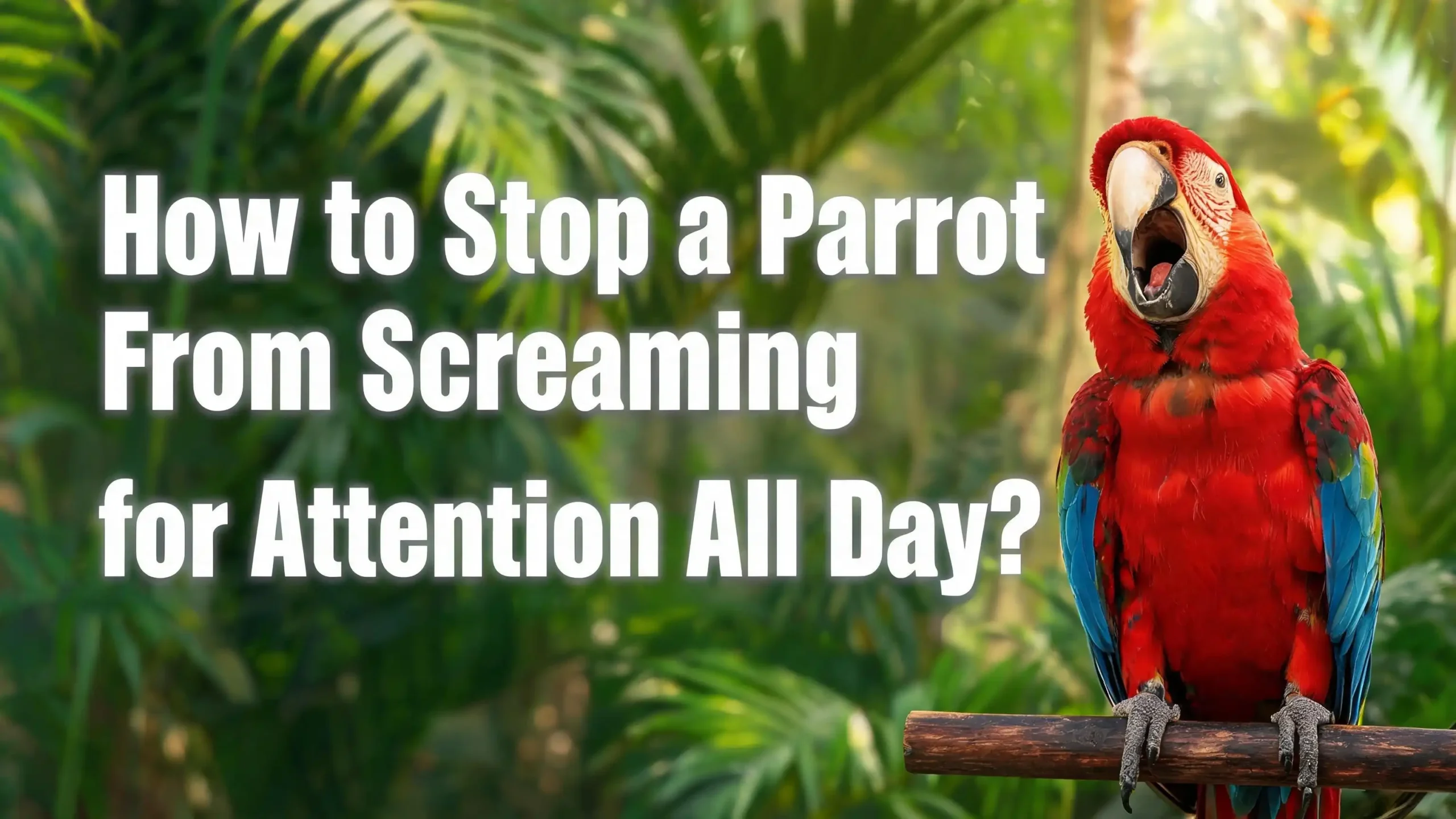
How to Stop a Parrot From Screaming for Attention All Day?
Living with a screaming parrot can feel exhausting. The shrill calls can echo through your home for hours, leaving you stressed and your neighbors annoyed. You love your bird, but the constant noise is wearing you down. The good news is that attention screaming is a learned behavior, and learned behaviors can be changed.
Parrots are intelligent flock animals. In the wild, they call to stay connected with their group. At home, your bird sees you as its flock.
This guide will show you how to break that cycle using kind, science based methods that real bird trainers use every day. You will learn how to spot the cause, change your reactions, build new habits, and create a calmer home for both of you.
Key Takeaways
- Screaming is communication, not misbehavior. Your parrot is not trying to annoy you. It is calling its flock, asking for company, or telling you something is wrong. Understanding the cause is the first step to solving the problem.
- You must stop rewarding the screams. Any reaction, including eye contact, talking back, or rushing into the room, teaches your bird that screaming works. Consistency from every family member is critical.
- Reinforce quiet behavior instead. Reward your parrot when it whistles, talks, or plays calmly. Treats, praise, and attention should always follow good vocalizations.
- Enrichment cuts boredom screams in half. A bird with foraging toys, fresh branches, and daily training sessions has less reason to scream for stimulation.
- Expect an extinction burst. When you stop rewarding screams, your bird will try harder before it gives up. Push through this phase, because giving in restarts the whole cycle.
- Rule out medical issues first. A sudden change in vocal behavior can mean illness, pain, or hormonal stress. A vet visit is always a smart starting point.
Understand Why Your Parrot Screams in the First Place
Parrots scream for clear reasons. The most common cause is contact calling. In the wild, flock members call across the trees to stay in touch. When you leave the room, your bird may scream to find you. This is normal and healthy in small doses.
Other reasons include boredom, fear, hunger, hormonal changes, and learned attention seeking. Some parrots also have a natural dawn and dusk chorus. These short bursts of loud calls in the morning and evening are wired into their biology. You cannot eliminate them, but you can manage them.
The screams that drive owners crazy are usually attention screams. Your bird learned that screaming brings you running. Maybe you came back to scold it. Maybe you covered the cage. Maybe you just walked past and looked at it. Each response taught the bird that noise equals results.
Before you start training, watch your parrot for two or three days. Write down when it screams, what was happening, and how you reacted. Patterns will appear quickly. You may notice it screams when you leave the room, when the TV turns on, or when it sees food. This log becomes your training roadmap.
Rule Out Medical and Environmental Causes First
Sudden screaming can signal a health problem. Birds hide illness well, so loud vocal changes are sometimes the first warning sign. Always book a vet visit before you assume the behavior is purely emotional or learned.
A board certified avian vet can check for infections, pain, vitamin deficiencies, and reproductive issues. Female parrots in egg laying mode often become loud and irritable. Male parrots in breeding season may scream for a mate. Hormonal screaming needs different solutions than attention screaming.
Environmental factors also matter. Check the room temperature, lighting schedule, and air quality. Parrots need 10 to 12 hours of dark, quiet sleep each night. A bird that sleeps in a busy living room with the TV on until midnight will be cranky and loud the next day.
Pros of a vet checkup first: You catch hidden illness early, you avoid blaming your bird for pain, and you build a baseline for future health issues.
Cons of a vet checkup first: Avian vet visits can be expensive, stressful for the bird, and hard to find in rural areas. Still, the benefits far outweigh the cost. Skipping this step can mean training a sick bird, which never works and delays real treatment.
Stop Reinforcing the Screaming Without Realizing It
Most owners reinforce screams by accident. You walk into the room when your bird is loud. You shout “stop.” You give it a treat to quiet it down. Each of these actions tells the bird, screaming gets results.
The fix is simple but hard. Never enter the room while your bird is screaming. Wait for a pause, even a two second pause, then walk in calmly. Your bird will quickly notice that quiet brings you, not noise.
Avoid eye contact during screaming. Parrots read your face like a book. A glance, a frown, or a sigh is still attention. Pretend the bird does not exist when it screams. Keep moving, keep working, and stay neutral.
Also stop the common mistakes. Do not spray the bird with water. Do not slam the cage cover down. Do not yell back. These create fear, damage trust, and often make screaming worse because the bird now associates you with stress.
Pros of ignoring screams: It is free, science backed, and works for almost every parrot when done correctly.
Cons of ignoring screams: It takes patience, family cooperation, and emotional toughness. If even one person caves and reacts, the bird learns that persistence pays off, and the behavior gets stronger.
Reward Quiet and Acceptable Sounds Instead
Ignoring screams alone is not enough. You must teach your bird what to do instead. This is called differential reinforcement. You reward the sounds you like and ignore the ones you do not.
Pick two or three acceptable noises. These could be whistles, chirps, soft talking, or a specific word like “hello.” Every time your parrot makes one of these sounds, react fast. Walk over, smile, give a treat, or say its name happily. Make good sounds the most rewarding thing in its day.
Use high value treats for this work. Small pieces of nuts, sunflower seeds, or fresh fruit work well. Keep them only for quiet rewards, not for everyday meals. Your bird should think, “That sound brings the good stuff.”
Be quick and consistent. Birds connect actions to rewards within about three seconds. If you wait too long, the bird will not link the treat to the behavior. Carry treats in your pocket so you are always ready to reinforce a good moment.
Within a few weeks, most parrots start using their reward sounds more and more. The screams fade because they no longer work, while whistling, talking, and chirping pay off. This shift creates a quieter, happier home without any punishment at all.
Prepare for the Extinction Burst
When you stop rewarding screams, your parrot will not give up easily. It will scream louder, longer, and more often. This phase is called an extinction burst, and it is a normal part of behavior change.
Think of it like a vending machine. If your favorite snack stops coming out, you press the button harder, then shake the machine, then kick it. Eventually you walk away. Your parrot does the same thing with screaming. It tries every version it knows before accepting that the old trick no longer works.
The extinction burst usually lasts three to ten days. This is the hardest part of training. Many owners give in here, thinking the method is failing. In reality, the louder screaming means you are close to success.
Plan ahead for this phase. Warn your family and neighbors. Use earplugs if you need them. Move your work to a quiet room during peak screaming hours. Do not cave, even once. A single reaction during the burst teaches the bird that extra effort wins, and the screaming will become worse than before.
After the burst ends, the screaming usually drops sharply. Many owners report a 70 to 90 percent reduction within two to four weeks of consistent training. The patience pays off.
Build a Rich Foraging and Enrichment Routine
A bored parrot is a loud parrot. Wild parrots spend six to eight hours a day searching for food. Pet parrots often finish breakfast in five minutes and then have nothing to do. All that extra energy turns into screams.
Foraging toys solve this problem fast. Hide pellets and treats inside paper cups, cardboard tubes, or wooden puzzle toys. Wrap nuts in plain paper. Stuff seeds into pine cones. Make your bird work for every bite of food it can. This mimics natural behavior and burns mental energy.
Rotate toys every few days. Parrots get bored with the same items quickly. Keep three or four sets of toys and swap them in and out. Add fresh, untreated branches from safe trees like apple, willow, or eucalyptus for chewing.
Music, bird safe TV shows, and window views also help. Many parrots enjoy watching wildlife through a window or listening to soft music while you are at work. These distractions reduce contact calling because the bird feels less alone.
Pros of enrichment: It addresses the root cause of boredom screaming, improves mental health, and reduces feather plucking too.
Cons of enrichment: Toys can be costly, and some birds are scared of new items at first. Introduce changes slowly, and offer simple homemade options when budget is tight.
Teach a Replacement Behavior on Cue
A trained behavior gives your bird a job to do instead of screaming. Target training is the easiest place to start. You teach the bird to touch a stick with its beak for a treat. This simple skill becomes a tool for redirecting energy.
When your parrot starts to ramp up before a scream, ask it to target. The bird focuses on the stick, earns a treat, and forgets the noise. You replace the unwanted behavior with a productive one.
You can also teach “quiet” as a cue. Wait for a calm moment, say the word “quiet” softly, then reward. Repeat this many times across many days. Over weeks, your bird learns that quiet is a behavior it can do on demand.
Other useful cues include “step up,” “wave,” “spin,” and “fetch.” Each new trick gives your parrot a way to earn attention without screaming. Five to ten minutes of training, two or three times a day, is enough for most birds.
Training also strengthens your bond. Your parrot starts to see you as a source of fun, food, and games rather than just the loud person who comes when it screams. A trained bird is a calmer bird, because its mind has somewhere productive to go.
Set a Predictable Daily Schedule
Parrots thrive on routine. A predictable schedule lowers anxiety and reduces stress screaming. Wild flocks follow the sun, and your bird wants the same rhythm at home.
Set fixed times for waking, feeding, play, training, and sleep. Birds quickly learn the pattern and stop screaming for things they know are coming soon. For example, if breakfast always arrives at 7 a.m., your parrot will not panic at 6:30 a.m. with hunger calls.
Sleep is the most important part of the schedule. Adult parrots need 10 to 12 hours of dark, quiet rest every night. A sleep deprived parrot is loud, cranky, and harder to train. Use a sleep cage in a quiet room if your living area stays busy at night.
Include flock time in your schedule. Set aside one or two daily windows when you sit near the cage, talk to your bird, or let it out for play. Knowing that attention is coming reduces the urge to demand it through screaming.
Try to keep weekends similar to weekdays. Sudden changes in routine can trigger stress vocalizations. If your work schedule shifts often, build a flexible but consistent core, like always feeding within a 30 minute window of the same time each day.
Use Soft Vocal Responses to Replace Loud Ones
Parrots match the energy of their flock. If you yell, they yell. If you whisper, they often quiet down to listen. Lower your own volume, and your bird may follow your lead.
Try the whisper game. When your parrot screams, do not respond. When it makes a soft sound, walk over and whisper a reply. Soft talk becomes the new way to get your attention. Many parrots love this game and start using quiet voices to invite conversation.
You can also teach contact calls. Pick a soft whistle or short word as your shared call. When your bird whistles it, whistle back from any room in the house. This satisfies the natural urge to flock call without loud screaming.
Avoid laughing at loud sounds, even if they are funny. Laughter is a strong reward for parrots. They will repeat anything that makes you laugh. Save your big reactions for the quiet, sweet sounds you want to hear more often.
Over time, your home becomes quieter as a whole. The bird learns that soft sounds bring connection, while loud screams bring nothing. This shift often surprises owners with how fast it works once the family commits.
Adjust Cage Placement and Lighting
Where you put the cage matters more than most owners realize. A cage in a high traffic area can overstimulate your bird, while a cage in an isolated room can trigger lonely screaming. Find the balance, often a quiet corner of a family room.
Avoid placing the cage directly in front of windows with constant outdoor activity. Hawks, cats, and busy streets can scare your parrot and cause alarm screaming. A side view of the window is usually safer than a direct view.
Lighting affects mood and hormones. Use full spectrum bird safe lighting if your room is dark. Keep a regular 12 hour light and 12 hour dark cycle. Long daylight hours can trigger breeding hormones, which often cause increased screaming and aggression.
Cage size also plays a role. A cramped bird is a frustrated bird. Choose the largest cage you can fit in the room, with horizontal bars for climbing and plenty of perch variety. Add natural wood perches of different widths to keep feet healthy and minds engaged.
Pros of cage adjustments: Quick wins, often reducing screaming within days. Better sleep and lower stress are bonus benefits.
Cons of cage adjustments: Large cages and full spectrum lights are expensive. Moving the cage too often can stress the bird, so plan the new spot carefully before making the change.
Get the Whole Household on the Same Page
Training fails when family members react differently to screams. If you ignore the bird but your partner runs in to soothe it, the bird learns that screaming sometimes works, and intermittent rewards make behaviors stronger, not weaker.
Hold a family meeting. Explain the plan in simple terms. Show everyone the list of acceptable sounds and the rule about not entering during screams. Post a written guide on the fridge if needed.
Children need special coaching. Kids often laugh at parrot screams or try to copy them. Teach them to stay calm, walk away during screams, and give treats only during quiet moments. Make it a game with rewards for the kids too.
Visitors also need a quick brief. Tell them not to walk up to the cage when the bird is loud. Ask them to wait for quiet, then approach gently. One excited guest can undo a week of training in five minutes.
Track progress as a household. Keep a shared chart of screaming episodes per day. Watching the number drop is motivating and helps everyone stay committed. Celebrate small wins together, because consistency from every person is what makes the training stick.
Know When to Call a Professional Behavior Consultant
Some screaming problems need expert help. If you have followed every step for six to eight weeks with no improvement, or if your bird is showing other issues like feather plucking or biting, call a certified parrot behavior consultant.
Look for credentials from groups like the International Association of Animal Behavior Consultants or the Animal Behavior Management Alliance. Many consultants now offer video sessions, so you do not need a local expert. A trained eye can spot triggers you have missed.
Avoid trainers who use punishment, dominance language, or quick fix promises. Modern parrot training is based on positive reinforcement and applied behavior analysis. Anyone telling you to grab the beak, flick the head, or use shock methods is using outdated and harmful techniques.
A good consultant will ask about diet, sleep, cage setup, family routines, and your bird’s history. They will then build a step by step plan you can follow at home. Expect to spend a few hundred dollars, but the long term improvement is usually worth it.
Pros of hiring a pro: Faster results, custom plans, and emotional support during tough phases.
Cons of hiring a pro: Cost, finding a qualified person, and the time to do the homework they assign. Still, for severe cases, professional help often saves the relationship between owner and bird.
Frequently Asked Questions
How long does it take to stop a parrot from screaming for attention?
Most parrots show clear improvement within two to four weeks of consistent training. The first week often includes an extinction burst with louder screaming. After that, screams usually drop fast. Severe cases can take two to three months. Stay patient and track progress weekly.
Is it cruel to ignore my parrot when it screams?
No, ignoring attention screams is not cruel as long as your bird’s basic needs are met. You still provide food, water, sleep, enrichment, and daily flock time. Ignoring is a teaching tool, not neglect. Pair it with rewards for quiet behavior to keep training kind and effective.
Should I cover the cage to stop screaming?
Covering the cage as punishment usually does not work and can cause fear or stress. However, a cover at sleep time helps signal bedtime and reduces evening calls. Use it as a routine cue, not as a reaction to noise.
Can I train an older parrot to stop screaming?
Yes, parrots of any age can learn new behaviors. Older birds may take a bit longer because their habits are deeper, but the same methods work. Patience and consistency matter more than the bird’s age.
Do certain parrot species scream more than others?
Yes, cockatoos, macaws, conures, and amazons are naturally louder than budgies or cockatiels. If you live in an apartment, research species volume before adopting. Even loud species can be trained to reduce attention screaming, but you cannot eliminate their natural calls.
What if my parrot screams only when I leave the room?
This is contact calling. Teach a soft whistle as your shared call and answer it from other rooms. This satisfies the flock instinct without loud screams. Also leave foraging toys and background music to ease separation stress.