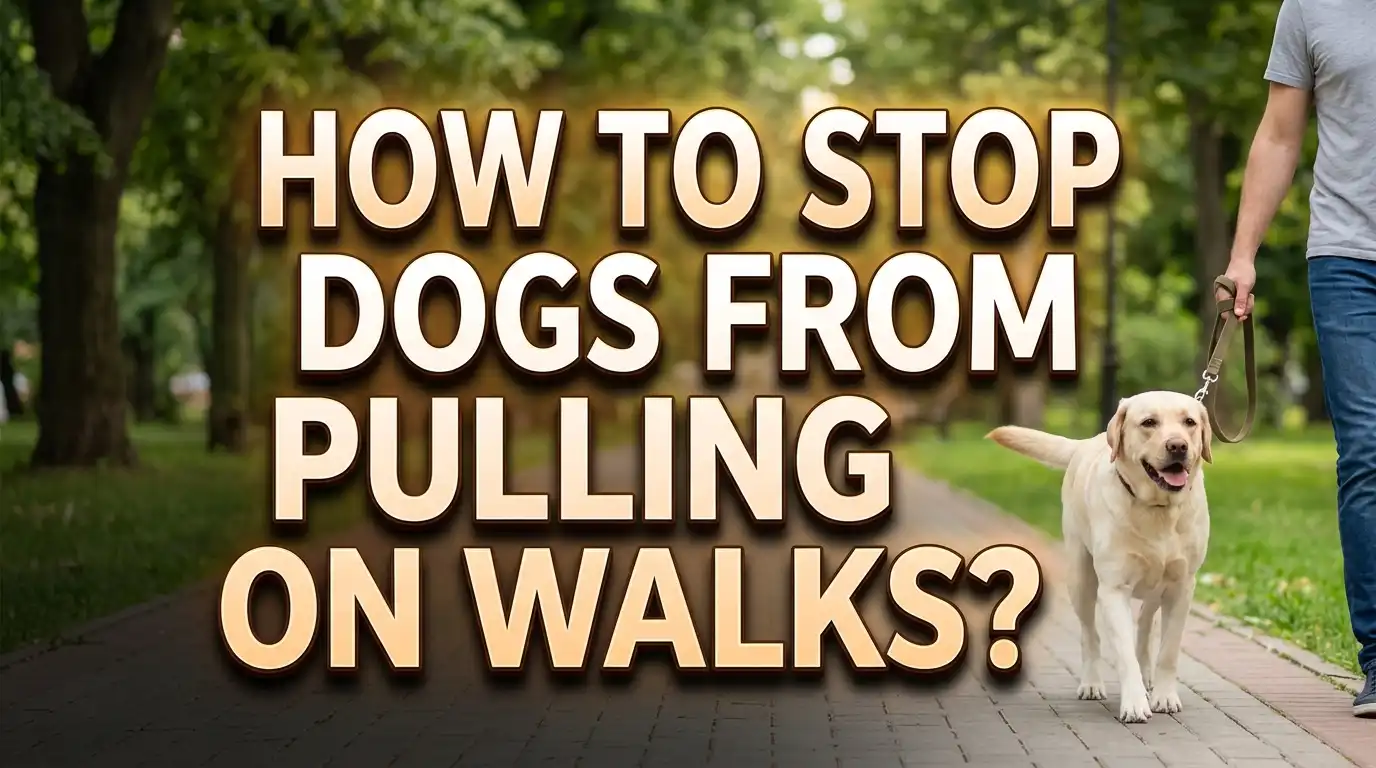
How To Stop Dogs From Pulling On Walks?
Does your dog turn every walk into a tug of war? You are not alone. Studies show that 83% of dog owners report leash pulling as a problem with their dog. It is one of the most common behavior issues that dog trainers are asked to solve.
A pulling dog can make walks stressful, painful, and even dangerous. Large dogs can cause shoulder injuries. Small dogs can damage their own trachea. The good news? Leash pulling is a solvable problem.
This guide gives you clear, step by step solutions to stop your dog from pulling on walks. You will learn why dogs pull, which training methods work best, what equipment helps, and how to stay consistent.
Key Takeaways
- Dogs pull because it works. Every time your dog pulls and you keep walking, you reward the pulling behavior. The first step is to stop moving forward the moment the leash gets tight.
- Positive reinforcement is the most effective approach. Reward your dog with treats, praise, or life rewards like sniffing a tree when they walk with a loose leash. Dogs repeat behaviors that earn rewards.
- Consistency matters more than any single technique. If you allow pulling even once, your dog learns that pulling sometimes pays off. You must enforce the rule on every single walk.
- The right equipment can help but cannot replace training. Front clip harnesses and head halters reduce pulling force, but they are management tools. You still need to teach your dog how to walk properly.
- Short, fun training sessions produce better results than long, frustrating ones. Keep early sessions to 5 or 10 minutes. End on a positive note. Your dog will learn faster when the experience feels like a game.
- Patience is essential. If your dog has been pulling for months or years, the habit will not disappear overnight. Most dogs show real improvement within 2 to 4 weeks of consistent training.
Why Do Dogs Pull On The Leash In The First Place
Understanding the root cause of pulling makes it much easier to fix. Dogs pull on the leash for several reasons, and none of them involve dominance or defiance. Your dog is not trying to be the “alpha” or challenge you.
The most basic reason is that dogs naturally walk faster than humans. Even small breeds move at a quicker pace than most people. When a dog reaches the end of the leash, the tension creates forward pressure. The dog pushes against that pressure due to something called the opposition reflex. This is a natural instinct that causes dogs to push or pull against physical resistance.
Another major reason is that pulling has been rewarded over time. Every time your dog pulled and you kept walking, your dog learned that pulling works. The destination got closer. The interesting smell was reached. The other dog was greeted. Your dog was trained to pull, even though you never intended it.
Dogs also pull because the outside world is extremely exciting. New smells, sounds, animals, and people all compete for your dog’s attention. An excited dog has a harder time controlling impulses, which leads to more pulling. High energy breeds and young dogs are especially prone to this.
Some dogs pull because of anxiety or reactivity. A fearful dog may pull to escape a situation. A reactive dog may pull to get closer to a trigger. These cases often need a different approach, and professional help may be needed.
The Stop And Wait Method
The stop and wait method is one of the simplest and most effective techniques to stop leash pulling. Professional trainers often recommend it as the first strategy to try. It works by removing the reward your dog gets from pulling, which is forward movement.
Here is how it works. Start walking with your dog on a standard 4 to 6 foot leash. The moment the leash becomes tight and your dog starts pulling, stop completely. Plant your feet and do not move. Do not pull your dog back. Do not yell or give a correction. Just stop and wait.
Your dog will eventually notice that you are not moving. They may look back at you, sit down, or take a step in your direction. The second the leash goes slack, praise your dog and start walking again. You can also offer a treat at your side to reinforce the position you want.
In the beginning, you may stop every few steps. That is completely normal. Some owners report stopping 50 or more times on a single short walk. The key is persistence. Your dog is learning a new rule: tight leash means the walk stops, loose leash means the walk continues.
Pros: This method is gentle, requires no special equipment, and teaches your dog to think about leash tension. It builds a lasting habit because the dog makes the choice to stop pulling.
Cons: It requires a lot of patience, especially in the first week. Walks will be very slow at the start. It can be frustrating if you are short on time. It also may not work well for highly reactive dogs who cannot calm down easily.
The Direction Change Technique
The direction change technique adds another layer to your training. Instead of just stopping when your dog pulls, you turn and walk the other way. This forces your dog to follow you and pay attention to where you are going.
When your dog pulls forward, calmly turn 180 degrees and walk in the opposite direction. Do not yank or jerk the leash. Simply turn and walk. Your dog will end up behind you and will need to catch up. As your dog comes back to your side, praise them and offer a treat.
You can also use random direction changes, sometimes called “crazy walking.” Instead of walking in a straight line, you move in unpredictable patterns. You turn left, then right, then circle around. This keeps your dog guessing and focused on your movements instead of pulling ahead.
This technique teaches your dog that you are the one who decides the direction and pace of the walk. Your dog learns to watch you because they never know when you might change course.
Pros: This method is very effective for dogs that are easily distracted. It builds focus and engagement. It works well in combination with the stop and wait method.
Cons: It can look a bit odd to neighbors. You will not cover much ground during early training sessions. It can be confusing for very anxious dogs who need more predictable movement patterns.
Using Positive Reinforcement To Build Loose Leash Skills
Positive reinforcement is the backbone of effective leash training. It means rewarding your dog for the behavior you want instead of punishing the behavior you do not want. Research and professional experience consistently show that positive methods produce longer lasting results with fewer behavioral side effects.
Start your training in a low distraction environment such as your living room, backyard, or a quiet section of your street. Bring small, high value treats that your dog loves. Begin walking, and every time your dog is near your side with a loose leash, say “yes” or “good” and give a treat.
Reward frequently at the beginning. You may treat every 2 to 3 steps in the first few sessions. As your dog starts to understand what earns the reward, you can gradually increase the number of steps between treats. Eventually, you can replace some treats with life rewards like allowing your dog to sniff a bush or greet a friendly person.
The goal is to make walking next to you more rewarding than pulling ahead. Your dog should think, “Staying near my owner is the best strategy because good things happen here.”
Pros: Positive reinforcement builds trust between you and your dog. It reduces stress and creates a dog who enjoys walking politely. It works for dogs of all ages, breeds, and temperaments.
Cons: It requires you to carry treats on every walk, at least during the training phase. Progress can feel slow at times. Some owners struggle with timing their rewards correctly, which can confuse the dog.
Choosing The Right Walking Equipment
The equipment you use can make a significant difference in your training success. The wrong gear can actually encourage pulling, while the right tools can give you more control and make training easier.
A standard flat collar is fine for dogs that do not pull hard. However, if your dog is a strong puller, a collar puts pressure on the throat and can cause injury. It also does nothing to discourage pulling.
A front clip harness is one of the best tools for managing pulling. The leash attaches to a ring on the dog’s chest. When the dog pulls, the harness turns the dog’s body back to face you. This interrupts forward momentum without pain or discomfort. Front clip harnesses work on the principle of redirecting force rather than fighting it.
A back clip harness is more comfortable for some dogs but actually encourages pulling. The attachment point on the back allows the dog to lean into the harness and use their full body weight. Think of sled dogs, they pull from a back clip harness design.
A head halter works like a horse halter. It has straps around the nose and behind the ears. The leash attaches under the chin. When the dog pulls, the head halter gently turns the dog’s head to the side, which redirects their movement. Head halters offer excellent control for large, strong dogs.
Pros of front clip harnesses: Easy to use, comfortable for most dogs, reduces pulling immediately, no risk of neck injury.
Cons of front clip harnesses: Can cause chafing under the legs if poorly fitted. Does not work well for all body types.
Pros of head halters: Outstanding control for strong pullers. Gentle and effective.
Cons of head halters: Many dogs resist wearing them at first. Requires a gradual introduction period. Risk of neck injury if the leash is jerked.
Why You Should Avoid Punishment Based Methods
Some trainers recommend prong collars, choke chains, or leash corrections such as jerking or popping the leash. These methods rely on pain or discomfort to discourage pulling. While they may appear to produce quick results, professional animal behavior organizations advise against them.
Punishment based tools can cause physical harm. Prong collars can puncture skin. Choke chains can damage the trachea, thyroid gland, and neck vertebrae. Leash jerks can cause whiplash and spinal injuries.
Beyond physical harm, punishment creates negative emotional associations with walking. A dog that feels pain during walks becomes more anxious, more reactive, or more shut down. A dog that walks calmly out of fear is not the same as a dog that walks calmly because it wants to. The first dog is at risk of behavioral fallout, including aggression.
Punishment also damages the trust between you and your dog. Your dog may begin to associate you with pain and discomfort. This can affect your entire relationship, not just your walks.
Pros of punishment based methods: Can produce fast suppression of pulling behavior in some dogs.
Cons of punishment based methods: Risk of physical injury. Can increase fear, anxiety, and aggression. Damages the bond between dog and owner. Does not teach the dog what to do instead. The pulling often returns when the aversive tool is removed.
How To Train Your Puppy To Walk Without Pulling
Starting leash training early gives you a huge advantage. Puppies have not yet developed a pulling habit, so you can build good behavior from the beginning. The techniques are similar to those used for adult dogs, but with some important adjustments.
Begin indoors. Let your puppy wear a collar and drag a lightweight leash around the house under supervision. This helps them get used to the feeling. Once they are comfortable, pick up the leash and follow them around. Let them lead at first so they do not feel restricted.
Next, start adding structure. Walk around your home and reward your puppy every time they stay near your side. Use small, soft treats and deliver them frequently. Puppies have short attention spans, so keep sessions to 5 minutes or less.
When you move outside, choose a quiet area with minimal distractions. Puppies are easily overwhelmed by new environments, so start in your yard or on a calm street. If your puppy pulls, stop and wait. When they look back at you, reward them and keep moving.
Be patient. Puppies are learning about the entire world for the first time. Everything is new and exciting. They will make mistakes. The goal is to build a positive association with walking near you, not to achieve perfect behavior immediately.
Pros of early training: Prevents pulling from becoming a habit. Puppies learn faster than adult dogs in many cases. Builds a strong foundation for all future leash work.
Cons of early training: Puppies get tired quickly and have short attention spans. Outdoor training is limited until vaccinations are complete. Progress may seem inconsistent due to developmental stages.
How To Fix Pulling In Adult Dogs With Established Habits
Training an adult dog that has been pulling for months or years is harder than starting fresh with a puppy. The pulling behavior has been heavily reinforced over time. But it is absolutely possible to change. Thousands of dog owners successfully retrain adult dogs every year.
Step one is to reset expectations. Your dog does not know that pulling is wrong. They have been rewarded for pulling on every walk they have ever taken. You need to teach them a new rule, and that takes time.
Step two is to go back to basics. Use the stop and wait method. Use direction changes. Reward every moment of loose leash walking. Treat your adult dog’s training like you would treat a puppy’s training. Start in low distraction environments and build up slowly.
Step three is to use management tools while you train. A front clip harness or head halter can reduce pulling force while you work on teaching new skills. These tools do not replace training, but they make the training process easier and safer.
Step four is to be consistent across all family members. If one person allows pulling and another does not, the dog will be confused. Everyone who walks the dog must follow the same rules.
Most adult dogs show noticeable improvement within 2 to 4 weeks of consistent training. Some stubborn or highly energetic dogs may take longer. If you are not seeing progress after a month, consider hiring a certified professional dog trainer for a personalized assessment.
Dealing With Distractions During Walks
Distractions are the biggest challenge for dogs learning to walk on a loose leash. A squirrel, another dog, a jogger, or an interesting smell can undo all your training progress in a second. Learning to manage distractions is a critical part of the process.
The best strategy is to get your dog’s attention before the distraction takes over. If you see another dog approaching from a distance, start asking your dog for simple behaviors like “sit” or “look at me.” Reward your dog for focusing on you. This gives your dog an alternative behavior that is incompatible with pulling.
Increase distance from the distraction. If your dog loses control around other dogs, cross the street or step off the path. Distance reduces the intensity of the trigger. From a greater distance, your dog is more likely to listen and respond.
Carry high value treats for distraction training. The reward needs to compete with the distraction. Regular kibble may not be enough. Use small pieces of cheese, cooked chicken, or other treats your dog finds irresistible.
Practice a “watch me” or “look” command at home first. Hold a treat near your eyes, say the command, and reward your dog when they make eye contact. Once they are reliable at home, practice in the yard, then on the street, then near distractions.
Pros of distraction management training: Gives your dog clear instructions in challenging situations. Builds impulse control that benefits all areas of your dog’s life.
Cons of distraction management training: Takes weeks or months to master in high distraction environments. Requires you to be proactive and always aware of your surroundings.
The Importance Of Consistency And Patience
Consistency is the single most important factor in stopping leash pulling. A dog that is allowed to pull sometimes and corrected other times does not understand the rule. Your dog needs the same response every single time they pull.
Every person who walks your dog must follow the same protocol. If you stop when the dog pulls but your partner lets the dog pull them down the block, the training falls apart. Sit down as a household and agree on the rules before you begin training.
Patience is equally important. Real behavior change takes time. Your dog is breaking an old habit and building a new one. Some days will feel like huge progress. Other days will feel like you are starting over. That is normal.
Keep a training journal. Write down how many stops you made on each walk, how far you got, and what distractions caused problems. Over time, you will see improvement even on days that feel frustrating. A journal gives you objective evidence of progress.
Avoid the temptation to rush training. Do not increase difficulty too quickly. If your dog walks well on a quiet street, that does not mean they are ready for a busy park. Build up gradually. Add one new challenge at a time and make sure your dog is reliable before moving on.
Celebrate small wins. If your dog walked 20 steps without pulling yesterday and 30 steps today, that is real progress. Acknowledge it. Reward your dog. Reward yourself. This process should feel good for both of you.
Burning Off Energy Before The Walk
A dog with pent up energy is much harder to train. If your dog has been inside all day, they will explode with excitement the moment you grab the leash. All that energy has to go somewhere, and it usually goes straight into pulling.
Play a quick game before you head out. A 5 to 10 minute session of fetch, tug, or indoor training can take the edge off your dog’s excitement. A dog that has already burned some energy can focus better and control impulses more easily.
You can also use mental enrichment to tire your dog out. Puzzle toys, snuffle mats, and training games work the brain and reduce restlessness. A mentally tired dog is often calmer than a physically tired dog.
Some trainers recommend doing a brief recall game in the yard before the walk. Call your dog back and forth between two people, rewarding each recall with a treat. This engages your dog’s focus, burns energy, and primes them for cooperation on the walk.
Pros: Reduces pulling immediately by lowering your dog’s arousal level. Makes training more productive. Easy to implement with no special skills or equipment.
Cons: Adds time to your walk routine. Not always practical for owners with tight schedules. Some high energy breeds may need more than 10 minutes of pre walk activity.
When To Seek Professional Help
Most dogs respond well to the methods described in this post. But some dogs have deeper issues that require professional guidance. If your dog is reactive, aggressive, or extremely anxious on walks, a certified professional dog trainer or veterinary behaviorist can help.
Signs that you may need professional help include a dog that lunges and barks at other dogs or people, a dog that panics during walks, a dog that has injured you or itself from pulling, or a dog that shows no improvement after 4 to 6 weeks of consistent training.
Look for a trainer who uses positive reinforcement based methods. Check for certifications such as CPDT (Certified Professional Dog Trainer) or CAAB (Certified Applied Animal Behaviorist). Ask about their training philosophy before you commit. Avoid trainers who rely on prong collars, shock collars, or dominance based techniques.
A good trainer will observe you and your dog walking together, identify specific issues, and create a training plan that fits your situation. They can also spot problems you may not notice, such as subtle body language cues that indicate stress or fear.
Pros of professional help: Expert assessment of your specific dog. Customized training plan. Faster results for complex cases. Support and accountability throughout the process.
Cons of professional help: Costs money. Requires scheduling. Some areas have limited access to qualified trainers. Results still depend on the owner’s commitment to following through.
Building A Long Term Loose Leash Walking Habit
Stopping your dog from pulling is not a one time event. It is an ongoing practice that becomes easier over time. Even after your dog has learned to walk on a loose leash, you should continue to reinforce good behavior.
Continue to reward your dog on walks, even after the pulling has stopped. You can reduce the frequency of treats, but do not stop them entirely. Occasional rewards keep the behavior strong. You can also use life rewards like sniffing, exploring, and greeting people as reinforcement.
Keep walks interesting for your dog. Walk different routes. Visit new parks. Allow your dog to sniff and explore on a longer leash sometimes. A dog that is mentally stimulated on walks is less likely to pull out of boredom or frustration.
If you notice pulling starting to creep back in, go back to basics immediately. Increase your treat frequency. Use the stop and wait method again. Do not wait until the behavior becomes a full blown problem. Catching a regression early makes it much faster to fix.
Practice leash skills in new environments regularly. A dog that walks well in your neighborhood may struggle in a pet store or at a festival. Gradually expose your dog to new settings and reinforce good behavior in each one.
Your long term goal is a dog that defaults to walking near you on a loose leash. This becomes natural over time with consistent practice. Many owners report that after a few months of training, their dog walks beautifully without any treats at all. The walk itself becomes the reward.
Frequently Asked Questions
How long does it take to stop a dog from pulling on the leash?
Most dogs show meaningful improvement within 2 to 4 weeks of consistent training. However, the timeline depends on the dog’s age, temperament, and how long the pulling habit has existed. Puppies often learn faster than adult dogs with established habits. The most important factor is daily practice with consistent rules. If you train 5 minutes a day every day, you will see faster results than training 30 minutes once a week.
Can old dogs learn to stop pulling on walks?
Yes. Dogs of all ages can learn new behaviors. Older dogs may take a bit longer because they have more deeply ingrained habits. But with patience, positive reinforcement, and consistent training, senior dogs can absolutely learn to walk on a loose leash. Age is not a barrier to learning.
Is a harness better than a collar for dogs that pull?
For dogs that pull, a front clip harness is generally better than a standard collar. Collars put pressure on the throat and can cause tracheal damage in dogs that pull hard. A front clip harness redirects the dog’s body without causing pain or injury. Back clip harnesses, on the other hand, can encourage pulling because they allow the dog to lean into the leash.
Why does my dog only pull at the beginning of the walk?
Many dogs pull at the start of a walk because they are excited and full of energy. As the walk continues and some energy is released, they calm down and pull less. Burning off energy before the walk with a game of fetch or a quick training session can help reduce this initial burst of pulling.
Should I use a retractable leash to stop pulling?
No. Retractable leashes are not recommended for training. They teach your dog that pulling extends the leash, which directly rewards pulling behavior. A standard 4 to 6 foot fixed length leash is the best tool for loose leash training. It gives you consistent control and teaches your dog to stay within a predictable range.
What should I do if my dog pulls to sniff everything?
Sniffing is a natural and important activity for dogs. Instead of preventing sniffing entirely, use it as a reward. Walk with a loose leash, and when your dog maintains good position for several steps, release them to a longer leash or say “go sniff” as a reward. This teaches your dog that polite walking earns them sniffing time, which motivates them to cooperate.