
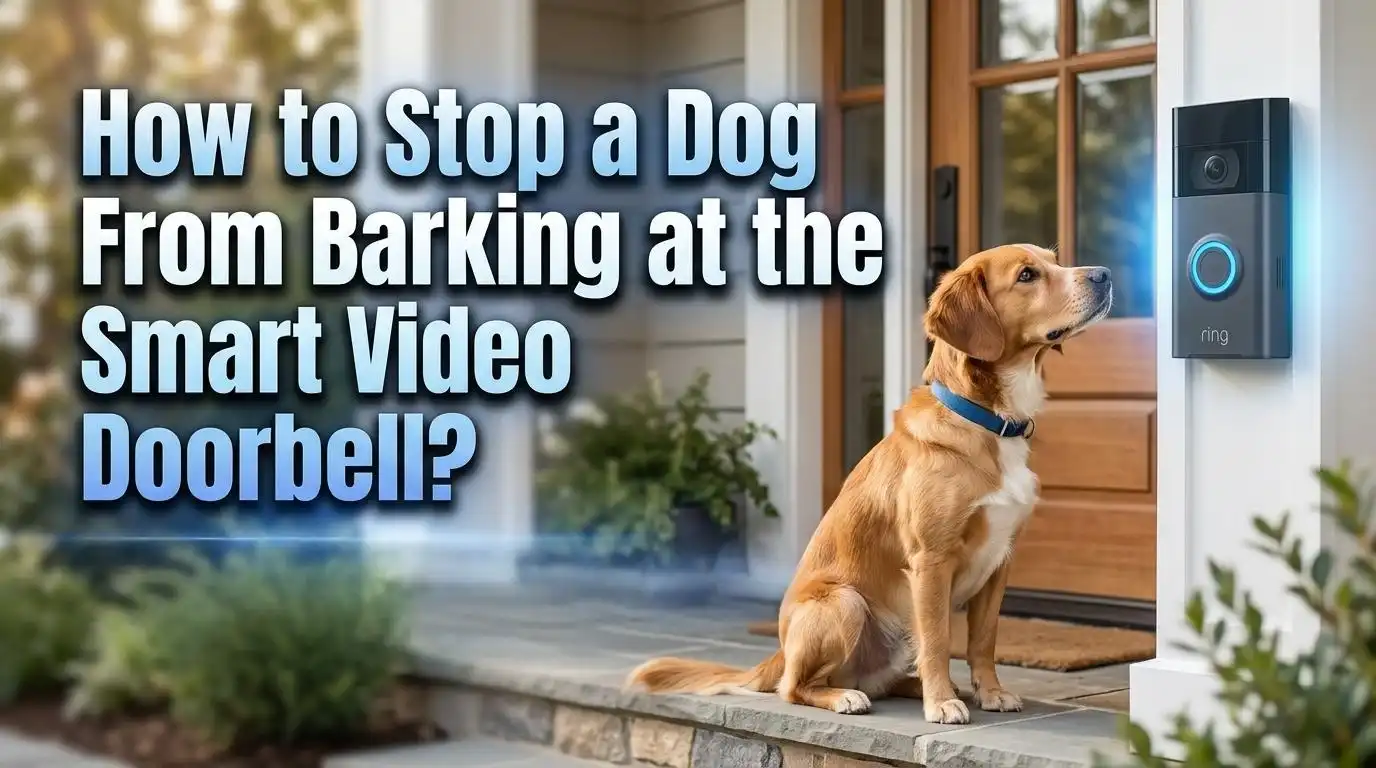
How to Stop a Dog From Barking at the Smart Video Doorbell?
A smart video doorbell can make home life safer and easier. It can also turn a quiet dog into a loud alarm system in seconds. The sound, the motion alert, the visitor voice, and the sudden screen activity can all push a dog into barking, rushing, spinning, or jumping at the door.
The good news is that this problem is very common, and it is very fixable. Most dogs are not trying to be difficult. They are reacting to surprise, excitement, worry, habit, or a learned pattern that says, doorbell sound means action now.
This guide will show you exactly how to do that with simple steps, realistic training sessions, and smart changes inside your home. If your dog loses it every time the bell rings, keep reading. You do not need a perfect dog. You need a clear plan.
In a Nutshell
- Your dog is reacting to a trigger, not being stubborn. Many dogs bark at a smart video doorbell because they hear a sudden sound, expect a stranger, or feel a burst of alert energy. Some dogs bark to warn. Some bark to greet. Some bark because the pattern has repeated so many times that it feels automatic. The first job is to identify what your dog is reacting to most.
- Fix the setup before you fix the behavior. Lowering chime volume, muting indoor announcements, reducing motion alerts, tightening motion zones, and using quiet times can remove many extra triggers. This step gives your dog fewer chances to rehearse barking. That matters because practice makes habits stronger.
- Teach one calm replacement behavior. A dog cannot rush the door and rest on a mat at the same time. A place cue, bed cue, or crate cue gives your dog a clear job. Clear jobs reduce chaos. Reward that job often.
- Train with a recording before real visitors. Start at a very low volume. Play the sound. Feed a treat. Repeat until your dog hears the sound and looks at you instead of the door. Then raise the volume in small steps. Slow progress works better than rushed progress.
- Use management on busy days. Gates, leashes, closed blinds, treat jars, and delivery instructions can protect your training. Management is not cheating. It is a smart way to stop the barking habit from growing.
- Do not rely on punishment. Yelling, shock tools, or harsh corrections can increase fear and make the door area feel worse. Calm training changes the cause. Punishment often only hides the sound for a moment.
Why Dogs Bark at a Smart Video Doorbell
Dogs bark at a smart video doorbell for simple reasons. The sound starts suddenly. A person may appear right after it. Your dog may hear a voice from the device or from your phone. Motion alerts may repeat many times in one day. Over time, your dog learns that this sound predicts something important.
Some dogs bark because they feel protective. They think, someone is near my home and I need to respond. Some bark because they are excited and want to greet the visitor. Other dogs bark because the sound startles them. A few dogs do all three. That is why two dogs in the same house can react in very different ways.
A smart video doorbell can be harder for some dogs than a regular bell. It may use indoor chimes, app tones, visitor announcements, motion warnings, or speaker voices. That means the trigger may not be just one sound. It may be a stack of sounds.
This matters because the best solution depends on the cause. A worried dog needs safety and slow training. An excited dog needs impulse control and a clear task. A dog that has built a barking habit needs fewer chances to rehearse it.
Pros of understanding the cause: you train faster, you avoid guessing, and you choose the right rewards.
Cons of skipping this step: you may train the wrong behavior, move too fast, and feel stuck even though your dog is trying.
Watch body language closely. A loose body and wagging tail often suggest excitement. A stiff body, hard stare, and forward rush can suggest alarm. A tucked tail, retreat, or frantic sound can suggest fear.
Find the Exact Trigger Before You Start Training
Before you begin training, spend two or three days watching what sets your dog off. You do not need a long notebook. You just need clear answers. Ask yourself what happens first. Does your dog bark at the outside bell, the indoor chime, the app notification, the motion alert, the screen view, or the person speaking through the device?
Many owners assume the dog is reacting to the button press. Sometimes that is wrong. Your dog may stay calm until the indoor speaker announces a visitor. Your dog may bark only when package motion alerts fire again and again. Your dog may react more to footsteps on the porch than to the bell itself.
Write down four things. Note the trigger, the time of day, the type of visitor, and how long the barking lasts. Also note your response. If you run to the door while your dog barks, your dog may think the barking helps open the door faster.
This step gives you a clean starting point. If the main problem is motion alerts, device settings may help a lot. If the main problem is guest arrival, behavior practice will matter more. If the main problem is fear, slower training and more distance will help.
Pros of trigger tracking: you stop guessing, save time, and see patterns quickly.
Cons of skipping it: you may blame the wrong sound, miss key details, and repeat failed methods.
Keep this simple. Most people find the answer fast. Once you know the real trigger, the plan becomes much easier. Clear facts create calm training.
Adjust the Doorbell Settings Before You Train the Dog
Training works best when the dog is not hearing the trigger all day long. That is why your first action should be a device check. Many smart video doorbells let you lower alert volume, mute indoor chimes for a period, reduce motion sensitivity, tighten motion zones, or snooze alerts during busy parts of the day.
If your dog barks at every motion notice, reduce those notices. Cut out the sidewalk if possible. Keep the camera focused on your porch. If your dog reacts to indoor announcements, turn them off during naps, work calls, and training periods. If your doorbell supports quiet time, use it. You can still get alerts on your phone without filling the house with sound.
Also change human habits. Ask frequent visitors to text first. Put delivery notes in the app if that option exists. Use the live feed on your phone instead of speaking through the doorbell speaker unless you really need to.
These changes do not solve the whole problem. They reduce the number of rehearsals. That is huge. A dog that barks ten times a day learns barking faster than a dog that hears the trigger once during training.
Pros of device changes: fast relief, fewer false alarms, and less stress for everyone.
Cons of device changes: they do not teach calm behavior by themselves, and some alerts may become easier to miss.
Think of settings as support, not the final answer. A quieter system gives your training room to work. That one change alone can make the next steps feel much easier.
Teach a Strong Place Cue Near the Entry
Now teach your dog what to do instead of barking and charging the door. The easiest answer is a place cue. This means your dog goes to a bed, mat, or crate and stays there for a reward. It is simple, clear, and useful for real life.
Start far from the excitement of the bell. Put a mat in view of the door but not right beside it. Lure your dog onto the mat with a treat. The moment all four paws are on it, reward. Then reward again for sitting or lying down. Keep sessions short and easy.
Once your dog runs to the mat with your hand motion, add a cue like place or bed. Say the word once. Point if needed. Reward fast. Next, build duration. Count one second, then reward. Count three seconds, then reward. Keep success easy.
After that, add little pieces of door life. Touch the doorknob. Reward calm. Open the door one inch. Reward calm. Step away and return. Reward calm. Your goal is simple. The mat becomes the dog’s safe job near the entry.
Pros of the place cue: it is easy to teach, works for guests and deliveries, and gives the dog a clear task.
Cons of the place cue: it needs practice, and some high energy dogs will break position at first.
Do not wait for real visitors to begin. Practice in quiet moments every day. A calm skill built in peace is easier to use in noise. This one habit can change the whole front door routine.
Desensitize the Doorbell Sound in Tiny Steps
Once the place cue is started, teach your dog that the bell sound itself is safe. Use a recording of your own doorbell if possible. That matters because dogs often react more strongly to the exact sound they know.
Play the recording at the lowest volume that your dog notices without barking. The moment your dog hears it, give a high value treat. Do not ask for anything yet. Sound first, treat second. Repeat several times. Then stop the session before your dog gets tired.
When your dog hears the sound and turns to you for food, raise the volume a tiny amount. Repeat the same pattern. If your dog barks, the step was too big. Go back down. Slow work feels boring to people, but it helps dogs learn fast and clean.
Keep sessions short. One to three minutes is enough. Do a few rounds each day. Once the recording works at normal volume, move to the real bell with a helper outside. Have them press the bell, but do not open the door yet. Just reward the calm response.
Pros of desensitization: it changes the sound itself, lowers startle, and builds confidence.
Cons of desensitization: it takes patience, and progress can stall if you raise volume too quickly.
This method is powerful because it works at the root. Your dog stops hearing danger or chaos and starts hearing a signal for something good. That emotional shift is the heart of long term success.
Change the Emotional Response With Food or a Favorite Toy
A calm response grows faster when you change how your dog feels about the sound. This is where food or play helps. The idea is simple. The bell rings, and something great appears. Over time, the dog starts to think, that sound means good things happen here.
Choose a reward that is stronger than the urge to bark. For many dogs, soft meat treats work best. For toy driven dogs, a favorite tug or ball can work well. Keep these rewards special. Do not use them all day for random moments.
At first, reward right after the sound. Later, reward the calm behavior that follows. If your dog hears the bell and looks at you, praise and reward. If your dog hears the bell and goes to the mat, reward again. You are building a chain that feels safe and rewarding.
This is also a good place to use a treat station near the door. Keep a jar by the entry. That lets you respond fast when the bell rings in real life. Speed matters. If the reward comes too late, your dog will connect it to something else.
Pros of reward based response change: it is gentle, clear, and works well for fear, excitement, and habit.
Cons of reward based work: timing matters, and weak rewards often fail in high excitement moments.
Do not worry about using food at first. You are not bribing. You are teaching. Good timing turns treats into information. Soon the bell becomes a cue for calm attention instead of a cue for chaos.
Practice Visitor Drills Before Real Deliveries Matter
A dog may do well with recordings and still fall apart when a real person appears. That is normal. Real life adds movement, smell, footsteps, and door opening. You need practice drills that copy real life in small steps.
Ask a friend or family member to help. Start with the dog on leash or behind a gate. Have the helper ring the bell and wait outside. You guide your dog to the mat, reward calm, and do not open the door if your dog is spinning, lunging, or barking hard. Reset and try again with an easier step.
Next, open the door a crack while your dog stays on the mat. Reward often. Then let the helper step inside and ignore the dog for a moment. Reward calm again. If greetings make your dog wild, delay the hello until your dog can stay soft and quiet.
You can also teach a toy pickup drill for friendly dogs. Bell rings, dog grabs toy, guest enters, calm greeting follows. A toy gives the mouth something to do and can lower barking in some social dogs.
Pros of visitor drills: they prepare your dog for real life, reveal weak spots, and build reliable habits.
Cons of visitor drills: they need help from another person, and dogs can regress if the steps move too fast.
Make these sessions short and cheerful. End on success. Practice should feel clear, not chaotic. Real improvement often appears after several easy drills, not one big test.
Use Management Tools on Busy Days
Training is important, but management is what protects your progress. On busy delivery days, holiday visits, or repair appointments, your dog may be too aroused to learn well. That is the time to prevent barking rehearsals.
Use baby gates to block the front area. Close blinds if your dog reacts to porch movement. Clip a leash on before expected arrivals. Put a stuffed food toy in a back room. Turn on white noise. Ask visitors to text before ringing. If your doorbell has a quiet or snooze feature, use it.
Management does not mean your dog failed. It means the day is too hard for training. Dogs learn best below their stress limit. If the trigger is too big, your job is to lower it.
A crate can also help if your dog already likes it. Give the crate before the visitor arrives, not after barking begins. That keeps the crate positive. If your dog hates confinement, choose a different tool.
Pros of management: fast relief, fewer barking episodes, and safer guest arrivals.
Cons of management: it does not teach new skills by itself, and it works only if you use it early.
The smartest homes use both training and management. Training builds the new habit. Management protects it. If you combine both, progress usually comes faster and feels less stressful for everyone in the house.
Handle Motion Alerts, Delivery Hours, and Repeat Triggers
Some dogs do not bark at the actual ring. They bark at constant porch movement. Delivery drivers, passing people, leaves, cars, and shadows can keep a dog on alert all day. Smart doorbells can reduce this if you set them up well.
Start by checking where motion is detected. If your porch view includes the street or sidewalk, your dog may hear frequent indoor sounds or see you react to constant app alerts. Tighten the motion area if your device allows it. Lower sensitivity if harmless movement keeps firing alerts.
Next, think about timing. Many homes have busy delivery windows. If you know your dog is already tired, hungry, or restless at that time, give a walk, food puzzle, or chew before the rush starts. A calmer body often means a calmer response.
Some owners also improve things by changing the indoor chime location. If the sound blasts near the dog’s rest area, move the dog or lower the sound. If your doorbell supports temporary muting, use it during training blocks, naps, or work hours.
Pros of trigger control: fewer surprise alerts, less all day stress, and better training results.
Cons of trigger control: it takes some trial and error, and outdoor changes may be limited in some homes.
A dog that stays on alert all day has less control at night. Reduce the small triggers, and the big trigger often gets easier too. That is why smart device setup matters so much in this problem.
What Not to Do if You Want Lasting Results
Some common reactions make doorbell barking worse. The first is shouting. If you yell quiet while your dog barks, your dog may think you are joining the alarm. The sound level rises, and the stress level rises with it.
The second mistake is moving too fast in training. If you jump from a low volume recording to a real guest at the door, your dog may fail and rehearse the old pattern again. Dogs need small steps.
The third mistake is relying on punishment tools. Harsh collars, sudden fear based corrections, or rough handling can increase anxiety. They may stop the bark in the moment, but they do not change why the dog feels the need to bark. In some dogs, punishment can even make the door area feel more threatening.
Another mistake is opening the door while your dog is in a full bark rush. That can reward the whole chain. Your dog learns, I bark, people appear, the door opens. If possible, wait for a calmer moment or use management to break that pattern.
Pros of avoiding these mistakes: faster learning, less stress, and better trust between you and your dog.
Cons of old habits: they can slow progress, confuse the dog, and make the barking more intense.
Try to stay calm and boring during barking. Then become warm and rewarding during quiet choices. Dogs learn from contrast. Calm pays. Chaos does not.
When to Call a Trainer or a Vet
Some dogs need extra support, and that is okay. If your dog is panicked by the sound, cannot take food, snaps near the door, redirects onto people or other pets, or seems worse over time, get help from a qualified force free trainer or a veterinary professional.
A trainer can watch details you may miss. They can see if your dog is over threshold, if the mat is too close to the door, or if your timing is late. They can also help with guest setups and leash safety.
A vet check is smart if the barking has changed suddenly, your dog seems more reactive with age, or your dog has trouble settling in other parts of life too. Pain, hearing changes, sleep problems, and anxiety can all affect behavior.
Do not wait until the issue becomes a household crisis. Early help often saves time and stress. Good support does not mean you failed. It means you want a cleaner plan.
Pros of getting help: safer progress, fewer mistakes, and a plan matched to your dog.
Cons of waiting too long: stronger habits, more stress, and a higher chance of guest problems.
Most dogs improve with calm practice and smart setup. Some need a little more guidance. There is no prize for doing it alone. The real win is a dog that feels safer and a home that feels peaceful again.
FAQs
Why does my dog bark more at a smart video doorbell than a normal bell
A smart video doorbell can create more layers of stimulation. Your dog may hear the outside bell, the indoor chime, a phone alert, a voice announcement, or two way talk from the speaker. That stack of sounds can feel bigger than one simple bell. Some dogs also notice you checking the app and rushing to the door, which adds more excitement. Reducing extra alerts and training the exact sound in small steps usually helps a lot.
How long does it take to stop doorbell barking
That depends on the dog, the cause, and how often the barking happens now. Mild cases can improve in a couple of weeks with daily practice. Strong habits or fear based barking often take longer. The biggest speed boost comes from preventing extra barking outside training sessions. Less rehearsal often means faster change.
Should I let my dog bark a few times and then say quiet
That can work for some dogs, but it is not always the best first step. Many dogs do better when you focus on a replacement behavior like going to a mat, looking at you, or grabbing a toy. If your dog is already very aroused, a quiet cue may come too late. Build calm habits first, then use a quiet cue if needed.
Can I fix this without turning off my doorbell
Yes, but it is usually easier if you reduce the trigger while training. Temporary quiet settings, alert snooze periods, lower volume, or text first instructions can protect your progress. You do not need to remove the system forever. You just need to stop the dog from practicing the old reaction all day.