
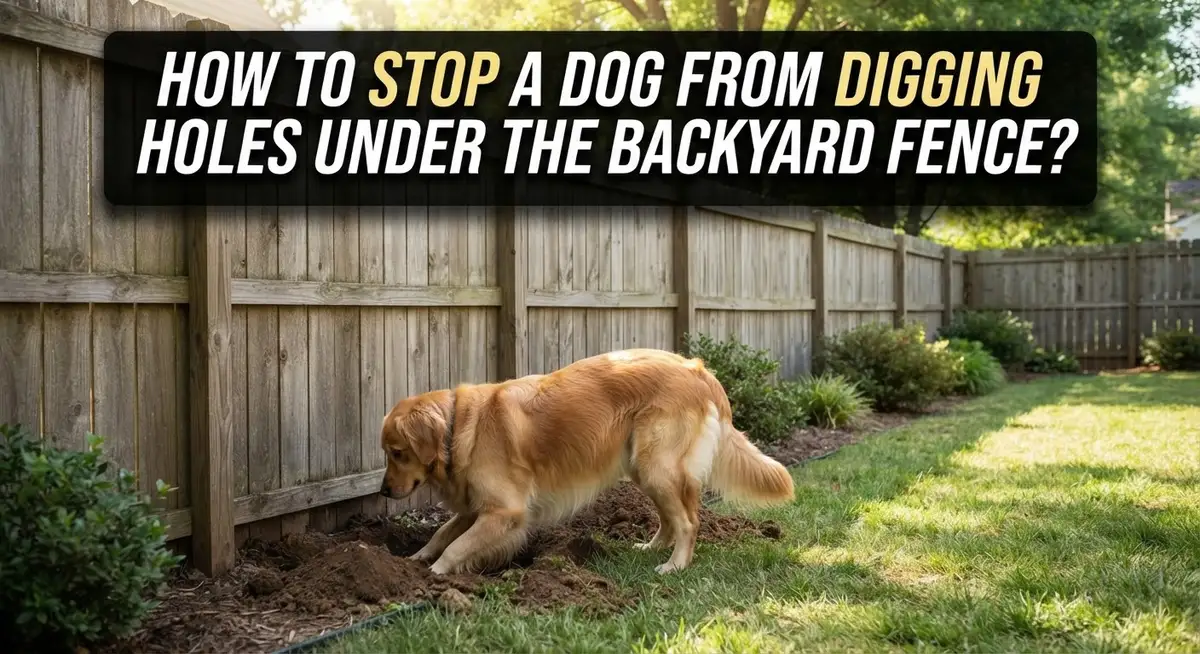
How to Stop a Dog From Digging Holes Under the Backyard Fence?
Does your dog turn your backyard fence line into a construction zone? You are not alone. Many dog owners face this frustrating habit, and those escape tunnels can damage your yard fast.
The good news? Digging under the fence is not random behavior. Your dog does it for a reason. It could be boredom, pent up energy, anxiety, or even a cool spot to escape the heat.
This guide will help you understand why your dog digs in the first place. Once you know the cause, stopping the behavior becomes much easier.
Plus, we will look at exercise and enrichment tips that tackle boredom at its root. Ready to save your yard and keep your pup safe at home? Let’s dig into the solutions.
In a Nutshell
- Find the root cause first. Dogs dig due to boredom, anxiety, escape attempts, or the need to cool down. Fix the cause before adding barriers.
- Give your dog a job to do. More exercise and mental games reduce the urge to dig. Tired dogs rest instead of digging.
- Create a digging zone. Fill a small area with sand or loose soil. Hide toys or treats there to make it fun.
- Block the fence line. Use chicken wire, pavers, or mesh laid flat on the ground. This stops new tunnels before they start.
- Fill old holes right away. Empty holes invite more digging. Pack them with rocks or soil so your dog does not return to the same spot.
- Skip the punishment. Yelling does not solve the real problem. Instead, interrupt and redirect with a firm “no dig” and guide your dog to the right zone.
Why Dogs Dig Under Fences: Common Root Causes
Your dog digs under the fence for specific reasons. Understanding these reasons is the first step to fixing the problem.
Boredom is the number one cause. Dogs left alone for long periods need something to do. Digging feels like work to them. A bored dog will dig to pass time and burn energy.
Anxiety and stress drive some dogs to dig. Loud noises, storms, or separation from their family can trigger this behavior. Your dog may dig as a way to cope with fear or worry.
Escape attempts happen when dogs want to reach something on the other side of the fence. A dog in heat, a neighbor’s dog, or even a small animal can motivate escape digging. Some dogs simply want to explore beyond their yard.
Heat and cooling needs matter more than many owners realize. Dogs lack sweat glands and dig to reach cool soil underneath. On hot days, your dog may dig near the fence just to find relief.
Prey drive plays a role too. If your dog sees or hears small animals near the fence, the instinct to chase kicks in. Moles, squirrels, or rabbits trigger digging behavior in many dogs.
Genetic factors influence digging habits. Certain breeds like Terriers, Dachshunds, and Beagles were originally bred to dig. These dogs have a stronger natural urge to dig than others.
The key is to identify which cause applies to your dog. Watch when and where your dog digs. Does it happen when your dog is alone? Does it occur on hot days? Is the digging near a specific fence spot where animals pass by? Once you know the reason, you can choose the right solution. Different causes need different fixes.
Step-by-Step Plan to Stop Fence-Line Digging
Start by observing your dog’s digging pattern. Watch when the digging happens most. Does it occur during the hottest part of the day? Early morning? When you leave for work? This timing reveals the root cause.
Next, fill every active hole completely. Pack soil, rocks, or sand firmly into the hole so your dog cannot simply resume digging in the same spot. Dogs return to familiar digging sites, so eliminating the hole removes the invitation.
Once holes are filled, add a physical barrier at the fence line. Lay chicken wire flat on the ground in front of the fence, then cover it with soil. Your dog’s paws will hit the wire and feel uncomfortable, which discourages further digging in that area. Alternatively, place concrete pavers or large rocks along the fence line.
Create one approved digging zone in your yard. Choose a corner or designated spot away from the fence. Fill a shallow frame or container with sand or loose soil. Bury toys and treats in this zone daily. When your dog digs there, praise and reward the behavior immediately. This teaches your dog exactly where digging is allowed.
Increase daily exercise significantly. A tired dog has less energy for destructive digging. Add 20 to 30 minutes of extra activity like walks, fetch, or running games. Mental stimulation matters just as much. Use puzzle toys, training sessions, and sniff games to keep your dog’s brain engaged.
Combine multiple solutions for best results. One strategy alone rarely works. Pair the approved digging zone with increased exercise, physical barriers, and consistent hole filling. Stay patient through this process. Behavior change takes time, usually two to four weeks of consistent effort.
Monitor progress weekly. If digging continues near the fence after two weeks, reassess the root cause and adjust your approach accordingly.
Creating a Designated Digging Zone Your Dog Will Love
A designated digging zone gives your dog a legal outlet for their natural instinct. This approach works because it redirects behavior rather than stopping it completely.
Start by choosing the right location. Pick a spot in your yard away from the fence, ideally in a shaded area. A corner works well. Make sure your dog can access it easily during the day.
Create the zone using sand or loose soil. You can use a simple wooden frame, a large container, or just a cleared patch of ground. The material should be soft and easy to dig through. Sand is ideal because dogs love it and it won’t damage their paws.
Bury toys and treats in this approved zone regularly. When your dog digs there, they find rewards. This teaches them that this spot is the best place to dig. Use small toys, chew items, or training treats. Refresh the zone every few days to keep it interesting.
Make the zone more appealing than the fence line. Keep it clean and accessible at all times. Remove debris or packed soil that makes digging harder. Your dog should feel excited to use this space.
Spend time with your dog in the digging zone. Play nearby or sit close by while they dig. Praise them enthusiastically when they dig in the right spot. Use a happy voice and offer treats immediately after they dig there.
Visit the zone together during your daily routine. This builds a positive association. Your dog learns that this is their special digging place.
Combine the designated zone with increased exercise and mental games. A tired dog is less likely to dig elsewhere. The zone works best as part of a complete plan, not as a standalone solution. Monitor your dog’s progress weekly to see if they favor the approved zone over the fence line.
Physical Barriers That Block Escape Routes
Physical barriers work best when combined with addressing why your dog digs in the first place. Once you’ve filled holes and increased exercise, barriers prevent your dog from returning to dig in the same spots.
Chicken wire is an affordable option. Lay it flat on the ground in front of the fence, then cover it with soil or grass. Your dog’s paws hit the wire and feel uncomfortable, so they stop digging in that area. The wire must extend at least 12 inches out from the fence line to be effective.
Mesh barriers work similarly. Dig a shallow trench along the fence base, place the mesh inside, and refill with soil. This creates an underground barrier your dog cannot penetrate. Make sure the mesh is sturdy enough to withstand scratching and pawing.
Railroad ties or concrete pavers offer a more permanent solution. Position them along the fence line to create a physical wall your dog cannot dig under. This method also looks cleaner than buried mesh and requires less maintenance over time.
Large rocks filling holes work as an immediate deterrent. Pack rocks tightly into freshly dug holes so your dog cannot remove them easily. This method works best for smaller holes or as a temporary fix while other barriers are being installed.
Commercial no dig deterrents are available as ready made solutions. These typically combine mesh, stakes, and installation hardware into one package designed specifically for fence lines.
The key is layering your approach. Use a barrier plus the designated digging zone plus increased exercise. A single barrier alone often fails because your dog simply digs in a new location nearby.
Check your barriers monthly. Soil shifts, weather changes things, and determined dogs find weak spots. Maintenance ensures your barriers stay effective throughout the year.
Boosting Exercise and Mental Stimulation to Curb Digging
Your dog digs because they need an outlet for energy and mental engagement. Increasing exercise and mental stimulation directly addresses the root cause of fence line digging. Dogs with insufficient activity levels turn to digging as their primary entertainment.
Start by boosting daily exercise. A tired dog has less motivation to dig. Aim for at least two solid exercise sessions each day. These can include walks, running, fetch games, or swimming. The intensity matters more than the duration. Your dog should feel genuinely tired afterward, not just walked around the block.
Mental stimulation works just as powerfully as physical exercise. Your dog’s brain needs challenges throughout the day. Interactive games, training sessions, and puzzle activities keep their mind occupied. Spend 15 to 20 minutes daily on obedience training or new commands. This builds focus and reduces boredom driven digging.
Rotate toys and enrichment activities regularly. The same toys become boring quickly. Introduce new puzzle feeders, sniff games, and hide and seek activities. These activities tap into your dog’s natural instincts in approved ways. Your dog learns that mental engagement happens everywhere in the yard, not just at the fence line.
Assign your dog household responsibilities to increase engagement. Some dogs benefit from having a job. This might include carrying items, learning new tricks, or participating in dog sports like agility or dock diving.
Consider interactive play sessions with you present. Many dogs dig because they lack connection with their owners. Spend quality time playing together. This strengthens your bond while burning energy simultaneously.
Combine increased exercise with your designated digging zone and physical barriers. This three pronged approach works best. A well exercised, mentally stimulated dog loses interest in fence line digging. They channel their energy into approved activities instead. Results typically appear within two to three weeks of consistent effort.
Common Mistakes That Sabotage Your Progress
Many dog owners make critical mistakes that actually make digging worse instead of better. Understanding these errors helps you avoid wasting time and effort on solutions that backfire.
Punishing your dog without finding the real cause is the biggest mistake. Your dog digs for a reason: boredom, anxiety, escape urges, or overheating. Yelling or scolding after the fact teaches your dog nothing except fear. Your dog doesn’t connect the punishment to the digging behavior. Instead, your dog becomes anxious around you, which can increase digging even more.
Another common error is stopping too soon. You fill the hole once, and your dog digs it out again the next day. This happens because the underlying cause still exists. Your dog returns to the same spot because the urge to dig remains strong. Filling holes without addressing why your dog digs guarantees the behavior will repeat.
Many owners also rely on one solution alone. A physical barrier helps, but it won’t stop a bored dog from trying. A designated digging zone works better when combined with increased exercise. Mental stimulation alone won’t satisfy a dog with excess physical energy. Your dog needs a complete approach.
Ignoring shade and water access is another frequent mistake. Dogs often dig to reach cool soil on hot days. If your dog lacks shelter or fresh water outside, digging becomes their cooling strategy. Providing these basics removes one major digging trigger.
Finally, owners sometimes don’t monitor their progress. You can’t tell if your approach works without tracking changes weekly. Keep notes on digging frequency and intensity. This helps you spot what actually helps your specific dog.
The path to success requires patience and a multi-angle strategy. Identify why your dog digs first, then layer your solutions together for real results.
Troubleshooting: When Digging Continues Despite Your Efforts
Your dog keeps digging under the fence even after you’ve tried solutions. This happens more often than you think. Let’s figure out what’s going wrong and fix it.
The most common reason digging continues is that you’re only treating the symptom, not the cause. You filled the hole and added a barrier, but your dog still has the urge to dig. The underlying need remains unmet. Your dog might still lack enough exercise, mental stimulation, or they’re dealing with anxiety about being alone.
Start by honestly assessing your current routine. How much exercise does your dog get daily? A tired dog has less energy to dig. If your dog gets less than two hours of active play per day, increase it. This alone stops digging in many cases.
Next, check if your dog has a designated digging zone. Some dogs ignore it because the fence line is simply more rewarding. Make your approved zone irresistible by burying high value treats there regularly. Spend time with your dog in that zone. Play with them there. This teaches them the approved spot is better than the fence.
If digging continues, you likely need to combine multiple solutions at once. Don’t rely on just a barrier or just exercise. Layer your approach. Add a physical barrier, provide the digging zone, boost exercise, and increase mental games through training or puzzle toys.
Also check if your dog has adequate shade and fresh water in the yard. Dogs sometimes dig to reach cool soil when overheated. Removing this trigger helps.
Finally, monitor your progress weekly. Take photos of problem areas. If nothing improves after two weeks of consistent effort, your dog might be escaping or experiencing severe anxiety. In these cases, consult a behavior specialist who can observe your specific situation and recommend targeted solutions.
Final Thoughts
Stopping your dog from digging under the fence takes more than one quick fix. You need to understand why your dog digs in the first place.
Boredom, excess energy, or a strong urge to escape often drive this behavior. Once you know the cause, you can pick the right solution.
Physical barriers stop your dog from digging under the fence right now. But they don’t solve the reason behind the digging.
That’s why you also need a designated digging zone. This gives your dog a place to dig without breaking any rules.
Exercise and mental stimulation matter just as much. A tired, engaged dog has less reason to dig holes in your yard.
Think of these solutions as pieces of one puzzle. Each piece supports the others.
Skip one piece, and your dog may find new ways to dig or escape. Use all of them together for lasting results.
Patience plays a big role here too. Your dog won’t change old habits overnight.
Give your new routine a few weeks before you judge its success. Small, steady changes often work better than sudden, strict rules.
Watch your dog’s behavior closely during this time. Notice what triggers digging and adjust your approach as needed.
Remember that every dog is different. What works for one dog may need small tweaks for another.
Stay consistent with your training and barriers. Consistency helps your dog learn faster and feel more secure.
If digging continues, don’t get discouraged. Go back to the basics and check each part of your plan.
With the right mix of exercise, enrichment, barriers, and patience, you can stop your dog from digging under the fence for good. Your yard, your fence, and your dog will all thank you.
Frequently Asked Questions
Why does my dog dig under the fence in the first place?
Dogs dig for several reasons. Your dog might be bored and looking for something to do. Some dogs dig to cool off on hot days. Others dig because they have too much energy and need more exercise. A few dogs dig to escape because they feel anxious or want to explore beyond the fence.
The key is figuring out which reason applies to your dog. Watch your dog’s behavior closely. Does your dog dig mostly on hot days? That suggests cooling off. Does your dog dig when you’re away? That might mean boredom or anxiety. Understanding the cause helps you pick the right solution.
Can I just fill the holes and call it done?
Filling holes alone won’t work long term. Your dog will dig them right back out. Think of filling holes as a temporary fix, not a solution.
You need to address the underlying reason your dog digs. If you only fill holes without giving your dog more exercise or mental stimulation, the digging will return. The same applies if you ignore shade and water access on hot days.
Combine hole filling with other strategies. Add a designated digging zone. Increase playtime and training. Then fill holes and monitor for new ones. This approach actually stops the behavior instead of just hiding it.
How long does it take to stop the digging?
Give your new routine at least 2 to 3 weeks before expecting major changes. Some dogs respond faster. Others need more time to learn new habits.
Consistency matters more than speed. Stick with your plan every single day. Watch your dog’s behavior weekly to see if digging decreases. If progress stalls, you may need to add another solution to your routine.
What if my dog keeps digging despite my efforts?
This usually means you’re missing one key piece. Most dogs need multiple solutions working together, not just one approach.
Check these items: Does your dog get enough daily exercise? Does your dog have a designated digging zone with buried toys? Is there adequate shade and water in the yard? Are you using a physical barrier at the fence line?
If you’ve checked all these and digging continues, consult a professional. Sometimes anxiety or other behavioral issues require expert guidance.