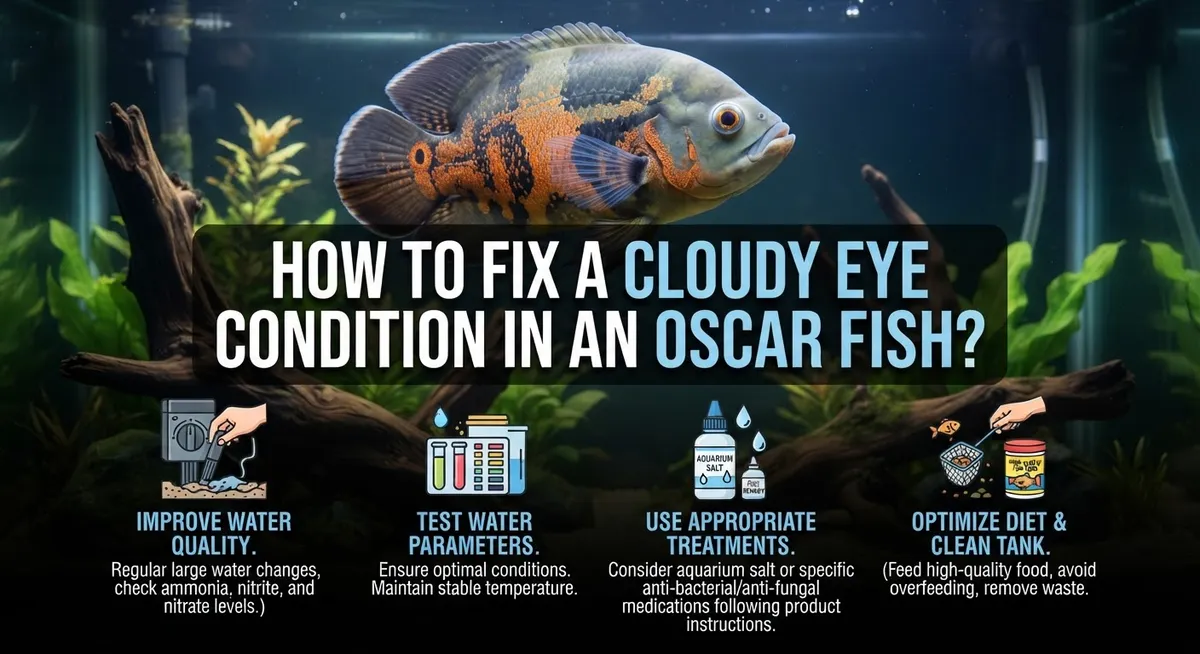
How to Fix a Cloudy Eye Condition in an Oscar Fish?
Have you noticed a strange cloudy film covering your Oscar fish’s eyes? This condition can worry any fish keeper. The good news is that it’s often treatable when you act fast.
Cloudy eye happens for a few key reasons. Poor water quality is the top cause. Ammonia, nitrites, and low pH levels can also trigger this problem.
Sometimes it’s simpler than that. Your Oscar might have bumped into a tank decoration or the glass. This physical trauma can cloud the eye too.
The great news is that cloudy eye usually clears up fast. With the right care, you’ll often see improvement in just three to four days.
This guide walks you through everything you need to know. We’ll cover how to spot the early signs and test your water properly. You’ll also learn the exact steps to treat this condition at home.
In a Nutshell
- Test your water first. Check ammonia, nitrite, nitrate, and pH levels. Poor water quality is the main cause of cloudy eye in Oscar fish.
- Change the water right away. Do an emergency 50% water change to remove toxins fast. This step alone often starts the healing process.
- Use medication if needed. Apply a treatment like Pimafix or Melafix based on the label. This helps fight infection after water quality is fixed.
- Adjust the temperature. Raise your tank to around 82°F. Warmer water can help your Oscar fish recover faster.
- Expect quick results. Cloudy eye usually clears up in three to four days with proper care. Patience and consistency matter here.
- Keep up regular maintenance. Do weekly water changes of 25% or more. This prevents cloudy eye from returning.
What Causes Cloudy Eye in Oscar Fish
Cloudy eye in Oscar fish develops when something goes wrong in their tank environment. Poor water quality is the number one culprit behind this condition. Your Oscar’s eyes cloud up as a response to stress and irritation from bad water conditions.
High ammonia and nitrite levels are major problems. These toxic compounds build up when you skip water changes or overstock your tank. Your Oscar’s sensitive eyes react first to these chemicals. The cloudiness appears as a protective response to the irritation.
Low pH water also triggers cloudy eye. Oscar fish need slightly acidic to neutral water to stay healthy. When pH drops too low, it stresses their system and damages their eyes. You should test your water regularly to catch pH problems early.
Incorrect water temperature creates another common cause. Oscar fish are tropical and need warm water to thrive. If your tank gets too cold, your fish becomes stressed. This stress weakens their immune system and makes them vulnerable to eye problems.
Physical trauma can also cloud an Oscar’s eyes. These fish are active swimmers and sometimes collide with tank decorations or other fish. A direct hit to the eye causes swelling and cloudiness. This type of injury usually heals on its own with clean water.
The key takeaway is simple: most cloudy eye cases come from neglected water conditions. Your Oscar fish lives in a closed system where waste builds up quickly. Without regular maintenance, ammonia and nitrites accumulate to dangerous levels. This toxic environment irritates your fish’s eyes and causes the cloudy appearance.
Understanding these causes helps you prevent the problem before it starts. Clean water prevents almost all cases of cloudy eye. When you know what causes the condition, you can focus on keeping your tank clean and your Oscar healthy.
How to Diagnose the Problem: Testing Your Water Parameters
Testing your water parameters is the first and most important step. Clean water fixes cloudy eye faster than anything else. You need to check four main measurements: ammonia, nitrite, nitrate, and pH.
Start by getting a water test kit. These kits come in liquid or strip form and measure your tank’s chemical levels. Ammonia and nitrite should both read zero or very close to zero. If either one is high, your water quality is poor and causing the problem.
Nitrate levels should stay below 40 parts per million. Even though nitrate is less toxic than ammonia, high levels still harm your Oscar fish. pH should sit between 6.0 and 7.5 for Oscar fish. Low pH water commonly causes cloudy eye.
Test your water right away, not later. Don’t wait a few hours. The faster you identify the problem, the faster you can fix it. Write down your results so you remember the exact numbers.
If ammonia or nitrite are high, your tank’s nitrogen cycle isn’t working properly. This happens when you skip water changes, overfeed your fish, or have too many fish in one tank. Address these issues immediately.
Low pH also needs quick attention. Check your tap water’s pH first. Sometimes your source water is already acidic. If your tap water is fine but your tank pH is low, decaying food or waste is making the water acidic.
Temperature matters too, though most test kits don’t measure it. Use a reliable thermometer to check. Oscar fish prefer water between 74°F and 81°F. Cold water weakens their immune system and allows infections to develop.
Once you have these measurements, you’ll know exactly what’s wrong. This information guides your next steps. You might need a big water change, filter cleaning, or all three. Testing first prevents guessing and saves your Oscar fish time.
Step-by-Step Treatment: Fixing Cloudy Eye in Your Oscar
Start by checking your Oscar’s tank setup carefully. Look at the water conditions first because cloudy eye almost always signals a water quality problem. You need to test ammonia, nitrite, nitrate, and pH levels right away. Use a reliable test kit to get accurate readings.
Once you have your test results, perform an emergency 50% water change immediately. This step removes toxins and gives your Oscar fish instant relief. Remove half the water from the tank and replace it with fresh, dechlorinated water at the same temperature.
After the water change, raise your tank temperature to around 82°F. Warmer water helps your Oscar’s immune system fight the cloudy eye condition. Monitor the temperature carefully to keep it steady at this level.
Next, consider using medication if the cloudiness doesn’t improve within 24 hours. Follow the label instructions exactly for any treatment you choose. Overdosing medication can harm your fish, so measure carefully and use only the recommended amount.
Watch your Oscar’s eye closely over the next few days. The cloudiness should start clearing within 3 to 4 days with proper treatment. If improvement doesn’t happen, test your water again because something else might be wrong.
Continue doing weekly water changes of 25% or more to maintain clean conditions. This regular maintenance prevents the problem from returning. Keep your tank free of excess food and waste by removing uneaten food after feeding.
Check your filter regularly to ensure it’s working properly. A functioning filter keeps ammonia and nitrite levels low. Your Oscar fish depends on consistent water quality to stay healthy and keep those eyes clear.
Using Medication Safely and Effectively
Medication works best when you handle water quality first. Clean water is the primary treatment. Medication is only a backup plan when water conditions improve but cloudiness remains.
Start by testing your water parameters before you add any medication. Ammonia and nitrite must be at zero. If these levels are high, medication won’t help much. Fix the water problem first, then decide if you need medication.
Perform that emergency 50% water change right away. This single step removes harmful chemicals and gives your Oscar immediate relief. After the water change, raise your temperature to around 82°F. Many cases clear up within 24 hours just from these two actions.
Wait a full day before medicating. Watch your Oscar’s eye closely. If cloudiness starts fading, continue with water changes only. Skip the medication and let clean water do the work.
If cloudiness persists after 24 hours, medication becomes helpful. Follow the label instructions exactly. Dosage matters. Too much medication stresses your fish. Too little won’t help.
Common medications for cloudy eye work by reducing bacterial and fungal growth. Apply them only after water parameters are normal. Never medicate dirty water. The combination of clean water plus medication works best together.
Continue weekly water changes while medicating. Don’t stop your maintenance routine. Keep monitoring ammonia and nitrite levels. These must stay at zero throughout treatment.
Most cases clear in three to four days with proper care. Your Oscar’s eye should become clear again. If cloudiness persists beyond four days, test your water again. Something might still be wrong with your tank conditions.
Remember this principle: clean water fixes most cloudy eye cases. Medication helps stubborn cases. Address the root cause first, then add medication only if needed. This approach keeps your Oscar healthy and prevents future problems.
What to Expect: Recovery Timeline and Signs of Improvement
Your Oscar fish’s cloudy eye will start improving within the first 24 to 48 hours if you’ve addressed the water quality problems. Most cases clear completely in 3 to 4 days with consistent treatment and maintenance.
During the first day, watch for any changes in your fish’s behavior. Your Oscar might seem less active or hide more than usual. This is normal and doesn’t mean the treatment isn’t working. The cloudiness itself may look worse before it gets better because the eye is healing and shedding damaged tissue.
By day two or three, you should notice the white or milky appearance starting to fade. The eye will gradually become clearer from the edges inward. You might see a thin film still covering part of the eye, but this will disappear as healing continues.
Signs of genuine improvement include the cloudiness reducing in size, your Oscar becoming more active, and normal feeding behavior returning. Your fish should start exploring the tank again and respond to your presence.
If you don’t see any improvement by day three, check your water parameters again. Sometimes the cloudiness lingers because ammonia or nitrite levels are still too high. Perform another partial water change and verify your filter is working correctly.
Complete recovery means the eye returns to its normal clear appearance. Your Oscar’s vision should improve, and the fish will move around the tank normally. Some fish recover faster than others depending on how severe the condition was and how quickly you started treatment.
Continue your weekly water changes even after the eye clears completely. This prevents the problem from returning. Monitor your Oscar’s eyes regularly for any signs of cloudiness reappearing. Consistent water maintenance is your best defense against this condition happening again in the future.
Common Mistakes That Delay Healing
Many Oscar fish owners make simple mistakes that prevent their fish from healing quickly. Understanding these errors helps you avoid them.
The biggest mistake is skipping water quality tests. You must test ammonia, nitrite, nitrate, and pH levels before doing anything else. Guessing about your water conditions wastes precious time. Your Oscar cannot heal in dirty water, no matter what medication you use.
Another common error is performing water changes too slowly or infrequently. Some owners do small 10% changes instead of the necessary 50% emergency change. Small changes don’t remove enough harmful chemicals. Your fish needs that large water change immediately to feel better.
Overcrowding the tank creates continuous water quality problems. More fish means more waste and higher ammonia levels. Even if you treat the cloudy eye, overcrowding brings the problem back. Oscar fish need adequate space to thrive.
Ignoring high nitrite levels is dangerous. Nitrites damage your fish’s ability to carry oxygen. This makes cloudy eye worse and delays healing. Test for nitrites regularly, especially during the first week of treatment.
Some owners add medication too quickly without addressing water parameters first. Medication cannot fix a dirty tank. Clean water is the primary treatment. Medication only helps after you’ve improved your water conditions.
Inconsistent temperature control also slows healing. Your Oscar needs stable water around 82°F during treatment. Temperature fluctuations stress your fish and extend recovery time.
Finally, many owners stop doing water changes once the eye looks better. Recovery requires ongoing maintenance. Continue weekly 25% water changes for at least two weeks after the cloudiness disappears. This prevents the condition from returning.
Focus on water quality first, then add medication if needed. This approach works faster and keeps your Oscar healthy long term.
Preventing Cloudy Eye From Returning
Preventing cloudy eye from returning requires consistent attention to your tank environment. The best defense is maintaining stable water conditions at all times.
Test your water parameters weekly using a reliable aquarium test kit. Check ammonia, nitrite, nitrate, and pH levels regularly. Ammonia and nitrite must stay at zero. Keep nitrate below 40 parts per million. Your Oscar fish thrives when pH stays between 6.0 and 7.5.
Perform water changes every week without fail. Replace at least 25 percent of your tank water each time. Many experienced aquarium keepers do 30 to 50 percent changes for extra safety. Fresh water removes accumulated waste and harmful chemicals before they damage your fish’s eyes.
Monitor your tank temperature carefully. Oscar fish need water between 74 and 81 degrees Fahrenheit. Fluctuating temperatures stress your fish and weaken their immune system. Use a reliable heater and thermometer to keep conditions stable.
Avoid overstocking your tank. Too many fish create excess waste that fouls the water quickly. Provide adequate space for each Oscar fish to swim comfortably. A larger tank is always better for maintaining water quality.
Feed your Oscar fish high quality food in appropriate amounts. Excess food decays and pollutes the water. Feed only what your fish can eat in two to three minutes, once or twice daily.
Clean your filter regularly according to manufacturer instructions. A clogged filter cannot remove waste effectively. Maintain your tank decorations and substrate by removing uneaten food and debris.
Keep a maintenance log of your water tests and changes. This helps you spot problems before they harm your fish. If you notice any parameter changes, act immediately.
Consistency prevents cloudy eye from returning. Your Oscar fish depends on you to maintain a clean, stable home. Regular testing and water changes are the foundation of good fish health.
Final Thoughts
Cloudy eye in Oscar fish looks scary at first. But it responds well to prompt action. Clean water is the real cure here, not medication alone.
Remember that poor water quality causes most cases. Ammonia, nitrite, and unstable pH stress your fish. This stress shows up as a cloudy eye.
Your first move should always be testing the water. Check ammonia, nitrite, nitrate, and pH levels right away. This tells you what needs fixing.
A 50% emergency water change often starts the healing process. Follow this with medication only if the cloudiness persists. Raising the temperature to around 82°F also supports recovery.
Most Oscar fish show real improvement within three to four days. Their eyes clear up once water conditions stabilize. Patience and consistency matter more than rushing to add medicine.
Long term success depends on your weekly routine. Change at least 25% of the water every week. Test parameters often, even when your fish looks healthy.
Avoid overcrowding your tank. Give your Oscar enough space to swim and thrive. A cramped tank breaks down water quality fast.
Feed a balanced diet suited for Oscar fish. Good nutrition supports their immune system and eye health. This helps them resist infections and stress.
Think of cloudy eye as a warning sign. Your tank is telling you something needs attention. Listen to it early before problems grow bigger.
Simple habits protect your Oscar fish long term. Regular water testing, proper feeding, and routine maintenance work together. These steps keep your fish healthy and your water clear.
With the right care, your Oscar fish can fully recover. Cloudy eye rarely causes lasting harm when treated quickly. Stay consistent, and your fish will reward you with vibrant health.
Frequently Asked Questions
Can cloudy eye in Oscar fish spread to other fish in my tank?
Cloudy eye itself does not spread like a contagious disease. The condition results from water quality problems or physical injury, not from pathogens that jump between fish. However, if your water parameters are poor, other fish in the tank will also suffer stress and develop similar issues.
All fish in the tank share the same water. When one Oscar develops cloudy eye, it signals that conditions are bad for everyone. Test your water immediately and fix the problem for all residents.
How long does it take for a cloudy eye to clear up?
Most Oscar fish show clear improvement within three to four days once you start proper treatment. The eye typically returns to normal appearance during this timeframe if you address water quality issues right away.
Speed of recovery depends on how quickly you act. Starting treatment on day one produces faster results than waiting several days. Consistent water changes and stable temperatures accelerate healing.
Should I isolate my Oscar fish with cloudy eye?
Isolation is not necessary in most cases. Your Oscar fish needs to stay in stable water conditions, and moving it causes additional stress. A separate tank also requires the same water quality management.
Keep your fish in the main tank while you fix the water parameters. The exception is if your Oscar has physical injuries from fighting and needs protection from aggressive tank mates.
What water temperature should I maintain during treatment?
Raise your tank temperature to 82°F during treatment. Warmer water helps your Oscar fish’s immune system work better. Once the eye clears, you can gradually return to your normal temperature range.
Monitor the thermometer daily to keep conditions stable.