
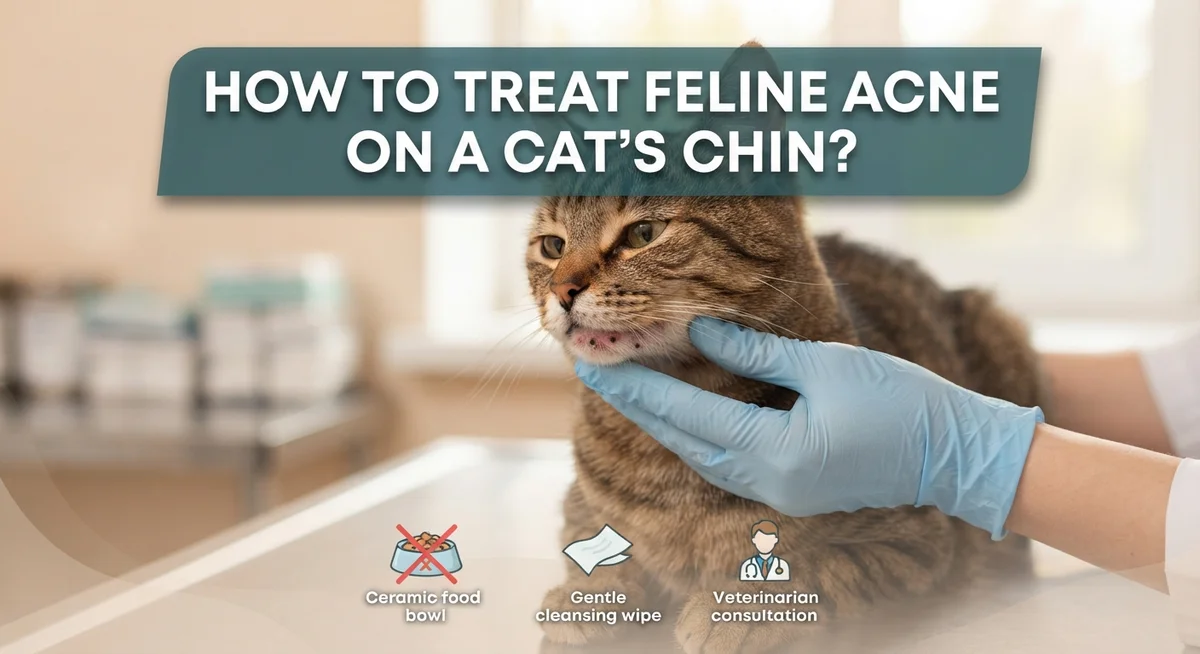
How to Treat Feline Acne on a Cat’s Chin?
Does your cat have small black spots on their chin? You might think it’s dirt. But it could be feline acne.
This common skin condition affects cats of all ages. It happens when dirt, oil, and bacteria build up in the chin area. The result is small bumps called comedones, which look like tiny blackheads.
The good news is that feline acne is very treatable. Most cases improve with simple hygiene changes at home. You do not need anything complicated to help your cat feel better.
In this guide, we will walk you through easy steps to treat this condition. You will learn how to clean your cat’s chin the right way. We will also cover which products help and which ones to avoid.
In a Nutshell
- Start with a warm compress. Hold it on your cat’s chin for two to three minutes. This softens the debris and opens up the pores.
- Clean gently with a soft toothbrush. Soak it in warm water and brush the area lightly. Avoid harsh scrubbing since it irritates the skin.
- Use medicated wipes daily. Antibacterial cleansers help keep bacteria under control between deeper cleanings.
- Try benzoyl peroxide products. These shampoos or gels flush out clogged debris from the chin area.
- Skip alcohol and peroxide based products. They cause irritation and make the acne worse, not better.
- Stay consistent with care. Some cats need daily attention while others do fine with occasional cleaning. Gentle and steady care works better than aggressive treatment.
What Is Feline Chin Acne and What Causes It
Feline chin acne is a skin condition that shows up as small black spots or bumps on your cat’s chin. These spots look like blackheads you might see on human skin. The medical term for these spots is comedones.
Your cat’s chin is particularly prone to this problem because it collects dirt and bacteria easily. Cats rub their chins on food bowls, water dishes, and other objects throughout the day. This constant contact creates the perfect environment for acne to develop.
Poor chin hygiene is the main cause of this condition. When bacteria and dead skin cells build up in the pores, they create those dark spots. The chin area has more oil glands than other parts of your cat’s body, which makes it even more likely to develop acne.
The good news is that feline chin acne is not painful for most cats. Many cats don’t even notice they have it. However, if left untreated, the acne can become infected or cause discomfort.
This condition affects cats of all ages and breeds. Young cats, senior cats, and everything in between can develop chin acne. It’s not a sign of poor pet care or neglect. Even the cleanest cats can get it.
Feline chin acne is very manageable with proper care. Most cases respond well to simple daily cleaning routines. Some cats need ongoing treatment, while others only need occasional attention. The key is consistency and gentleness. Rough handling or harsh products will only make the acne worse. With the right approach, you can keep your cat’s chin healthy and acne free.
Recognizing the Symptoms: What to Look For on Your Cat’s Chin
Feline acne shows up in specific ways on your cat’s chin. You will notice small black dots or bumps clustered in the area below your cat’s mouth. These spots look like tiny blackheads you might see on human skin.
Run your finger gently across your cat’s chin. You may feel a slightly rough or bumpy texture. The affected area might appear darker than the surrounding skin.
Some cats develop redness or swelling around the chin. This happens when bacteria builds up and causes mild inflammation. Your cat’s skin in this area may look irritated or feel warm to the touch.
Look for signs of discomfort. Most cats with chin acne feel fine, but some show mild itching or tenderness. Your cat might rub their chin more often than usual or avoid having their chin touched.
The condition often gets worse if left untreated. Bacteria and dirt continue to accumulate in the pores. You may notice the black spots becoming more numerous or the bumps getting larger over time.
Check your cat’s chin regularly during grooming or playtime. Early detection makes treatment easier and faster. The spots typically appear only on the chin area, though some cats develop acne on their lower lip or jawline too.
Pay attention to your cat’s eating habits. Cats with severe chin acne sometimes eat less comfortably. They may avoid certain foods or seem reluctant during mealtime if their chin feels sore.
The good news is that recognizing these symptoms early helps you start treatment right away. Your cat will feel better once you begin a proper cleaning routine.
Step-by-Step Treatment: Cleansing and Topical Care
Begin by preparing your cat’s chin for treatment. Warmth helps open the pores and softens the buildup. Apply a warm compress directly to the affected area and hold it gently for two to three minutes. Use a clean cloth or soft washcloth soaked in warm water. This step makes the next cleansing phase much more effective.
After the warm compress, it’s time to cleanse. Take a soft toothbrush and soak it in warm water. Gently brush the chin area using light, circular motions. Never scrub hard or aggressively. Your goal is to remove debris without irritating your cat’s sensitive skin. Many cats tolerate this step better when you move slowly and calmly.
Medicated antibacterial wipes become your daily maintenance tool. Use these wipes once per day on your cat’s chin. They control bacteria growth and prevent acne from returning. Consistency matters more than intensity here. Daily application works better than occasional deep cleaning.
For stubborn cases, benzoyl peroxide products can help flush out clogged pores. These come as shampoos or gels designed specifically for this purpose. Follow the product instructions carefully regarding application frequency and duration.
Create a routine your cat can tolerate. Some cats sit still for treatment while others resist. If your cat won’t cooperate, use a gentler approach. A quick wipe with medicated cleansers takes only seconds. Even brief daily care prevents acne from worsening.
Avoid alcohol and peroxide based products entirely. These cause irritation and make acne worse. Stick with antibacterial and benzoyl peroxide options instead. Your cat’s chin skin is delicate and needs gentle, consistent care to heal properly.
Building a Daily Hygiene Routine for Long-Term Control
A daily hygiene routine is your best defense against feline chin acne returning. Consistency matters more than intensity when treating your cat’s skin condition. Start by choosing a time each day when your cat feels calm and relaxed.
Begin with a warm compress held gently against the chin for 2 to 3 minutes. This softens the skin and opens pores naturally. Your cat may resist at first, but most adapt quickly to this soothing step.
Next, use a soft toothbrush soaked in warm water to gently cleanse the chin area. Move the brush in circular motions without applying pressure. This removes loose debris without causing irritation or discomfort.
Apply medicated antibacterial wipes to the chin once daily. These wipes are your main maintenance tool for long-term control. Keep them accessible so you remember to use them every single day.
Establish a specific time slot for this routine, such as morning or evening. Your cat will begin to expect the care and may cooperate more easily. Some cats respond better to treatment right after meals or playtime.
Watch for signs that your cat tolerates the routine well. If your cat shows stress or excessive resistance, slow down and use gentler techniques. Never rush the process or use aggressive scrubbing motions.
Track any changes in your cat’s chin appearance. Improvement typically takes 2 to 3 weeks with consistent care. If the acne worsens or spreads despite your efforts, contact your veterinarian for additional guidance.
Remember that this routine prevents flare-ups and keeps your cat’s chin clean. Long-term management is the key to success with feline chin acne.
Common Mistakes to Avoid When Treating Chin Acne
When treating feline chin acne, several mistakes can slow your cat’s recovery or make the condition worse. Understanding what not to do is just as important as knowing the right steps.
Aggressive scrubbing is one of the biggest errors. Your cat’s chin skin is delicate and sensitive. Rough brushing or hard scrubbing causes irritation, redness, and pain. Instead, use gentle, light pressure when cleansing. Your goal is to remove dirt and bacteria, not damage the skin underneath.
Many people reach for alcohol based products thinking they’ll kill bacteria. This backfires badly. Alcohol dries out the skin and creates more irritation. It actually makes acne worse, not better. Stick to gentle, cat safe cleansers instead.
Skipping the warm compress step is another common mistake. This step matters because it softens the skin and opens pores naturally. Without it, you’re working against your cat’s skin, not with it. Take two to three minutes for this step every time.
Inconsistency ruins progress. Some people treat the acne for a few days, then stop. Feline chin acne needs ongoing attention. Daily care is essential, even when the acne looks better. Missing days allows bacteria to build up again.
Don’t assume your cat will cooperate immediately. Patience is crucial. If your cat resists, take breaks. A stressed cat won’t tolerate treatment well. Consistency matters more than intensity. Treating gently three times per week beats rough treatment once daily.
Finally, avoid waiting too long before starting treatment. Early intervention prevents severe cases. The longer acne sits untreated, the harder it becomes to manage. Start your routine as soon as you notice symptoms on your cat’s chin.
Troubleshooting: When Home Care Isn’t Enough
When home care routines don’t improve your cat’s chin acne after two to three weeks, it’s time to see a veterinarian. Professional intervention becomes necessary when the condition worsens or spreads beyond the chin area.
Your vet can prescribe oral antibiotics if a bacterial infection is present. Cats with infected acne often show redness, swelling, or drainage. These signs indicate that home treatments alone won’t solve the problem.
Topical prescription medications are stronger than over-the-counter options. Your veterinarian may recommend medicated ointments or solutions designed specifically for feline skin. These products work faster and more effectively on stubborn cases.
Some cats develop allergic reactions to certain cleansers or environmental factors. Your vet can identify whether allergies are triggering the acne. Addressing the root cause prevents the acne from returning repeatedly.
Dietary changes sometimes help cats with persistent chin acne. Your veterinarian can recommend adjustments to your cat’s food or water bowls. Plastic bowls often harbor bacteria, so switching to ceramic or stainless steel may reduce flare-ups.
If your cat has underlying health conditions like feline immunodeficiency virus or diabetes, these can complicate acne treatment. Your vet will check for these conditions during the examination.
Chronic cases may require ongoing prescription care rather than just home maintenance. Some cats need monthly medicated baths or regular antibiotic courses. Your veterinarian will create a long-term management plan tailored to your cat’s specific situation.
Don’t delay seeking professional help if home care fails. Early veterinary intervention prevents complications and keeps your cat comfortable. Your vet has tools and medications that home treatments cannot provide.
Tips for Handling a Cat That Resists Treatment
Many cats resist treatment because they find the experience uncomfortable or stressful. Start by building trust with your cat before attempting any chin care. Spend a few minutes petting your cat’s face and chin area when there’s no treatment involved. This helps your cat associate chin contact with positive experiences rather than discomfort.
Choose the right timing for treatment sessions. Approach your cat when they’re calm and relaxed, such as after a meal or during their quiet hours. Avoid treating your cat when they’re playful or agitated. A calm cat is far more likely to tolerate the routine.
Use slow, deliberate movements throughout the process. Rush or sudden motions trigger defensive reactions. Let your cat sniff your hand before touching their chin. Speak in a soft, soothing voice to keep them relaxed during the session.
Keep sessions short and sweet. Your cat doesn’t need a lengthy treatment time. A quick two to three minute routine is enough to be effective. Longer sessions frustrate resistant cats and make future treatments harder.
If your cat pulls away, pause and try again in a few minutes. Forcing treatment creates negative associations. Consistency matters more than intensity, so gentle daily care beats aggressive occasional attempts.
Consider having a second person help if your cat becomes particularly difficult. One person can gently hold the cat while another applies treatment. Some cats respond better when they’re wrapped loosely in a soft blanket, which provides comfort and prevents scratching.
Reward your cat after each successful session with treats or playtime. Positive reinforcement teaches your cat that treatment time leads to good things. Over time, your resistant cat may become more cooperative with patience and repetition.
Preventing Future Flare-Ups
Preventing future flare-ups requires consistent effort and smart habits. The key is maintaining your cat’s chin hygiene on a daily basis. Clean your cat’s chin gently every single day using warm water and a soft cloth or toothbrush. This removes dirt and bacteria before they build up and cause problems.
Change your cat’s food and water bowls regularly. Dirty bowls harbor bacteria that transfer to your cat’s chin. Wash bowls daily with hot water. Consider using ceramic or stainless steel bowls instead of plastic, since plastic can harbor more bacteria in small scratches.
Keep your cat’s environment clean. Wash bedding weekly and remove any dirt from areas where your cat rests. A clean living space means fewer bacteria on your cat’s skin.
Monitor your cat’s chin weekly for early signs of acne. Catch blackheads or redness before they get worse. Early detection makes treatment much easier.
Reduce stress in your cat’s life when possible. Stress weakens immune function and can trigger acne flare-ups. Provide quiet spaces, regular playtime, and consistent routines.
Stay consistent with any ongoing topical treatments your vet recommends. Even when your cat’s chin looks clear, continue the routine for the time period your vet suggests. Stopping too early often leads to quick return of acne.
If your cat develops flare-ups despite prevention efforts, return to your vet. Some cats need long-term maintenance therapy. Others may benefit from dietary adjustments or environmental changes. Your vet can identify patterns in your cat’s specific situation and adjust the prevention plan accordingly.
Final Thoughts
Feline chin acne feels frustrating, but it’s very manageable with the right approach. Most cases respond well to gentle cleaning and patience. Your cat depends on you to notice changes and act early.
Remember that consistency beats intensity every time. A calm, five minute routine done daily works better than an aggressive session done once a week. Cats sense stress, so staying relaxed helps both of you.
Every cat is different. Some clear up quickly with simple hygiene changes. Others need ongoing care and occasional vet visits. This is completely normal and does not mean you are doing something wrong.
Watch your cat’s chin regularly, even after symptoms fade. Early detection makes future flare ups much easier to treat. A quick glance during petting sessions can save you from bigger problems later.
Trust your instincts as a pet owner. You know your cat better than anyone else. If something feels off or treatment isn’t working, don’t hesitate to ask your vet for guidance.
Building a strong bond with your cat during treatment makes the whole process smoother. Gentle touch and soft words go a long way. Your cat will learn to associate chin care with comfort, not fear.
Feline acne rarely signals a serious health issue. With attention and care, most cats live comfortably without ongoing problems. The key is staying observant and responsive to your cat’s needs.
Treating chin acne is really about building good habits. Small, steady efforts add up over time. Your cat’s skin health reflects the routine care you provide every single day.
Stay patient, stay consistent, and your cat’s chin will thank you.
Frequently Asked Questions
How long does feline chin acne treatment take to show results?
Most cats see improvement within 2 to 3 weeks of consistent daily care. The key is sticking with your routine even when progress feels slow. Some cats respond faster, while others need 4 to 6 weeks. Results depend on how severe the acne is and how well your cat tolerates treatment.
Do I need to treat my cat’s acne forever?
Many cats need ongoing topical care to prevent flare-ups. Think of it like brushing teeth. Once you stop the daily routine, the acne often returns. Your vet can help you figure out if your cat needs year-round treatment or just seasonal care during flare-up periods.
What should I avoid when treating my cat’s chin acne?
Never use alcohol-based products on your cat’s skin. These cause irritation and make acne worse. Avoid aggressive scrubbing, which damages the delicate chin area. Don’t squeeze or pick at the blackheads, as this invites infection and pain.
Can I treat chin acne at home without a vet visit?
Mild cases often respond well to home care with medicated antibacterial wipes and daily cleansing. However, visit your vet first to confirm it’s actually acne and not a fungal infection or other condition. Your vet can recommend the right products for your cat’s skin type.
What if my cat won’t let me treat the acne?
Patience matters more than force. Use gentle touches and keep sessions short. Reward your cat with treats afterward. If your cat truly resists, ask your vet about alternative treatment options or prescription products that might work better for your situation.