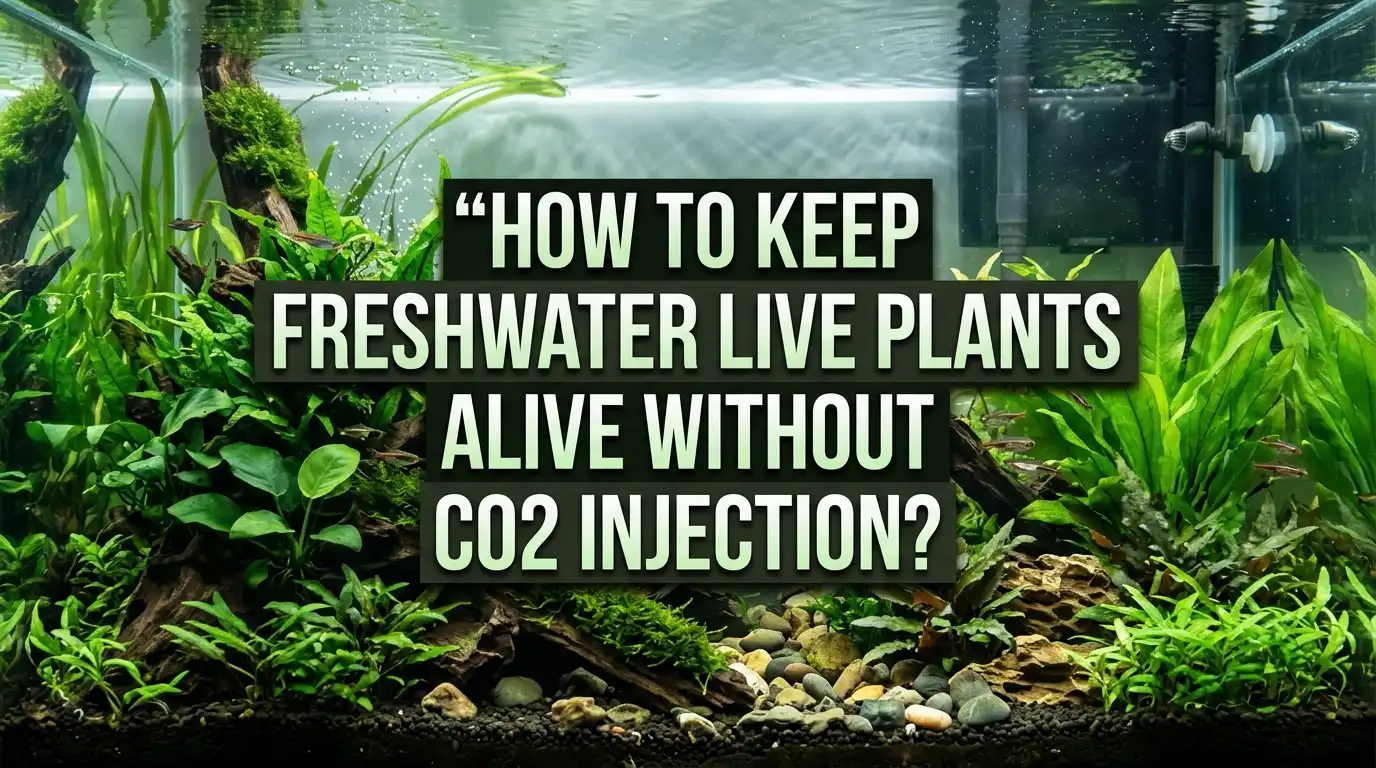
How to Keep Freshwater Live Plants Alive Without CO2 Injection?
Do you dream of a lush green fish tank? Many people think you need CO2 injection to grow healthy live plants. That is simply not true.
You can absolutely keep freshwater plants thriving without any extra CO2 equipment. It just takes a bit of know how.
Success in a low tech tank depends on a few key factors. Good lighting matters a lot. The right substrate matters too.
Plant choice also plays a huge role. Some plants simply do better without added CO2 than others.
This guide will show you exactly how to build a thriving planted tank the simple way. We will cover the best substrate options for feeding your plants naturally.
By the end, you will feel confident growing a beautiful, green aquarium. No complicated gear required. Just smart, simple choices that work.
In a Nutshell
- Choose the right substrate. A nutrient rich, soil based substrate like aquasoil feeds your plants from the roots up. This gives them a strong foundation.
- Give plants strong, steady light. Lighting is the most critical factor in a low tech tank. Consistent light helps plants make energy without extra CO2.
- Pick low tech friendly plants. Hornwort, Christmas moss, and small leaf species grow well without added CO2. These plants adapt easily to simple setups.
- Plant densely for stability. A tank packed with plants stays more balanced. High density helps control algae and keeps water quality steady.
- Watch for warning signs. Browning leaves often mean lighting or substrate problems. Catching this early saves your plants.
- Aim high with your aquascape. Even Dutch style tanks are possible without CO2 injection. With the right care, you can reach 50% or more plant coverage.
Why CO2 Injection Isn’t Always Necessary
Many aquarium owners assume CO2 injection is mandatory for plant growth. The truth is simpler. Plants need carbon, but they get it from multiple sources in your tank.
Fish waste contains nitrogen and phosphorus. These nutrients fuel plant growth naturally. Decaying plant matter adds more organic material to your substrate. Water changes introduce fresh minerals. Your plants absorb carbon dioxide from the water column and from fish respiration. This slow, steady supply works perfectly fine for many species.
The key difference between high tech and low tech tanks is growth speed, not survival. CO2 injected tanks grow faster and allow more demanding plants. Low tech tanks grow slower but still produce healthy, beautiful plants. You simply choose species that accept lower carbon availability.
Your substrate becomes extra important without CO2 injection. Nutrient rich, soil based substrates release minerals directly to plant roots. This compensates for slower nutrient uptake through the water column. Dense planting also stabilizes your environment naturally. More plants mean better oxygen production and waste processing.
Lighting matters even more without CO2. Strong, consistent light drives photosynthesis efficiently. Your plants convert available resources into growth more effectively. Weak lighting fails regardless of substrate quality or nutrient levels.
Tank stability is your real advantage. Low tech systems run steadily for years. You skip expensive equipment, complicated maintenance, and constant adjustments. Water parameters stay consistent. Plants adapt to your conditions rather than needing perfect parameters.
Many successful aquascapers build stunning tanks without any CO2 equipment. Their secret? They work with nature instead of against it. They choose compatible plants, provide good lighting, and let the system balance itself. This approach rewards patience and observation, not complexity.
Choosing the Right Substrate for Low-Tech Success
Your substrate choice makes or breaks a low-tech planted tank. The right foundation feeds plants through their roots and creates a stable environment for growth.
Aquasoil is your best option. This specialized substrate contains organic matter, minerals, and nutrients that plants absorb directly. It mimics natural soil conditions found in riverbeds where aquatic plants evolved. Most aquasoil products release nutrients gradually over months, giving your plants steady food without chemical dosing.
Standard gravel alone won’t work well. Plain gravel is inert, meaning it doesn’t provide nutrients. Your plants starve slowly, leading to browning leaves and stunted growth.
Layer your substrate strategically. Place nutrient-rich soil on the bottom layer, then cap it with regular gravel on top. This approach keeps nutrients from clouding your water while making them available to plant roots. A 2 to 3 inch total depth works best for most low-tech setups.
Consider substrate depth based on your plants. Root feeders like stem plants and crypts need deeper substrate to establish strong root systems. Shallow gravel works fine for epiphytes like moss and anubias, which attach to rocks or wood instead.
Substrate composition matters more than brand. Look for products containing clay, peat, and minerals. Avoid substrates with artificial dyes or unnecessary additives.
Your substrate becomes extra important without CO2 injection because it’s your primary nutrient source. Plants rely on root absorption rather than water column nutrients. A poor substrate choice forces you to add fertilizers constantly, complicating your maintenance routine.
Invest time selecting quality substrate upfront. This single decision determines whether your plants thrive or struggle throughout their lives in your aquarium.
Lighting Requirements for CO2-Free Planted Tanks
Lighting drives photosynthesis in your plants. Without CO2 injection, strong lighting becomes even more critical to keep your aquatic plants healthy and growing.
Aim for 8 to 10 hours of light daily. This duration mimics natural daylight cycles and gives plants enough time to produce energy. Most low-tech tanks need between 2 to 3 watts per gallon to succeed. This intensity level pushes photosynthesis without promoting excessive algae growth.
Position your light source directly above the tank. Light travels downward, so placement matters significantly. Plants closer to the surface receive stronger light than those at the bottom. Rotate or rearrange plants occasionally so all areas get adequate exposure.
LED lights work best for low-tech setups. They produce less heat, consume less electricity, and last longer than older fluorescent options. Full spectrum lights mimic natural sunlight and encourage healthy plant development. Your plants respond better to consistent light quality.
Watch your plants for signs of light stress. Pale leaves or slow growth indicate insufficient lighting. Conversely, excessive algae blooms suggest your light runs too long or too intensely. Adjust gradually until you find the right balance.
Consider your tank depth when selecting lighting power. Deeper tanks need stronger lights to reach bottom-dwelling plants. Shallow tanks under 12 inches need less intense lighting to achieve results.
Consistency matters more than intensity alone. Running lights on a timer ensures your plants receive predictable daily cycles. This regularity helps plants establish steady growth patterns. Avoid sudden changes to your lighting schedule, as plants need time to adapt to new conditions.
Best Low-Tech Plant Species That Thrive Without CO2
Low-tech planted tanks work best with species that don’t demand high carbon dioxide levels. Hornwort stands out as one of the easiest choices. This plant grows quickly, absorbs excess nutrients, and handles varying light conditions. It rarely develops algae issues and provides excellent cover for fish.
Christmas moss thrives in low-tech setups without fussing. You can attach it to rocks or driftwood using fishing line. It grows slowly, which means less maintenance for you. The delicate appearance adds visual interest to any tank design.
Anubias and Java fern are reliable performers in CO2-free environments. Both plants prefer shade, so they work well in tanks with moderate lighting. They attach to hardscape materials rather than rooting in substrate. These species tolerate a wide range of water conditions and temperatures.
Dwarf sagittaria and cryptocoryne varieties offer excellent flexibility. They root in substrate and provide carpet-like ground coverage. Growth remains steady without carbon dioxide injection. These plants also help stabilize your water chemistry naturally.
Rotala and ludwigia species can survive without CO2, though growth slows compared to injected tanks. Select smaller-leaf varieties for better results. They still add color and texture to your aquascape.
Marimo moss balls require minimal care and no substrate anchoring. They float or rest on the bottom of your tank. These unique plants absorb nutrients directly from water and fish waste.
The key is selecting plants with low metabolic demands. Avoid fast-growing stem plants that rapidly consume resources. Focus on slow-growing species that match your tank’s natural nutrient cycle. This approach creates a balanced, sustainable environment where plants genuinely flourish without expensive equipment.
Step-by-Step Setup for a Stable No-CO2 Planted Tank
Your tank setup forms the foundation for plant survival without CO2 injection. Start by establishing your water parameters first. Test your pH, keeping it between 6.0 and 7.5 for most low-tech plants. Measure your water hardness and aim for moderate levels, as extremely soft or hard water stresses plants unnecessarily.
Next, install your lighting system on a reliable timer. This automation ensures your plants receive consistent photoperiods every single day. Position lights 12 to 18 inches above the water surface, depending on your tank depth. Turn the lights on for 8 to 10 hours daily, then off completely to allow plants their rest period.
Now arrange your plants strategically throughout the tank. Place taller species in the background and shorter varieties toward the front. This creates visual depth and ensures all plants receive adequate light exposure. Leave some open water space for fish movement and maintenance access.
Add your plants gradually over 2 to 3 weeks rather than all at once. This staged approach prevents sudden biological imbalances and gives your tank time to stabilize. Start with hardy species like Christmas moss or anubias, then introduce more delicate plants once conditions stabilize.
Monitor water temperature consistently. Most low-tech plants prefer 72 to 78 degrees Fahrenheit. Use a reliable thermometer and adjust your heater settings if needed.
Perform partial water changes weekly, replacing 25 to 30 percent of your tank water. This removes waste products and replenishes minerals your plants need. Keep water movement gentle using an air stone or filter outlet directed away from delicate plant leaves.
Your setup is now ready for long-term plant growth without CO2 injection.
Maintenance Tips to Keep Plants Healthy Long-Term
Your plants need regular attention to stay healthy without CO2 injection. Consistency is your best tool for long-term success in a low-tech setup.
Check your plants weekly for signs of trouble. Brown or yellowing leaves mean something needs adjustment. Algae growth on leaves blocks light and slows photosynthesis. Remove algae gently with a soft brush or cloth.
Trim dead leaves and stems promptly. This prevents decay and keeps your tank clean. Pruning also encourages new growth and maintains plant shape. Remove any leaves that touch the substrate, as they rot easily.
Test your water parameters monthly. pH, ammonia, and nitrate levels affect plant health directly. Stable conditions prevent stress and stunted growth. Keep temperature between 72 and 78 degrees Fahrenheit.
Feed your plants through the water column using liquid fertilizers designed for planted tanks. Without CO2, your plants absorb nutrients slower, so regular supplementation helps. Follow dosing guidelines carefully to avoid overdosing, which causes algae blooms.
Substrate maintenance matters significantly. Gently stir the top layer during water changes to release trapped nutrients. Avoid disturbing plant roots too much. Over time, substrate breaks down and loses effectiveness. Plan for substrate replacement every two to three years.
Monitor plant density carefully. Overcrowding reduces water circulation and creates dead zones. Thin out plants that grow too densely. Proper spacing ensures every plant receives adequate light and nutrients.
Watch for pest outbreaks like snails or algae eaters that damage leaves. Remove pests manually when possible. Keep your tank clean by removing uneaten food and decaying matter daily.
Patience and observation are your strongest assets. Small adjustments based on what you see keep your plants thriving for years.
Common Mistakes That Cause Plant Die-Off
Many aquarium keepers lose their plants within weeks because they make preventable errors. Understanding these mistakes helps you avoid the same frustrations.
Insufficient lighting is the most common culprit. Plants need strong, consistent light to photosynthesize without CO2 support. Dim lighting forces plants to struggle and eventually fade. Your lights should run 8 to 10 hours daily at adequate intensity. Weak lighting combined with infrequent photoperiods guarantees failure.
Poor substrate selection undermines everything else. Regular gravel lacks the nutrients plants need to establish roots. Aquasoil and nutrient-rich substrates provide essential minerals that plants absorb through their roots. Without proper substrate, even hardy species decline rapidly.
Choosing incompatible plants causes immediate disappointment. Some species demand high CO2 levels to survive. Selecting demanding plants for low-tech setups wastes time and money. Stick with proven species like hornwort, Christmas moss, and small-leaf varieties that actually thrive without injection.
Overcrowding or undercrowding creates instability. Dense planting stabilizes the tank environment and reduces algae competition. Too few plants leave water conditions unstable. Too many plants initially can overwhelm your system before they establish.
Neglecting water parameters leads to slow decline. Plants need stable temperature, pH, and nutrient levels. Skipping water tests means problems go unnoticed until plants show severe damage. Brown leaves and stunted growth indicate conditions have already deteriorated.
Inconsistent maintenance breaks the careful balance. Irregular water changes, sporadic trimming, and skipped fertilizer dosing stress your plants. Low-tech tanks require steady, predictable routines to function properly.
Patience matters tremendously. Expecting rapid growth without CO2 sets unrealistic expectations. Plants grow slower in low-tech setups. Accept moderate growth rates and focus on stability instead.
Troubleshooting Signs of Poor Plant Health
Your plants will show clear warning signs when conditions aren’t right. Learning to spot these signals helps you fix problems before they become permanent.
Browning or yellowing leaves indicate your plants aren’t getting enough light or nutrients. Check if your lighting runs for 8 to 10 hours daily. If leaves turn brown at the tips first, this usually means nutrient deficiency. Add a liquid fertilizer designed for aquatic plants to address this quickly.
Slow or stunted growth happens when plants lack sufficient lighting intensity. Low-tech tanks need strong light to compensate for missing CO2. If your plants barely grow over several weeks, your light source probably isn’t powerful enough for the tank depth.
Melting or transparent leaves suggest unstable water conditions. This occurs when you add plants too quickly without letting the tank stabilize first. Gradual plant introduction over 2 to 3 weeks prevents this shock response.
Algae blooms often mean excess nutrients without enough plant competition. Dense plant coverage consumes excess nutrients and prevents algae growth. If algae spreads rapidly, increase your plant density and reduce light duration slightly.
Leaf holes or damage point to pest problems. Snails and certain fish species eat plant leaves. Inspect your tank inhabitants and remove any known plant eaters if damage appears.
Root rot or mushy stems indicate poor substrate quality or water stagnation. Ensure your substrate has adequate nutrients and your water circulation remains steady. Check that you’re performing weekly 25 to 30 percent water changes.
Monitor your plants weekly. Early detection of these signs lets you adjust lighting, fertilizers, or plant density before serious damage occurs.
Final Thoughts
Keeping freshwater plants alive without CO2 injection is easy when you focus on the basics. Strong lighting and nutrient rich substrate form the foundation of any successful low-tech tank.
You don’t need expensive equipment to grow healthy plants. Many aquarists maintain heavily planted tanks with over 50% coverage using just light and good substrate.
Plant selection makes a huge difference in your success. Hornwort, Christmas moss, and small-leaf varieties thrive in low-tech setups without extra effort.
These plants adapt well to lower carbon levels naturally. They don’t demand the intense care that high-tech plants require.
Consistency matters more than perfection in this hobby. Your tank environment stays stable when you plant densely and choose compatible species from the start.
Even Dutch-style aquascaping is possible without CO2 systems. This proves you can create stunning, lush tanks using natural methods alone.
Epiphytes work well too in these setups. They attach to hardscape and don’t need soil to flourish.
Remember that patience pays off in planted tanks. Plants take time to establish strong roots and adjust to their new home.
Watch your tank closely during the first few weeks. This helps you catch problems early before they become serious issues.
Your low-tech tank can look just as beautiful as high-tech setups. The key lies in matching your plant choices to your available light and nutrients.
Simple choices lead to long-term success in this hobby. Focus on proven plants, quality substrate, and steady lighting for the best results.
With the right approach, your plants will grow strong for years. You don’t need complicated equipment to enjoy a thriving planted aquarium.
Frequently Asked Questions
Do I really need CO2 to grow aquatic plants?
No. You can grow healthy plants without CO2 injection. The key is optimizing other factors like lighting, substrate, and plant selection. Many aquarists maintain beautiful planted tanks using only basic equipment. Success depends on consistent effort, not expensive systems.
What substrate works best for low-tech tanks?
Soil-based substrates perform better than regular gravel. Aquasoil contains essential nutrients that plants need to establish roots. Regular gravel lacks these nutrients and makes plant growth slow or stunted. Your substrate choice directly impacts how well your plants thrive.
Which plants survive without CO2 injection?
Hornwort, Christmas moss, and small-leaf varieties thrive in low-tech setups. These plants adapt naturally to lower carbon levels. They grow steadily without special equipment. Epiphytes also work well in these tanks. Choose plants that match your setup rather than fighting against their needs.
Why do my plants keep dying?
Insufficient lighting is the most common reason. Plants need strong, consistent light to photosynthesize without CO2. Weak lighting causes browning leaves and stunted growth. Check that your lights run 8 to 10 hours daily at proper intensity. Poor substrate and unstable water conditions also cause plant death within weeks.
How does plant density affect my tank?
High plant coverage stabilizes your entire tank environment. Densely planted tanks reduce algae blooms naturally. Plants compete with algae for nutrients, keeping your water cleaner. Aim for at least 50 percent plant coverage. This density creates a balanced ecosystem that requires less maintenance.