
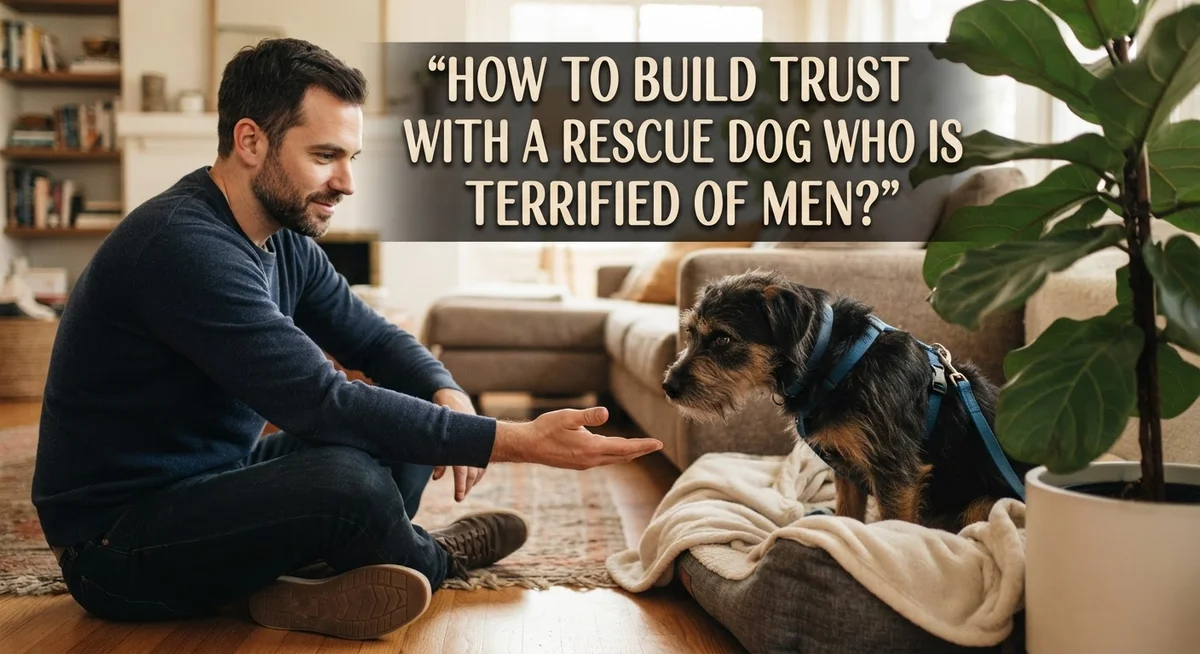
How to Build Trust With a Rescue Dog Who Is Terrified of Men?
Your new rescue dog flinches when a man walks into the room. He backs into a corner. He won’t take treats from male hands. This is heartbreaking to watch, but it’s also very common.
Many rescue dogs carry fear from past experiences with men. That fear feels overwhelming for both the dog and the family trying to help him.
The good news? Trust can be rebuilt. It takes patience, but it works.
This guide walks you through practical, force-free steps to help your dog feel safe. You’ll learn how to set up a calm space where he can settle in. We’ll cover gentle feeding techniques that build positive associations with men.
By the end, you’ll have a clear roadmap for helping your rescue dog feel safe with men.
In a Nutshell
- Give him space first. Set up a quiet safe zone with a bed or crate away from foot traffic. Let him settle in for two to four weeks before pushing for interaction.
- Feed him yourself. Sit at his level and hand-feed meals with a soft voice. This builds a calm, positive link between you and good things.
- Let men stay distant at first. Ask male visitors to toss treats from across the room. No direct approach, no eye contact, no reaching out.
- Skip the pity party. Comforting him too much can actually reinforce his fear. Stay calm and neutral instead.
- Never punish fear. Growling or backing away means he’s scared, not bad. Punishment only breaks trust further.
- Let him choose. Real progress happens when he decides to approach, not when someone forces it. Patience beats speed every time.
Understanding Why Rescue Dogs Fear Men
Rescue dogs often react with fear to men due to their past experiences. Many have encountered negative situations, loud voices, or physical punishment from male figures. Their nervous systems learned to associate men with danger, so their body responds with anxiety or defensive behaviors.
Understanding the root cause helps you respond with patience instead of frustration. A dog’s fear isn’t stubbornness or bad behavior. It’s a survival response based on what he learned before arriving at your home.
Some rescue dogs show obvious signs of fear around men. They may hide, tremble, growl, or try to escape when a man enters the room. Other dogs freeze or become very still, hoping the threat will pass. A few may even snap or lunge as a way to create distance.
Not all fear looks the same. Some dogs panic immediately. Others seem fine until a man gets too close or makes sudden movements. Understanding your specific dog’s triggers helps you plan better introductions.
The good news is that fear responses aren’t permanent. Dogs have remarkable ability to learn new associations. If your dog learns that men mean good things happen, his brain can rewire those fear pathways over time. This process requires consistency and patience, but it absolutely works.
Your dog’s past doesn’t define his future. He didn’t choose his early experiences, but you can choose how to help him heal. By learning what triggers his fear and responding thoughtfully, you create new, safer memories.
Fear in rescue dogs is common and understandable. It reflects survival instincts, not character flaws. With the right approach, your dog can learn to feel secure around men again. The journey starts with recognizing that his fear is real and valid, then moving forward with compassion and science backed strategies.
Setting Up a Safe Space for Your Dog
Your rescue dog needs a quiet place where he feels completely secure. This space becomes his refuge when the world feels overwhelming. A bedroom corner, spare bathroom, or quiet hallway works perfectly for this purpose.
Choose a low-traffic area of your home. Your dog should be able to relax without constant foot traffic or sudden noises. Avoid placing his safe space near doors where men typically enter the house. Distance from these trigger points helps him decompress naturally.
Set up a comfortable bed or crate in this zone. Dogs instinctively seek enclosed spaces when anxious. A crate with an open door gives him control over when he enters and exits. Leave the door unlocked so he never feels trapped. Add soft blankets or a worn shirt that smells like you for extra comfort.
Keep this area free from children, other pets, and visitors. This space belongs entirely to your dog. He should never feel pressured to interact or perform while there. Make it boring and peaceful, not exciting or stimulating.
Stock the safe space with water and his regular food bowl. Leave him undisturbed during the first 2 to 4 weeks in your home. Many rescue dogs need this settling period before they’re ready for intensive interaction. Rushing this timeline often backfires and increases anxiety.
Don’t force your dog to stay in his safe space. He should choose to use it voluntarily. Some dogs spend most of their first week there, and that’s completely normal. Others venture out sooner. Every dog moves at his own pace.
This foundation matters because it teaches your dog that your home is predictable and safe. Once he feels secure in this space, trust building with men becomes much easier. You’re essentially giving him permission to heal on his timeline, not yours.
The First Few Weeks: Letting Your Dog Settle In
The first few weeks with your rescue dog are about creating stability, not rushing bonding. Your dog’s nervous system needs time to calm down after the stress of shelter life, transport, and a completely new environment.
During this settling period, keep your home calm and predictable. Stick to a consistent daily routine with meals, bathroom breaks, and quiet time at the same hours each day. This predictability helps your dog’s brain relax. He starts to understand what comes next, which reduces anxiety.
Let your dog explore your home at his own pace. Don’t follow him around or try to engage him constantly. Instead, go about your normal activities and allow him to observe you from a distance. This gives him control over the interaction, which is crucial for building trust.
Spend time in the same room without demanding attention. Sit quietly, read a book, or watch television. Your calm presence teaches him that men (or people in general) aren’t threats. You’re simply existing peacefully nearby.
Hand-feeding is powerful during these early weeks. Sit on the floor or a low chair at your dog’s level. Offer small pieces of his regular food from your open palm. Use a soft, gentle voice. Never reach toward him. Let him come to your hand when he’s ready. This creates positive associations with your presence without pressure.
Avoid excessive petting or cuddling, even though you want to comfort him. Forcing affection can actually reinforce his fear by making him feel trapped. Instead, let him initiate contact. When he does approach, keep interactions brief and calm.
During these first weeks, your job is simply to be a safe, consistent presence. You’re not trying to fix his fear yet. You’re laying the groundwork by showing him that your home is secure and that you respect his boundaries. This foundation makes everything that comes later much easier.
Step-by-Step: Gradual Exposure and Positive Association Techniques
Start by sitting on the floor or crouching at your dog’s eye level. This position makes you appear less threatening than standing above him. Keep your body turned slightly sideways rather than facing him directly, as this feels less confrontational to anxious dogs.
Hand feeding works remarkably well during trust building. Place treats in your open palm and let your dog take them at his own speed. Use a soft, calm voice while doing this. Never grab his face or try to pet him while he eats. This simple act shows him that your hands bring good things, not danger.
Introduce distance gradually. Start with a man sitting 8 to 10 feet away from your dog. Have the man toss low value treats (like kibble) in your dog’s direction without making eye contact or talking. The man should avoid sudden movements. After several successful sessions over days, he can reduce the distance by one or two feet.
Let your dog approach the man, never the other way around. If your dog moves closer, that’s his choice and builds confidence. If he retreats, that’s fine too. Respect his decision every single time.
Keep sessions short and positive. Five to ten minutes is enough. Stop before your dog shows stress signals like panting, yawning, or backing away. End on a good note so he looks forward to the next interaction.
Consistency matters more than intensity. Daily calm interactions for weeks create lasting trust. Avoid having multiple men interact with your dog at once during early stages. One trusted male figure should be the primary person working through this process.
Never reward fearful behavior with extra attention or treats. This accidentally teaches him that fear gets him what he wants. Instead, reward calm, brave choices with genuine enthusiasm and treats.
Reading Your Dog’s Body Language and Respecting Boundaries
Your rescue dog communicates constantly through body language. Learning to read these signals helps you respect his boundaries and build trust faster.
Fearful dogs show specific physical signs. Flattened ears, tucked tail, and a lowered body posture all mean your dog feels unsafe. A dog who yawns repeatedly, licks his lips, or turns his head away is also stressed. These aren’t signs of stubbornness. Your dog is telling you he needs space.
Pay attention to his eyes. A dog staring intensely at a man may feel threatened. A dog who avoids eye contact is uncomfortable. Both responses mean you should slow down the introduction process.
Respecting boundaries is non-negotiable for trust building. When your dog shows fear signals, step back immediately. Don’t try to comfort him with petting or soothing words. This actually rewards the fearful behavior. Instead, create distance between your dog and the man. Let your dog move away without any pressure.
Watch for tension in his body. Stiff legs, a rigid posture, or a raised hackle line means your dog is escalating. Stop the interaction before he reaches this point.
Some dogs show subtle signs you might miss. A dog who suddenly stops eating treats is uncomfortable. A dog who leaves the room is communicating clearly. Honor these messages every single time.
Your dog’s comfort level should guide every interaction. If he shows any fear signal, the session is over. This isn’t failure. This is you listening to your dog. Consistent respect for his boundaries teaches him that you’re trustworthy.
Track patterns in his reactions. Does he show more fear around certain men? Does time of day matter? Does distance help? These observations help you create better conditions for positive experiences. Your attentiveness shows your dog that his feelings matter, which is the foundation of real trust.
Common Mistakes That Undermine Trust-Building
Many well meaning people make mistakes when working with scared rescue dogs. These errors can actually slow down trust building or make fear worse.
Rushing the process is the biggest mistake. You want your dog to feel better quickly, but fear doesn’t disappear on a schedule. Some people try intensive bonding in the first week. Your dog needs 2 to 4 weeks just to settle and feel safe in his new home. Pushing interaction too fast teaches him that men are unpredictable and overwhelming.
Showering your dog with pity creates problems too. When you use a soft, sympathetic voice or give extra attention during fearful moments, your dog learns that fear gets rewarded. This actually strengthens the fear response. Instead, stay calm and matter of fact. Your dog picks up on your emotions and energy.
Using punishment for fear responses is harmful and ineffective. Your dog isn’t being stubborn or disobedient when he backs away from a man. He’s genuinely scared. Punishment teaches him that men are even more dangerous. It destroys trust instead of building it.
Forcing interaction before your dog is ready is another common error. Some people insist the dog sit with a visiting man or accept petting when the dog clearly doesn’t want it. This violates your dog’s autonomy and makes him feel trapped. Trust requires that your dog has control over interactions.
Ignoring subtle body language signals happens frequently too. People miss the early warning signs like ear flattening or body tension. They keep pushing until the dog reacts strongly. By then, you’ve already crossed your dog’s boundary.
Inconsistency also undermines progress. Your dog needs the same calm, predictable approach every single day. Mixed messages confuse him and slow trust development.
The key is patience, respect for your dog’s boundaries, and understanding that trust builds through small positive moments repeated consistently over weeks.
Troubleshooting Setbacks and Slow Progress
Progress with a fearful rescue dog rarely moves in a straight line. You will hit plateaus. Your dog might regress after a stressful event. This is completely normal and doesn’t mean you’ve failed.
Setbacks happen for real reasons. A loud noise, a visitor’s sudden movement, or even a change in routine can trigger old fears. Your dog’s nervous system needs time to rewire. Expect these moments and respond with extra patience, not frustration.
When progress stalls, first check your consistency. Are you and other family members following the same approach? Mixed signals confuse dogs. Everyone in the home should use identical techniques for hand feeding, distance, and tone of voice. Even small inconsistencies can slow trust building.
Look at your expectations too. Some people expect major changes in weeks. Real progress takes months. A dog who hides for the first month but makes eye contact in month three is making genuine progress. Celebrate these small wins.
If your dog seems stuck, reduce pressure further. Go back to basics. If hand feeding at three feet isn’t working, try it at six feet. Slower progress is still progress. Your dog will tell you the right pace if you listen.
Environmental stress also causes setbacks. Is your home chaotic? Are there loud noises or unpredictable activity? Create an even quieter, more predictable space. Reduce variables so your dog can focus on building trust.
Track specific behaviors over time rather than judging overall progress. Write down when your dog makes eye contact, eats treats, or relaxes. These small moments prove forward movement even when it feels invisible.
Patience compounds over time. The weeks you invest now create a foundation for years of companionship. Your consistency and calm presence are exactly what your rescue dog needs to heal.
Final Thoughts
Building trust with a fearful rescue dog takes real time. There is no shortcut that works. Every small step matters more than you think.
Your rescue dog needs you to stay calm and consistent. Men who visit your home should follow the same slow approach. This keeps things predictable for your dog.
Remember that fear responses come from past experiences, not stubbornness. Your dog is not being difficult on purpose. He is simply scared and needs proof that he is safe now.
Celebrate tiny wins along the way. A dog who sniffs a man’s shoe from ten feet away is making progress. A dog who eats treats near a stranger is building real trust.
Some dogs bond with men in a few months. Others take a full year or longer. Every dog has his own timeline, and that is okay.
Stay focused on his comfort level, not your timeline. Your patience today becomes his confidence tomorrow. This trade off is always worth it.
Keep using positive reinforcement even after trust starts to form. Old fears can resurface during stressful times. A solid foundation helps him bounce back faster.
Work with a certified force-free trainer if progress feels stuck. Professional guidance can spot small issues you might miss. This is not a sign of failure on your part.
Your rescue dog can absolutely learn to trust men again. It happens through countless small positive moments repeated over time. Consistency matters more than speed here.
Give him grace on hard days. Give yourself grace too. This process asks a lot from both of you.
In the end, the dog who once flinched at every man may greet them with a wagging tail. That transformation is built one calm, patient day at a time.
Frequently Asked Questions
Why does my rescue dog fear men specifically?
Past experiences shape how dogs react to people. Your dog may have experienced rough handling, loud voices, or physical punishment from men before rescue. Dogs also pick up on size and deeper voices, which can feel threatening to a frightened dog. Some rescue dogs generalize their fear, meaning one negative experience with a man can affect how they react to all men.
The good news is that fear is learned behavior. With consistent positive experiences, your dog can learn that men are safe.
How long does it take to build trust with a fearful rescue dog?
Trust building happens on your dog’s timeline, not yours. Most dogs need 2 to 4 weeks just to settle into a new home. Real progress with fear often takes months, not weeks.
Some dogs show improvement in 2 to 3 months. Others need 6 months or longer. Each dog is different based on their past and personality. Patience matters more than speed here.
What should I do if my dog makes progress, then suddenly gets scared again?
Setbacks are normal and expected. A loud noise, a stranger’s sudden movement, or even a change in routine can trigger fear again. This doesn’t mean you failed or that progress disappeared.
When setbacks happen, simply return to what was working before. Stay calm and consistent. Keep offering positive experiences at a slower pace if needed. Track specific behaviors over weeks rather than judging progress day to day.
Can my rescue dog ever truly trust men again?
Yes, absolutely. Dogs are capable of learning new associations and building real trust. Many fearful rescue dogs go on to bond deeply with men and other people.
The foundation you build now creates lasting change. Your consistency, patience, and respect for your dog’s boundaries make recovery possible.