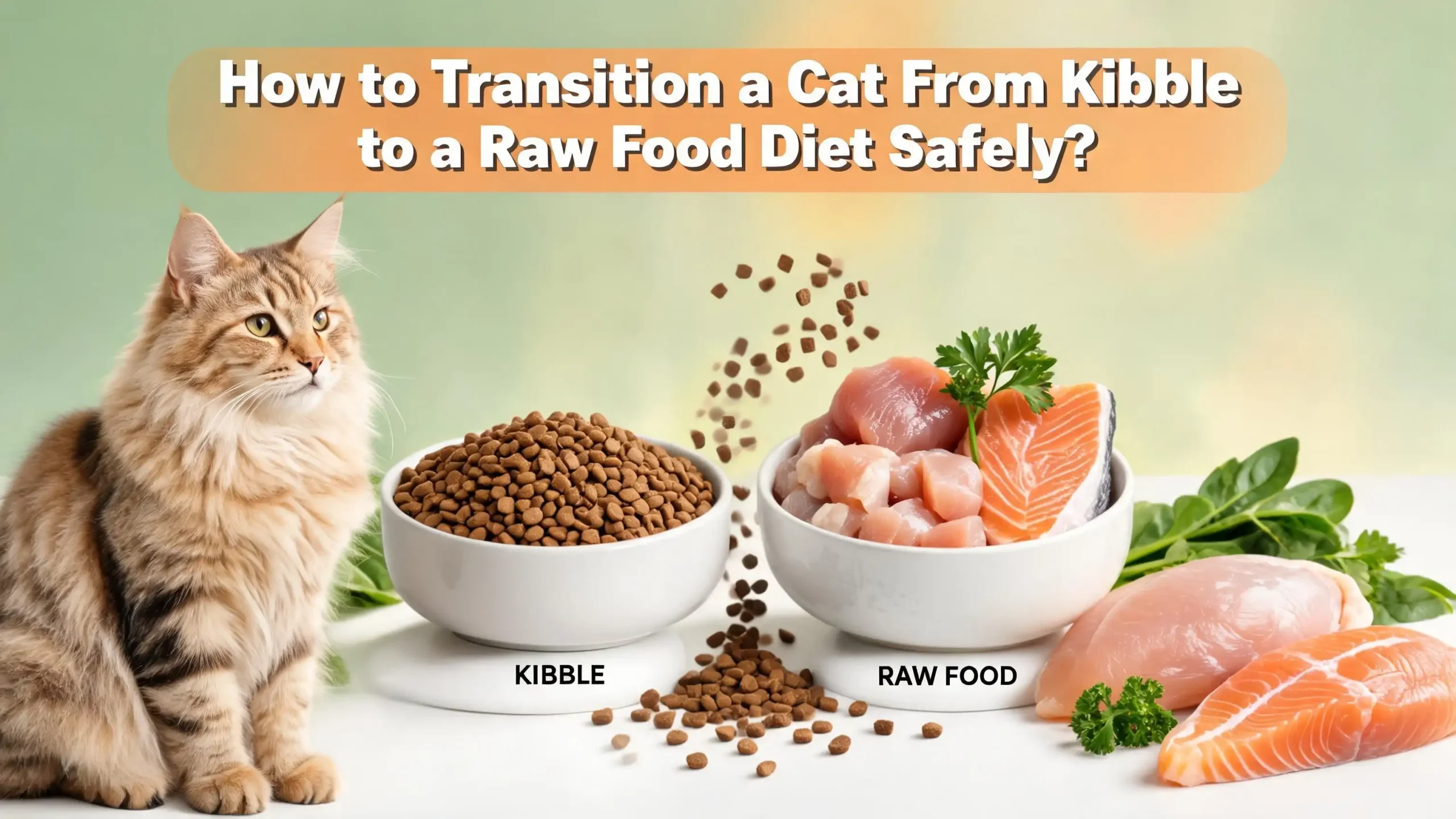
How to Transition a Cat From Kibble to a Raw Food Diet Safely?
Switching your cat from dry kibble to a raw food diet can feel like a big change. Cats are known for their strong food preferences. Many cats have eaten the same kibble their entire lives and resist anything new on the plate.
The truth is, cats are obligate carnivores. Their bodies are built to digest raw meat, organs, and bones. Kibble is a modern invention that relies heavily on carbohydrates and processed ingredients. A raw food diet brings your cat closer to what nature intended.
But here is the important part. You cannot just swap the kibble bowl for a plate of raw chicken overnight. A sudden change can upset your cat’s stomach, cause refusal to eat, or even create dangerous nutritional gaps.
This guide will walk you through every stage of the process so you and your cat can make the shift safely and successfully.
Key Takeaways
- Cats are imprint eaters, which means they identify food based on what they ate as kittens. This is why many adult cats resist new food textures and smells. Understanding this behavior will help you stay patient during the transition and avoid frustration.
- The transition should take at least two to six weeks, depending on your cat’s personality and current diet. Rushing the process leads to digestive upset, food refusal, and stress for both you and your cat.
- You should move from kibble to wet canned food first before introducing any raw food. This intermediate step helps your cat adjust to higher moisture content and softer textures, making the final switch to raw much easier.
- Nutritional balance is critical in a raw diet. Raw feeding is not just about giving your cat plain meat. A complete raw diet must include muscle meat, organ meat, edible bone, and specific supplements like taurine to prevent serious health problems.
- Food safety practices protect both you and your cat. Raw meat carries bacteria like Salmonella and Listeria. Proper handling, storage, and hygiene during preparation reduce these risks significantly.
- Consult your veterinarian before starting the transition, especially if your cat has existing health conditions like kidney disease, diabetes, or a compromised immune system.
Why Cats Resist New Foods and What You Can Do About It
Cats develop their food preferences early in life through a process called food imprinting. During kittenhood, cats learn what counts as “food” based on smell, texture, and taste. Once those preferences are set, cats tend to stick with them. This is why a cat who has eaten dry kibble for years may look at a piece of raw chicken like it is a foreign object.
This behavior is not stubbornness in the way humans understand it. Your cat genuinely may not recognize raw meat as food. The smell is different. The texture is different. The temperature is different. Everything about raw food contradicts what your cat has learned to expect at mealtime.
The best way to work with this natural instinct is to introduce change slowly. Start by placing a tiny amount of the new food next to the old food. Let your cat sniff and investigate without pressure. Never force your cat to eat something new. Pressure creates negative associations that make future attempts even harder.
You can also try lightly warming the raw food to release its aroma. Cats rely heavily on smell to decide if something is edible. A slightly warmed piece of meat will smell much more interesting than a cold chunk straight from the refrigerator. Patience is your greatest tool during this phase.
The Importance of a Gradual Transition
A sudden diet change can cause real problems for your cat. Digestive upset is the most common issue, including vomiting, diarrhea, and gas. Cats who have eaten kibble for years have digestive systems that are accustomed to processing dry, carbohydrate heavy food. Switching abruptly to raw meat shocks the system.
There is also a behavioral risk. If your cat tries raw food and gets a stomachache, they will associate that food with feeling sick. This creates an even stronger resistance to raw food in the future. A gradual transition avoids this problem by giving the digestive system time to adjust.
The general timeline for a full transition ranges from two weeks for easy going cats to six weeks or more for picky eaters. Some very stubborn cats may need several months. The key is to follow your cat’s pace. Watch their behavior and their stool quality to decide when to increase the amount of new food.
Never let your cat go without eating for more than 24 hours. Cats who stop eating are at risk for a serious condition called hepatic lipidosis (fatty liver disease). If your cat refuses the new food entirely, go back to what they will eat and try again later with a smaller change.
Step One: Switch From Free Feeding to Scheduled Meals
Many kibble fed cats eat by grazing throughout the day. A bowl of dry food sits out, and the cat eats whenever they feel like it. This free feeding habit is the first thing you need to change before starting the transition to raw food.
Raw food cannot sit out at room temperature for hours the way kibble can. Bacteria grow quickly on raw meat, so meals must be served fresh and removed after 20 to 30 minutes. Getting your cat used to scheduled feeding times now will make the raw feeding routine much smoother later.
Start by offering two or three meals per day at set times. Place the kibble down and pick it up after 30 minutes, even if your cat has not finished. Your cat will quickly learn that food appears at specific times and will not be available all day.
This change also creates healthy hunger between meals. A cat who feels genuinely hungry at mealtime is much more willing to try something new. Free fed cats never experience real hunger, so they have no motivation to eat anything unfamiliar.
Expect a few days of protest. Your cat may meow, paw at the empty food spot, or give you disapproving looks. Stay consistent. Within a week, most cats settle into the new routine and eat eagerly at each scheduled meal.
Step Two: Transition From Kibble to Wet Canned Food
Before you introduce any raw food, take your cat through an intermediate step. Move from dry kibble to wet canned food first. This step bridges the gap between the dry, crunchy texture of kibble and the soft, moist texture of raw meat.
Start by mixing a small amount of canned food into the kibble. A ratio of 75% kibble and 25% canned food works well for the first few days. Choose a chunked style canned food rather than a smooth paste, since chunks are closer to the texture of raw meat pieces.
Over the next week or two, gradually shift the ratio. Move to 50/50, then 75% canned and 25% kibble, and finally 100% canned food. Watch your cat’s stool during this process. Soft stool is normal for a day or two after each change, but persistent diarrhea means you are moving too fast.
Wet canned food also helps increase your cat’s water intake. Kibble contains roughly 10% moisture, while canned food contains about 78% moisture. This higher water content better prepares your cat’s digestive system for raw food, which has a similar moisture level. By the end of this step, your cat should be eating exclusively wet food at scheduled mealtimes.
Step Three: Introduce Small Pieces of Raw Meat
Once your cat eats wet canned food comfortably, you can begin adding raw food. Start with tiny pieces of boneless raw muscle meat such as chicken breast or turkey. Cut the meat into very small, bite sized chunks that can be mixed into the canned food.
Begin with just three or four small raw pieces hidden inside the canned food. Coat the raw chunks thoroughly with the canned food so they pick up the familiar smell and flavor. Most cats will eat these pieces without even noticing the difference.
Over several days, increase the number of raw pieces in each meal. Move from three or four pieces to six or eight, then to a dozen. At the same time, start reducing the amount of canned food slightly. The goal is to gradually shift the balance so raw meat makes up a larger portion of each meal.
If your cat picks around the raw pieces, try a different approach. Lightly sear the outside of the raw meat to release more aroma. You can also sprinkle a small amount of nutritional yeast over the food, or add a teaspoon of bone broth. These flavor boosters often convince hesitant cats to give the raw pieces a try.
This step typically takes one to two weeks. Do not rush it. Let your cat build confidence with the new texture and taste before moving forward.
Step Four: Increase Raw Food and Phase Out Canned Food
At this point your cat is eating a mix of canned food and raw meat chunks. Now you will steadily increase the size and proportion of the raw portions while decreasing the canned food.
Start cutting the raw meat into slightly larger chunks. Cats need to chew their food, and larger pieces encourage natural chewing behavior that supports dental health. If your cat refuses the larger pieces, go back to smaller ones for a few more days before trying again.
A good progression looks like this. Move to 50% canned food and 50% raw meat. Hold at this ratio for several days. Then shift to 25% canned and 75% raw. Finally, feed 100% raw food. Each shift should take at least three to five days, and longer if your cat needs more time to adjust.
Monitor your cat’s stool closely during this phase. You may notice some changes in color, texture, or frequency. Cats on raw diets typically produce smaller, firmer, less smelly stool. Some temporary digestive oddities are normal during the adjustment period. However, persistent vomiting, bloody stool, or complete refusal to eat are signs to stop and consult your veterinarian.
Building a Nutritionally Complete Raw Diet
Feeding raw food is not as simple as giving your cat a piece of chicken. A balanced raw diet requires specific ratios of muscle meat, organ meat, and edible bone. Without this balance, your cat can develop serious nutritional deficiencies over time.
A commonly used guideline for adult cats follows this ratio: 80% muscle meat, 10% edible bone, 5% liver, and 5% other secreting organs such as kidney, spleen, or pancreas. This ratio provides a broad range of essential nutrients including protein, fat, calcium, phosphorus, and vitamins A and D.
Taurine is one of the most critical nutrients for cats. Cats cannot produce enough taurine on their own and must get it from their food. Taurine deficiency causes serious health problems including heart disease, vision loss, and reproductive issues. Raw heart meat is an excellent natural source of taurine. Many raw feeders also add a taurine supplement as extra insurance.
Other important supplements to consider include fish oil for omega 3 fatty acids and vitamin E as an antioxidant. If you are preparing homemade raw meals, work with a veterinary nutritionist to create recipes that meet all of your cat’s needs. Pre made commercial raw foods are formulated to be nutritionally complete and can be a simpler option for new raw feeders.
Protein Variety and Why It Matters
Feeding the same protein source every day is a common mistake among new raw feeders. Variety is essential for nutritional balance and for preventing food sensitivities. Different meats provide different nutrient profiles, and rotating proteins ensures your cat gets a wide spectrum of vitamins and minerals.
Good protein options for cats include chicken, turkey, rabbit, duck, quail, and beef. Start with one or two proteins during the transition and add new ones gradually. Chicken and turkey are mild, easy to digest, and widely available, making them ideal starting proteins.
Once your cat is fully transitioned, aim to rotate between at least three different protein sources over time. This rotation mimics the variety a wild cat would experience. A feral cat does not eat the same prey animal every day. They eat mice, birds, insects, and small rabbits depending on what is available.
Introduce each new protein one at a time and watch for any signs of intolerance such as vomiting, diarrhea, or itching. Most cats do well with common poultry proteins but may need time to adjust to richer meats like beef or duck. Give your cat at least a week on each new protein before adding another.
Food Safety and Hygiene Practices
Raw meat carries bacteria including Salmonella, Listeria, and E. coli. Proper handling and hygiene are essential to protect both your cat and your household. The FDA and CDC both emphasize the importance of safe food handling practices for anyone preparing raw pet food.
Always wash your hands thoroughly with soap and water after touching raw meat. Clean and disinfect all cutting boards, knives, bowls, and surfaces that contact raw food. Use separate preparation tools for raw pet food and human food to prevent cross contamination.
Store raw food in sealed containers in the freezer until you are ready to use it. Thaw portions in the refrigerator rather than on the counter. Thawing at room temperature encourages rapid bacterial growth. Once thawed, raw food should be used within two to three days.
Serve meals in stainless steel or ceramic bowls that are easy to sanitize. Wash food bowls with hot soapy water after every meal. Pick up any uneaten raw food after 20 to 30 minutes. Do not leave raw food sitting out at room temperature, as bacteria multiply quickly in the danger zone between 40 and 140 degrees Fahrenheit.
Households with young children, elderly individuals, or immunocompromised people should take extra care. Keep raw feeding preparation areas separate and maintain strict hygiene routines.
Handling Picky Eaters and Food Refusal
Some cats take weeks or even months to accept raw food. This is normal and does not mean the transition has failed. Picky eating is one of the most common challenges raw feeders face, and there are several strategies to work through it.
Lightly cooking the raw meat is a useful trick for reluctant cats. Searing the outside while leaving the inside raw gives the food a cooked smell that many cats find appealing. Over time, cook the meat less and less until your cat accepts it fully raw.
Adding flavor enhancers can also help. A small amount of bone broth, sardine juice, or nutritional yeast sprinkled on top of raw food makes it more attractive. Some cats respond to a tiny bit of freeze dried meat crumbled over the meal as a topper.
Temperature matters more than most people realize. Many cats prefer food at body temperature, around 100 to 102 degrees Fahrenheit. This mimics the temperature of freshly caught prey. Place the thawed raw food in a sealed bag and submerge it in warm water for a few minutes before serving.
If your cat still refuses, do not panic and do not give in by switching back to kibble permanently. Go back one step in the transition process and hold there for a longer period. Consistency and patience will get you through this stage.
Signs Your Cat Is Thriving on a Raw Diet
Once the transition is complete, you should start to notice positive changes in your cat’s health. These changes often appear within the first few weeks and become more obvious over time.
One of the first things owners notice is improved coat quality. Cats on raw diets often develop softer, shinier fur with less shedding. The high quality animal fats and omega fatty acids in raw food support skin and coat health in ways that processed kibble cannot match.
Digestive improvements are another common benefit. Cats on raw diets typically produce smaller, firmer, and less odorous stool. This happens because raw food is more digestible than kibble, and the cat’s body absorbs more nutrients with less waste.
Increased energy and playfulness are also frequently reported. Cats who seemed lethargic on kibble often become more active and engaged after switching to raw. Better hydration from the moisture rich food, combined with higher quality protein, gives cats more fuel for daily activity.
Other positive signs include healthier gums, cleaner teeth, better breath, and a leaner body condition. If you notice any negative changes such as ongoing digestive problems, weight loss, lethargy, or coat deterioration, consult your veterinarian to rule out nutritional imbalances or underlying health issues.
When to Consult Your Veterinarian
Your veterinarian should be part of the raw feeding process from the beginning. Schedule a checkup before starting the transition so your vet can assess your cat’s current health and identify any conditions that might affect the diet change.
Cats with kidney disease, pancreatitis, or compromised immune systems may need special considerations or modified raw diets. Kittens and senior cats also have unique nutritional requirements that must be addressed. A veterinarian or veterinary nutritionist can help you create a feeding plan that meets your specific cat’s needs.
Schedule a follow up appointment four to six weeks after completing the transition. Blood work can confirm that your cat’s nutrient levels are on track. Regular checkups every six to twelve months after that will help catch any issues early.
If at any point during the transition your cat stops eating for more than 24 hours, vomits repeatedly, develops bloody stool, or shows signs of lethargy or pain, stop the transition and seek veterinary advice immediately. These symptoms could indicate a reaction to the new food or an unrelated health problem that needs attention.
Your vet may not be enthusiastic about raw feeding, as many veterinary organizations have concerns about bacterial contamination. Have an open, respectful conversation about your goals and be willing to compromise on safety measures.
Common Mistakes to Avoid During the Transition
Even well intentioned cat owners make errors that slow down or derail the raw feeding transition. Knowing these common mistakes ahead of time helps you avoid them.
The biggest mistake is switching too fast. Dumping a bowl of raw food in front of a lifelong kibble eater almost always ends in rejection. The gradual approach described in this guide gives your cat the time they need to adjust physically and mentally.
Feeding an unbalanced diet is the second most serious mistake. Giving your cat only muscle meat without organs, bone, or supplements creates dangerous nutritional gaps. Taurine deficiency alone can cause irreversible heart and eye damage. Always follow a balanced recipe or use a pre formulated commercial raw food.
Not practicing proper food safety puts your household at risk. Treat raw pet food with the same caution you would use for raw food in your own cooking. Sanitize everything, store food correctly, and never leave raw food out at room temperature.
Another common error is giving up too quickly. Many cats need weeks to accept new food. Owners who abandon the transition after a few days of refusal miss out on the long term benefits. Stay the course, adjust your approach, and trust the process.
Frequently Asked Questions
How long does it take to fully transition a cat from kibble to raw food?
The timeline varies based on your cat’s age, personality, and previous diet. Most cats complete the transition in two to six weeks. However, very picky cats or those who have eaten kibble exclusively for many years may need two to three months. The key is to move at your cat’s pace and never rush the process. Watch stool quality and appetite as your guide.
Can kittens eat a raw food diet?
Yes, kittens can eat raw food and often transition more easily than adult cats because their food preferences are still forming. However, kittens have higher calorie and nutrient requirements than adult cats due to their rapid growth. Work with a veterinarian to ensure the raw diet meets all of a kitten’s specific nutritional needs, including adequate calcium and phosphorus for bone development.
Is a raw food diet safe for my cat?
Raw diets carry some risk of bacterial contamination from organisms like Salmonella and Listeria. However, cats have shorter digestive tracts and more acidic stomachs than humans, which gives them a natural advantage in handling bacteria. Proper sourcing, storage, handling, and hygiene practices reduce these risks significantly. Consult your veterinarian to weigh the benefits and risks for your specific cat.
What supplements does a raw fed cat need?
At minimum, a raw fed cat needs adequate taurine, which is found naturally in heart meat but is often added as a supplement for safety. Other common supplements include fish oil for omega 3 fatty acids, vitamin E, and vitamin B complex. If you prepare homemade raw meals, a veterinary nutritionist can create a complete supplement plan.
My cat refuses to eat raw food. What should I do?
Go back to the last step in the transition that your cat accepted and stay there for a few extra days. Try warming the food slightly, adding a flavor enhancer like bone broth or sardine juice, or lightly searing the outside of the meat. Never let your cat go without food for more than 24 hours. If refusal continues, consult your veterinarian for personalized advice on how to proceed.
Can I mix raw food and kibble in the same meal?
This is a debated topic among raw feeders. Some experts advise against mixing raw and kibble in the same bowl because they digest at different rates. Others find it works fine during the transition period. During the transition, mixing raw with canned wet food is a safer and more effective approach. Once your cat is fully on raw, feed complete raw meals without kibble.