
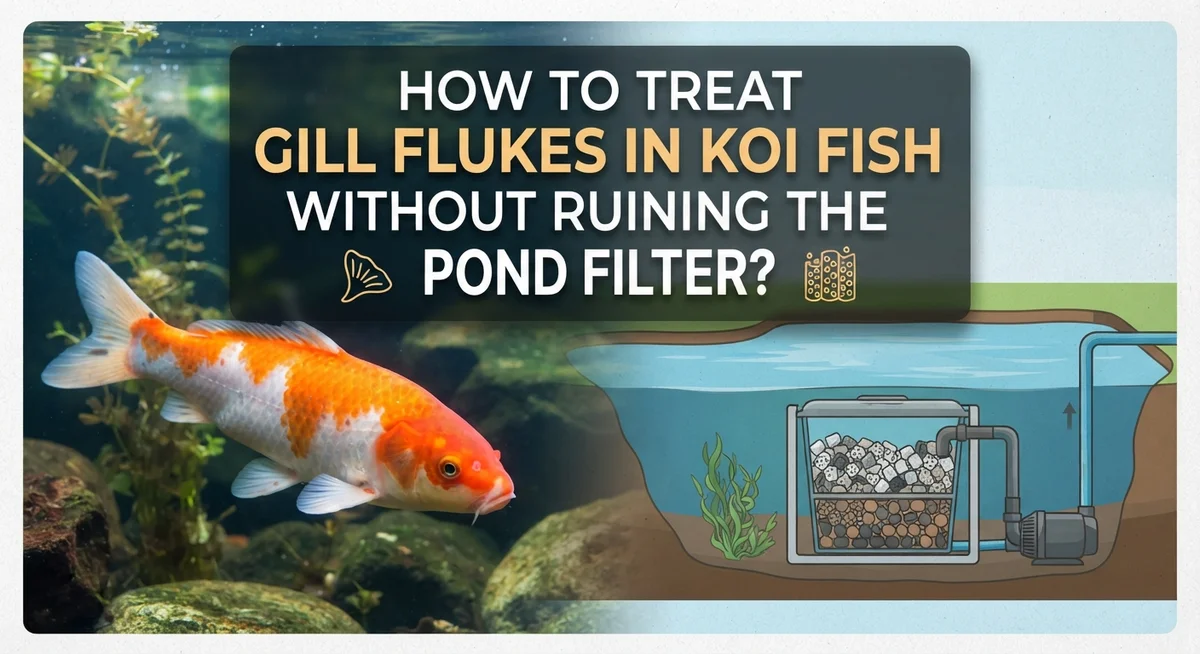
How to Treat Gill Flukes in Koi Fish Without Ruining the Pond Filter?
Your koi keep scratching against rocks. They clamp their fins tight. Their gills look red and swollen.
These signs often point to gill flukes. These tiny parasites attach to your koi’s gills and cause real distress.
But here’s the tricky part. Treating gill flukes can harm your pond’s beneficial bacteria if you’re not careful.
Many koi owners panic and dump treatment straight into their filter system. This mistake kills the good bacteria your filter needs. Your water quality crashes right when your fish need it most.
This guide shows you a safer path forward. You will learn how to confirm gill flukes through proper diagnosis first. We cover the exact treatment steps that protect your biological filter.
In a Nutshell
- Confirm the diagnosis first. Ask your vet to do a gill scrape. This step tells you if flukes are really the problem.
- Praziquantel works best. It targets gill flukes without harming your koi. Most experts trust this treatment above others.
- Bypass your filter during treatment. This step protects your good bacteria. It also keeps the medicine strong enough to work.
- Use potassium permanganate first. Add 1.5g per 220 gallons to clear the slime coat. Wait 24 hours before starting the fluke treatment.
- Keep treatment in the pond briefly. A few hours is enough time. Then restore normal water flow through your filter.
- Expect to repeat the process. Gill flukes often need a second round. One treatment rarely finishes the job completely.
- Prevent future outbreaks. Quarantine new fish for 2 to 4 weeks. Clean your nets and avoid overcrowding your pond.
What Are Gill Flukes and How Do They Affect Koi
Gill flukes are tiny parasites that live inside your koi’s gills. These creatures attach to gill tissue and feed on blood and mucus. Your fish cannot shake them off by scratching like they do with skin parasites.
What makes gill flukes different is their location. They hide deep inside the gill chambers where you cannot see them easily. Skin flukes sit on the body surface, so they respond to salt baths. Gill flukes need stronger medicine to reach them.
Your koi shows specific signs when gill flukes attack. They gasp at the water surface because damaged gills cannot absorb oxygen properly. They lose appetite and stop eating. Their gills may look pale or swollen. Some fish rub their gill covers against rocks, trying to find relief.
The real damage happens inside. Gill flukes create tiny wounds on gill tissue. Bacteria and fungus can enter these wounds and cause secondary infections. If left untreated, your koi will weaken and may die within weeks.
Here is the critical part: you must confirm the diagnosis before treating. Many koi owners mistake gill flukes for other problems. Ask your veterinarian to perform a gill scrape examination. They take a small sample from the gills and look at it under a microscope. This simple test reveals if flukes are actually present.
Guessing wrong wastes time and money. It also stresses your fish unnecessarily. A confirmed diagnosis means you can start the right treatment immediately. You will know exactly what you are fighting against.
Confirming Diagnosis: Why a Gill Scrape Matters Before Treatment
A gill scrape is your first and most important step. Without it, you risk treating the wrong problem and damaging your pond’s ecosystem.
Here’s why the gill scrape matters so much. Your vet or fish specialist places a small tool under the koi’s gill cover and gently scrapes cells from the gill tissue. These cells go under a microscope. The vet looks for actual gill fluke parasites, their eggs, or other problems like bacteria or fungus.
This confirmation prevents costly mistakes. Many koi diseases look similar. Skin flukes, bacterial infections, and poor water quality all cause scratching behavior. Treating for gill flukes when your koi has a bacterial issue will fail. Your fish stays sick while you waste treatment chemicals and time.
The gill scrape also shows how severe the infestation is. Light infestations need one treatment cycle. Heavy infestations often require repeated applications. Knowing the severity helps you plan your filter bypass schedule and predict recovery time.
Another benefit: the scrape reveals if your koi has multiple parasites at once. Some fish carry both gill flukes and skin flukes simultaneously. Different parasites need different treatment approaches. A gill scrape catches this immediately.
Skip this step and you gamble with your entire pond. Wrong treatments can crash your beneficial bacteria. They can stress your koi further. They cost money with zero results.
Most vets complete a gill scrape in minutes. The procedure causes minimal stress to your fish. The cost is small compared to failed treatments or fish loss.
Contact your local koi veterinarian or fish specialist before buying any treatment supplies. Ask them to perform a gill scrape first. This simple confirmation saves time, money, and fish lives.
Gill Flukes vs Skin Flukes: Why the Distinction Changes Your Approach
Gill flukes and skin flukes are two different parasites that attack your koi in separate ways. Understanding which one you have changes everything about how you treat it.
Gill flukes live inside your koi’s gills. They hide in the gill tissue where you cannot see them without a microscope. Skin flukes, on the other hand, attach to the outer body surface of your fish. This location difference matters because treatments work differently for each parasite.
Gill flukes cause your koi to gasp at the water surface and produce excess slime. Your fish may also rub against rocks and pond walls. Skin flukes create visible spots or patches on your koi’s body. The fish flashes and scratches, but the damage stays on the outside.
The treatment approach splits based on location. Skin flukes respond well to salt baths and some topical treatments. Gill flukes require stronger medications that work from inside the body. Using a skin fluke treatment on gill flukes will fail because the medicine cannot reach deep enough into the gill tissue.
Filter bypass becomes even more critical with gill fluke treatments. These medications are potent and need to stay concentrated in your pond water. Running them through your filter system weakens the dose and wastes your effort.
Skin fluke treatments are gentler, but you should still consider your filter during application. Some treatments contain ingredients that can stress your beneficial bacteria.
The key difference is this: gill flukes demand systemic medication and strict filter management, while skin flukes often respond to simpler, localized treatments. Never assume which type your koi has. Always confirm with a gill scrape first. This one step prevents wasted money and protects your entire pond ecosystem.
Step-by-Step Treatment Protocol Using Praziquantel and Potassium Permanganate
Praziquantel works as the primary treatment for gill flukes because it targets the parasite’s nervous system. Your koi absorbs this medication through their gills and digestive tract, killing adult flukes and some larvae.
Start by preparing your pond for treatment. Turn off all filters, pumps, and UV sterilizers at least 2 hours before dosing. This step prevents the medication from circulating through filter media where beneficial bacteria would break it down. Your treatment loses effectiveness if it passes through activated carbon or biological filters.
Many koi keepers use potassium permanganate first to remove excess slime coat. Add 1.5 grams per 220 gallons of water. This prep step helps praziquantel penetrate gill tissue more effectively. Wait 24 hours after the permanganate treatment before adding praziquantel.
Follow the dosage instructions precisely. Underdosing leaves flukes alive. Overdosing stresses your koi unnecessarily. Most treatments specify dosage based on total pond volume, so measure your water accurately beforehand.
Keep filters offline during the entire treatment window, usually 4 to 6 hours. After this period, you can restart your filtration system. The medication disperses throughout the water during this time.
Gill flukes often require repeat treatments. Plan a second dose 7 to 10 days after the first application. This catches any flukes that survived the initial treatment or hatched from eggs. Some severe infestations need three rounds.
Monitor your koi closely during treatment. Watch for gasping, unusual swimming, or color changes. These signs indicate stress. If your koi shows severe distress, perform a partial water change immediately and contact your fish veterinarian.
Document each treatment date and dosage. This record helps you track progress and prevents accidental overdosing.
How to Bypass Your Pond Filter Safely During Treatment
Bypassing your pond filter safely during treatment protects both your fish and your beneficial bacteria. Here’s how to do it correctly.
Turn off all equipment before treatment begins. Shut down your main filter, any secondary filters, and UV sterilizers at least 2 hours before adding medicine to the water. This waiting period lets particles settle and prevents treatment chemicals from entering filter media where they can harm beneficial bacteria colonies.
Next, isolate your koi in a separate container if possible. A large, aerated holding tank with fresh pond water lets you treat fish individually without affecting the entire pond ecosystem. This approach works best for single fish or small groups. If you must treat the whole pond, proceed with the filter offline throughout the entire treatment window, usually 4 to 6 hours.
During treatment, keep aeration running. Use an air stone or pump to maintain oxygen levels while filters stay off. Your koi still need oxygen even though the filter isn’t circulating water.
After treatment ends, wait before restarting your filter. Let the medication work for the full recommended time. Then perform a 25 to 30 percent water change to dilute remaining treatment chemicals. This step protects your beneficial bacteria from shock when the filter restarts.
Finally, restart your filter gradually. Turn it on at low flow for the first hour, then increase to normal speed. This gentle approach helps bacteria adjust to treatment residue still in the water.
Never run active treatment through your filter. The chemicals weaken or break down inside filter media, reducing effectiveness against gill flukes. Your filter’s job is to clean water, not process medicine.
Post-Treatment Care and Knowing When to Repeat Dosing
After your first gill fluke treatment, monitoring your koi becomes your main job. Watch for behavioral changes over the next 7 to 10 days. If your fish still gasp at the surface or show excess slime production, a second dose is likely needed.
Gill flukes often survive the first treatment because some parasites hide deeper in gill tissue. This is normal and expected. Plan for a repeat application one week after your initial dose. Do not treat sooner, as this stresses your koi unnecessarily.
Before repeating treatment, check your filter system. Run your filter normally for those 7 days to rebuild beneficial bacteria populations. Your bio filter needs this recovery time. A weakened filter invites secondary infections that harm your fish more than the flukes themselves.
Signs that repeat dosing is necessary include persistent gasping, rapid gill movement, and continued mucus buildup. If your koi breathes normally and shows clear gills by day 10, skip the second dose. Overtreatment damages your pond’s biological balance.
Always confirm improvement before stopping care. Some keepers observe their fish for a full 14 days before concluding treatment worked. This patience prevents unnecessary medication.
When repeating the treatment, follow the exact same protocol. Turn off filters again, apply potassium permanganate first if using it, then add your fluke treatment 24 hours later. Keep filters offline for the same duration as your first application.
After the second treatment, monitor water quality closely. Your filter may need extra time to stabilize. Test ammonia and nitrite levels daily for one week. If levels spike, perform partial water changes to support your fish while bacteria recover.
Preventing Future Outbreaks Through Quarantine and Pond Management
Quarantine is your first defense against gill flukes entering your pond. When you bring new koi home, place them in a separate tank for 2 to 4 weeks before adding them to your main pond. This waiting period lets you watch for signs of parasites, disease, or stress before they spread to your existing fish.
Set up your quarantine tank with a simple sponge bio-filter. This gentle system removes waste without the complexity of a full pond filter. Add an air stone for oxygen. Keep the water temperature close to your pond’s temperature to reduce shock when you eventually move the fish.
Disinfect all equipment between tanks. Use nets, brushes, and buckets only in your quarantine area first, then clean them before touching your main pond. Parasites and bacteria travel on wet equipment, so this step matters more than most keepers realize.
Avoid overstocking your pond. Crowded conditions stress koi and weaken their immune systems. Stressed fish are more prone to parasite infections. Maintain proper stocking levels based on your pond size and filtration capacity.
Address the root causes of repeated outbreaks. Poor water quality, inadequate aeration, and uneaten food create environments where flukes thrive. Test your water regularly for ammonia, nitrite, and nitrate levels. Remove dead plants and debris that decay and foul the water.
Monitor water temperature during seasonal changes. Flukes multiply faster in warmer water, typically between 60 and 75 degrees Fahrenheit. While you cannot always control temperature, awareness helps you stay alert during high-risk months.
These prevention steps reduce your chances of treating gill flukes again. Quarantine, clean equipment, and good pond management keep your fish healthier long term.
Common Mistakes That Undermine Gill Fluke Treatment
Many koi keepers rush into treatment without confirming they actually have gill flukes. You must perform a gill scrape examination first. This simple procedure involves scraping the gill tissue and examining it under a microscope. Treating without confirmation wastes time and money.
Another major mistake is confusing gill flukes with skin flukes. These parasites require different treatment approaches. Gill flukes attach to gill tissue and cause respiratory problems. Skin flukes live on the body surface. Using the wrong treatment won’t help your fish.
Running treatment through your filter is a critical error. The filter media absorbs medication and reduces its strength. Activated carbon especially pulls out active ingredients. Your treatment becomes ineffective before it reaches your koi. Always bypass filters during the medication period.
Many keepers assume one treatment solves the problem. Gill flukes often hide deep in gill tissue and survive the first dose. You typically need a second treatment seven to ten days later. Skipping this repeat dose leaves parasites behind.
Some pond owners rely only on salt baths. Salt helps remove slime coats but doesn’t kill gill flukes directly. Salt works best as a preparatory step, not as a standalone cure.
Ignoring water quality during treatment also undermines success. Stressed fish with poor water conditions resist medication less effectively. Keep aeration running and monitor ammonia and nitrite levels throughout treatment.
Finally, don’t skip the pre treatment potassium permanganate dip. This step removes the protective slime coat and allows medication to penetrate properly. Skipping this preparation reduces your treatment’s effectiveness significantly.
Final Thoughts
Treating gill flukes takes patience and a clear plan. Your koi depend on you to act calmly and correctly. Rushing steps often causes more harm than good.
Confirm the diagnosis first. A gill scrape from your vet tells you exactly what you are dealing with. This simple step saves time and protects your fish from wrong treatments.
Praziquantel remains the most trusted option for gill flukes in koi. It targets the parasite directly and works well when used correctly. Pair it with the potassium permanganate protocol for the best results.
Your filter is not the enemy here. It just needs a break during treatment. Bypassing it protects your beneficial bacteria while letting the medication do its job in the pond.
Think of treatment as a partnership between you and your pond system. You manage the medicine. Your filter manages long term water balance. Both matter equally.
Patience makes a real difference too. Gill flukes sometimes need a second round of treatment before they fully clear. This is normal and not a sign of failure.
Watch your koi closely after each treatment. Their behavior tells you everything. Calm breathing and normal swimming mean you are on the right track.
Prevention is truly your strongest tool going forward. Quarantine new fish every single time. Clean your equipment often. Keep your pond stocked at a healthy level.
Every pond owner faces parasite issues at some point. What matters most is how you respond. Stay calm, follow proven steps, and give your koi the care they need.
Your fish will recover well with steady attention and the right treatment plan.
Frequently Asked Questions
Can I treat gill flukes while my filter is running?
No. Running treatment through your filter weakens the medicine significantly. The filter media absorbs and breaks down the active ingredients before they reach your fish. Instead, bypass your filter completely during treatment. Turn off the pump and let the treatment stay in the pond for a few hours only. This keeps the medication concentrated where it needs to work.
How do I know my koi actually has gill flukes and not something else?
A gill scrape examination is the only way to confirm. Your veterinarian takes a small sample from the fish’s gills and looks at it under a microscope. This tells you exactly what parasite you’re dealing with. Many keepers treat without this step and waste time and money. Get the diagnosis first. Gill flukes look different from skin flukes, and they need different treatment approaches.
Do I need to treat more than once for gill flukes?
Yes, often you do. Gill flukes frequently require a second treatment. The first dose kills adult parasites, but some eggs may survive. Wait about 7 to 10 days, then repeat the same protocol. Monitor your fish closely between treatments. If symptoms return after two rounds, consult your veterinarian about alternative options.
What should I do before applying fluke treatment to my pond?
Use potassium permanganate first. This removes the slime coat from your koi, allowing the fluke treatment to work better. Apply 1.5 grams per 220 gallons of water. Wait 24 hours, then apply your fluke treatment. This two step approach gives you the best results. Never skip the potassium permanganate step.