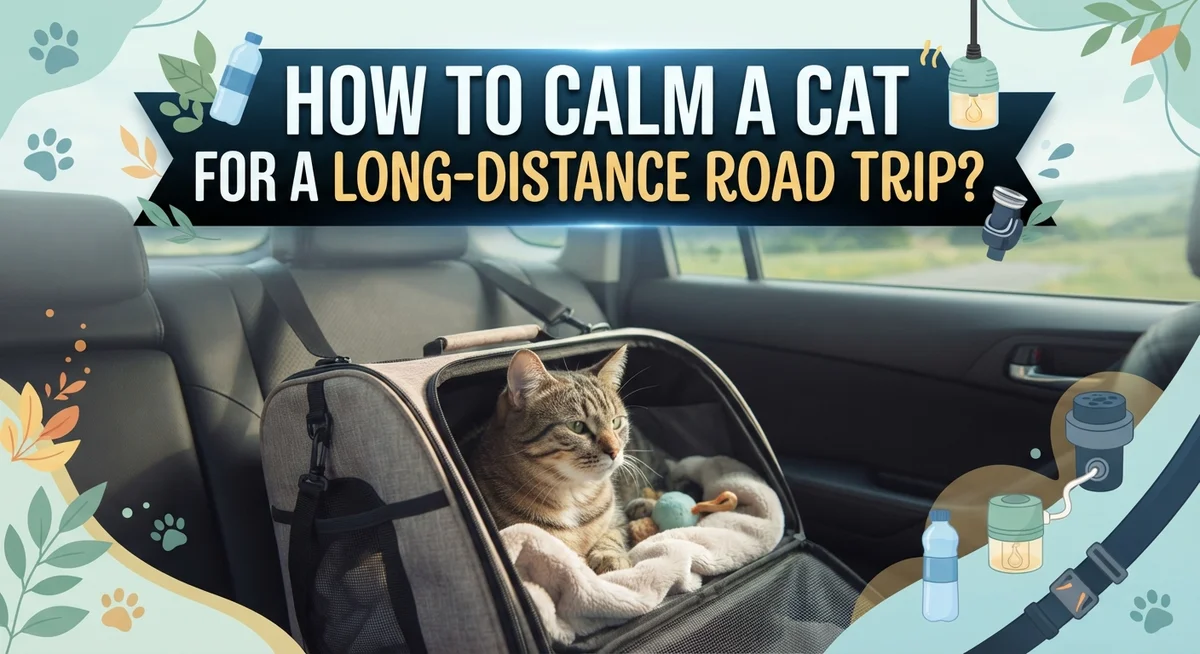
How to Calm a Cat for a Long-Distance Road Trip?
Long road trips sound fun. But for your cat, they can feel scary and stressful.
Cats love routine. They feel safe in familiar spaces. A long car ride disrupts everything they know.
That’s why planning ahead matters so much. A calm cat makes a calm trip for everyone in the car.
Good news: you can help your cat feel safe. Small steps can make a huge difference in their comfort.
This guide covers everything you need to know. We will show you how to prepare your cat before the trip even starts.
In a Nutshell
- Always use a secure crate. Never let your cat roam free in the car. A crate keeps them safe and reduces panic during the drive.
- Practice short car rides first. Gradual exposure helps your cat get used to motion and sounds. This step lowers stress on the actual trip day.
- Skip meals before departure. An empty stomach means less chance of car sickness. Feed your cat a few hours before you leave.
- Pack calming tools. Pheromone sprays and soft bedding can soothe anxious cats. Some owners also try catnip or gentle music.
- Check airflow and water often. Good ventilation keeps your cat comfortable. Offer water at every stop to prevent dehydration.
- Break up long trips. For rides over a day, plan overnight stops. This gives your cat time to rest and reset.
- Stay calm yourself. Your cat senses your mood. A relaxed voice and steady hands help them feel safe too.
Why Road Trips Stress Cats Out
Cats experience significant stress during car travel because their world suddenly becomes unpredictable and chaotic. Your cat thrives on routine and familiar surroundings. A moving vehicle removes both of these comfort zones instantly.
The motion itself triggers anxiety in most cats. Unlike humans, cats cannot understand why the ground beneath them keeps shifting. This unfamiliar sensation activates their fight or flight response. Their heart rate increases and stress hormones flood their system.
Loud noises amplify this stress. Engine sounds, road noise, and wind create an overwhelming sensory experience. Cats have more sensitive hearing than humans. What seems normal to you feels painfully intense to your pet.
Temperature changes also bother cats significantly. Cars heat up quickly in sunlight or cool down rapidly with air conditioning. Your cat cannot regulate their body temperature as efficiently as you can. This physical discomfort compounds their emotional anxiety.
Confinement in a crate adds another layer of stress. While crates keep cats safe during travel, the enclosed space feels restrictive to an animal accustomed to roaming freely. Your cat may feel trapped and powerless.
Separation from their familiar territory intensifies everything. Cats form deep attachments to their home environment. Removing them from this space creates genuine fear and disorientation.
Additionally, cats struggle with unfamiliar smells and sights. The car interior smells nothing like home. Windows display constantly changing landscapes. These new stimuli overwhelm their senses.
Long drives compound all these factors. A brief car ride causes temporary stress. Multi-hour journeys create sustained anxiety that exhausts your cat physically and emotionally.
Understanding these stress triggers helps you prepare better. You can now implement strategies that address each specific concern. Your cat’s anxiety is real and valid. With proper planning and compassion, you can significantly reduce their suffering during long distance travel.
Pre-Trip Preparation: Crate Training and Gradual Car Exposure
Starting crate training weeks before your trip makes a huge difference. Your cat needs time to view the crate as a safe space, not a scary cage. Begin by leaving the crate open in your home so your cat can explore freely.
Place soft bedding inside and put treats near the entrance. Let your cat enter and exit on their own schedule. This builds positive associations gradually. Spend a few days doing this before moving forward.
Next, close the door briefly while your cat is inside eating or playing. Open it immediately so your cat doesn’t feel trapped. Gradually increase the time the door stays closed. This teaches your cat that the crate isn’t permanent.
Once your cat seems comfortable, practice short car rides. Start with just five minutes of driving. Keep the crate secured with a seatbelt or cargo tie. Your calm voice and soft tone help tremendously during these practice runs.
Increase trip length slowly over several weeks. A ten minute drive, then twenty minutes, then longer distances. This gradual exposure helps your cat’s nervous system adjust to engine sounds, motion, and vibration.
During practice drives, ensure proper ventilation inside the crate. Your cat needs fresh air flowing through. Never cover the crate completely, as this increases anxiety and restricts airflow.
Pay attention to your cat’s behavior during these short trips. Does your cat seem relaxed or extremely stressed? Some cats need more practice time than others. There’s no rush. Patience now prevents serious problems during your actual journey.
Make sure the crate has a small litter pan that fits inside. Your cat may need bathroom access during longer practice sessions. This familiarity with the crate setup helps your cat feel more secure when the real trip begins.
Calming Tools and Techniques That Actually Work
Pheromone products work by mimicking natural calming scents your cat produces. These synthetic versions signal safety to your cat’s brain, reducing anxiety during the trip. Apply pheromone spray to the crate bedding about 15 minutes before travel. Alternatively, pheromone collars release calming scents continuously throughout your journey.
Calming bedding makes a real difference. Use soft, familiar blankets from home that carry your cat’s own scent. This combination of known smells helps your cat feel secure in an otherwise stressful environment. Wash the bedding before the trip so it smells like home.
Soft music specifically designed for cats can lower stress levels significantly. Play gentle, slow-tempo music at low volume during driving. This masks jarring road noises and creates a soothing atmosphere inside the crate.
Catnip works for some cats but not all. Test it at home first to see if your cat responds positively. If your cat enjoys catnip, a small amount on bedding can provide comfort. However, skip this if your cat becomes overstimulated.
Keep water available at all stops. Dehydration increases stress and discomfort. Offer water every two hours, even if your cat doesn’t drink much. A portable water bowl works well for rest breaks.
Maintain a calm voice and gentle demeanor around your cat. Cats pick up on your energy immediately. Speak softly and move slowly when checking on your cat during stops. Your relaxed behavior reassures your cat that everything is okay.
Combine multiple techniques for best results. Use pheromones, calming music, and familiar bedding together. This layered approach addresses different stress triggers at once. Every cat responds differently, so observe what works best for yours during practice trips.
Step-by-Step: Setting Up a Stress-Free Travel Routine
Creating a stress-free travel routine starts with planning ahead. Your cat needs consistency and predictability during the trip, so establish a schedule you’ll follow.
Begin by setting specific travel times. Cats do better when they know what to expect. Travel during cooler parts of the day, typically early morning or late evening. This reduces heat stress inside the vehicle.
Feed your cat a light meal 3 to 4 hours before departure. Never feed right before travel because motion sickness becomes more likely. Offer water regularly at rest stops, but don’t force it. Your cat will drink when thirsty.
Create a comfortable space inside the crate before leaving. Include familiar bedding that smells like home. Add a small litter pan that fits inside the crate. This prevents accidents and gives your cat a sense of control.
Maintain a calm atmosphere throughout your journey. Speak softly to your cat at rest stops. Your cat picks up on your stress, so take deep breaths and stay relaxed. Keep the vehicle temperature comfortable, not too hot or cold.
Establish rest stop intervals based on trip length. Stop every 2 to 3 hours to check on your cat. Let your cat use the litter pan and stretch slightly if safe. Never leave your cat alone in the vehicle.
Keep the crate properly ventilated at all times. Poor air circulation increases anxiety and discomfort. Position the crate away from direct sunlight and air conditioning vents.
Bring items that provide comfort, like a favorite toy or blanket from home. Familiar scents help your cat feel safer. Use soft, calming music designed for cats during driving. This masks road noise and creates a soothing environment.
Consistency matters most. Stick to your routine throughout the entire trip. Your cat will gradually adjust better when everything follows a predictable pattern.
Multi-Day Trips: Planning Rest Stops and Overnight Stays
When you’re taking your cat on a journey longer than a few hours, planning rest stops becomes essential. Break up long drives into manageable segments. Most cats handle 4 to 6 hours of travel before needing a substantial break. If your trip exceeds 8 hours, plan to stop overnight at a pet-friendly location.
During rest stops, let your cat use the litter pan inside the crate. Never force your cat out of the carrier in unfamiliar parking lots. The outdoor environment poses risks like escape or injury. Instead, keep the crate in a quiet, shaded area of your vehicle with windows cracked for fresh air.
Offer fresh water at every rest stop. Use a collapsible bowl or water dispenser designed for travel. Even if your cat doesn’t drink immediately, having water available prevents dehydration. Wait at least 2 hours after a meal before offering water to reduce motion sickness.
For overnight stays, choose accommodations that welcome pets. Set up the litter pan in a quiet corner of the room. Place your cat’s familiar bedding nearby to create a sense of security. Keep the room temperature comfortable and ensure proper ventilation.
Maintain your cat’s regular feeding schedule as much as possible. Feed at similar times each day, even while traveling. This consistency helps reduce stress and digestive upset. Stick to the same food your cat eats at home. Switching foods during travel can cause stomach issues.
During overnight stays, let your cat explore the room slowly. Keep the door closed to prevent escape. Place the litter pan, food, and water in separate areas. Some cats relax better with soft background noise or dim lighting. Spend quiet time with your cat to reinforce that this temporary space is safe.
Common Mistakes That Increase Cat Anxiety on the Road
Many cat owners make mistakes without realizing they stress their pets during road trips. Understanding these errors helps you avoid them.
Letting your cat roam loose in the car is the biggest mistake. A free cat can distract you while driving, jump onto the dashboard, or get injured if you brake suddenly. Your cat needs to stay in a secure crate for safety and their own peace of mind.
Feeding your cat right before departure causes nausea and vomiting. Your cat’s stomach gets upset when the vehicle moves after eating. Wait at least 3 to 4 hours after a meal before hitting the road. This simple timing change reduces digestive stress significantly.
Poor ventilation inside the crate creates a hot, stuffy environment. Your cat needs fresh air flowing through at all times. Check that air can move freely through the crate’s openings. A stuffy crate makes anxiety worse and can become dangerous in warm weather.
Forgetting to offer water during the trip dehydrates your cat. Some owners skip water stops to keep the journey short. Your cat needs access to fresh water at every rest stop. Dehydration increases stress and affects your cat’s health.
Ignoring your cat’s signals is another common error. If your cat meows constantly, paces, or seems panicked, something needs adjustment. Maybe the crate needs better ventilation. Maybe your cat needs a break. Listen to what your pet is telling you.
Driving with loud music or speaking harshly adds to stress. Your cat picks up on your tension and energy. Keep your voice calm and the environment quiet. Soft, soothing sounds work better than loud noises.
Finally, skipping the gradual car exposure phase sets your cat up for failure. Cats need practice rides before long trips. Without this preparation, your cat’s anxiety peaks during the actual journey. Short practice drives make a real difference in your cat’s comfort level.
Troubleshooting: What to Do If Your Cat Panics Mid-Trip
If your cat starts panicking during the trip, stay calm yourself. Your cat picks up on your stress, so take deep breaths and speak softly to reassure them. A panicked cat needs immediate attention, but your safety matters too. Pull over at a safe location if the situation becomes dangerous.
Check your cat’s basic needs first. Your cat may panic because they need water, the crate feels too hot, or they haven’t used the litter pan recently. Open the crate slightly in a safe, enclosed space like a rest area bathroom. Offer water immediately. Let your cat use the portable litter pan if they need it.
Watch for signs of severe distress. Heavy panting, excessive drooling, or attempts to escape the crate mean your cat is in real trouble. These signs indicate your cat may be overheating or experiencing extreme anxiety. Stop the car and move to a cooler location right away.
Adjust the environment to help your cat feel safer. Ensure air flows properly through the crate vents. Lower the car temperature if it’s warm. Cover part of the crate with a blanket to create a den-like space where your cat feels more secure.
If your cat continues panicking after you’ve addressed basic needs, consider cutting the trip short. Some cats simply cannot handle long car rides. Stopping at a pet-friendly hotel gives your cat time to recover and calm down naturally.
Never force your cat to continue if they’re extremely distressed. Your cat’s wellbeing comes first. A shorter trip with an overnight stay beats pushing through panic. Sometimes the kindest choice is to slow down and give your cat the recovery time they need to feel safe again.
Final Thoughts
A long distance road trip with your cat takes patience and planning. Your cat depends on you to feel safe during the entire journey. Small steps make a huge difference in how your cat handles travel.
Preparation is the real key to success. Cats that get gradual exposure to the car before the trip often stay calmer. Skipping this step usually leads to more stress once you hit the road.
Remember that every cat reacts differently to travel. Some cats settle quickly, while others need more time and reassurance. Watch your cat closely and adjust your approach as needed.
Keep your cat secure in a crate throughout the trip. This single habit protects your cat and keeps you focused on driving safely. A loose cat in a moving car creates real danger for everyone.
Hydration and ventilation matter just as much as comfort items. Check your cat’s crate often to make sure air flows well. Offer water at every stop to prevent dehydration.
Pheromone sprays, calming bedding, and soft music can ease anxiety. These tools work best when combined with a calm attitude from you. Your cat picks up on your energy more than you realize.
Long trips test both you and your cat, but they are manageable with the right mindset. Break the journey into smaller segments if you’re traveling multiple days. Rest stops give your cat a chance to reset.
Trust your instincts if something feels wrong during the trip. Cats communicate stress through body language, sound, and behavior. Responding quickly helps prevent bigger problems later.
In the end, a calm cat makes for a calm trip. Preparation, patience, and attention go a long way. With the right approach, your cat can handle even a long distance journey with confidence.
Frequently Asked Questions
Can I give my cat medication to calm them during travel?
Some cat owners ask their vet about calming aids before long trips. Your veterinarian can discuss options that might work for your specific cat. Every cat responds differently to medications, so professional guidance is important. Never give your cat any substance without checking with your vet first.
How often should I stop during a long road trip?
Plan to stop every 2 to 3 hours. Your cat needs breaks to stretch, use the litter pan, and drink water. During stops, let your cat stay in the crate in a quiet, shaded area. Short breaks prevent stress buildup and keep your cat’s anxiety lower throughout the journey.
What if my cat refuses to eat or drink during the trip?
This is normal stress behavior. Don’t force your cat to eat. Offer fresh water at each stop and keep it available in the crate. Once you reach your destination and your cat feels safe, appetite usually returns within hours. Monitor your cat’s hydration more carefully than food intake.
Should I take my cat out of the crate at rest stops?
Keep your cat in the crate at rest stops for safety. Your cat could escape or get lost in an unfamiliar place. Instead, offer water and let your cat use a portable litter pan inside the crate. This keeps your cat secure while still meeting basic needs during breaks.
Is my cat too old or too young for a long road trip?
Kittens and senior cats can travel, but they need extra care. Young kittens may struggle with stress more than adult cats. Senior cats need frequent breaks and access to medications if they take any. Consult your vet about your cat’s age and health before planning the trip.