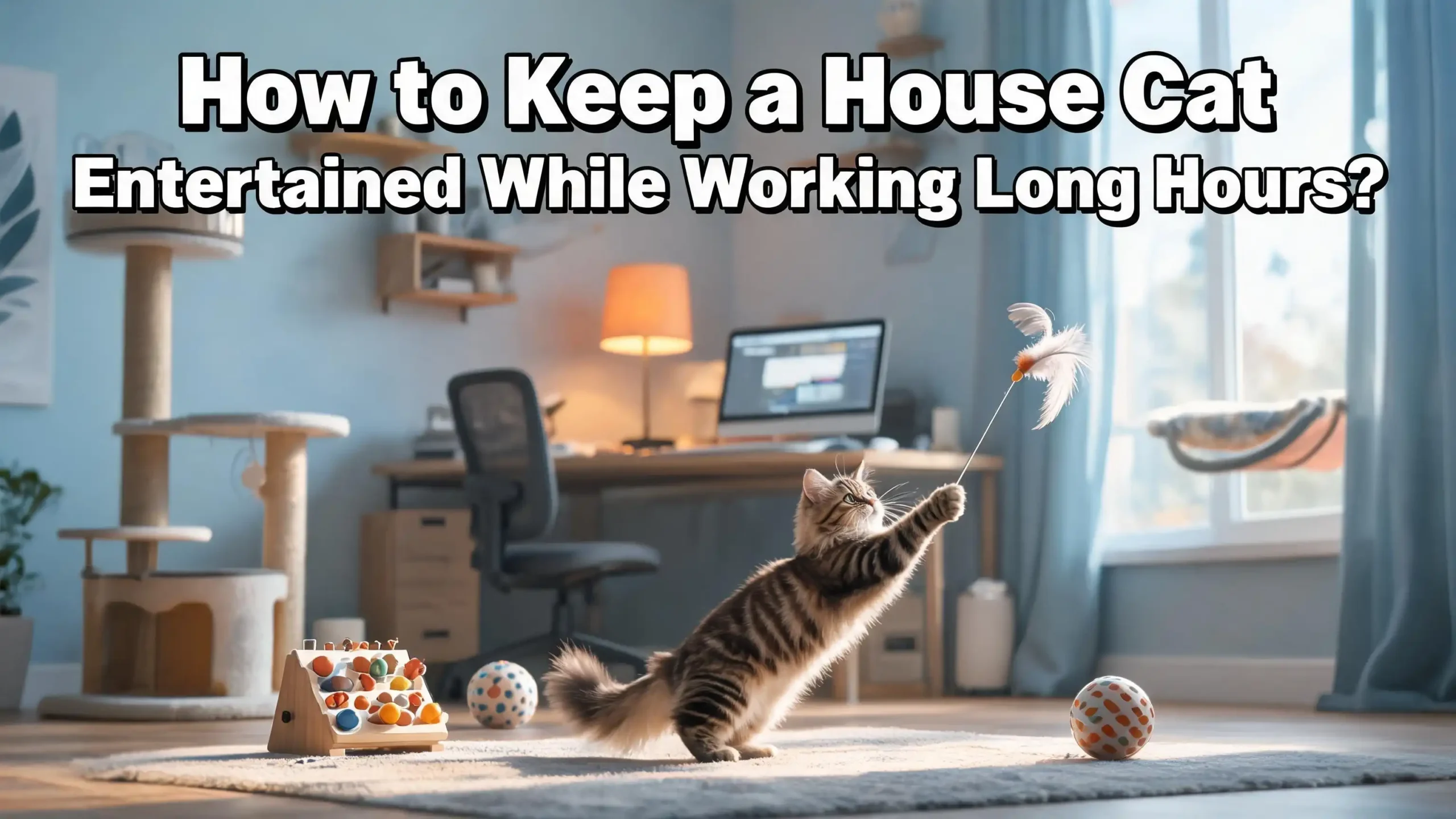
How to Keep a House Cat Entertained While Working Long Hours?
You love your cat. But your job demands eight, ten, or even twelve hours away from home. That quiet guilt creeps in every morning as you grab your keys and see your cat sitting by the door. Is your cat bored? Is your cat lonely?
These are real concerns. Indoor cats need mental stimulation and physical activity every single day. Without it, they can develop behavior problems like excessive grooming, overeating, aggression, and even depression.
This post gives you 15 clear, actionable strategies to keep your house cat entertained while you work. Every tip is practical, affordable, and easy to set up. Let’s make sure your cat has the best day possible, even without you there.
In a Nutshell
Here are the core strategies you need to keep your cat entertained during long work hours. Each one addresses a specific need your cat has, from mental stimulation to physical exercise.
Set up a window perch and bird feeder to give your cat hours of visual stimulation. Cats are natural observers and bird watching activates their hunting instincts in a safe, passive way. Use puzzle feeders instead of a regular food bowl to make mealtime a brain exercise.
Puzzle feeders slow down eating and keep your cat engaged for longer periods. Create vertical spaces with cat trees, wall shelves, and tall perches. Cats feel secure at height, and climbing burns energy while satisfying their instinct to survey their territory.
Rotate toys on a weekly schedule so your cat does not lose interest. A toy that has been hidden for a week feels brand new when it reappears. Play with your cat before and after work for at least 15 minutes each session.
This focused interactive time helps release pent up energy and strengthens your bond. Consider adopting a second cat if your lifestyle keeps you away for most of the day. Many cats thrive with a companion, and two cats often entertain each other better than any toy can.
Understand Why Your Cat Gets Bored
Cats are predators by nature. Even the most laid back house cat carries instincts for stalking, chasing, pouncing, and exploring. When a cat lives indoors with no outlet for these behaviors, boredom sets in fast. Bored cats do not just sit quietly. They act out.
Signs of boredom include excessive sleeping, overeating, destructive scratching, and aggression toward people or other pets. Some cats begin over grooming to the point of creating bald patches on their skin.
Others become vocal and restless, pacing the house and meowing without reason. According to Purina’s behavioral research, changes in sleep patterns and sudden weight gain are two of the most common indicators that a cat lacks stimulation.
The problem grows worse for cats left alone during long work shifts. A cat with nothing to do for ten hours has no choice but to sleep or find trouble. Understanding this is the first step. Your cat is not being “bad” when it tears up furniture or knocks things off counters.
It is bored and looking for something to do. Once you accept that boredom is the root cause, every solution in this post becomes much easier to apply. Your goal is to create an environment that mimics the variety and stimulation of outdoor life, all within the safety of your home.
Set Up a Window Perch for Bird Watching
One of the simplest and most effective ways to entertain your cat is to give it a window with a view. Cats can spend hours watching birds, squirrels, insects, and passing pedestrians. This is not passive entertainment. Bird watching activates your cat’s predatory focus, triggering the same mental pathways used during a hunt.
Install a sturdy window perch or place a cat tree next to a window that gets good natural light. Pick a window where your cat can see outdoor activity. If you have a yard or balcony, hang a bird feeder outside that window. The combination of a comfortable perch and live bird activity creates what many cat owners call “Cat TV.”
The benefits go beyond entertainment. Sunlight exposure helps regulate your cat’s sleep cycle and supports vitamin D absorption through the skin and fur. The mental stimulation from tracking moving objects reduces stress and anxiety.
Many Reddit cat owners report that adding a window perch and bird feeder dramatically reduced their cat’s destructive behavior during the day. This setup costs very little, takes minutes to arrange, and provides ongoing enrichment without any effort on your part once it is in place. Make sure the window is securely closed or screened so your cat stays safe.
Use Puzzle Feeders to Make Mealtime a Challenge
A regular food bowl is boring. Your cat walks up, eats, and walks away. That entire experience lasts about two minutes. A puzzle feeder transforms mealtime into a brain workout that can keep your cat busy for 20 to 30 minutes or more.
Puzzle feeders come in many forms. Some are balls that release kibble when rolled. Others are trays with compartments that require your cat to use its paws to fish out food. The idea is simple: make your cat work for its meal.
This mimics the effort a wild cat would use to hunt and forage for food. The Animal Humane Society specifically recommends puzzle feeders as one of the top enrichment tools for indoor cats.
You can also make puzzle feeders at home. The ASPCA suggests cutting small holes in a toilet paper roll, filling it with kibble, and folding the ends shut. Your cat will bat, roll, and paw at the tube to get the food out. Another option is placing treats inside an egg carton or muffin tin covered with tennis balls. DIY puzzle feeders are free, easy to make, and surprisingly effective.
Scatter several puzzle feeders around your home before you leave for work. This gives your cat multiple “hunting stations” to visit throughout the day and prevents it from eating all its food in one sitting.
Create Vertical Spaces for Climbing and Exploration
Cats think in three dimensions. Floor space alone does not satisfy them. Vertical space is just as important as square footage for an indoor cat’s happiness. Cats feel safe and confident at height. A cat perched on a tall shelf can survey its entire territory, and this sense of control reduces anxiety.
Invest in a tall cat tree with multiple levels. Place it near a window for maximum benefit. You can also install wall mounted shelves, floating cat walkways, or carpeted perches at various heights around a room. These structures give your cat a climbing circuit to travel without ever touching the floor.
Vertical spaces also add exercise to your cat’s day. Jumping from shelf to shelf and climbing up and down a cat tree burns calories and builds muscle tone. This is especially important for indoor cats that do not get the natural exercise of outdoor roaming. A cat that climbs is a cat that stays fit.
If budget is a concern, you can create vertical space with everyday furniture. Clear off the top of a bookshelf and place a soft blanket there. Stack sturdy boxes to create a stairway. Move a chair next to a dresser so your cat can jump up. The goal is to give your cat options at different heights throughout your home. The more paths and perches your cat has, the more exploring it will do while you are away.
Rotate Toys on a Weekly Schedule
Cats lose interest in toys quickly. A toy mouse that was exciting on Monday becomes invisible by Friday. This is normal feline behavior. Cats are wired to respond to novelty. A familiar object stops triggering their hunt response.
The solution is rotation, not replacement. You do not need to buy new toys every week. Instead, divide your cat’s toy collection into three or four groups. Put one group out for the week and store the rest in a sealed bag or container. At the end of the week, swap the current group for a stored group. The toys your cat has not seen in two or three weeks will feel fresh and exciting again.
This strategy is free and incredibly effective. Cat behaviorists consistently recommend toy rotation as one of the easiest ways to maintain a cat’s interest in its environment. Sprinkle a little catnip on the “new” batch before putting them out for extra appeal.
Keep a mix of toy types in each rotation group. Include something that rolls, something with feathers, something crinkly, and something soft. Variety in texture, shape, and movement keeps your cat stimulated across different play styles. Place the toys in different locations each week too. A toy under the couch one week and on top of a cat tree the next creates a treasure hunt effect that encourages exploration.
Invest in Automatic and Motion Activated Toys
When you cannot be home to wave a feather wand, automatic toys fill the gap. These battery operated or rechargeable toys move on their own, creating the unpredictable motion that triggers your cat’s chase instinct. Many modern automatic toys include timers that turn them on and off throughout the day, so your cat gets bursts of activity even when you are not there.
Popular options include rotating feather spinners, laser toys that project moving dots on the floor, and robotic mice that scurry across the room in random patterns. Some toys use motion sensors and only activate when your cat walks nearby. This prevents the toy from running all day and keeps the experience surprising.
Safety is important with any automatic toy. Supervise your cat with a new toy for the first few sessions to make sure it cannot chew off small parts or get tangled in any cords. Once you are confident the toy is safe, you can leave it accessible during work hours.
A smart plug can turn toys on and off at set times if the toy itself does not have a timer. Set it to activate for 15 minutes every few hours. This creates scheduled play sessions that break up the monotony of an empty house and give your cat something to look forward to throughout the day.
Build DIY Enrichment Stations Around Your Home
You do not need to spend a lot of money to keep your cat entertained. Some of the best enrichment activities use items you already have at home. The ASPCA and several animal welfare organizations offer DIY enrichment guides that use cardboard, toilet paper rolls, and basic household items.
Create a cardboard box maze by cutting doorways between several boxes and taping them together. Your cat will love exploring the tunnels, hiding inside, and ambushing invisible prey. Scatter a few treats inside the maze to make it even more rewarding. Swap the box layout every couple of weeks to keep it fresh.
The towel burrito is another brilliant DIY idea. Roll treats inside a towel and let your cat unravel it to find the food. This mimics problem solving skills used in the wild and provides both mental stimulation and a satisfying reward. Paper bags (with handles removed for safety) also make excellent crinkly hiding spots that most cats find irresistible.
Set up three or four of these DIY stations in different rooms before you leave for work. Your cat will spend its day moving from station to station, investigating, playing, and foraging. Change the stations every few days so the experience stays interesting. The key is variety and placement. A cat that has to search the house for fun is a cat that stays active all day.
Leave Background Noise On for Comfort
An empty, silent house can feel unsettling for a social cat. Background noise helps fill the void and creates a sense of normalcy. Many veterinarians and animal behaviorists recommend leaving a radio or television on at low volume when you leave the house.
Choose calm, soothing content. Classical music, nature documentaries, or talk radio programs work well. The steady sound of human voices or gentle music can reduce anxiety and help your cat feel less alone. Some cats respond especially well to nature sounds like birdsong and flowing water.
There are also video playlists made specifically for cats. These feature close up footage of birds, fish, and small animals moving across the screen. Many cat owners play these on a tablet or laptop positioned where the cat can watch safely. The combination of visual and audio stimulation can hold a cat’s attention for a surprisingly long time.
Avoid loud or chaotic programming like action movies or music with heavy bass. These can startle your cat and increase stress rather than reduce it. Keep the volume low enough to be background noise, not a disturbance. The goal is ambient comfort, not a concert. Pair background noise with a cozy resting spot near the source for the best calming effect.
Play With Your Cat Before and After Work
The time you spend at home matters just as much as what you leave behind. Focused interactive play sessions before you leave for work and after you return make a huge difference in your cat’s daily happiness. Aim for at least 15 minutes of active play in the morning and another 15 to 20 minutes in the evening.
Morning play sessions help your cat burn off energy before you leave. Use a wand toy or feather teaser to mimic prey movements. Let your cat stalk, chase, pounce, and “catch” the toy. End the session with a small treat or meal. This sequence mirrors the natural hunt, catch, eat, and sleep cycle. Your cat is more likely to nap peacefully after a satisfying play session and meal.
Evening play is equally important. Your cat has been waiting for you all day. Give it dedicated attention before you settle into your own evening routine. This is bonding time. Interactive play strengthens the relationship between you and your cat and helps prevent attention seeking behaviors like excessive meowing or knocking items off tables.
Consistency matters more than duration. A cat that gets reliable play sessions twice a day will be calmer and more confident than a cat that gets sporadic attention. Set a routine and stick to it. Your cat will learn the schedule and anticipate play time with excitement rather than anxiety.
Consider a Second Cat for Companionship
If you work long hours consistently, a second cat might be the best solution. Cats are more social than many people realize. While they are not pack animals like dogs, many cats enjoy and benefit from feline companionship. Two cats can wrestle, chase, groom, and curl up together, activities that no toy or puzzle can fully replicate.
VCA Hospitals notes that cats often do well when adopted in pairs. Cats within the same household will sleep together, share spaces, and groom one another. This social interaction provides a level of stimulation that is impossible for a solo cat to experience when its human is away.
That said, not every cat wants a companion. Some cats are truly happiest as the only pet in the household. Consider your current cat’s personality before making this decision. A cat that is territorial, fearful, or aggressive toward other animals may not adjust well to a new feline housemate. If your cat has lived alone for many years, introduction must be done slowly and carefully.
The best candidates for a companion cat are younger, social cats that show interest in other animals. If you decide to adopt a second cat, look for one with a compatible energy level and temperament. A proper introduction process, involving scent swapping and gradual visual contact, takes patience but greatly increases the chance of success.
Create Hiding Spots and Safe Spaces
Cats do not just need entertainment. They also need places to retreat, rest, and feel secure. Hiding is a natural and healthy behavior for cats. A cat that has access to cozy, enclosed spaces will feel less stressed, especially when home alone.
Provide a variety of hiding options throughout your home. Covered cat beds, cardboard boxes with a hole cut in the side, and open closet spaces all work well. Place these hiding spots in quiet areas of the house where your cat will not be disturbed by noise or foot traffic. Some cats prefer dark, enclosed spaces while others like semi open spots where they can still see the room.
Tunnels are another excellent addition. Collapsible fabric tunnels are lightweight, affordable, and cats love darting through them. Place a tunnel in a hallway or living room and your cat will use it for both hiding and play. Add a crinkly ball inside the tunnel for extra stimulation.
The number of safe spaces matters. A cat in a multi room home should have at least two or three hiding options spread across different areas. This gives your cat choices and allows it to move between spots as it pleases. Rotate the types and locations of hiding spots occasionally to create a sense of novelty. Even a simple blanket draped over a chair can create a new den that your cat will investigate with curiosity.
Use Scent Enrichment to Stimulate Your Cat’s Nose
A cat’s sense of smell is roughly 14 times stronger than a human’s. Scent enrichment is an often overlooked but powerful way to keep your cat engaged. New and interesting smells activate your cat’s brain and encourage exploration, even when no visual or physical stimulation is available.
Catnip is the most well known scent enrichment tool. About 60 to 70 percent of cats respond to catnip with excited rolling, rubbing, and playful behavior. Sprinkle dried catnip on scratching posts, inside cardboard boxes, or on toys before you leave for work. The effect usually lasts about 10 to 15 minutes and is completely safe.
Silver vine is a great alternative for cats that do not respond to catnip. Studies show that silver vine appeals to a broader range of cats and often produces a stronger reaction. Valerian root is another option that many cats find exciting.
Beyond herbs, you can introduce scent enrichment with everyday items. Bring in a small branch from outside, a pinecone, or a handful of leaves (make sure they are from nontoxic plants). Place these items in different spots around your home.
Your cat will sniff, investigate, and interact with these natural objects. A worn t shirt from your laundry can also provide comforting scent enrichment, since it carries your familiar smell. Rotate scents regularly so your cat always has something new to discover.
Establish a Consistent Daily Routine
Cats are creatures of habit. A predictable routine reduces stress and helps your cat feel secure, even during long hours alone. Structure your cat’s day around consistent times for feeding, play, and rest. Your cat will learn the pattern and adjust its behavior accordingly.
Feed your cat at the same time each morning before you leave. Follow the meal with an interactive play session. Then set out the puzzle feeders, treat stations, and toys you have prepared for the day. This departure routine signals to your cat that it is time for independent activity. Over time, your cat will associate your departure with the start of its own enrichment schedule rather than with loneliness.
When you return home, follow a consistent evening routine too. Greet your cat calmly, offer an interactive play session, and then serve dinner. Avoid making your arrival home overly exciting. Dramatic greetings can actually increase separation anxiety because they emphasize the contrast between your absence and your presence. A calm, consistent return teaches your cat that your coming and going is normal and safe.
If possible, use timed feeders to provide a midday meal while you are away. This breaks the long stretch between morning and evening into smaller, more manageable segments. Each feeding event becomes a small anchor point in your cat’s day, adding structure and something to look forward to.
Use Technology to Stay Connected
Modern technology makes it easier than ever to check on your cat and even interact with it from a distance. Wi Fi pet cameras let you watch your cat in real time through your phone. Some cameras include two way audio so you can talk to your cat, and your cat can hear your voice throughout the day.
Several pet cameras also feature built in laser pointers or treat dispensers that you can control remotely. During a break at work, you can activate a laser dot and play with your cat for a few minutes from miles away. Treat dispensers let you toss your cat a reward when you see it being active or playful. These features turn a simple camera into an interactive enrichment tool.
Smart home devices add another layer of control. You can program lights, music, and automatic toys to turn on and off at set intervals. This creates an enrichment schedule that runs even when you forget to set things up manually. Automation removes the guesswork and ensures your cat has stimulation throughout the entire day.
Even without fancy gadgets, a basic webcam can give you peace of mind. Knowing that your cat is sleeping peacefully or playing with a toy rather than scratching the couch reduces your own stress about leaving it alone. That peace of mind benefits both you and your cat.
Watch for Signs of Stress or Anxiety
No amount of enrichment can replace awareness. You need to monitor your cat for signs that it is not coping well with your absence. Cats are good at hiding discomfort, so you must pay close attention to subtle changes in behavior.
Common signs of stress in cats left alone include excessive vocalization when you leave or return, urinating outside the litter box, destructive scratching on furniture, and over grooming that leads to bald patches. Some cats stop eating or become unusually clingy when their owner is home. Others show the opposite reaction and become withdrawn or hide more than usual.
If you notice any of these behaviors, increase your cat’s enrichment immediately. Add more play sessions, introduce new puzzle feeders, and make sure your cat has adequate hiding spots and vertical space. If the behavior persists, schedule a visit with your veterinarian to rule out medical issues and discuss whether anxiety medication or behavioral therapy might help.
Separation anxiety is a real condition in cats, not just a dog problem. The Cats Protection organization identifies restlessness, excessive meowing, and being startled easily as key indicators. Early intervention prevents these issues from becoming chronic. A combination of environmental enrichment, consistent routines, and professional guidance can help most cats adjust to their owner’s work schedule. Your attention to your cat’s behavior is the most important tool you have.
Make Your Home a Cat Friendly Playground
Think of your entire home as your cat’s world. Every room should offer something interesting. A cat that has access to only one room with one bed and one food bowl will get bored fast. Spread enrichment across every accessible space to encourage movement and exploration.
In the living room, place a cat tree near the window and scatter a few toys on the floor. In the bedroom, set up a cozy hiding spot under the bed or on a shelf. In the kitchen or hallway, place a DIY puzzle feeder or a crinkly paper bag. The idea is to create a circuit of activity stations that your cat can visit throughout the day.
Rotate the locations of these stations regularly. Move the cat tree to a different window. Swap the hiding spot from the bedroom to the office. Change which room gets the puzzle feeder. Novelty drives exploration, and even small changes in the environment spark your cat’s curiosity.
Make sure each room is safe. Remove toxic plants, secure loose cords, close toilet lids, and block access to any small spaces where your cat could get stuck. A safe home is an enriching home. When your cat can roam freely without danger, every corner becomes an opportunity for adventure. Your goal is to give your cat reasons to move, explore, and engage with its surroundings all day long.
Frequently Asked Questions
How long can I safely leave my cat alone during the day?
Healthy adult cats can generally be left alone for 8 to 12 hours at a time, according to PetMD. However, this assumes your cat has fresh water, adequate food, a clean litter box, and some form of enrichment. Kittens, senior cats, and cats with medical conditions need more frequent check ins. If you work shifts longer than 12 hours, consider hiring a pet sitter for a midday visit.
Do cats get lonely when left alone all day?
Yes, many cats experience loneliness, especially social breeds that bond closely with their owners. Signs include excessive meowing, clinginess when you are home, and changes in appetite or litter box habits. Providing enrichment, background noise, and considering a second cat can help reduce loneliness.
What are the best types of toys for a cat left alone?
Puzzle feeders, automatic laser toys, motion activated toys, and crinkly balls are all excellent options. Avoid toys with small parts that your cat could swallow, and skip string or ribbon toys that pose a choking hazard when unsupervised. Rotate toys weekly to maintain interest.
Is it worth getting a second cat so my cat has company?
For many households, a second cat provides excellent companionship and reduces boredom. However, your current cat’s personality matters. Territorial or anxious cats may not welcome a new addition. If your cat is social and curious about other animals, a second cat could be a great solution. Always introduce new cats gradually.
Can background music or TV really help calm a cat?
Yes. Studies and veterinary recommendations support using low volume background noise to reduce anxiety in cats. Classical music and nature sounds are particularly effective. Cat specific video playlists featuring birds and fish can also provide visual entertainment. Keep the volume gentle and avoid sudden loud noises.
How do I know if my cat is bored or depressed?
Bored cats often overeat, sleep excessively, groom obsessively, or act destructively. Depressed cats may lose interest in food, stop grooming, or become withdrawn. Both conditions benefit from increased enrichment, more interactive play time, and a structured daily routine. If behavior changes persist for more than a week, consult your veterinarian to rule out underlying health issues.