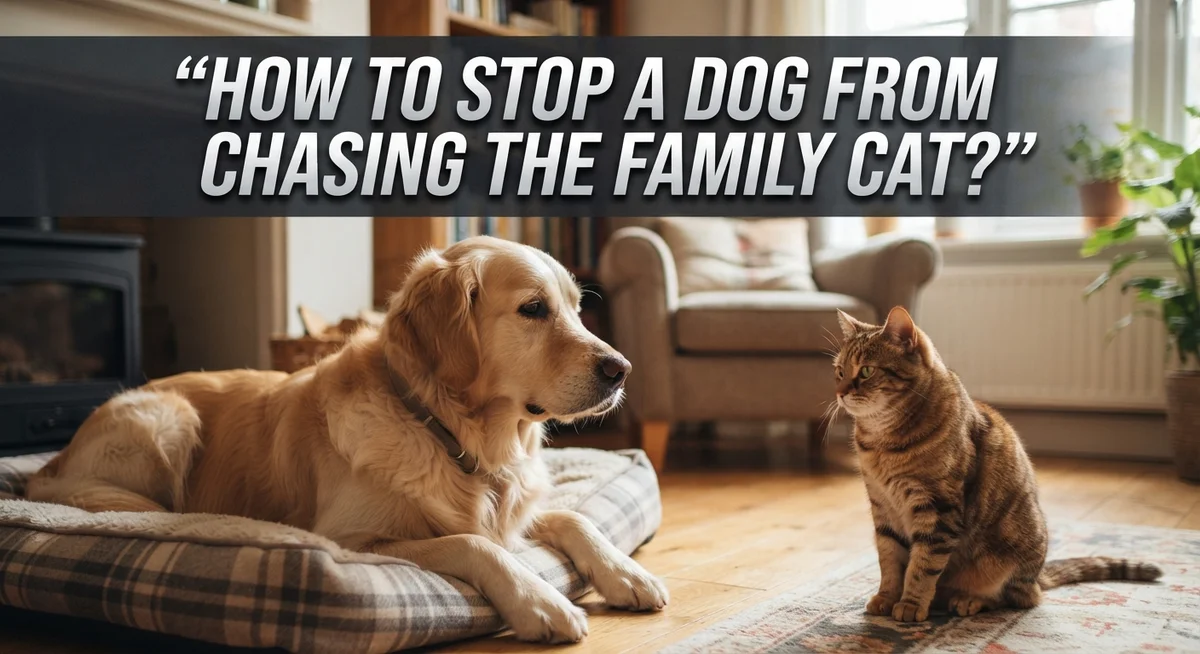
How to Stop a Dog From Chasing the Family Cat?
Does your dog turn into a rocket every time your cat walks by? You are not alone. This is one of the most common problems in multi pet homes.
The good news is that chasing behavior is not permanent. Dogs chase cats because of instinct, excitement, or simple curiosity. With the right approach, you can teach your dog to stay calm around your cat.
This article covers a two part solution: management and training. Management means preventing chase opportunities before they start. Training means teaching your dog new habits that replace the chase instinct.
By the end, you will have a clear plan to help your dog and cat live together peacefully.
In a Nutshell
- Catch it early. Stop the chase the moment your dog starts stalking or staring at the cat. This is the easiest time to interrupt the behavior.
- Use management first. Keep your dog on a leash indoors or block access with a gate. This prevents chase practice while you train.
- Teach “leave it”. This command builds self control. Practice it often, even when the cat is not around.
- Reward calm behavior. Give treats when your dog ignores the cat or stays relaxed. Positive reinforcement works better than punishment.
- Stay consistent. Everyone in the house must use the same commands and rules. Mixed signals slow down progress.
- Never leave them alone together yet. Supervise every interaction until you trust your dog fully. This avoids setbacks and keeps your cat safe.
Why Dogs Chase Cats: Understanding Prey Drive and Instinct
Your dog’s instinct to chase your cat comes from something deep inside. Dogs are predators by nature, and cats trigger what we call “prey drive.” This is not a behavior problem or a sign your dog is bad. It is simply how dogs are wired.
Prey drive varies from dog to dog. Some breeds, like terriers and sighthounds, have stronger chasing instincts than others. A dog with high prey drive feels an urge to chase anything that moves quickly. Your cat’s sudden movements and small size activate this ancient hunting response.
When your dog locks eyes on your cat and freezes, that is the stalking phase. The dog’s body goes stiff. Their focus narrows. This moment happens before the actual chase. Understanding this phase is crucial because interrupting at this point is much easier than stopping a full sprint.
Your dog is not trying to hurt your cat on purpose. The chase itself feels rewarding to your dog’s brain. Each time your dog runs after the cat, the behavior gets reinforced. This means the more it happens, the stronger the habit becomes.
Some dogs have such strong prey drive that they need extra patience and training. Others have mild instincts and learn quickly. Age matters too. Puppies are more playful and less controlled. Adult dogs sometimes have better impulse control, though this depends on their individual personality.
The key point is this: prey drive is not permanent. With proper management and training, your dog can learn to ignore the urge to chase. Your dog’s brain is flexible. New habits replace old ones when you practice consistently. Understanding what drives the behavior helps you address it effectively.
Setting Up a Safe Environment Before You Start Training
Before you start any training, your home needs to be set up so your dog cannot chase your cat. This is called management, and it stops the behavior before it even starts.
Create separate spaces for each animal. Your cat needs a room or area where your dog cannot go. This room should have your cat’s litter box, food, water, and a comfortable place to rest. A baby gate works well because it lets your cat escape quickly but keeps your dog out.
Set up high perches and escape routes for your cat. Cats feel safer when they can jump to shelves, cat trees, or furniture your dog cannot reach. Your cat should never feel trapped or cornered.
Remove toys and objects that trigger your dog’s chase instinct. If your dog gets excited by fast moving things, put away toys that bounce or roll unpredictably.
Keep your dog on a leash during early introductions. This gives you control when your dog notices your cat. You can gently redirect your dog’s attention before the chase starts.
Use baby gates throughout your home to separate the animals during times you cannot watch them closely. This prevents repeated chase cycles that reinforce the bad behavior.
Stock up on high value treats before training begins. You will need these to reward your dog for calm, non chase behavior around your cat.
Make sure your dog gets plenty of exercise before any cat interactions. A tired dog has less energy to chase. A good walk or play session reduces your dog’s excitement level significantly.
These setup steps take just a few hours but create the foundation for successful training ahead.
Step-by-Step Training Plan to Stop the Chase
Start training when your dog shows early focus on your cat. Do not wait until a full chase happens. The moment your dog’s ears perk up or eyes lock on your cat, step in immediately.
Call your dog’s name in a happy, upbeat voice. Use a treat or toy to grab attention away from the cat. This interruption stops the chase before it starts. Reward your dog the second they look at you instead of the cat.
Practice the “leave it” command during calm moments first. Hold a treat in your closed fist. When your dog stops sniffing and looks away, say “leave it” and reward them with a different treat. Do this 5 to 10 times daily for two weeks before using it near your cat.
Once your dog knows “leave it,” use it when they focus on your cat. Say the command clearly. The moment they turn away from your cat, give praise and a treat. Consistency matters here. Everyone in your home must use the same command and reward system.
Practice redirecting to a toy or command. Teach your dog to sit or lie down on command. When you see stalking behavior, ask for a sit instead. Reward heavily when they obey. This gives your dog an alternative behavior to chase.
Keep training sessions short, about 5 to 10 minutes each. Train multiple times daily if possible. Your dog learns faster with frequent, brief practice. Stay patient. Some dogs need weeks while others need months. The timeline depends on your dog’s prey drive and how often you practice.
Teaching and Reinforcing the ‘Leave It’ Command
The “leave it” command is your strongest tool for stopping chase behavior. This command tells your dog to stop focusing on your cat and redirect their attention elsewhere.
Start teaching “leave it” when your dog is calm and relaxed. Hold a treat in your closed fist. Let your dog sniff and lick your hand. The moment they pull away, say “leave it” in a clear voice and give them a different treat from your other hand. Repeat this 5 to 10 times per session.
Practice this exercise daily for one week before using it near your cat. Your dog needs to understand the command deeply. Once your dog responds well during calm moments, you can use it during real situations.
When your dog locks eyes on your cat or starts to stalk, say “leave it” in a firm but friendly tone. The instant your dog looks away from the cat, praise them enthusiastically and give them a high value treat. This teaches your dog that ignoring the cat brings rewards.
Consistency matters more than anything else. Every family member must use the same command and the same reward system. If one person sometimes lets your dog chase without correction, the training falls apart.
If your dog ignores the “leave it” command, they are not ready yet. Go back to practicing during calm moments. Never force your dog or use punishment. Positive reinforcement works faster and creates a better relationship between you and your dog.
Timing is critical. Interrupt your dog during the early focus phase, not after the chase has started. This prevents the chase cycle from reinforcing itself and makes training much more effective.
Managing Interactions During the Introduction Period
During the introduction period, your goal is to prevent chase behavior from happening in the first place. Supervision is your most powerful tool right now. Never leave your dog and cat alone together until you are 100% certain the chase behavior has stopped completely.
Watch for the moment your dog’s attention shifts toward your cat. This is when you act. Before your dog’s body tenses or they start to move, interrupt them. Use a cheerful voice to call their name. Get their focus back on you immediately.
Have high value treats ready at all times. The second your dog looks away from your cat, reward them. This teaches your dog that ignoring the cat brings good things. Repeat this many times throughout each day.
Keep your dog on a leash during these early interactions. A leash gives you instant control without chasing your dog around the house. You can gently guide them away from your cat before excitement builds.
Separate the animals during moments you cannot watch carefully. Use baby gates, closed doors, or separate rooms. This prevents accidental chase cycles that reinforce the behavior.
Practice calm, parallel time together. Let your dog and cat exist in the same space while you reward your dog for calm behavior. No playing, no excitement. Just peaceful coexistence.
Consistency across all family members matters greatly. Everyone must use the same commands and reward system. Mixed messages confuse your dog and slow progress.
Expect this introduction period to last weeks or even months. Your dog’s prey drive did not develop overnight, and it will not disappear overnight either. Patient, repetitive management during this phase sets the foundation for lasting peace between your pets.
Common Mistakes That Undermine Your Training Progress
Many dog owners accidentally make their training fail by repeating the same mistakes. Understanding what goes wrong helps you succeed faster.
The biggest mistake is allowing repeated chase cycles. Each time your dog chases your cat without interruption, the behavior gets stronger. Your dog’s brain learns that chasing works and feels rewarding. Even if the chase doesn’t result in catching the cat, the act itself becomes self reinforcing. You must interrupt the moment your dog focuses on the cat, not after a full chase happens.
Inconsistent training undermines everything. One family member uses “leave it” while another uses “stop it.” Your dog becomes confused about what you actually want. Everyone in your household must use identical commands and reward the same way. This means discussing your training plan with all family members before you start.
Insufficient supervision during the introduction period is another critical error. You cannot train your dog to ignore the cat if they practice chasing when you are not watching. Unsupervised time teaches your dog that chasing happens and goes unpunished. Keep your dog leashed or separated until they consistently respond to your commands around the cat.
Some owners also expect results too quickly. Training takes time because you are changing your dog’s instinctual behavior. Prey drive is natural and powerful. Patience matters more than rushing through steps.
Finally, many people skip the foundation work. They try using “leave it” near the cat before their dog knows the command well. Practice “leave it” during calm moments first. Build this skill away from the cat completely. Once your dog masters it reliably, then introduce the cat into the training equation. This order makes success much more likely.
Troubleshooting Persistent Chasing Behavior
When your dog keeps chasing your cat despite your efforts, you need to dig deeper into why the behavior persists. Persistent chasing usually means your training approach needs adjustment.
The first thing to check is whether you’re truly interrupting the chase before it starts. Most owners wait too long. Your dog’s prey drive activates during the focus phase, not when the chase is already happening. Watch for the moment your dog’s body stiffens or their eyes lock onto your cat. That’s your window to intervene.
Are you using the “leave it” command correctly? If your dog ignores it, they haven’t truly learned it yet. Go back to practicing away from your cat for several more weeks. Your dog needs to know this command perfectly in calm situations before you expect them to obey it during high excitement.
Inconsistency is another major culprit. Every family member must use the exact same command, the same tone, and the same reward system. If one person says “leave it” while another says “stop,” your dog becomes confused and the behavior continues.
Check your supervision level too. If chasing happens even once without correction, your dog learns the behavior works. Each successful chase reinforces the urge to chase again. You must prevent the chase from occurring at all during this phase.
The timeline matters more than you think. Some dogs need weeks of consistent work. Others need months. Your dog’s natural prey drive level affects how long this takes. Patience combined with strict consistency produces results. Without both elements working together, the chasing behavior will remain.
Signs of Progress and How to Maintain Long-Term Peace
Progress looks different for every dog and cat pair. Early signs include your dog pausing before chasing, looking at you instead of the cat, or simply walking past your cat without reacting. These small moments matter. They show your dog is learning self control.
Watch for calm behavior during shared spaces. If your dog lies down near your cat without tension, that’s real progress. Your dog’s body language should be relaxed, not stiff or focused. Ears and tail tell you everything. A wagging tail and soft eyes mean success.
The timeline varies based on your dog’s prey drive and your consistency. Some dogs show improvement in weeks. Others need months of steady work. Don’t rush this process. Speed creates setbacks.
To maintain long term peace, continue your training even after progress appears. Many owners stop too soon and see old behaviors return. Keep rewarding calm moments around your cat. Keep practicing “leave it” commands regularly. Make these exercises part of your daily routine, not just something you do during crisis moments.
Supervision remains important indefinitely. You don’t need to watch constantly once trust builds, but stay alert during high energy times like playtime or mealtimes. These moments still trigger chasing instincts.
Manage your environment too. Keep food and toys separate. Provide your cat with escape routes and high perches. Give your dog appropriate outlets for their hunting instincts through toys and games.
Your dog and cat can absolutely live together peacefully. The key is staying consistent, celebrating small wins, and never assuming the work is finished. Maintenance prevents old habits from returning.
Final Thoughts
Stopping a dog from chasing your cat takes time and patience. Most dogs learn to live calmly with cats when owners stay consistent.
Remember that every dog is different. Some dogs stop chasing within a few weeks. Others need several months of steady practice.
Your dog’s prey drive plays a big role here. Dogs with high prey drive need more repetition and patience from you.
The good news is that training truly works. Interrupting chases early and rewarding calm behavior builds new habits over time.
Management matters just as much as training. Keeping your pets separated when you cannot supervise protects both animals during this process.
Do not get discouraged by small setbacks. A single chase does not undo weeks of progress. Simply return to your training steps and keep going.
Celebrate small wins along the way. A calm glance, a relaxed body, or ignoring the cat completely all show real progress.
Your consistency teaches your dog what behavior earns rewards. Mixed signals from family members slow down this learning process significantly.
Trust builds gradually between your pets. Many dogs and cats become comfortable companions once training becomes part of daily life.
Patience is your best tool throughout this journey. Rushing the process often leads to more frustration for you and your pets.
Keep practicing even after you see good behavior. Long term peace comes from maintaining habits, not just achieving one good day.
Your effort today creates a safer, happier home for both pets. With commitment and the right approach, chasing can become a thing of the past.
Frequently Asked Questions
Why does my dog chase the cat in the first place?
Dogs have a natural prey drive. When your cat runs, your dog’s instinct kicks in. This instinctive behavior happens fast and feels rewarding to your dog. Cats trigger this response by moving quickly or appearing small and vulnerable. Some dog breeds have stronger prey drives than others. Understanding this helps you work with your dog’s nature instead of against it.
Can I stop the chasing behavior completely?
Yes, you can. Consistent training and management work together to reduce chasing. Your dog can learn to ignore the cat with proper interruption and redirection. The key is catching the behavior early, before the chase starts. When your dog focuses on the cat, that’s your moment to redirect attention. With patience, most dogs learn to coexist peacefully with cats.
How do I know if my dog is making progress?
Progress appears as calm moments around your cat. If your dog lies down near the cat without tension, that’s real improvement. Your dog might also ignore the cat during playtime. Look for moments when your dog chooses not to chase. These small wins add up over time. Celebrate each calm interaction you observe.
What’s the biggest mistake owners make?
Allowing repeated chase cycles reinforces the behavior. Each time your dog chases and the cat runs, your dog learns chasing is fun. Inconsistent training also sabotages your efforts. One family member correcting the behavior while another allows it confuses your dog. Supervision matters too. You cannot train effectively if you’re not watching during interactions.
How long until they get along?
The timeline varies. Some dogs need weeks of consistent work. Others improve faster with dedicated training. Your dog’s prey drive and your consistency determine the speed. Stay patient and keep practicing. Results come from repetition, not quick fixes.