How to Stop a Dog From Resource Guarding Toys Against Other Pets?
Does your dog stiffen up or growl when another pet gets close to their favorite toy? This behavior is called resource guarding. It happens more often than you think, and it can turn playtime into a tense standoff.
The good news is you can manage this behavior. Most dogs won’t fully “outgrow” guarding instincts, but you can teach them to feel safe sharing space with other pets.
This guide walks you through practical steps to reduce guarding around toys. You will learn how to use treat exchanges to build positive associations between your pets.
By the end, you will understand that guarding is often toy-specific. Your dog might be perfectly relaxed around food or attention, but tense around a squeaky toy.
Let’s help your pets coexist peacefully around their favorite things.
In a Nutshell
- Management is the goal, not a cure. Most dogs will always need some support around toys. That’s okay and totally normal.
- Use simultaneous treat exchanges. Give one dog a treat, then quickly reward the other. This teaches both pets that good things happen when they share space.
- Teach “Drop It” and “Leave It.” These commands give you control during tricky moments. Practice them often with positive rewards.
- Block access when you can’t supervise. Baby gates and closed doors keep toys out of reach. This stops fights before they start.
- Never leave guarded toys unsupervised. Consistent supervision is your best tool. Skipping this step often undoes your progress.
- Remember, guarding is often toy-specific. Your dog might guard one toy but ignore others completely. This means you can focus your training where it matters most.
What Is Resource Guarding and Why Dogs Do It
Resource guarding happens when a dog acts protective over something valuable to them. Your dog might stiffen, growl, snap, or block other pets from getting near their toy. This is a normal dog behavior, not a sign of aggression or a broken pet.
Dogs guard resources because of survival instinct. In the wild, animals protect food and valuable items to stay safe. Your dog’s brain works the same way. They see their favorite toy as something worth protecting. When another pet approaches, your dog feels threatened and reacts defensively.
Some dogs guard only toys. Others guard food, treats, or even your attention. Resource guarding is often toy specific. Your dog might guard their squeaky ball but completely ignore other toys. They might not guard food at all. Understanding what your dog guards helps you create a better management plan.
The behavior usually starts early. Puppies learn to guard toys through play and experience. If a puppy had to compete for resources, they may guard more intensely. Adult dogs can develop guarding too, especially after stressful situations or changes in their home.
Here’s what matters most: resource guarding is manageable, not curable. Most dogs will always need some support around toys. This doesn’t mean your dog is broken or dangerous. It means you need smart strategies to keep everyone safe.
Your job is to prevent conflicts before they happen. You do this through supervision, separation, and training. With consistent effort, your pets can coexist peacefully. The goal is to reduce tension and build trust between your animals over time.
Recognizing the Warning Signs Between Pets
Recognizing warning signs early stops conflicts before they escalate. Your dogs will give you clear signals when tension builds around toys.
Watch for stiffening of the body. When a dog freezes near a toy, their muscles tense up. Their tail stops moving. This rigid posture means they feel protective.
Listen for growling or snarling. These sounds are direct warnings. Your dog is saying “stay back.” Do not ignore these vocalizations, even if they seem mild.
Look at eye contact and staring. A guarding dog locks eyes on the other pet. Their gaze becomes intense and focused. This fixation shows they are monitoring the threat.
Notice lip curling or bared teeth. Your dog’s mouth changes shape when guarding intensifies. Teeth become visible. This escalates beyond growling.
Pay attention to blocking behavior. A guarding dog positions their body between the toy and the other pet. They stand over the toy or push their body in front of it. This physical barrier signals serious concern.
Watch for quick snapping motions. Your dog may snap at the air near the other pet. They might snap directly at the approaching dog. This indicates they will bite if the other pet gets closer.
Raised hackles (fur standing up along the spine) show heightened arousal. Combined with other signs, this means tension is very high.
The key is catching these warnings before bites happen. Early recognition lets you separate the dogs immediately. You prevent injuries and reduce fear in both pets.
Document which situations trigger these signs. Does guarding happen with specific toys only? Does it occur at certain times? This information helps you manage the environment more effectively and plan your training approach.
Setting Up a Safe Training Environment
Creating a safe training space is the foundation for success. Your environment controls what happens before problems start.
Start with physical separation. Use baby gates to divide rooms where your dogs spend time. This lets them see and smell each other without direct access to toys. Separation prevents arguments when you cannot watch them closely.
Remove all contested toys. Put guarded toys away in a closed cabinet or high shelf during the initial training phase. This eliminates the trigger completely. You bring toys out only during supervised training sessions where you control the interaction.
Choose a calm location. Pick a quiet room with few distractions. Your dogs need to focus on you and the training, not other sights or sounds. A living room works better than a busy kitchen.
Gather your training supplies. Have high value treats ready before you start. Use small pieces of chicken, cheese, or special training treats. Keep treats in easy reach so you can reward quickly.
Set a consistent schedule. Train at the same time each day. Dogs learn better with routine. Morning sessions often work well when dogs are fresh and alert.
Prepare for short sessions. Plan training for 5 to 10 minutes only. Shorter sessions keep dogs engaged and prevent frustration. You can do multiple sessions throughout the day if needed.
Keep a clear space. Remove furniture that blocks your movement. You need room to position yourself between the dogs safely. Clear pathways let you move quickly if tensions rise.
Have an exit plan. Know exactly where you will separate the dogs if needed. Keep gates or barriers accessible. Quick removal prevents escalation into actual conflict.
Step-by-Step Desensitization and Counterconditioning Protocol
The desensitization and counterconditioning protocol works by changing how your dog feels about sharing toys with other pets. This method takes time but produces real results when done consistently.
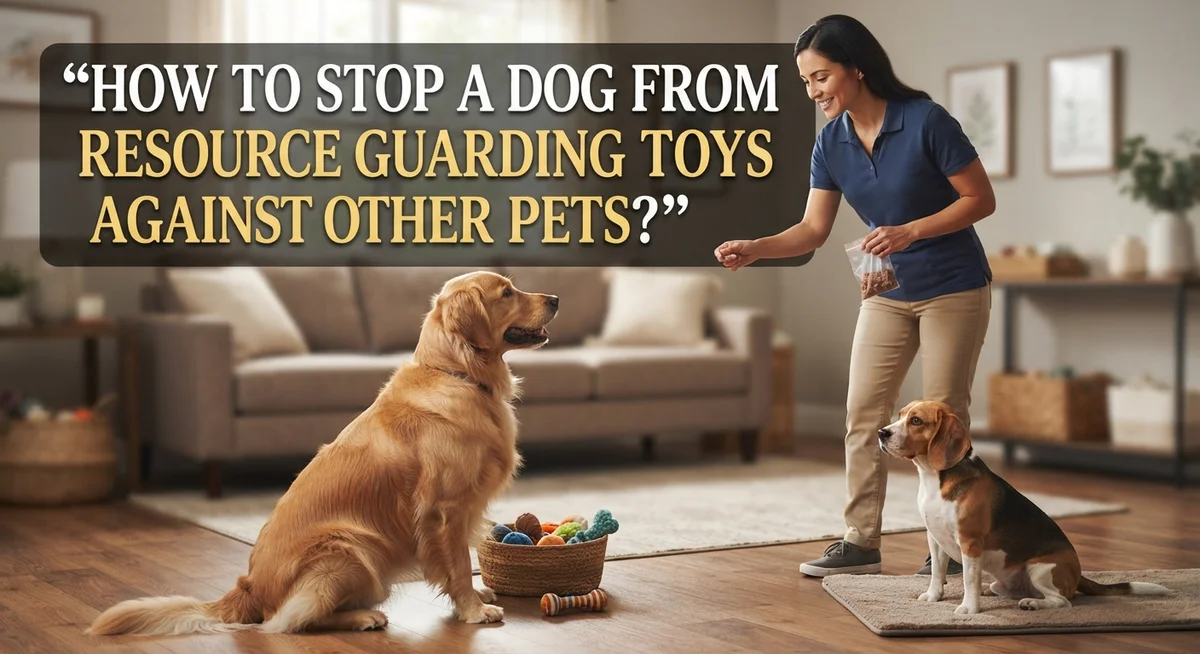
Start with the simultaneous treat exchange. Give your first dog a treat while your second dog receives one at the same time. This teaches both dogs that good things happen when the other pet is nearby. Reverse the roles and repeat. Do this 5 to 10 times per session, several times weekly.
Next, introduce toys into the equation slowly. Place a toy your dog doesn’t guard heavily on the ground. Reward both dogs with high value treats when they’re near the toy without conflict. Gradually work toward the toy your dog guards most intensely.
Practice the “Drop It” command separately from the toy guarding situation. Teach your dog to release items on cue using positive reinforcement alone. This builds the skill before you need it during multi dog interactions.
Once your dog knows “Drop It,” use it during controlled sessions. Have your dog hold a toy, ask for the drop, and immediately reward with treats or praise. Practice this repeatedly until the response becomes automatic.
Watch for any tension or stiffness during these exercises. If your dog shows warning signs, pause the session and try again later. Never force interaction or push your dog past their comfort level.
The key is consistency. Run these exercises multiple times per week using the same routine. Your dog learns through repetition that sharing toys leads to rewards, not loss. Progress happens gradually, so patience matters more than speed.
Teaching Reliable ‘Drop It’ and ‘Leave It’ Commands
Teaching your dog to drop items on command gives you real control during moments when resource guarding might happen. This skill becomes your safety tool when multiple dogs are near toys or treats.
Start by working with your dog alone in a quiet space. Use a toy your dog enjoys but doesn’t guard intensely. Show the toy, let your dog grab it, then immediately show a high value treat close to their nose. Most dogs drop the toy naturally to take the treat. The moment they release it, say “Drop It” clearly and reward them right away.
Repeat this exercise 5 to 10 times per session, several times each week. Your dog learns that releasing items leads to something even better. This creates positive feelings about letting go.
Next, teach “Leave It” with items on the ground. Place a toy on the floor and cover it with your hand or foot. When your dog moves away from it, reward them immediately. Gradually reduce how much you block the toy. Your dog learns to ignore items without touching them first.
Practice both commands separately from the actual guarding situation. This prevents frustration and keeps training positive. Once your dog responds reliably in calm settings, you can use these commands during supervised multi dog interactions.
Consistency matters enormously here. Use the same words, the same rewards, and the same training times each week. Dogs learn through repetition and predictability.
Remember that these commands work best as prevention tools. You still need to supervise your dogs closely and separate them when you cannot watch them actively.
Daily Management Strategies for Multi-Pet Households
Resource guarding rarely disappears completely. Instead, you manage it through smart daily choices that prevent problems before they start. Separation is your most powerful tool during times when you cannot watch your dogs closely.
Use physical barriers like gates to keep dogs apart when toys are present. Store contested toys in closed spaces your dogs cannot access. This removes the trigger entirely and keeps peace in your home.
Supervision is non negotiable whenever your dogs interact. Watch their body language carefully. Stiff postures, raised hackles, or growling mean you should separate them immediately. Do not wait for escalation.
Rotate toys regularly so no single item becomes overly precious. Introduce new toys gradually while removing old ones temporarily. This reduces the emotional attachment dogs develop to specific objects.
Create a feeding and toy schedule. Give each dog their own space during mealtimes and play sessions. Separate rooms work best. Feed them at different times if needed.
Maintain consistent rules across your household. Every family member should respond the same way to guarding behavior. Inconsistency confuses dogs and undermines progress.
Practice prevention daily. Reward calm behavior around toys with treats and praise. When dogs remain relaxed near each other and toys, reinforce that choice immediately.
Keep high value items completely out of reach. Chew toys, bones, and special treats should never be available when multiple dogs are together unsupervised.
Document what triggers guarding in your home. Does it happen with specific toys? Certain times of day? Near particular locations? Understanding your dogs’ patterns helps you prevent incidents before they occur.
Management requires patience and planning. Most households find that consistent daily practices eliminate dangerous conflicts entirely.
Common Mistakes That Undermine Progress
Many dog owners unknowingly make choices that slow down progress with resource guarding. Understanding these mistakes helps you avoid setbacks and keep your training on track.
Allowing unsupervised access to toys is the biggest mistake. If you leave multiple dogs alone with toys, you’re asking for conflict. Resource guarding happens when dogs feel they need to protect what they have. Unsupervised time teaches your dog that guarding works. Always watch your dogs during play sessions.
Inconsistent training approaches also undermine your efforts. If one family member uses “Drop It” while another uses “Leave It,” your dog gets confused. Everyone in your home must use the same commands and reward system. Inconsistency teaches your dog that the rules change, so guarding sometimes pays off.
Starting training too quickly with high value items sets you up for failure. Many owners jump straight to favorite toys. Begin with low value items your dog doesn’t care much about. Build success slowly before moving to precious toys.
Punishing guarding behavior makes things worse. Yelling, grabbing toys, or physical corrections increase your dog’s anxiety. Your dog guards because he feels threatened. Punishment confirms that threat. Use positive reinforcement instead.
Skipping the “Drop It” foundation work means you lack real control when guarding happens. Practice this command separately from toy situations first. Your dog needs to understand the command before you use it during stressful moments.
Expecting quick fixes leads to frustration. Resource guarding takes weeks or months to manage properly. This isn’t a behavior you cure overnight. Accept that management is your realistic goal, not complete elimination.
Troubleshooting Setbacks and Knowing When to Seek Professional Help
Setbacks happen with resource guarding. Your dog may progress for weeks, then suddenly regress when a new toy arrives. This is completely normal and doesn’t mean you’ve failed.
Common setbacks include sudden regression after introducing new items. Your dog’s guarding intensity might spike if a high value toy enters the home. Environmental changes like new pets or moving houses can also trigger old behaviors. These situations test your management system.
When setbacks occur, return to basics immediately. Go back to the simultaneous treat exchange exercise. Work with lower value items for several weeks before advancing again. Slow progress beats rushed progress that falls apart.
Know when professional help is necessary. If your dog shows escalating aggression or has bitten another pet, contact a certified professional right away. If you feel unsafe during training, stop and seek expert guidance. A professional can assess whether your dog has underlying anxiety or fear driving the guarding.
Resource guarding that involves food is different from toy guarding. Food guarding sometimes requires specialized protocols. Professional trainers can distinguish between typical guarding and serious behavioral issues.
Keep detailed records of what triggers guarding in your home. Note which toys cause problems, which dogs are involved, and what time of day incidents occur. This information helps professionals understand your specific situation.
Management is your realistic long term goal, not complete elimination. Most dogs never stop resource guarding entirely. You’ll likely manage it through supervision and environmental controls for your dog’s lifetime. This isn’t failure. It’s responsible pet ownership. Accept this reality early and you’ll feel less frustrated with the process.
Final Thoughts
Resource guarding between pets is a real challenge. But it does not mean your home has to feel stressful.
With time and the right approach, most dogs learn to share space more peacefully. Small wins matter more than perfect behavior.
Think of this process as building trust. Each dog needs to feel safe around the other, especially near toys.
Consistency helps your pets predict what happens next. When routines stay the same, anxiety drops for everyone involved.
Some days will go smoothly. Other days might feel like a step backward. This is normal for multi-pet households.
Stay calm when guarding shows up again. Your reaction teaches your dogs how to respond too.
Celebrate the small changes you notice. Maybe your dogs now rest near each other without tension. That progress counts.
Avoid comparing your pets to others you see online or hear about from friends. Every dog has a different history and temperament.
Focus on what works for your specific animals. What helps one household may not help another.
Remember that safety comes first, always. No amount of progress is worth risking a fight between your pets.
Keep your expectations realistic and kind toward yourself too. This process takes effort from you as the owner.
Your patience shapes the outcome more than any single training method. Dogs sense stress, so staying relaxed helps them relax too.
In the end, living peacefully with multiple pets is possible. It just needs structure, supervision, and a willingness to adjust as you learn more about your dogs.
Give yourself credit for showing up and trying. That effort makes a real difference in your pets’ daily lives.
Frequently Asked Questions
Why does my dog guard toys from my other pet?
Dogs guard toys because they see them as valuable resources. Your dog learned that possessing a toy is important for survival or comfort. When another pet appears, your dog may feel threatened and protect what they have. This behavior is natural, not a sign of a bad dog.
Some dogs guard only specific toys, while others guard all toys. The guarding instinct varies by individual dog and their past experiences. Understanding your dog’s specific triggers helps you manage the behavior effectively.
Can resource guarding be completely cured?
Resource guarding is typically managed rather than fully eliminated. Most dogs never stop resource guarding entirely, even with excellent training. The goal is to reduce the intensity and teach your dog that sharing space is safe and rewarding.
Think of management as a long term strategy, not a cure. Your dog learns to tolerate other pets near valued items through consistent practice. Progress looks like less tension, softer body language, and fewer warnings before guarding happens.
What’s the best way to train the “Drop It” command?
Start with low value items your dog doesn’t care much about. Show your dog a treat, say “Drop It,” and reward immediately when they release the toy. Practice this hundreds of times before moving to higher value toys.
Never chase your dog or grab toys away. This teaches them to guard harder. Instead, make dropping toys rewarding so your dog wants to do it. Consistency matters here. Practice the same way every single time.
Should I separate my dogs during toy time?
Yes, separation is necessary when you cannot actively supervise. Use baby gates or separate rooms to block access to guarded toys and areas. This prevents conflict and keeps your pets safe while you build better habits.
Supervised sessions are where training happens. Unsupervised time is where problems develop. Keep guarded toys out of reach when you’re not watching closely.