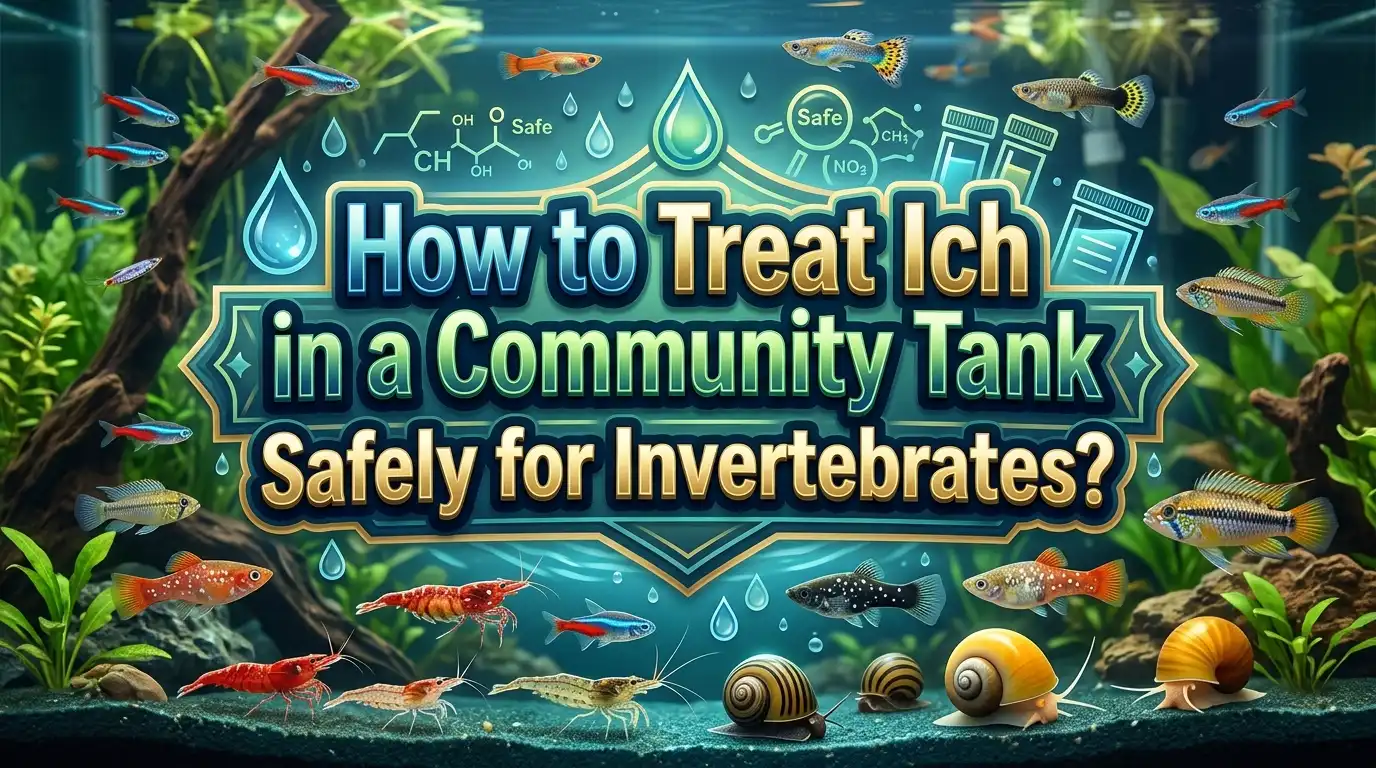
How to Treat Ich in a Community Tank Safely for Invertebrates?
You just spotted tiny white dots on your favorite fish. Your stomach drops. It’s ich. But then a second wave of panic hits because your tank is also home to shrimp, snails, or other invertebrates. Most ich medications contain copper, and copper is lethal to invertebrates even in small amounts. So what do you do?
This is one of the most stressful situations any aquarium keeper can face. You need to act fast because ich spreads quickly and can kill fish within days. But you also need to protect the shrimp, snails, and other invertebrates sharing that same water.
The good news is that safe and effective treatment options exist. You do not have to choose between saving your fish and keeping your invertebrates alive.
In this guide, you will learn exactly how ich works, why it is so dangerous, and how to treat it step by step without harming a single shrimp or snail. Every method covered here has been tested and discussed by experienced aquarists who keep invertebrates alongside their fish.
In a Nutshell
- Ich is caused by the protozoan parasite Ichthyophthirius multifiliis. It appears as small white spots on the skin and gills of freshwater fish. The parasite has a multi-stage life cycle, and it can only be killed during its free-swimming stage. This means treatment must continue for at least two weeks to catch every generation of the parasite.
- Most commercial ich medications contain copper, which is toxic to invertebrates. Shrimp and snails are extremely sensitive to copper. Even trace amounts can kill them within hours. Always read the ingredients on any medication before adding it to a tank with invertebrates.
- The heat method is one of the safest options for invertebrate tanks. Raising the water temperature to 86°F (30°C) speeds up the parasite’s life cycle and can kill free-swimming ich. Most common aquarium shrimp and snails tolerate this temperature for the short treatment period required.
- Malachite green-based medications (without copper) are generally considered invertebrate safe. Products containing only malachite green as the active ingredient have been used successfully in tanks with shrimp and snails. Always follow the dosage instructions exactly.
- Aquarium salt can help treat ich, but it harms many invertebrate species. Freshwater shrimp are sensitive to salt. If you choose to use salt, you may need to relocate your invertebrates to a separate container during treatment.
- Prevention is always better than cure. Quarantining new fish for two to four weeks before adding them to your community tank is the single most effective way to prevent ich outbreaks. A simple quarantine tank can save you enormous stress and expense.
What Is Ich and Why Is It So Dangerous?
Ich, short for Ichthyophthirius multifiliis, is a protozoan parasite that infects freshwater fish. It is one of the most common diseases found in home aquariums. The parasite burrows beneath the skin and gills of fish, creating the signature white spots that give it the nickname “white spot disease.”
The reason ich is so dangerous is its rapid reproduction. A single parasite can produce hundreds of free-swimming offspring once it drops off the fish and forms a cyst. These offspring, called theronts, actively swim through the water searching for a new fish host. In a closed aquarium environment, the parasite has nowhere to go but onto your other fish.
Ich is almost always fatal if left untreated. The parasites damage the gills, making it hard for fish to breathe. Infected fish often gasp at the surface, clamp their fins, and rub against objects in the tank. Secondary bacterial infections can set in at the wound sites, compounding the problem further.
The challenge in a community tank with invertebrates is that many standard treatments are just as deadly to your shrimp and snails as ich is to your fish. This creates a situation where you must be strategic about which treatment method you choose. Understanding the parasite’s life cycle gives you a major advantage in this fight.
Understanding the Ich Life Cycle
Knowing the ich life cycle is critical because the parasite can only be killed during one specific stage. If you treat at the wrong time, the medication or heat does nothing. The life cycle has three main stages that repeat in a continuous loop.
The first stage is the trophont. This is the feeding stage you can actually see on your fish. The parasite embeds itself under the fish’s skin and feeds on body tissue. During this stage, the parasite is protected by the fish’s own slime coat and skin layers. No medication in the water can reach it here. This feeding stage lasts roughly five to seven days at normal aquarium temperatures.
The second stage is the tomont. Once the trophont is fully grown, it drops off the fish, sinks to the substrate, and forms a hard protective cyst. Inside this cyst, the parasite divides into hundreds of daughter cells called tomites. The cyst is extremely resistant to medication and environmental changes. This is another stage where treatment cannot penetrate.
The third stage is the theront, or free-swimming stage. The cyst bursts open, releasing hundreds of theronts into the water. These tiny organisms have roughly 48 hours to find a fish host or they die. This is the only stage where the parasite is vulnerable to medication, heat, and salt treatments.
At typical aquarium temperatures of 76°F to 78°F, the full cycle takes about seven to ten days. Raising the temperature shortens this cycle, which is exactly why heat treatment works so well.
Why Standard Ich Medications Are Dangerous for Invertebrates
Most over-the-counter ich treatments contain copper sulfate as their primary active ingredient. Copper is extremely effective at killing the free-swimming theront stage of ich. However, copper is also a powerful toxin for invertebrates.
Shrimp, snails, crayfish, and other aquatic invertebrates absorb copper directly through their bodies. Even very low concentrations of copper can cause organ failure and death in these animals. There is no safe level of copper exposure for most freshwater invertebrates. This is why the label on many ich medications warns against use in tanks containing invertebrates.
The problem goes beyond just the treatment period. Copper binds to surfaces in the aquarium, including the substrate, decorations, silicone seals, and filter media. It can leach back into the water for weeks or even months after treatment ends. This means that even if you remove your invertebrates during treatment, reintroducing them later can still be risky.
Some medications also contain formalin or formaldehyde at concentrations that stress or kill sensitive invertebrates. Always check the full ingredient list on any product before adding it to a tank with shrimp or snails. The safest approach is to use treatments specifically formulated without copper and to rely on methods like heat that pose no chemical risk to invertebrates.
The Heat Treatment Method: Your Safest First Option
Raising the water temperature is the most invertebrate-safe method for treating ich. The principle is simple. Higher temperatures speed up the parasite’s life cycle, forcing it through its vulnerable free-swimming stage faster. At 86°F (30°C), the parasite also struggles to survive and reproduce.
To use this method, raise your aquarium temperature gradually. Increase it by about 2°F every few hours until you reach 86°F. Sudden temperature spikes stress both fish and invertebrates, so patience is important here. Most common aquarium heaters allow you to make these small adjustments easily.
Keep the temperature at 86°F for a minimum of 10 to 14 days. This duration ensures that all generations of the parasite have moved through their life cycle and been exposed during the vulnerable free-swimming stage. Some experienced aquarists recommend maintaining the elevated temperature for a full three weeks to be thorough.
Most popular aquarium shrimp species can handle 86°F for this period. Cherry shrimp, amano shrimp, and ghost shrimp all tolerate this range for short durations. Nerite snails and mystery snails also generally do fine. However, some cold-water species like crystal red shrimp or caridina shrimp are more heat sensitive. Research your specific species before starting.
One important note: higher temperatures reduce dissolved oxygen in the water. Add an air stone or increase surface agitation during heat treatment. This keeps oxygen levels high enough for both fish and invertebrates to breathe comfortably throughout the treatment period.
Using Aquarium Salt: Proceed with Caution
Aquarium salt is a tried-and-true ich treatment that many fishkeepers rely on. It works by creating an osmotic imbalance that kills the free-swimming theronts and encourages parasites to detach from the fish’s skin. Salt also promotes gill function and helps fish breathe more easily during illness.
However, freshwater invertebrates are sensitive to salt. Shrimp in particular do not tolerate elevated salt levels well. Even the commonly recommended dose of 1 tablespoon per 5 gallons can stress or kill sensitive shrimp species. Snails are slightly more tolerant, but prolonged exposure to salt is still harmful.
If you decide to use salt alongside heat treatment, you have two options. The first is to remove your invertebrates to a separate container for the duration of treatment. A simple plastic tub with a heater, air stone, and some tank water works well as a temporary holding tank. Keep your invertebrates there for the full two to three week treatment period.
The second option is to use a very low salt dose of about 1 tablespoon per 5 gallons combined with the full heat treatment. Some aquarists report that this lower dose does not harm hardier shrimp species like amanos and ghost shrimp. But this carries risk, and you should monitor your invertebrates closely for signs of stress such as lethargy, erratic swimming, or color loss.
Remember that salt does not evaporate from water. The only way to remove it is through water changes. After treatment is complete, do several 25% to 30% water changes over the following weeks to gradually bring the salt level back to zero before reintroducing any removed invertebrates.
Invertebrate-Safe Medications: What Actually Works
Not all ich medications contain copper. Some use malachite green as the sole active ingredient, and this chemical has a strong track record of being safe for invertebrates when dosed correctly.
Malachite green works by killing the free-swimming theront stage of ich on contact. It is effective and fast-acting. Many aquarists who keep shrimp and snails report successful ich treatment using malachite green-based products without losing any invertebrates. The key is to follow the dosage instructions exactly and never exceed the recommended amount.
Overdosing any medication, even an invertebrate-safe one, can harm or kill shrimp and snails. Use a precise measuring tool and calculate the dosage based on the actual water volume in your tank, not the tank’s total capacity. Remember that substrate, decorations, and equipment displace water. A 20-gallon tank might only hold 15 to 17 gallons of actual water.
Another option that some aquarists use is Seachem ParaGuard, which contains a proprietary aldehyde-based formula. Some users report it is safe for shrimp and snails at the recommended dose, though results can vary depending on species sensitivity.
Before using any medication, remove activated carbon from your filter. Carbon absorbs medication from the water and makes the treatment useless. You can replace the carbon after the treatment period ends. Also increase aeration during medication treatment, as some chemicals reduce dissolved oxygen levels in the water.
Step-by-Step Treatment Plan for Invertebrate Tanks
Here is a clear, actionable plan you can follow right now if ich has appeared in your community tank with invertebrates.
Step 1: Confirm the diagnosis. Look for small white spots that resemble grains of salt on the body and fins of your fish. Watch for flashing behavior where fish rub against objects. Check for clamped fins and gasping at the surface. These signs together confirm ich.
Step 2: Remove activated carbon from your filter. This is essential if you plan to use any medication. Leave the biological filter media in place so your beneficial bacteria continue working.
Step 3: Begin raising the temperature. Increase the heater setting by 2°F every few hours until you reach 86°F. This process should take about 24 to 48 hours.
Step 4: Add an air stone or increase surface agitation. Higher temperatures hold less dissolved oxygen. Your fish and invertebrates need extra aeration during this period.
Step 5: Dose an invertebrate-safe medication. Choose a malachite green-based treatment and follow the label exactly. Dose based on actual water volume, not tank capacity.
Step 6: Perform partial water changes every two to three days. Change 25% to 30% of the water, then re-dose the medication according to the amount of new water added. This removes dead parasites and waste while maintaining the treatment concentration.
Step 7: Continue treatment for 14 days minimum after the last visible white spot disappears from any fish. This ensures that all stages of the parasite’s life cycle have been addressed.
How to Monitor Your Invertebrates During Treatment
Even with invertebrate-safe methods, you should watch your shrimp and snails closely throughout the treatment process. Stress from elevated temperatures or medication exposure can still affect sensitive individuals.
Healthy shrimp are active, graze constantly, and display bright coloration. Signs of stress in shrimp include lethargy, loss of color, hiding more than usual, and erratic swimming patterns. If you see shrimp lying on their sides or failing to right themselves, something is wrong. Reduce the medication dose by performing an immediate water change and adding fresh activated carbon to absorb the remaining chemical.
Snails show stress differently. A stressed snail may retract fully into its shell and refuse to come out for extended periods. It may also float at the surface or fall off the glass repeatedly. Some snails release excess mucus when exposed to irritants in the water. If your snails show these behaviors, take action to reduce the chemical concentration.
Keep a close eye on your water parameters during treatment. Test for ammonia, nitrite, and nitrate every other day. The combination of higher temperature and medication can sometimes disrupt the nitrogen cycle. Beneficial bacteria work differently at 86°F, and any die-off from medication can release ammonia. Be ready to do extra water changes if ammonia or nitrite levels spike.
It also helps to reduce feeding during treatment. Sick fish eat less, and uneaten food decays quickly in warm water. Feed small amounts once a day and remove anything not consumed within a few minutes.
What to Do If You Must Use Copper-Based Medication
Sometimes the ich infection is severe, and heat plus invertebrate-safe medication is not enough. In these extreme cases, you may need to consider a copper-based treatment as a last resort. But this requires physically separating your invertebrates first.
Set up a temporary holding container for your shrimp, snails, and any other invertebrates. A clean plastic storage bin works well for this purpose. Fill it with water from your main tank so the parameters match. Add a small sponge filter or air stone for filtration and oxygenation. Include a heater if your room temperature is below 72°F.
Transfer all invertebrates to this container before adding any copper to the main tank. Be thorough. Check plants, decorations, and the substrate for any hiding shrimp. Missing even one shrimp means losing it once the copper goes in.
After treating with copper and completing the full treatment cycle, you face another challenge. Copper residue stays in the tank. Run activated carbon in your filter for at least two weeks after the treatment ends. Perform multiple large water changes over several weeks. Test the water with a copper test kit before reintroducing invertebrates. The copper level should read zero on the test before any shrimp or snail goes back in.
Some aquarists also add a product like Seachem CupriSorb to actively pull copper from the water and substrate. This can speed up the process and provide extra peace of mind.
Treating Ich in Planted Tanks with Invertebrates
Planted tanks add another layer of consideration. Many aquatic plants are also sensitive to copper and high salt concentrations. The good news is that the heat method and malachite green-based medications generally do not harm most common aquarium plants.
Most popular aquarium plants like java fern, anubias, amazon swords, and cryptocoryne species tolerate temperatures up to 86°F for the two to three week treatment window. Floating plants and stem plants also handle this range without problems. However, some delicate species like certain mosses may show some browning at elevated temperatures.
Avoid using salt in heavily planted tanks. Salt damages many freshwater plant species, especially at the concentrations needed to treat ich effectively. Even the lower dose of 1 tablespoon per 5 gallons can harm sensitive plants over a two-week period.
If your planted tank has both invertebrates and sensitive plants, the best combination is heat at 86°F plus an invertebrate-safe malachite green medication. This approach treats the ich effectively without harming plants, shrimp, or snails. Increase light period slightly if your plants seem stressed, but keep a normal photoperiod to avoid algae blooms encouraged by the warmer water.
After treatment, lower the temperature gradually back to normal over two to three days. Resume your regular fertilizer schedule. Most plants bounce back quickly once conditions return to normal. Any minor leaf damage during the treatment period will grow out as the plant produces new healthy foliage.
How to Prevent Ich from Entering Your Tank
Prevention is the single most effective strategy against ich. Quarantining new fish is the gold standard for keeping this parasite out of your established community tank.
Set up a simple quarantine tank of 10 to 20 gallons. It does not need to be fancy. A bare-bottom tank with a sponge filter, heater, and a hiding spot is enough. Keep every new fish in this quarantine tank for a minimum of two to four weeks before adding them to your main tank. Ich symptoms typically appear within the first week if the fish is carrying the parasite.
New plants can also carry ich. The tomont cysts can attach to plant leaves and stems. Rinse new plants in clean dechlorinated water before adding them to your tank. Some aquarists do a brief dip in a mild potassium permanganate solution to kill any hitchhiking parasites, though this step is optional.
Avoid sudden temperature swings in your main tank. Ich outbreaks often follow periods of stress, and temperature drops are a common trigger. Use a reliable heater and check it regularly. Power outages in winter can cause dangerous temperature drops, so have a backup plan like battery-powered air pumps and insulated blankets for your tank.
Keep your fish healthy through good nutrition and clean water. Fish with strong immune systems can actually fight off low-level ich infections on their own. Regular water changes, a balanced diet, and avoiding overstocking all contribute to a tank full of healthy, disease-resistant fish.
Common Mistakes to Avoid During Ich Treatment
Many aquarists make errors during ich treatment that either fail to cure the disease or harm their invertebrates in the process. Here are the most common mistakes and how to avoid them.
Stopping treatment too early is the number one mistake. The white spots disappear from the fish before all the parasites are dead. Many people see their fish looking better and stop treatment. But the parasites in the cyst stage on the substrate are still alive and will release a new wave of theronts. Always continue treatment for at least 10 to 14 days after the last visible spot is gone.
Failing to remove activated carbon before dosing medication wastes both your time and your medication. Carbon absorbs the active ingredients immediately, leaving the parasites untreated. Check your filter before every dose.
Adding medication without checking ingredients is a recipe for disaster in an invertebrate tank. Grab the bottle, flip it over, and read the active ingredients. If you see copper sulfate, copper chloride, or any form of copper listed, do not add it to a tank with shrimp or snails.
Not increasing aeration during heat treatment can suffocate your fish. Warmer water holds less dissolved oxygen. Both fish and invertebrates need adequate oxygen, especially during the stress of illness and treatment. An air stone costs very little and can save lives.
Raising the temperature too quickly shocks both fish and invertebrates. Gradual increases of 2°F every few hours give everyone time to adjust. Patience here pays off enormously.
After Treatment: Restoring Your Community Tank
Once the treatment period is complete and no white spots have appeared for at least two weeks, it is time to return your tank to normal conditions.
Lower the temperature gradually. Decrease it by about 2°F every few hours until you reach your tank’s normal operating temperature. Most tropical community tanks run between 76°F and 78°F. This slow reduction prevents stress on both fish and invertebrates.
If you used medication, add fresh activated carbon to your filter. The carbon will absorb any remaining medication from the water column. Run the carbon for at least a week. Then remove it and return to your normal filter media routine.
Perform a 30% water change after completing treatment. This removes waste, dead parasites, and any lingering chemicals from the water. Follow up with your regular water change schedule in the weeks after. If you used salt, remember to keep doing water changes until all the added salt has been diluted out.
Watch your fish closely for the next month. Sometimes a small number of parasites survive treatment, and a secondary outbreak can occur. Catching it early means treating it faster and with less damage. Check your fish daily during feeding time. Look at their skin, gills, and behavior for any return of white spots or flashing.
Resume normal feeding gradually. Start with small meals and increase back to normal portions over three to four days. Your fish’s appetite should return as they recover. Offer high-quality food to help them rebuild their immune systems and repair any skin damage from the parasites.
Building Long-Term Resistance in Your Community Tank
A healthy tank is a resistant tank. Strong fish with robust immune systems can fight off low-level parasite exposure before it becomes a full outbreak. Here is how to keep your community tank in top condition for the long term.
Maintain excellent water quality through regular weekly water changes of 20% to 30%. Consistent water parameters reduce stress, and stress is the primary trigger for ich outbreaks. Test your water weekly for ammonia, nitrite, nitrate, and pH. Address any issues immediately.
Do not overstock your tank. Overcrowding increases waste, reduces oxygen, and raises stress levels for every inhabitant. Follow the general guideline of one inch of fish per gallon as a starting point, and adjust based on your specific species and filtration capacity.
Feed a varied, high-quality diet. Fish that receive proper nutrition have stronger immune systems. Offer a mix of high-quality flakes or pellets, frozen foods like bloodworms or brine shrimp, and blanched vegetables for herbivorous species.
Keep a quarantine tank running at all times. It does not need to be large or expensive. A 10-gallon tank with a sponge filter is enough. Make it a rule that every new fish spends at least two weeks in quarantine before joining your main tank. This single habit will prevent more disease outbreaks than any medication ever could.
Avoid buying fish from tanks where other fish show signs of illness. If you see white spots on any fish in a store tank, all fish in that system may be exposed. Choose a different store or wait until the outbreak clears before making a purchase.
Frequently Asked Questions
Can ich infect shrimp or snails?
No. Ich (Ichthyophthirius multifiliis) only infects fish. The parasite needs a fish host to complete its life cycle. Shrimp and snails cannot get ich. However, they can physically carry ich cysts on their shells or bodies and transfer them to a new tank. This is why quarantining all new additions, including invertebrates, is a good practice.
How long does it take to cure ich in an aquarium?
The full treatment process typically takes two to three weeks. This depends on the water temperature and the severity of the infection. At 86°F, the parasite’s life cycle speeds up, and treatment may be effective in about 10 to 14 days. At lower temperatures, the cycle slows down, and you may need three weeks or more. Always continue treatment for at least a week after the last visible spot disappears.
Will raising the temperature to 86°F kill my shrimp?
Most common aquarium shrimp species tolerate 86°F for the short treatment period of two to three weeks. Cherry shrimp, amano shrimp, and ghost shrimp all handle this temperature range. However, some sensitive species like crystal red shrimp or bee shrimp may become stressed. Research your specific shrimp species before starting heat treatment.
Is malachite green safe for all invertebrates?
Malachite green is generally considered safe for most common freshwater invertebrates when used at the correct dosage. However, overdosing can still harm or kill shrimp and snails. Always measure carefully and dose based on actual water volume. If you keep very sensitive or rare invertebrate species, consider removing them to a separate container during treatment as a precaution.
Can I use aquarium salt in a tank with shrimp?
Aquarium salt is not recommended for tanks with freshwater shrimp. Most freshwater shrimp species are sensitive to elevated salt concentrations. Even moderate doses can cause stress, molting problems, and death. If you need to use salt to treat ich, remove your shrimp to a separate container for the duration of the treatment. Snails are slightly more tolerant but should still be monitored closely.
How do I know if ich treatment is working?
You will know the treatment is working when the number of white spots on your fish decreases over several days. Fish will also become more active, stop flashing, and resume normal eating habits. Keep in mind that new white spots may appear in the first few days of treatment because parasites in the cyst stage are still hatching. This is normal. The key is that fewer and fewer new spots appear as treatment continues.