How to Stop a Puppy From Biting When Teething?
Your adorable new puppy has turned into a tiny land shark. Those 28 needle sharp baby teeth seem to find your fingers, toes, and ankles at every opportunity. You love your furry friend, but the constant nipping and biting is painful and exhausting.
Here is the good news: puppy biting during teething is completely normal. Every puppy goes through it. The even better news? You can train this behavior away with patience and the right techniques.
Teething causes real discomfort in your puppy’s mouth. Their gums are sore, and chewing helps relieve that pressure. The problem is that your puppy does not know the difference between a chew toy and your hand.
They need you to teach them. This post gives you clear, step by step methods to stop your puppy from biting during teething. You will learn why puppies bite, how long the teething phase lasts, and exactly what to do each time those tiny teeth sink into your skin.
Key Takeaways
- Puppy teething starts around 3 to 4 months old and usually ends by 6 to 7 months. During this time, 28 baby teeth fall out and 42 adult teeth grow in. Your puppy bites and chews more frequently because their gums are inflamed and sore. Understanding this timeline helps you prepare and stay patient through the process.
- Bite inhibition is the most important skill you can teach your puppy. This means your puppy learns to control the force of their bite. Puppies learn this naturally from their littermates, but you must continue this education at home. A dog with good bite inhibition is safer for life.
- Redirection is your best daily tool. Every time your puppy bites your skin, immediately offer a chew toy or frozen treat instead. This teaches your puppy what is acceptable to chew on and what is off limits. Keep toys within arm’s reach at all times.
- Consistency from every family member matters. If one person allows nipping during play and another does not, your puppy gets confused. Everyone in the household must follow the same rules and responses to biting behavior.
- Overtired puppies bite more. Many biting episodes happen because the puppy is exhausted and overstimulated. Enforced nap times and calm environments reduce biting incidents significantly.
- Professional help is available if biting does not improve by 6 months. If your puppy’s biting seems aggressive rather than playful, consult a certified dog trainer or veterinary behaviorist. Early intervention prevents long term behavioral problems.
Why Do Puppies Bite During Teething
Puppies explore the world with their mouths. This is the primary way they learn about objects, people, and their surroundings. Mouthing and nipping are natural puppy behaviors, not signs of aggression.
During the teething phase, your puppy’s gums become swollen, tender, and itchy. Chewing and biting provide relief from this discomfort. Think of it like a human baby who chews on everything during teething. Your puppy is doing the exact same thing for the exact same reason.
Puppies also bite during play. In a litter, puppies wrestle and nip at each other constantly. This is how they learn social boundaries and develop bite inhibition. When a puppy bites a sibling too hard, the sibling yelps and stops playing. The biting puppy learns that hard bites end the fun.
Boredom and excess energy also cause more biting. A puppy with nothing to do will find something to chew, and that something is often your hand, your shoe, or your furniture. Puppies need physical exercise and mental stimulation every day to keep biting under control.
Some breeds are naturally mouthier than others. Retrievers, herding breeds, and terriers tend to use their mouths more during play. This does not mean they are more aggressive. It simply means you may need to be more consistent with your training approach.
Understanding the Puppy Teething Timeline
Knowing when and how your puppy’s teeth develop helps you predict and manage biting behavior. Puppies are born without teeth. Their first set of baby teeth, also called deciduous teeth, starts to appear at around 2 to 4 weeks of age.
By 5 to 6 weeks old, most puppies have all 28 baby teeth. These teeth are incredibly sharp. They are designed to help puppies eat solid food and learn bite pressure during play with littermates.
The major teething phase begins at around 12 to 16 weeks old. This is when baby teeth start falling out and adult teeth push through the gums. You might find tiny teeth on the floor or in your puppy’s food bowl. Many puppies also swallow their baby teeth, which is completely normal and safe.
Between 4 and 6 months old, the teething discomfort is usually at its peak. Your puppy may drool more, chew more intensely, and show spots of blood on their toys. This is all part of the normal process.
By 6 to 7 months of age, most puppies have all 42 adult teeth in place. The intense biting behavior typically decreases significantly once all adult teeth have fully emerged. However, if baby teeth do not fall out on their own, talk to your veterinarian. Retained baby teeth can cause dental problems and may need to be removed professionally.
Teach Your Puppy Bite Inhibition
Bite inhibition is your puppy’s ability to control how hard they bite. This is one of the most valuable skills any dog can learn. A dog with good bite inhibition understands the sensitivity of human skin and adjusts their mouth pressure accordingly.
Puppies begin learning bite inhibition from their mother and littermates. When one puppy bites another too hard, the victim yelps and stops playing. The biting puppy learns that rough bites make the fun go away. You need to continue this education at home.
Here is how to do it. Let your puppy mouth your hand during gentle play. The moment they bite too hard, make a high pitched “ow” sound and let your hand go limp. Stop all interaction for 10 to 20 seconds. This mimics what a littermate would do.
If your puppy responds to the yelp by backing off, praise them immediately. If yelping makes your puppy more excited and bitey, skip the vocal response and simply withdraw your attention. Stand up, turn away, and ignore them for a short period.
Over time, gradually raise your standards. First, respond only to the hardest bites. Once those decrease, respond to moderately hard bites. Keep adjusting until your puppy can mouth your hand with little to no pressure at all. This gradual approach teaches your puppy fine motor control with their jaw, a skill that protects people for the rest of your dog’s life.
Use Redirection to Stop Biting
Redirection is one of the most effective and simple techniques for managing puppy biting. The concept is straightforward: every time your puppy bites your skin, you give them something appropriate to bite instead.
Keep chew toys and teething toys within arm’s reach in every room where you spend time with your puppy. When your puppy starts to nip at your fingers, calmly remove your hand and immediately offer a toy. The timing matters. The faster you make the swap, the clearer the message becomes for your puppy.
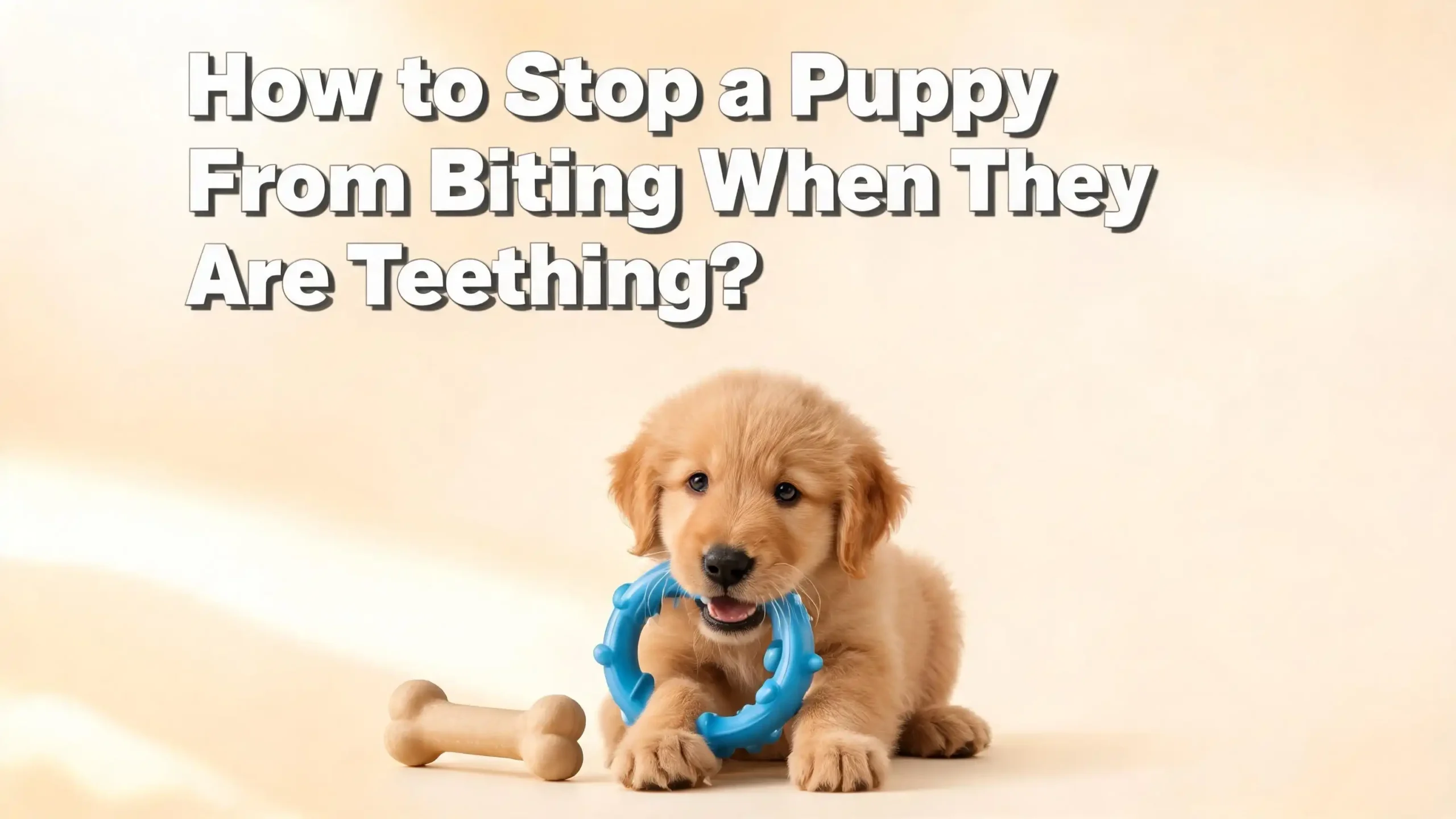
Frozen toys work especially well during the teething phase. The cold provides soothing relief for sore gums, which makes the toy even more appealing than your hand. You can freeze rubber chew toys, wet washcloths, or specially designed puppy teething rings.
Rotate your puppy’s toys every few days to keep them interesting. A puppy who gets bored with the same toy will go back to biting your hands. Variety keeps them engaged and gives them fresh options.
If your puppy ignores the toy and continues to bite you, stop all play immediately. Stand up and remove yourself from the situation. This sends a clear signal: biting you ends the fun, but biting the toy keeps the game going. Most puppies make this connection within a few weeks of consistent practice. The key word is consistent. Everyone in the household must redirect the same way every time.
Make Biting Mean Game Over
One of the strongest messages you can send your puppy is this: biting human skin stops all fun immediately. This technique works because puppies crave play and interaction. Losing your attention is a powerful consequence.
The moment your puppy’s teeth touch your skin during play, end the session. Do not yell, push them away, or react with big emotions. Simply stop moving, tuck your hands under your arms, and turn your back. This is a calming signal that also removes your attention entirely.
Wait about 10 to 20 seconds. If your puppy calms down and stops trying to bite, resume play. If they continue to jump and nip at you, leave the room for 30 to 60 seconds. The goal is to create a clear pattern in your puppy’s mind: gentle play continues, biting play stops.
Avoid roughhousing with your puppy using your bare hands. Wrestling and hand play teach your puppy that skin is a toy. Instead, always keep a toy between your hand and your puppy’s mouth during play sessions.
This approach requires patience. Some puppies get the message in a few days. Others take several weeks. You may notice improvement during one play session and then a setback in the next. This is completely normal. Puppies are learning, and learning is not always a straight line. Stay consistent, and the results will come.
Give Your Puppy Enough Rest
Many puppy owners are surprised to learn that overtired puppies bite more, not less. Just like a tired toddler who throws tantrums, an exhausted puppy becomes overstimulated and loses control of their behavior. The result is often an increase in frantic, relentless biting.
Puppies need a lot of sleep. Most puppies between 8 weeks and 6 months old need 16 to 20 hours of sleep per day. That means your puppy should nap after every 1 to 2 hours of being awake. If your puppy has been awake and active for more than two hours, a nap is probably overdue.
Enforced nap times are a game changer for biting behavior. Place your puppy in their crate or a quiet room with low stimulation when they become cranky or overly mouthy. This is not a punishment. It is giving your puppy what they actually need: rest.
Watch for signs of overtiredness. These include increased biting intensity, zoomies that seem out of control, inability to settle, and biting that does not respond to redirection. When you notice these signs, skip the training session and go straight to a nap. Trying to train an exhausted puppy only frustrates you both.
A predictable daily routine that includes scheduled nap times reduces biting episodes dramatically. Many owners report that simply adding more rest to their puppy’s day cut biting behavior in half.
Provide Plenty of Physical Exercise
A puppy with pent up energy will find ways to release it, and biting is one of the most common outlets. Regular physical exercise reduces biting behavior by giving your puppy a healthy way to burn off energy.
The amount of exercise your puppy needs depends on their age and breed. A general guideline is about five minutes of exercise per month of age, twice a day. So a 4 month old puppy would need about 20 minutes of exercise, two times a day.
Short walks, supervised backyard play, and fetch sessions are all excellent options. Avoid forced or high impact exercise for very young puppies, as their bones and joints are still developing. Gentle play and free running on soft surfaces are safer choices.
Exercise your puppy before situations where biting is likely to happen. If your puppy tends to bite most during evening family time, schedule a play session just before that. A tired puppy is much less likely to nip at everyone on the couch.
Swimming, if available and safe, is a great low impact exercise for puppies. So are short games of tug of war, which also give your puppy an appropriate outlet for their need to use their mouth. Make physical activity a daily habit, and you will notice a clear decrease in biting frequency.
Offer Mental Stimulation Daily
Physical exercise alone is not enough to tire out a puppy. Mental stimulation is equally important for reducing biting behavior. A bored puppy with an active mind will find ways to entertain themselves, often at the expense of your furniture and skin.
Puzzle toys, snuffle mats, and food dispensing toys challenge your puppy’s brain and keep them occupied. Stuffing a rubber toy with treats and freezing it can give your teething puppy 20 to 30 minutes of focused chewing and problem solving.
Training sessions are some of the best mental exercise you can provide. Teach your puppy basic commands like sit, down, stay, and come. Keep sessions short, about 5 to 10 minutes, and use positive reinforcement with treats and praise. A 10 minute training session can tire your puppy out more than a 30 minute walk.
Hide and seek games, scent work activities, and new environments also provide excellent mental stimulation. Let your puppy explore safe, new areas and sniff different objects. Sniffing is a primary mental activity for dogs and leaves them pleasantly tired.
Rotate mentally stimulating activities just like you rotate toys. A variety of challenges keeps your puppy engaged day after day. When your puppy has had enough mental exercise, they are far more likely to settle down calmly instead of nipping at your ankles.
Socialize Your Puppy With Other Dogs
Playing with other puppies is one of the best ways for your puppy to learn bite inhibition naturally. Other puppies give instant, honest feedback that no human can replicate. When your puppy bites a playmate too hard, the playmate yelps, stops playing, or corrects them with a growl.
Puppy socialization classes are an excellent option for this. These classes provide supervised play sessions where puppies of similar ages interact in a safe setting. A good puppy class also teaches basic obedience skills and helps your puppy become confident around new dogs and people.
Make sure all dogs your puppy interacts with are fully vaccinated and friendly. Avoid dog parks with unknown dogs until your puppy has completed their full vaccination series, which is usually around 16 weeks of age. Instead, arrange play dates with dogs you know and trust.
Friendly adult dogs can also teach your puppy manners. A well socialized adult dog will correct a mouthy puppy with a firm but gentle signal, like a low growl or a quick snap in the air. This type of correction from another dog is very effective and teaches lessons that last.
Puppies who regularly play with other dogs tend to have better bite inhibition and social skills overall. They learn to read body language, take turns, and play appropriately. These skills translate directly to how they interact with people.
Avoid Punishment Based Approaches
It might seem logical to punish your puppy for biting, but punishment based methods usually make biting worse. Yelling at your puppy, hitting them on the nose, spraying water in their face, or squeezing their muzzle shut can cause fear, anxiety, and even real aggression.
When you react with physical punishment, your puppy often interprets it as rough play. They may become more excited and bite harder. Or they may become afraid of your hands, which creates trust issues that are very difficult to repair.
Holding your puppy’s mouth shut is a common mistake that does not teach bite inhibition. It only teaches your puppy that your hands do unpleasant things to their face. This makes them less likely to accept handling around their mouth, which creates problems for future grooming and veterinary visits.
Alpha rolls, where you flip your puppy on their back and hold them down, are another outdated technique with no scientific support. Studies show these methods increase stress and fear in puppies without reducing biting behavior.
Positive reinforcement is always more effective than punishment. Reward the behavior you want to see. Praise your puppy for gentle mouth contact. Reward them for choosing a toy instead of your hand. Build trust, and your puppy will want to please you. Fear only teaches your puppy to avoid you, not to stop biting.
Use Taste Deterrents Safely
Taste deterrents are sprays with a bitter flavor that discourage your puppy from biting certain objects or body parts. These products can be helpful as a supporting tool, but they should not be your primary training method.
Apply a bitter spray to your hands or the areas of clothing your puppy targets most. When your puppy mouths you and tastes the unpleasant flavor, they will likely pull away. Praise them immediately for letting go. This reinforces the lesson that biting you leads to an unpleasant experience.
Consistency is important with taste deterrents. You need to apply them before every interaction for at least two weeks. If you use them sporadically, your puppy learns that sometimes biting tastes bad and sometimes it does not. This inconsistency weakens the training effect.
Not all puppies respond to bitter sprays. Some dogs are not bothered by the taste at all. If your puppy does not react to the product, try a different brand or skip this method and focus on redirection and bite inhibition training instead.
Always check that the product is safe for use on skin and clothing. Read the label carefully. Some deterrent sprays are designed only for furniture and should not be applied to your body. Talk to your veterinarian if you have questions about which product is appropriate for your situation.
Know When to Seek Professional Help
Most puppy biting is normal and resolves with consistent training by 6 to 7 months of age. However, some biting behavior signals a deeper issue that requires professional intervention.
Contact a certified dog trainer or veterinary behaviorist if your puppy’s biting seems fearful or aggressive rather than playful. Signs of concerning behavior include a stiff, rigid body during biting, bared teeth with a wrinkled muzzle, deep growling, and bites that break skin regularly.
Puppy temper tantrums are different from playful mouthing. These happen when a puppy is restrained, handled, or frustrated. The biting during a tantrum is harder, faster, and more intense. If your puppy has frequent tantrums with biting, this is not a phase they will outgrow on their own.
Early intervention prevents small problems from becoming big ones. A professional can observe your puppy’s body language, assess the context of the biting, and create a customized plan. They can also determine if there is an underlying medical issue, like tooth pain or illness, driving the behavior.
Do not feel embarrassed about asking for help. Even experienced dog owners sometimes need professional guidance with a mouthy puppy. A few sessions with a qualified trainer can save you months of frustration and create a safer, happier relationship with your dog.
Build a Puppy Proof Environment
Your home environment plays a big role in how often and how intensely your puppy bites. A well prepared home reduces biting triggers and gives your puppy clear signals about what they can and cannot chew.
Use baby gates to limit your puppy’s access to rooms where they are likely to get into trouble. Smaller spaces are easier for your puppy to understand and easier for you to supervise. A puppy who roams freely through the entire house has more opportunities to find inappropriate things to bite.
Remove tempting items from your puppy’s reach. Shoes, children’s toys, socks, remote controls, and electrical cords are all common targets. If your puppy cannot access these items, they cannot develop bad chewing habits around them.
Create a designated puppy area with appropriate chew toys, a comfortable bed, and water. This gives your puppy a safe space where they know exactly what is available to them. Crate training supports this by giving your puppy a quiet den where they can rest and feel secure.
Keep chew toys in every room where your family spends time. The easier it is to grab a toy and redirect your puppy, the more successful you will be. A basket of toys near the couch, in the kitchen, and by the front door ensures you are always prepared when those tiny teeth come out.
Stay Consistent and Patient Through the Process
Training a teething puppy to stop biting takes time. There is no overnight fix. The techniques in this post work, but only if you apply them consistently over weeks and months.
Set realistic expectations. Your puppy will not stop biting after one training session. You will have good days and bad days. Some play sessions will go perfectly, and the very next one might feel like starting over. This is a normal part of the learning process for both you and your puppy.
Every person in your household must follow the same rules. If Mom redirects and Dad allows hand play, your puppy receives mixed signals. Sit down with your family and agree on a single set of responses to biting. Write them down if needed.
Track your progress instead of focusing on perfection. Notice when biting episodes become less frequent or less intense. Celebrate small wins, like your puppy choosing a toy on their own or responding to your “ow” signal. These moments show that your training is working.
Remember that this phase is temporary. Most puppies show significant improvement by 5 to 6 months and the behavior usually resolves by 7 to 8 months. The training you invest now builds a foundation for a well mannered adult dog who is gentle, trustworthy, and safe around everyone.
Frequently Asked Questions
At What Age Do Puppies Stop Biting From Teething?
Most puppies stop teething related biting between 6 and 8 months of age. This is when all 42 adult teeth are fully in place and the gum discomfort subsides. Some puppies stop biting sooner, and some take a bit longer. Consistent training during the teething phase speeds up this timeline. Even after teething ends, continue reinforcing gentle mouth behavior so good habits stick for life.
Is It Normal for a Teething Puppy to Bite a Lot?
Yes, frequent biting during teething is completely normal puppy behavior. Puppies bite to relieve gum pain, explore their environment, and play. This does not mean your puppy is aggressive. Nearly every puppy goes through an intense biting phase. The key is to manage and redirect the behavior rather than ignore it, so your puppy learns appropriate boundaries.
Should I Yelp When My Puppy Bites Me?
A high pitched “ow” sound works for many puppies because it mimics the feedback they would receive from a littermate. However, some puppies become more excited by the noise and bite harder. If yelping amps up your puppy, skip the vocal response. Instead, silently withdraw your attention by standing up and turning away. Test both approaches to see which one your puppy responds to better.
Can I Use Ice Cubes to Help My Teething Puppy?
Yes, many puppies enjoy chewing on ice cubes, and the cold helps soothe inflamed gums. Always supervise your puppy with ice to prevent choking on large pieces. You can also freeze wet washcloths, broth in ice cube trays, or rubber toys for a similar soothing effect. Frozen options are especially helpful during the peak teething months of 4 to 6 months old.
How Do I Stop My Puppy From Biting My Children?
Teach your children the same rules you follow. Kids should freeze, tuck their hands, and turn away if the puppy bites. They should never run, scream, or wave their hands, as this excites the puppy and encourages more biting. Always supervise interactions between young children and puppies. Teach kids to offer a toy instead of their hands during play.
What If My Puppy Only Bites One Person in the Family?
This often happens because that person’s reactions are different from everyone else’s. The targeted person might react with big movements, high pitched sounds, or rough play that the puppy finds rewarding. Observe the interactions closely and help that family member adjust their response. Consistency from every person is the fastest way to solve this problem.