How to Stop a Dog From Resource Guarding Their Food Bowl?
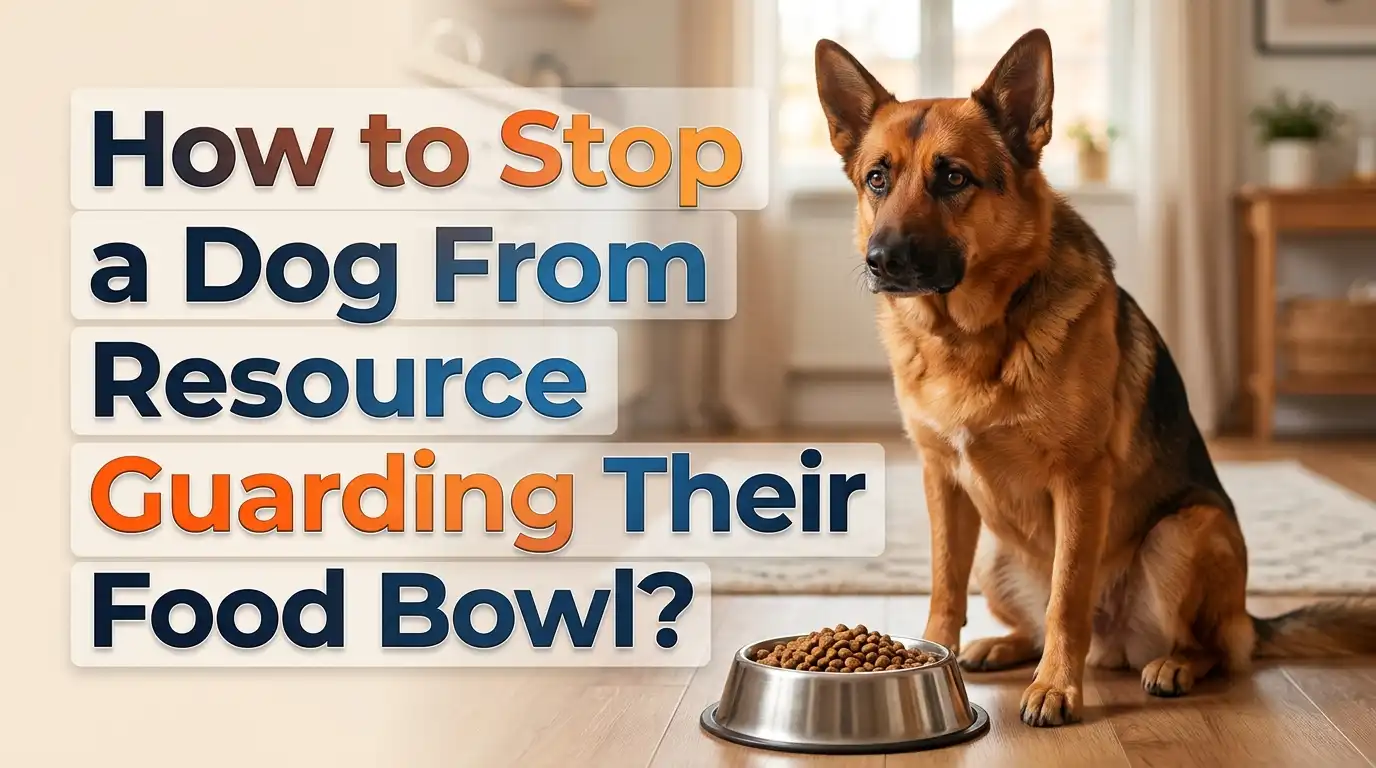
Does your dog growl, stiffen, or snap when you get near their food bowl? You are not alone. Resource guarding around the food bowl is one of the most common behavior concerns dog owners face today.
The good news? This behavior is highly manageable, and in many cases, completely reversible with the right approach. Whether your dog gives you a hard stare at mealtime or escalates into full growling and lunging, this guide walks you through exactly what to do, step by step.
You will learn why this happens, what mistakes to avoid, and how to build a calmer, more trusting relationship with your dog around their food.
Keep reading. The solution is simpler than you think, and it starts with understanding what your dog is actually telling you.
In a Nutshell
- Resource guarding is a natural dog behavior, not a sign of a bad dog. It is rooted in survival instincts that all dogs carry, but it becomes a serious problem when it escalates to growling, snapping, or biting near the food bowl.
- Punishment makes things worse. Yelling at, intimidating, or physically correcting a dog that guards food increases the likelihood of biting. It removes the dog’s ability to warn you before escalating.
- Desensitization and counterconditioning are the gold-standard methods for treating food bowl guarding. These techniques gradually change your dog’s emotional association with your approach during mealtime from anxiety to anticipation of something good.
- Management is your safety net. Before formal training begins, setting up the environment properly, such as feeding in a separate space and removing bowls after meals, prevents the problem from getting worse while you work through training.
- Consistency across all family members matters enormously. Every adult in the household must follow the same training protocol. A dog that feels safe with one person but threatened by another will not make full progress.
- Severe cases need professional support. If your dog has already bitten someone or charges at people near the food bowl, working with a certified applied animal behaviorist or veterinary behaviorist is the safest and most effective path forward.
What Is Resource Guarding and Why Do Dogs Do It?
Resource guarding happens when a dog uses avoidance, threatening, or aggressive behavior to keep a valued item. That item can be food, a toy, a chew bone, a sleeping spot, or even a person. Animal behaviorist Patricia McConnell defines it as “any behavior that discourages another to take, or get too close to, an object or valued area in the dog’s possession.”
This behavior is completely natural from an evolutionary standpoint. In the wild, dogs and their ancestors had to protect their food from other animals to survive. The dog that guarded its meal ate more, stayed stronger, and lived longer. That instinct still lives inside every dog today, even your well-fed golden retriever.
The food bowl, in particular, triggers this response because food carries the highest inherent survival value of almost any resource. When your dog sees you approaching their bowl, their brain fires a signal that says, “someone is coming to take what I need.” Without proper conditioning to associate your approach with good things, the dog defaults to defensive behavior.
Understanding this is the first step. Your dog is not being dominant, mean, or defiant. They are being a dog. That distinction matters a great deal when you choose your training approach.
Warning Signs of Food Bowl Guarding You Should Never Ignore
Many dog owners only notice resource guarding once it reaches an obvious stage like growling or snapping. But dogs almost always give earlier, subtler signals first. Learning to read these signals protects you and helps you catch the behavior early.
Subtle early warning signs include:
- Eating noticeably faster when someone approaches
- Freezing or brief body stiffness over the bowl
- Side-eye or hard stare tracking your movement
- Subtle body shift to block access to the bowl
- Ears pinned back against the head
More obvious escalating signs include:
- Growling or low rumbling sounds
- Lip lifting and teeth baring
- Lunging or air snapping
- Chasing a person away from the feeding area
Never ignore even the subtle signals. A dog that freezes for half a second over their bowl is communicating discomfort. If you continue approaching without addressing it, you teach the dog that quiet signals do not work, and they will escalate to louder ones. The goal is to change what the dog feels when you approach, not to silence their warnings.
Common Mistakes That Make Food Bowl Guarding Worse
Before diving into solutions, it is essential to address what not to do. Many well-meaning dog owners accidentally make food bowl guarding worse with approaches that seem logical but backfire completely.
Sticking your hand in the bowl “to show dominance” is one of the most commonly advised and most harmful strategies. The idea is that your dog will learn you are in charge and stop guarding. In reality, you are teaching your dog that a hand near the bowl means food disappears. This creates more anxiety, not less.
Punishing the growl is another major mistake. You can stop a dog from growling with punishment, but you have only muted the warning, not removed the underlying anxiety. A dog that no longer growls before biting is far more dangerous than one that growls. Always respect the growl as communication.
Randomly removing the bowl during meals to “practice” also creates the problem you are trying to prevent. It teaches the dog that people approaching the bowl always equals losing the food.
Free-feeding (leaving food out all day) can increase guarding because the bowl and its contents become a permanent, constantly available resource to defend. Scheduled mealtimes reduce the perceived value of any single feeding event.
Setting Up the Environment Before You Start Training
Management is not the long-term solution, but it is the critical first step. Before any formal training begins, you need to set up the environment to prevent your dog from practicing guarding behavior. Every time a dog practices resource guarding, the behavior becomes more practiced and reinforced in their brain.
Start by identifying every situation that triggers your dog’s guarding. Is it only at mealtime? Does it happen with an empty bowl too? Does it change depending on who approaches?
Practical management steps:
- Feed your dog in a separate, gated area where no one will approach during meals
- Remove the food bowl immediately after your dog finishes eating and walks away
- Do not free-feed your dog. Use scheduled meals
- If you have multiple dogs, feed them in completely separate rooms with doors or gates between them
- Do not leave high-value chews or food items accessible when you cannot supervise
These steps do not fix the behavior. They prevent it from getting worse while you work on the actual training. Think of management as holding the problem steady while training changes it permanently.
Step-by-Step Desensitization and Counterconditioning: The Foundation of Training
Desensitization and counterconditioning are the most effective, science-backed methods for treating food bowl guarding. The ASPCA, Preventive Vet, and countless certified animal behaviorists consistently recommend this approach.
Desensitization means gradually exposing your dog to the trigger (your approach at mealtime) at a low enough level that they do not react with guarding behavior.
Counterconditioning means pairing that trigger with something the dog loves, like a high-value treat, so that the emotional response shifts from “threat incoming” to “something good is coming.”
Before you start, cut up small pieces of high-value food your dog loves but does not get regularly. Chicken, small pieces of hot dog, or soft cheese work well. This food must be better than what is in the bowl.
Stage 1: Standing at a Distance
Stand several feet away from your dog while they eat. Say in a calm, conversational tone, “What have you got there?” and toss a high-value treat toward the bowl. Repeat every few seconds until your dog finishes eating. Do this for at least 10 calm, relaxed meals before moving on.
Stage 2: Moving Closer, One Step at a Time
Repeat Stage 1, but this time take one step closer before tossing the treat, then immediately step back. Each day, move one step closer. Continue until you can stand about two feet from the bowl without any tension from your dog.
Stage 3: Standing Right Next to the Bowl
Approach the bowl, stand beside it, drop a treat directly into the bowl, and then walk away. Repeat several times per meal for 10 relaxed meals in a row.
Stage 4: Bending Down
Now bend slightly toward the bowl, offer a treat from your hand, then stand and walk away. Gradually lower your hand closer to the bowl over multiple sessions.
Stage 5: Touching the Bowl
Touch the bowl with one hand while offering a treat with the other. Do this several times per meal, again aiming for 10 calm, relaxed meals.
Stage 6: Briefly Lifting the Bowl
Lift the bowl a few inches off the floor, drop a treat inside, and set it right back down. Over time, lift it higher. Eventually, walk it to a counter, add something special, and bring it back. The dog learns that you taking the bowl always means the bowl comes back better than before.
Patience is everything here. Never rush through stages. If your dog shows any tension, go back one stage.
How to Use the Trade-Up Method Effectively
The Trade-Up method is a powerful tool that works alongside the desensitization process. The core idea is simple: your dog learns that giving something up always means getting something even better in return.
To practice this, hold a high-value treat in your hand and approach your dog calmly while they eat. Without reaching for the bowl, offer the treat clearly within your dog’s sight. Let them leave the bowl to take the treat from your hand. Once they do, calmly walk away. The bowl stays there. The dog gets a treat and still gets to finish their meal.
Over time, this builds a strong, positive association. Your approach no longer signals “I am here to take your food.” Instead, it signals “something good is about to happen.”
This method also lays the groundwork for teaching your dog a “Leave It” or “Drop It” cue, which becomes invaluable in many situations beyond mealtime. Practice with lower-stakes items like toys first, then gradually work your way up to practicing near the food bowl as your dog’s comfort grows.
Teaching Drop It and Leave It as Supporting Skills
Two training cues work hand-in-hand with food bowl guarding treatment: “Drop It” and “Leave It.” These give you a way to communicate with your dog calmly and clearly in situations where they may be beginning to guard.
Drop It means to release whatever is in the dog’s mouth or possession. Start by offering your dog a low-value toy. Hold a treat near their nose. When they drop the toy to take the treat, say “Drop It” and give the treat. Never yank items away. The goal is a voluntary, willing release rewarded with something good.
Leave It means to turn away from something and not take it. Begin with a treat in your closed fist. When your dog stops trying to get it and looks away, say “Leave It” and reward them from your other hand.
Once your dog understands both cues with low-value items, gradually practice near the food bowl. Keep sessions short and always end on a success. Consistency over weeks and months builds the behavior reliably. These cues give you communication tools that keep both you and your dog safe.
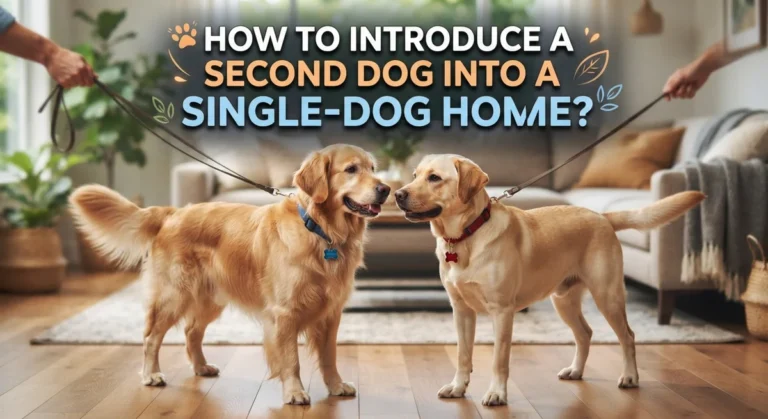
Managing Resource Guarding in a Multi-Dog Household
Food bowl guarding becomes a more urgent issue when multiple dogs live together. Dogs can and do direct guarding behavior at other household dogs, and it can escalate to serious fights if not managed carefully.
The most important rule is simple: always feed dogs in separate, fully secured spaces. Close doors or use baby gates between feeding areas. Do not allow dogs to see or hear each other while eating. Remove all bowls as soon as each dog finishes.
Never supervise multi-dog mealtimes casually. A dog that is fine at feeding time for months can suddenly redirect guarding behavior under stress, during a new dog’s introduction, or when food is particularly high value.
Once feeding areas are managed, you can work on building a more relaxed association between dogs at mealtime using counterconditioning. Feed dogs at increasing distances from each other over time, rewarding calm behavior. If either dog stiffens, growls, or stares, they are too close. Increase the distance and progress more slowly.
Do not rush multi-dog situations. The risk of injury is real. If dogs have already fought over food, work with a certified professional before attempting any shared-space feeding adjustments.
What the Science Says About Positive Reinforcement vs. Punishment
Research consistently supports positive reinforcement as the most effective and safest approach to resource guarding. Studies published in journals of applied animal behavior show that adding palatable food during meals reduces guarding behavior. Punishment-based approaches, on the other hand, increase arousal, stress, and the likelihood of escalation.
A landmark finding in dog behavior research is that punishing a growl does not remove the emotional state causing it. The dog still feels threatened. They simply learn to suppress the warning signal, which makes the next reaction faster and more dangerous.
Positive reinforcement changes the emotional state, not just the surface behavior. When a dog learns through consistent, rewarding experiences that human approach at mealtime means bonus chicken, their brain chemistry actually shifts. The trigger no longer activates the defensive response. This is the difference between compliance out of fear and genuine comfort.
The ASPCA, American Veterinary Society of Animal Behavior, and most certified applied animal behaviorists align on this point firmly. Aversive methods (shock collars, alpha rolls, food removal as punishment) are contraindicated for resource guarding cases specifically because they increase bite risk.
Preventing Resource Guarding in Puppies
Prevention is always easier than treatment, and the puppy period is the ideal window to build positive associations around food. Puppies that learn early that human hands near the bowl mean bonus rewards almost never develop significant guarding behavior as adults.
When you bring a new puppy home, hand feed several of their meals. Sit on the floor and offer kibble piece by piece. Speak calmly and touch the puppy gently while feeding. This builds a deeply positive association with your presence during eating from the very start.
After a few weeks, transition to holding the bowl in your lap during meals. Continue with calm praise and gentle handling. Then progress to placing the bowl on the floor and periodically dropping a high-value piece of food into it as your puppy eats.
Do not skip this step even if your puppy seems completely relaxed. Prevention is about building the habit of comfort before anxiety ever develops. Dogs from competitive litter environments, shelters, or rescue situations especially benefit from deliberate early conditioning around the food bowl.
When to Call a Professional
Some situations exceed what any home training program can safely manage. Knowing when to call a certified professional is not a sign of failure. It is the responsible choice for both your safety and your dog’s wellbeing.
Seek professional help immediately if:
- Your dog has already bitten a person near the food bowl
- Your dog charges, lunges, or chases people away from their food area
- The behavior is escalating in intensity despite management
- Children, elderly adults, or individuals with physical limitations live in the home
- You feel unsafe approaching your dog at any point during mealtime
The right professionals for this situation include:
- Certified Applied Animal Behaviorist (CAAB or ACAAB): The highest credential in animal behavior. Ideal for severe or escalating cases.
- Diplomate of the American College of Veterinary Behaviorists (Dip ACVB): A veterinary specialist in behavior. Can also prescribe medication if anxiety is contributing to the behavior.
- Certified Professional Dog Trainer (CPDT-KA): Can help with mild to moderate cases, especially those with documented experience in aggression.
Avoid anyone who recommends alpha rolls, dominance-based corrections, or punishment for growling. These methods make food bowl guarding more dangerous, not less.
Building a Calm Mealtime Routine That Lasts
Once your dog is progressing through training, building a consistent, structured mealtime routine cements the gains. A predictable routine reduces anxiety because your dog knows exactly what to expect. Less uncertainty means less need to guard.
Feed at the same times every day. Use the same feeding location. Ask your dog to perform a simple cue, like “Sit” or “Wait,” before you place the bowl down. This gives your dog a clear, rewarding job to do at mealtime and puts a small positive behavior between them and the food.
Routine elements that help long-term:
- Fixed, scheduled mealtimes (not free-feeding)
- A consistent feeding location with adequate space
- A simple, trained “Wait” or “Sit” before eating begins
- Periodic, random treat drops into the bowl from a standing position to maintain the positive association
- Bowl removal after meals, so the bowl does not sit out and become a permanent guarding trigger
Do not abandon the treat-drop habit entirely even after your dog improves. Occasional reinforcement of the “approaching humans bring good things” association maintains the behavior for life. Think of it as maintenance for your dog’s emotional comfort around feeding.
FAQs
Is resource guarding around the food bowl a sign of dominance?
No. Resource guarding is not about dominance. It is a natural survival behavior rooted in the instinct to protect food. Using dominance theory to explain or treat resource guarding is outdated and can make the problem worse. The correct approach is to address the anxiety driving the behavior through positive, reward-based training.
Can resource guarding get worse over time if untreated?
Yes, it often does. Without intervention, dogs learn that guarding works. Every time the guarding behavior successfully makes a person or animal back away, the behavior is reinforced. Over time, smaller triggers cause bigger reactions. Early intervention is always more effective than waiting.
Is my dog dangerous if they resource guard their food bowl?
The risk level depends on the severity of the behavior. A dog that occasionally eats faster when someone approaches is very different from a dog that bites. Any dog showing biting or lunging behavior near the food bowl should be assessed by a professional. Always err on the side of caution, especially with children in the home.
Should I take away my dog’s food bowl to show them it belongs to me?
No. Randomly removing the food bowl during meals teaches your dog that humans approaching equals losing food. This creates more anxiety and worsens guarding behavior. The goal is the opposite: teach your dog that your approach means something better is coming, not that their food will be taken.
How long does it take to stop food bowl guarding with training?
It varies. Mild cases with consistent daily training can show meaningful improvement in two to four weeks. Moderate cases may take several months of regular practice. Severe cases involving biting history can take considerably longer and require professional guidance throughout. Consistency, patience, and proper technique matter more than speed.
Can all dogs learn to stop guarding their food bowl?
Most dogs improve significantly with proper desensitization and counterconditioning. Some dogs, especially those with a long history of guarding or a bite history, may always need a degree of management like separate feeding areas. The goal is a dog that is safe and comfortable, and that outcome is achievable for the vast majority of dogs with the right approach.
What if my dog resource guards with other dogs but not with people?
Dog-directed food guarding is very common and should still be taken seriously. Always feed dogs in completely separate, secured spaces. Do not leave food bowls out between meals. Work with a certified trainer to introduce counter-conditioning exercises that help dogs build positive associations with each other near food, at a safe distance. Never force dogs to eat side by side before they are fully comfortable doing so.