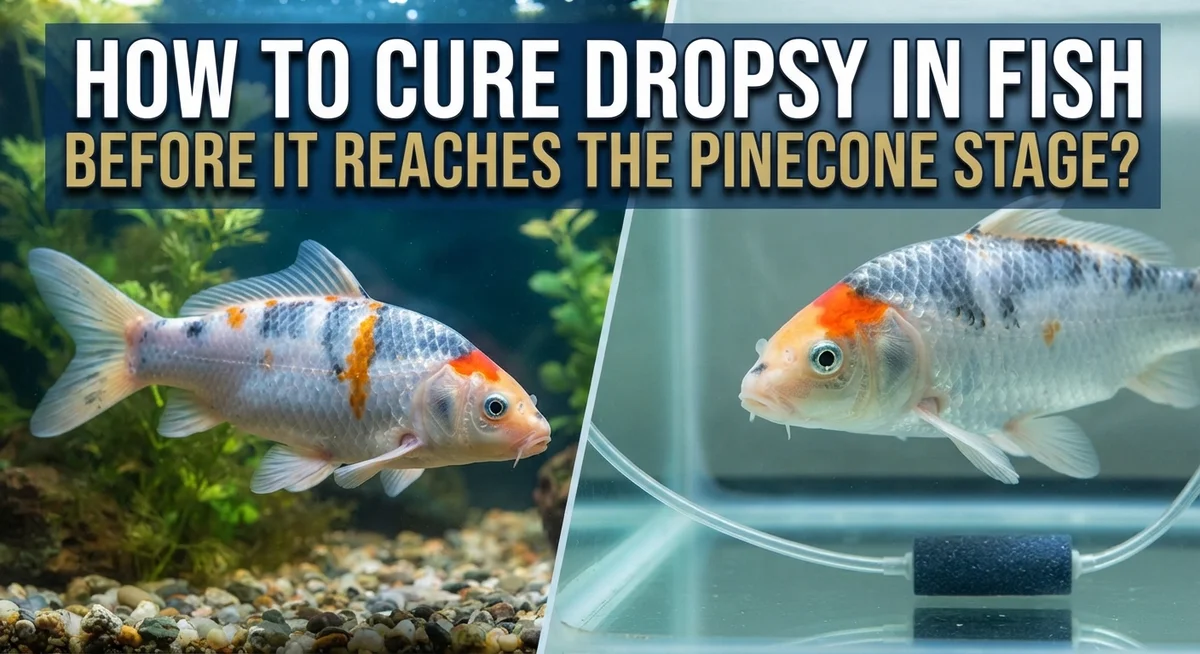
How to Cure Dropsy in Fish Before It Reaches the Pinecone Stage?
Have you noticed your fish looking swollen or bloated? This could be a sign of dropsy, a serious condition that affects a fish’s kidneys. The good news is you can treat it, especially if you catch it early.
Dropsy causes fluid buildup inside your fish’s body. In advanced stages, the scales stick out like a pinecone. But even pinecone stage fish can recover with the right care.
This guide will show you simple steps to treat dropsy before it gets worse. You will learn about salt baths, water changes, and safe medication options.
We will also cover common mistakes fish owners make. Many people delay treatment or mix medications without checking if they are safe together.
By the end of this article, you will know exactly what steps to take. You will understand how to reduce pressure on your fish’s kidneys and support its healing process.
Let’s help your fish get back to full health.
In a Nutshell
- Start with an Epsom salt bath. This is the first step in treating dropsy. It helps pull extra fluid out of your fish’s body.
- Salt reduces pressure on the kidneys. Adding salt to the water lowers osmotic pressure. This makes it easier for your fish to release trapped fluid.
- Do a full water change after the bath. Replace 100% of the water. Then add back only half the salt dose you used before.
- Repeat the water change a second time. This keeps the tank clean and safe. It also prevents salt buildup that could harm your fish.
- Levamisole can help in some cases. If you have access to this medication, it may support recovery. Always check for safety before combining treatments.
- Pinecone stage is not the end. Fish with raised scales can still recover. The same treatment steps often work, even at this advanced stage.
- Early treatment gives the best results. Don’t wait for symptoms to get worse. Quick action gives your fish a much better chance.
What Is Dropsy and Why Early Detection Matters
Dropsy is a kidney disease that causes fluid to build up inside your fish’s body. Your fish’s abdomen swells, and the fish looks bloated or puffy. This happens because the kidneys stop working properly and cannot remove excess water.
Why early detection matters so much is simple: fish recover faster when you catch dropsy in its early stages. A swollen belly is your first warning sign. You might also notice your fish swimming differently or refusing to eat.
The condition progresses through different stages. Early dropsy shows only mild swelling. As time passes, the scales start to stick out from the body like a pinecone. This pinecone appearance looks alarming, but it does not mean your fish cannot recover.
Starting treatment before pinecone scales appear gives your fish the best chance. Your fish’s body has not spent weeks fighting the disease. The kidney damage is still reversible in many cases. This is why acting quickly matters so much.
Dropsy affects many fish species, from bettas to goldfish. Stress, poor water quality, and bacterial infections can trigger it. Sometimes genetics play a role too. Regardless of the cause, the treatment approach remains the same.
Waiting until your fish shows severe symptoms makes recovery harder. The longer fluid builds up, the more damage occurs inside. Your fish’s organs work under extra pressure. Some fish survive pinecone stage dropsy, but prevention through early action is always smarter.
Check your fish daily for signs of bloating or unusual behavior. Healthy fish have normal body shapes and eat regularly. Any sudden changes deserve immediate attention. Early detection transforms dropsy from a serious threat into a manageable condition.
Early Warning Signs to Watch For
Your fish’s body sends you signals before dropsy reaches its worst stage. Learning to spot these early warnings helps you act fast and save your fish’s life.
The first sign is mild bloating around the belly area. Your fish may look slightly rounder than normal, but scales still lie flat against the body. This is when treatment works fastest and most reliably.
Watch for changes in behavior too. Sick fish often hide more than usual or stay near the bottom of the tank. They may eat less food or show no interest in feeding time. Some fish gasp at the water surface or move slowly through the tank.
Loss of color is another clue to watch for. Your fish’s bright patterns may fade or look dull. The fins might clamp closer to the body instead of staying relaxed and open.
Check the fish’s eyes and face carefully. Dropsy can cause the eyes to bulge slightly or appear swollen. The mouth area may look puffy as fluid builds up under the skin.
Irregular swimming patterns signal trouble too. Your fish may struggle to stay upright, tilt to one side, or float at odd angles. Some fish sink to the bottom when they should float normally.
The gills deserve attention as well. Rapid or labored breathing means your fish is stressed. You may notice the gill covers moving faster than usual.
Daily observation is your best tool. Spend a few minutes each day watching your fish move and eat. Early dropsy catches are much easier to treat than advanced cases. Start treatment the moment you notice these signs. Your quick action can mean the difference between recovery and serious illness.
Step-by-Step Epsom Salt Bath Treatment Protocol
Epsom salt baths work by reducing the pressure on your fish’s kidneys. The salt creates an osmotic gradient that helps pull excess fluid from your fish’s body back into the water. This gives the kidneys relief and starts the healing process.
Here’s how to perform the treatment correctly.
First, prepare a separate container like a hospital tank or large bucket. Fill it with water from your main tank to match the temperature. Add Epsom salt at a rate of one tablespoon per gallon of water in this bath container. Mix thoroughly until the salt dissolves completely.
Next, gently place your sick fish into the salt bath. Leave it there for 15 to 30 minutes while you watch carefully. Your fish may seem stressed at first, but this is normal. Remove the fish immediately if it shows severe distress like gasping or rolling sideways.
After the bath ends, return your fish to its main tank. Do not add salt to the main tank at this point.
Now perform a 100 percent water change in the main tank. Replace all the water with fresh, dechlorinated water. This removes waste and reduces overall salinity. Your fish needs this clean environment to recover properly.
Wait 24 hours, then do a second full water change. This second change is equally important because it keeps the tank conditions stable and clean.
Repeat the Epsom salt bath every day or every other day for up to one week. Monitor your fish closely during this period. Watch for signs of improvement like reduced bloating or better swimming behavior. Stop treatment once your fish shows consistent improvement.
Water Change and Salinity Management Process
Water changes are your most powerful tool in dropsy treatment. Fresh water reduces toxins that stress your fish’s kidneys and helps flush out excess fluid buildup. Start by removing 100% of the water from your main tank.
Replace it with clean, dechlorinated water at the same temperature. Temperature matters because sudden changes shock your fish’s system. Aim for the same warmth your fish was living in before the change.
After the initial full water change, wait exactly 24 hours. Then perform a second 100% water change using the same process. This two-step approach removes harmful bacteria and waste that contribute to kidney failure.
Salinity management works alongside water changes to reduce pressure on your fish’s kidneys. When you add salt to the water, it helps your fish’s body retain less fluid internally. This gives the kidneys relief from working overtime.
During your first water change, add salt at the recommended dosage for your fish species. After the second water change 24 hours later, add only 50% of the original salt dose. This gradual reduction prevents osmotic shock while still supporting kidney function.
Monitor your fish’s behavior after each water change. You should see improvements in activity levels within 2 to 3 days. The belly bloating may decrease slowly, and your fish might eat better.
Perform these full water changes every 24 to 48 hours for the first week of treatment. Consistency matters more than perfection here. Stick to your schedule even if your fish seems to improve quickly. Dropsy can return if you stop treatment too early.
Using Levamisole as a Secondary Treatment Option
Levamisole is a deworming medication that works as a secondary treatment option when your fish shows signs of dropsy. This medication targets parasitic infections that may be causing or worsening your fish’s condition. Many fish keepers use levamisole after initial salt therapy fails to show improvement.
How levamisole helps your fish is by eliminating internal parasites that stress the kidneys. When parasites damage kidney function, fluid builds up in your fish’s body. Removing these parasites can restore normal kidney operation and reduce bloating.
Before using levamisole, research the correct dosage for your specific fish species and tank size. Different fish tolerate medications differently, so getting the dose right matters. Always follow the instructions on the medication packaging carefully.
Important safety note: Do not mix levamisole with other medications unless you verify they are safe together. Combining treatments without research can harm or kill your fish. Ask experienced aquarists or consult reliable sources before mixing any medications.
Start levamisole treatment only after your fish completes at least three to five days of salt therapy and water changes. This sequence matters because salt therapy addresses immediate kidney pressure while levamisole handles underlying parasitic causes.
Watch your fish closely during levamisole treatment. Some fish show improvement within one week. Others need a second dose after a seven day break. If your fish shows no improvement after two treatment cycles, the dropsy may stem from bacterial infection or organ failure instead.
Remember: Levamisole works best as part of a complete treatment plan that includes salt baths, water changes, and good tank conditions. No single medication cures dropsy alone.
Common Mistakes That Delay Recovery
Many fish owners accidentally slow down their fish’s recovery by making simple but costly errors. Understanding these mistakes helps you avoid setbacks.
Delaying treatment is the biggest mistake. Many people wait to see if dropsy goes away on its own. It won’t. Every day you delay gives the disease time to progress deeper into your fish’s organs. Start salt baths and water changes immediately when you spot bloating, even if scales look normal.
Overdosing salt is another common error. Some owners think more salt means faster recovery. Too much salt actually stresses your fish further and can damage their gills. Follow the correct dosage for your specific fish species and stick to it exactly.
Mixing medications carelessly causes serious problems. Combining salt therapy with levamisole or other treatments without research can poison your fish. Each medication affects your fish’s body differently. Always verify that any two treatments are safe together before using them.
Inconsistent water changes break the treatment cycle. Your fish needs regular full water changes every 24 to 48 hours during the first week. Skipping changes or doing partial changes instead of complete ones allows toxins to build up again.
Giving up too early stops progress. Some owners treat for two or three days, see no improvement, and stop. Recovery takes time. Most fish show improvement between days five and seven of consistent treatment.
Ignoring temperature stability matters more than people realize. Sudden temperature swings stress your fish’s kidneys during treatment. Keep your tank temperature steady throughout recovery.
Avoiding these mistakes keeps your treatment plan on track and gives your fish the best chance at full recovery.
Troubleshooting When Symptoms Persist or Worsen
When your fish’s dropsy symptoms get worse instead of better, you need to act quickly. Worsening signs include increased swelling, loss of appetite, or difficulty swimming. These changes mean your current approach needs adjustment.
First, check your water quality. Test for ammonia, nitrite, and nitrate levels. High ammonia or nitrite can slow your fish’s recovery and make dropsy worse. If levels are high, perform an immediate 100% water change without salt. This removes toxins faster than gradual changes.
Next, review your salt dosage. Many fish owners accidentally use too little salt, which won’t reduce kidney pressure effectively. Verify the correct amount for your specific fish species and tank size. If you’ve been underdosing, increase to the proper level during your next water change.
Consider whether your fish needs secondary treatment. If salt therapy alone hasn’t improved symptoms after five to seven days, your fish might have internal parasites stressing the kidneys. Research levamisole dosing for your species before adding it to treatment.
Stop mixing new treatments without verification. Combining salt therapy with other medications incorrectly can harm your fish. Always research compatibility first.
Watch for secondary infections. Swollen fish sometimes develop bacterial infections on their skin. If you see red spots, white patches, or torn fins, these need separate treatment alongside dropsy care.
Finally, give treatment time to work. Dropsy recovery takes two to three weeks minimum, even with correct protocol. Inconsistent water changes or stopping treatment early prevents healing. Stay committed to the schedule, monitor daily, and adjust only when symptoms clearly indicate your current approach isn’t working.
Can Fish Recover Even at the Pinecone Stage?
Fish at the pinecone stage can absolutely recover. This advanced stage shows visible scale protrusion that looks like a pinecone, but it does not mean your fish is beyond help. Many fish owners believe pinecone dropsy is a death sentence, but documented cases prove otherwise.
The same treatment protocol works for pinecone stage fish as it does for earlier dropsy stages. You start with Epsom salt baths to reduce osmotic pressure on the kidneys. The salt helps pull excess fluid from the fish’s body tissues back into the water. Your fish’s kidneys struggle to filter properly, so salt therapy gives them relief.
Recovery at this stage takes longer and requires patience. Early treatment usually shows improvement within 5 to 7 days. Pinecone stage fish may need 2 to 3 weeks of consistent care before scales begin to flatten. Some fish recover completely. Others stabilize but keep slight scale roughness.
The key difference is consistency. You must perform 100% water changes every 24 to 48 hours without fail. Skipping even one water change cycle can set back progress. Your fish also needs excellent water quality. Poor conditions stress the kidneys further and slow recovery.
Secondary infections become more likely at pinecone stage. Watch for torn fins, white patches, or unusual behavior. Address any new problems immediately with appropriate treatment.
Pinecone stage fish deserve the same treatment effort as early dropsy cases. Many owners give up too soon because they expect instant results. Give your fish the full 2 to 3 week treatment window. Success is possible at this advanced stage if you stay committed to the protocol.
Final Thoughts
Dropsy is scary to see in your fish. But now you know it’s treatable at every stage.
Acting early gives your fish the best chance. Watch for swelling, raised scales, or unusual behavior. Start salt therapy the moment you notice these signs.
The treatment steps stay simple. Give an Epsom salt bath first. Then do a full water change and add back half the salt dose. Follow with another complete water change.
Levamisole can help if you have access to it. Use it carefully and never mix it with other medications without checking safety first. Your fish’s health depends on getting this right.
Remember that pinecone stage does not mean hopeless. Many fish owners have watched their fish recover even after scales puffed out fully. The same protocol that works early also works late.
Patience matters more than perfection here. Some fish bounce back in days. Others need weeks of consistent care. Stay steady with water changes and salt levels throughout.
Your daily habits make the biggest difference. Test your water often. Watch your fish’s swimming and eating patterns. Small changes tell you if treatment works or needs adjusting.
Don’t panic if progress feels slow. Dropsy fights back sometimes before it improves. Keep your routine steady and give your fish time to heal.
Every fish deserves a real chance at recovery. Whether you caught dropsy early or late, the steps stay the same. Salt therapy, clean water, and careful monitoring form your foundation.
Trust the process and trust your fish. With steady care and quick action, many fish surprise their owners by pulling through even tough cases of dropsy.
Frequently Asked Questions
What exactly is dropsy and why does it happen in fish?
Dropsy is a kidney disease that causes fluid to build up inside your fish’s body. The kidneys stop working properly and can’t remove excess water. Your fish’s belly swells up like a balloon. This happens due to poor water quality, stress, bacterial infections, or old age. Early signs include a puffy abdomen and lethargy. The condition gets worse over time if you don’t treat it.
Can I treat dropsy before the pinecone stage appears?
Yes, and this is the best time to start. Early treatment works faster and gives your fish a better chance. You should begin as soon as you see belly swelling or notice your fish acting tired. Don’t wait for scales to stick out. Start with an Epsom salt bath right away. The sooner you act, the quicker your fish responds.
How does salt therapy actually help dropsy?
Salt reduces the osmotic pressure on your fish’s kidneys. This lets the kidneys work better at removing excess fluid. The salt draws water out of your fish’s tissues and into the water around them. Your fish gradually loses the bloated appearance. This is why consistent salt dosing matters so much throughout treatment.
What should I do if my fish doesn’t improve after three days?
Check your water quality first. Poor conditions slow recovery significantly. Next, verify your salt dosage is correct. Consider whether your fish needs additional help like levamisole medication. Never mix treatments without researching safety first. Continue your regular water changes every 24 to 48 hours. Sometimes recovery takes longer than expected, especially in older fish.
Is recovery possible at the pinecone stage?
Absolutely. Fish recover at pinecone stage using the same treatment steps. Recovery takes longer and requires more patience at this advanced point. Don’t give up because scales look severe. Your fish still deserves full treatment effort. Many documented cases show successful recovery even at this stage.