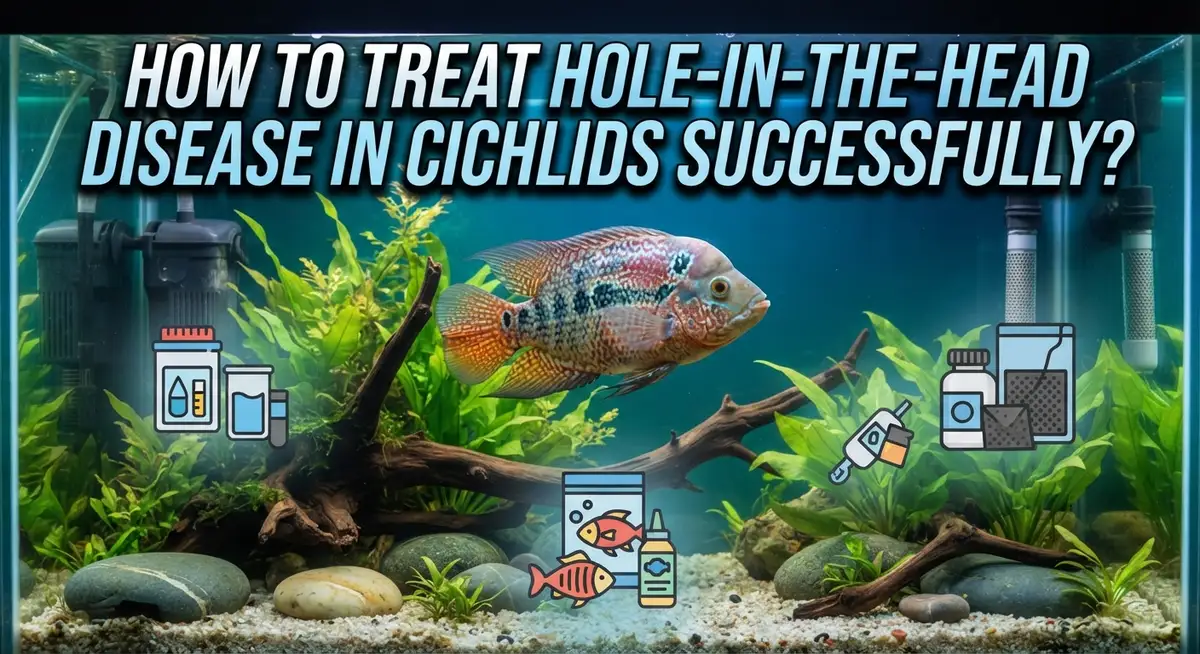
How to Treat Hole-In-The-Head Disease in Cichlids Successfully?
Have you noticed small pits or holes forming on your cichlid’s head? This condition is called Hole in the Head Disease, or HITH. It can look scary, but the good news is that it’s treatable.
HITH often starts with tiny organisms called Hexamita. These parasites thrive when water quality drops. Poor filtration and dirty tanks give them the perfect chance to multiply.
Many fish owners jump straight to medication. They reach for treatments like metronidazole and hope for a quick fix. But medicine alone rarely solves the real problem.
The truth is simple. Water quality is the core issue behind most HITH cases. Without fixing it, lesions can return again and again.
This article will walk you through the full picture. You will learn what causes HITH, how to spot it early, and why biofiltration matters so much.
In a Nutshell
Root Cause: Hexamita parasites grow fast when water quality drops. This makes cichlids weak and prone to lesions.
Medication Helps, But Isn’t Enough: Metronidazole fights the parasite. It works best when paired with clean water.
Water Quality Is Key: Strong biofiltration removes toxins that let Hexamita thrive. Without this step, medication alone often fails.
Upgrade Your Filtration: Weak filters like hang on back types will not do the job. Your tank needs stronger biological filtration for lasting results.
UV Sterilizers Add Protection: These help reduce harmful organisms in the water. They support your fish’s recovery process.
Healing Takes Time: Becaplermin gel can help lesions heal on the skin. Patience and consistency matter just as much as treatment.
What Is Hole-In-The-Head Disease and What Causes It
Hole in the Head Disease strikes cichlids when Hexamita organisms multiply rapidly in your tank. These tiny parasites thrive in poor conditions. You’ll see small pits or holes forming on your fish’s head and face. The lesions can spread if left untreated.
Poor water quality is the main culprit behind this disease. When ammonia and nitrite levels climb, your cichlid’s immune system weakens. Hexamita takes advantage of this weakness and spreads fast. Decaying food, excess waste, and inadequate filtration all contribute to these toxic conditions.
The disease doesn’t happen overnight. It develops gradually as water parameters deteriorate. Your fish may show early signs like loss of appetite or unusual behavior before visible holes appear. By the time you notice the pits, the parasites have already established themselves.
Temperature also plays a role. Warmer water can speed up parasite reproduction. Stress from overcrowding or aggressive tank mates makes cichlids more vulnerable to infection.
Understanding the connection between environment and disease helps you prevent future outbreaks. Many fish owners think medication alone solves the problem. This approach fails because it ignores the root cause. The parasites return once medication stops if water quality remains poor.
Your cichlid’s body actually signals distress through these lesions. The holes represent damage from parasitic activity and your fish’s weakened state. This is why treating only the parasite while ignoring water conditions leads to disappointment.
Recognizing these causes early gives your cichlid the best chance at recovery. You’ll need to address both the parasite and the environment simultaneously. This dual approach stops the disease from returning and keeps your fish healthy long term.
Recognizing the Symptoms and Stages of HITH
Your cichlid may show early warning signs before holes actually appear on its head. Watch for white spots or pits starting to form on the face and lateral line. These small marks are your first clue that something is wrong.
As the disease progresses, you’ll notice the pits become deeper and more noticeable. The affected areas may look like someone poked tiny holes into your fish’s skin. Some cichlids develop a white or grayish appearance around these lesions.
In early stages, your fish might act normal otherwise. It still eats and swims around the tank. This is why many owners miss HITH in the beginning.
The middle stage brings more visible damage. Multiple holes appear across the head and body. Your cichlid may lose appetite and hide more often. The fish seems stressed and uncomfortable.
Advanced HITH shows severe pitting and tissue loss. Large holes become obvious to anyone looking at the tank. Your cichlid stops eating almost completely. It stays near the bottom or hides constantly. Secondary infections can develop in the open wounds.
The speed of progression varies depending on water quality and your cichlid’s overall health. Some fish show rapid decline over weeks. Others progress slowly over months.
Temperature matters too. Warmer water (above 80°F) can speed up the disease. Cooler conditions may slow it down slightly.
Early detection is crucial for successful treatment. The moment you spot those first white pits, your cichlid needs help. Don’t wait for the holes to become large and obvious. Starting treatment during early stages gives your fish the best recovery chance.
Step-by-Step Treatment Plan for Hole-In-The-Head Disease
Start by testing your water quality immediately. Check ammonia, nitrite, nitrate, and pH levels. These parameters directly affect whether Hexamita organisms survive or die in your tank.
Perform large water changes right away. Remove 50% of the tank water and replace it with fresh, dechlorinated water. Do this every 2 to 3 days for the first two weeks. This single step removes toxins that fuel the parasite’s growth.
Upgrade your filtration system next. Hang-on-back filters and cartridge filters alone cannot handle the biological load your cichlid produces. Install a canister filter or sump system with adequate biofiltration media. Your filter should process the entire tank volume at least 4 times per hour.
Add a UV sterilizer to your setup. This device kills free-floating Hexamita organisms before they infect your fish. Run it continuously for best results.
Begin medication treatment alongside these changes. Use metronidazole as directed on the product label. Treat for the full duration even if your cichlid looks better. Stopping early allows parasites to return.
Apply topical becaplermin gel to visible lesions. This promotes skin healing and prevents secondary bacterial infections. Handle your cichlid gently during application to minimize stress.
Maintain consistent temperature between 76 and 78 degrees Fahrenheit. Warmer water accelerates healing but also speeds up parasite reproduction, so stay within this range.
Monitor your fish daily for improvement. Lesions should stop growing within one week. New pits should not appear after treatment begins. If your cichlid shows no improvement after two weeks, water quality issues likely remain. Retest all parameters and make additional adjustments immediately.
Improving Water Quality and Biofiltration for Long-Term Recovery
Water quality forms the foundation of your cichlid’s recovery from hole-in-the-head disease. Poor conditions allow Hexamita organisms to thrive, so fixing your water environment is non-negotiable alongside any medication you use.
Start by testing your water parameters immediately. Check ammonia, nitrite, nitrate, pH, and phosphate levels. Most cichlids need ammonia and nitrite at zero, with nitrate below 20 parts per million. High phosphate levels fuel algae growth and poor conditions that worsen the disease.
Upgrade your biofiltration system significantly. Standard hang-on-back filters or cartridge filters alone cannot handle the biological load in cichlid tanks effectively. You need a canister filter or sump system that provides substantial surface area for beneficial bacteria to colonize.
Beneficial bacteria are your allies here. These microorganisms break down fish waste into less harmful compounds. More biofiltration means more bacteria colonies working to keep your water clean.
Add a UV sterilizer to your setup. This device passes water through ultraviolet light, killing free-floating Hexamita organisms before they can infect your fish. Position it after your main filter in the water flow path.
Perform large water changes every few days during treatment. Remove 40 to 50 percent of the tank water and replace it with fresh, dechlorinated water. This removes accumulated waste and reduces parasite populations directly.
Maintain consistent water temperature between 76 and 78 degrees Fahrenheit. Temperature stability supports both your cichlid’s immune system and beneficial bacteria activity.
Continue these water quality improvements permanently. Don’t revert to old habits once your fish recovers. Consistent excellent water conditions prevent HITH from returning and keep your cichlids thriving long-term.
Using Medication and Topical Treatments Effectively
Medication works best when you combine it with improved water conditions. Metronidazole targets the hexamita organisms causing hole-in-the-head disease, but it cannot fix poor water quality on its own. You need both approaches working together.
Start medication according to the product label instructions. Most treatments require dosing your tank water over several days. Remove activated carbon from your filter during treatment, as it absorbs the medication and reduces effectiveness.
Apply topical treatments directly to visible lesions on your cichlid’s head. Becaplermin gel promotes healing of damaged tissue. Clean the affected area gently before application. Repeat this process as directed, typically once or twice daily.
Monitor your fish closely during medication treatment. Watch for signs of improvement like reduced inflammation or stopped progression of new holes. Most cichlids show improvement within one to two weeks of consistent treatment.
Change your water frequently while medicating. Medication can accumulate in your tank and stress your fish. Perform 25 to 30 percent water changes every other day during the treatment period. This keeps medication levels safe while removing waste products.
Never rely on medication alone to solve this problem. The underlying cause is environmental stress from poor water quality. Even if medication clears the hexamita organisms, your cichlid will relapse without better filtration and cleaner water.
Continue medication for the full recommended duration, even if your fish appears better. Stopping early allows organisms to survive and multiply again. Combine every medication dose with your improved biofiltration system and frequent water changes for the best results.
Common Mistakes That Delay Healing
Many aquarium keepers make critical errors that prevent their cichlids from recovering. The biggest mistake is treating medication as a complete solution. Medication alone cannot cure hole-in-the-head disease because the root problem lies in your water conditions.
Hexamita organisms thrive in poor environments. If you only use medication without fixing filtration and water quality, the parasites return after treatment ends. Your fish remains vulnerable to reinfection.
Another common error involves using inadequate filtration systems. Hang-on-back filters and cartridge filters alone cannot handle the biological load in cichlid tanks. These systems lack sufficient biofiltration capacity to support beneficial bacteria colonies. Weak filtration means poor water quality persists.
Some keepers skip water testing entirely. They assume their tank is clean without checking ammonia, nitrite, and nitrate levels. Poor parameters remain hidden until disease appears. Test your water before, during, and after treatment to confirm improvement.
Inconsistent water changes delay healing significantly. Performing one large water change then stopping allows toxins to rebuild. Your cichlid needs frequent water changes throughout treatment. This removes excess waste and reduces parasite loads naturally.
Temperature fluctuations also interfere with recovery. Unstable temperatures stress your fish and slow the healing process. Keep water between 76 and 78 degrees consistently.
Stopping treatment too early is another costly mistake. Many aquarists discontinue medication when lesions begin shrinking, thinking the disease is gone. Premature stopping allows parasites to survive and multiply again. Complete the full treatment duration as directed, even if your cichlid looks better.
The path to success requires combining medication with permanent water quality improvements. Address filtration, perform regular water changes, and maintain stable conditions. This approach gives your cichlid the best chance at complete recovery.
Troubleshooting Persistent or Recurring Cases
When hole-in-the-head disease keeps returning, your fish faces a deeper problem than initial treatment addressed. Recurring cases signal that environmental conditions remain unsuitable for your cichlid’s immune system to stay strong.
The first step is understanding why the disease came back. Your fish may have survived the first round of medication, but the underlying water conditions still support hexamita organisms. These parasites wait for any weakness in your tank’s ecosystem to strike again.
Start by examining your filtration system honestly. Many aquarium keepers discover their filter cannot handle their fish’s waste production. Upgrade to a system with significantly more biological capacity than you currently use. This means adding more filter media, increasing surface area for beneficial bacteria, or installing additional filtration stages.
Test your water parameters weekly, not just during treatment. Track ammonia, nitrite, nitrate, and pH consistently. If any parameter fluctuates, your cichlid’s immune system weakens. Stable conditions matter more than perfect numbers.
Consider adding a UV sterilizer if you haven’t already. This device kills free floating hexamita organisms before they infect your fish again. It works alongside your main filter, not as a replacement.
Feed your cichlid high quality foods in appropriate portions. Overfeeding creates excess waste that degrades water quality. Quality nutrition also strengthens your fish’s natural defenses against parasites.
Change your approach to maintenance permanently. Recurring cases mean temporary fixes failed. Commit to larger, more frequent water changes indefinitely. This becomes your new normal, not a temporary measure.
If the disease returns a third time despite these changes, your fish may carry resistant strains. Consult experienced cichlid keepers about specialized treatment protocols for stubborn cases.
Preventing Future Outbreaks in Your Cichlid Tank
Preventing future outbreaks requires you to make permanent changes to your tank environment. The key is understanding that hole-in-the-head disease returns when conditions allow harmful organisms to multiply again.
Strong biofiltration is your best defense. Upgrade your filtration system to handle your tank volume effectively. Hang-on-back filters and cartridge filters alone cannot provide enough biological filtration. You need a canister filter, sump system, or multiple filtration methods working together. This creates a healthier environment where beneficial bacteria thrive and harmful microorganisms cannot flourish.
Test your water parameters weekly, not just during treatment. Check ammonia, nitrite, nitrate, and pH regularly. Keep ammonia and nitrite at zero. Maintain nitrate below 20 ppm through consistent water changes. Most cichlid keepers test water only when problems appear, but weekly testing prevents disease from starting.
Perform 25 to 50 percent water changes every week. This removes waste and excess nutrients that fuel disease. Consistency matters more than doing large changes occasionally. Your fish responds better to regular, moderate changes than sporadic large ones.
Consider adding a UV sterilizer to your system. This device kills free-floating organisms before they infect your fish. It works alongside good filtration, not instead of it.
Feed your cichlids high quality foods in appropriate portions. Overfeeding creates excess waste that degrades water quality. Uneaten food rots and produces ammonia spikes. Feed only what your fish consume in two to three minutes.
Finally, maintain stable water temperature between 76 and 78 degrees Fahrenheit. Temperature swings stress your cichlids and weaken their immune systems. A reliable heater with a thermostat prevents fluctuations that invite disease.
These preventive steps require commitment, but they stop hole-in-the-head disease from returning.
Final Thoughts
Treating hole in the head disease takes patience and consistency. Your cichlid did not get sick overnight. It will not heal overnight either.
Medication alone will not solve this problem. Metronidazole or Metroplex kills the Hexamita organisms causing the lesions. But if your water quality stays poor, the disease will return.
Water quality is the real cure. Think of medication as step one and biofiltration as step two. Both steps matter equally for lasting success.
Upgrade your filtration before you need it, not after symptoms appear. Strong biofiltration keeps harmful organisms from multiplying in the first place.
A UV sterilizer adds extra protection. It targets free floating pathogens that regular filters miss. This tool works well alongside good filtration, not instead of it.
Watch your fish closely during treatment. Lesions should start shrinking within a week or two. If nothing improves, check your water parameters again.
Many fish keepers rush treatment and stop too soon. Complete the full medication course even if your cichlid looks better. Hidden organisms can survive incomplete treatment.
Your daily habits matter most. Regular water changes, proper feeding, and stable temperatures prevent future outbreaks. These small actions add up over time.
Hole in the head disease teaches an important lesson. Fish health depends on their environment first. Medication treats symptoms, but clean water prevents the root cause.
Stay consistent with tank maintenance even after your cichlid recovers fully. Disease prevention costs less effort than disease treatment.
Your cichlid can make a full recovery with the right approach. Combine proper medication with real water quality improvements. This combination gives your fish the best chance at lasting health.
Frequently Asked Questions
Can hole-in-the-head disease spread to other fish in my tank?
Yes, this disease spreads to other cichlids and fish species. The organisms that cause it live in water and fish waste. Infected fish shed these parasites constantly, making tank mates vulnerable. Quarantine sick fish immediately to protect your other fish. Move the affected cichlid to a separate tank during treatment. This stops the disease from spreading while you work on improving water quality in the main tank.
How long does treatment typically take?
Treatment usually takes 2 to 4 weeks to show real improvement. You’ll see the lesions start to fill in and the fish become more active. Don’t stop treatment early just because your fish looks better. Complete the full course of medication as directed. Water quality improvements work alongside medication, so continue your increased water changes and filtration upgrades throughout this period.
What water parameters should I monitor during treatment?
Test ammonia, nitrite, and nitrate levels weekly during treatment. Keep ammonia and nitrite at zero. Maintain nitrate below 20 parts per million if possible. Check pH and ensure it stays stable for your cichlid species. Monitor water temperature and keep it consistent. These parameters matter more than medication alone. Poor water quality will make treatment fail, even with the right drugs.
Why does my fish still have holes even after medication?
Medication kills the organisms, but lesions take time to heal. Your fish’s body must repair the damaged tissue underneath. Healing happens faster with excellent water conditions. Ensure your filtration system actually removes waste effectively. Some filters look adequate but don’t process enough water volume. The holes should gradually fill in over weeks as the fish recovers and water quality improves.