
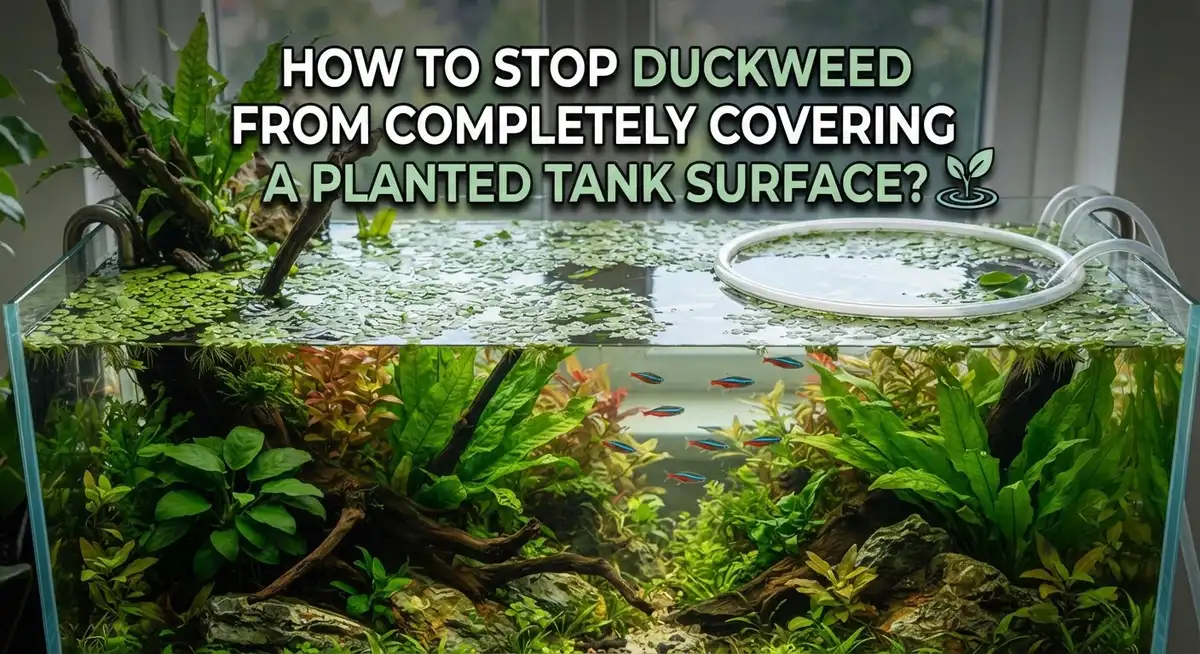
How to Stop Duckweed From Completely Covering a Planted Tank Surface?
Duckweed can turn a beautiful planted tank into a green carpet overnight. This tiny plant floats on the water surface and multiplies fast. Before you know it, your fish and plants below get little to no light.
Sound familiar? You are not alone. Many aquarium owners battle this stubborn little plant. It spreads through fragments, so even small pieces left behind can regrow quickly.
The good news is that duckweed control is possible. You just need the right approach and some consistency.
This article will show you how to stop duckweed from taking over your tank. We will cover manual removal techniques that actually work. You will learn why surface agitation matters and how it naturally slows duckweed growth.
By the end, you will have a clear, practical plan to keep your tank surface clear. Your plants and fish will thank you for the extra light and clean water.
In a Nutshell
- Duckweed loves calm water. It grows fastest when your tank surface stays still and humid. Add gentle surface agitation to slow it down naturally.
- Manual removal works best. Chemical or biological fixes are unreliable. A fine mesh net or rake helps you skim duckweed off the water regularly.
- Consistency beats big cleanups. Removing two thirds of the duckweed weekly keeps it from spreading out of control.
- Sift your floating plants carefully. Move them to a separate bowl and check for tiny duckweed fragments. Even a few leftover pieces can regrow fast.
- Skip the skimming, and it comes back quick. Duckweed can recover within one to two weeks if you are not consistent.
- Set a simple routine. Skim weekly, boost surface movement, and double check your plants. This small habit keeps your tank looking clean and healthy.
Why Duckweed Spreads So Fast in Planted Tanks
Duckweed spreads fast because it loves the conditions in most planted tanks. Still water is its best friend. When your tank surface stays calm and undisturbed, duckweed fronds multiply rapidly and cover the water in just days.
Your tank provides everything duckweed needs to explode in population. High nutrient levels from fish waste and fertilizers fuel its growth. Adequate lighting (which you already have for your plants) powers photosynthesis. Warm water temperatures speed up reproduction. These factors combined create a perfect storm for duckweed takeover.
Duckweed reproduces through simple fragmentation. Each tiny piece can become a new plant. A single frond breaks apart, and suddenly you have multiple plants growing from one. This is why incomplete removal leads to rapid comeback. Even microscopic fragments left behind regrow within one to two weeks.
The plant’s floating nature makes it unstoppable in still conditions. Duckweed doesn’t need soil or roots anchored to the substrate. It simply sits on the surface, absorbing nutrients directly from the water column. This freedom allows it to spread horizontally across your entire tank without limits.
Surface agitation actually suppresses duckweed growth. Water movement creates stress on the delicate fronds. Ripples and currents make it harder for duckweed to establish and multiply. This is why tanks with strong filter output or air stones often have less duckweed trouble.
Your planted tank’s nutrients become duckweed’s fuel source. Fish waste, decaying plant matter, and fertilizers all boost nitrogen and phosphorus levels. Duckweed thrives on these exact nutrients. The same fertilizers helping your stem plants and carpet plants accelerate duckweed growth.
Understanding these growth factors helps you fight back effectively. You now know why manual removal must be consistent and why surface movement matters. Attack the root cause (still water and excess nutrients) while removing existing plants regularly.
Essential Tools for Manual Duckweed Removal
You need three main tools to remove duckweed effectively. Each one serves a different purpose in your removal routine.
A fine mesh net is your first essential tool. This net catches duckweed fronds without letting tiny fragments slip through. Use it to skim the water surface in gentle, sweeping motions. The fine mesh prevents baby duckweed pieces from escaping back into the tank.
A surface skimmer or floating collector works well for bulk removal. This tool sits at the water line and pulls floating plants toward a collection area. Surface skimmers remove large amounts of duckweed without disturbing your substrate or plants below. They work continuously if you have one installed in your tank.
A rake or fine tooth comb helps you reach duckweed in corners and tight spaces. Tank corners trap floating plants where nets cannot reach easily. The rake’s teeth separate tangled duckweed mats so you can lift them out cleanly.
Beyond these three tools, you need a separate container for inspection. Move all collected duckweed to a bowl filled with tank water. Examine it carefully for fragments hiding in the pile. Fragments as small as a single frond will regrow into full plants.
Weekly maintenance matters more than having fancy equipment. Even basic tools work great if you use them consistently. Set a specific day each week for your removal routine.
The key is removing enough duckweed without damaging your other plants. Aim to take out about two thirds of the surface coverage. This aggressive removal prevents duckweed from bouncing back quickly.
Start with whichever tool feels easiest for your tank setup. You can add more tools later as your routine develops. Consistency with basic tools beats sporadic use of expensive equipment.
Step-by-Step Guide to Skimming and Removing Duckweed
Start your removal session by gathering your tools in one place. You need a fine mesh net, a surface skimmer, and a separate bowl or bucket ready to go.
Begin by skimming the water surface with your net. Move slowly across the tank in one direction. Scoop up duckweed gently to avoid disturbing your substrate or uprooting rooted plants.
Focus on removing about two thirds of the visible duckweed. Leave some behind intentionally. This prevents sudden changes to your tank’s ecosystem and reduces shock to fish.
Place all collected duckweed into your separate bowl. Fill it with tank water and let the duckweed settle for a few minutes. Tiny fragments often hide among the fronds.
Sift through the duckweed carefully with your fingers or a small net. Look for loose pieces and broken fragments. These fragments are the real problem because they regrow into full plants within days.
Rinse your collected duckweed under tank water if possible. This removes debris and loose particles. Discard everything or compost it outside your aquarium area.
Return to your tank and use a surface skimmer if you have stubborn patches. This tool pulls floating debris and plants toward a collection basket. It works especially well in corners where duckweed accumulates.
Check the water surface one more time. Look for any floating fragments you might have missed. Remove them immediately.
Set a calendar reminder for next week. Consistency prevents duckweed from bouncing back. Weekly removal takes only 10 to 15 minutes but stops the problem before it explodes.
After removal, increase your surface agitation slightly. Run your filter output toward the surface or add an air stone. This ongoing movement naturally suppresses new duckweed growth between your weekly sessions.
Using Surface Agitation to Naturally Suppress Growth
Surface agitation is one of the most effective ways to naturally keep duckweed under control. When water moves across the tank surface, duckweed struggles to establish the calm conditions it needs to thrive and spread.
Here’s how surface movement works against duckweed. This plant loves still water where it can sit undisturbed at the surface. Constant motion breaks up floating mats and prevents dense coverage from forming. The plant’s flat fronds get pushed around, which interrupts its growth cycle.
You can increase surface agitation in several practical ways. A simple air stone placed near the surface creates gentle bubbling that keeps water moving. Adjust your filter output so water flows across the top rather than down the sides. This redirects current right where duckweed lives.
Another option is positioning your filter intake and output on opposite sides of the tank. This creates a circular water flow pattern that naturally disturbs the surface. The movement doesn’t need to be violent or create excessive splashing. Gentle, consistent motion works best for your fish and plants.
The beauty of surface agitation is that it works alongside your manual removal efforts. Once you’ve skimmed away most of the duckweed, increased water movement prevents it from bouncing back as quickly. You’ll notice regrowth happens more slowly when your tank surface stays active.
Combine surface agitation with your weekly removal routine for best results. The agitation slows new duckweed growth between your skimming sessions. This gives you more breathing room and makes maintenance feel less overwhelming.
Remember that surface agitation alone won’t eliminate duckweed completely. You still need regular manual removal to stay ahead of the problem. Think of agitation as your defensive tool and skimming as your offensive strategy. Together, they create an environment where duckweed struggles rather than thrives.
Building a Weekly Maintenance Routine That Works
A solid weekly routine keeps duckweed from taking over your tank. The key is consistency over intensity. You need to pick the same day each week and stick with it.
Start your routine by checking your tank surface before you do anything else. Look for how much duckweed has grown since last week. This tells you if your current method is working or if you need to adjust your approach.
Spend about 10 to 15 minutes on actual removal. Use your net or skimmer to collect the floating plants. Remove roughly two thirds of what you see. This aggressive removal prevents duckweed from spreading faster than you can manage it.
After you skim the surface, inspect everything carefully. Put your collected duckweed into a separate bowl and check for fragments. Small pieces regrow quickly, so thorough inspection matters. Rinse what remains under your tank water before returning it or discarding it.
Next, check your filter output and intake positions. Make sure water is moving across your surface. Even small adjustments to your filter placement increase surface agitation throughout the week.
Finally, set a reminder on your phone or calendar right after you finish. This single step prevents you from forgetting and letting duckweed bounce back. Many people skip weekly removal just once and then struggle to catch up.
Your routine should feel easy, not overwhelming. If 15 minutes feels too long, break it into two shorter sessions. Some people prefer to skim every few days instead of one big removal day. The method matters less than doing it regularly.
Track your progress by taking photos of your tank surface each week. You’ll notice patterns in how fast duckweed returns. This helps you decide if you need stronger surface agitation or if your current routine is effective.
Common Mistakes That Let Duckweed Bounce Back
Many tank owners make simple mistakes that give duckweed a second chance to take over. Understanding these errors helps you stop the problem before it starts again.
Incomplete removal is the biggest mistake. Duckweed fragments are tiny and easy to miss. Even a few small pieces left behind will grow into full plants within days. When you remove duckweed, you must check every corner of your tank surface carefully.
Fragments hide in plants, under decorations, and along the glass edges. Many people skim the obvious floating plants but miss the smaller bits stuck to surfaces. These leftover fragments regrow faster than you expect.
Infrequent skimming allows rapid re-coverage. Some aquarists remove duckweed once every two or three weeks. By then, the remaining plants have already multiplied. Duckweed can cover your entire surface again within 1 to 2 weeks if you skip your removal schedule.
Skipping even one week gives the plant a huge advantage. The growth rate accelerates during warm months. Your tank conditions might change seasonally, but your removal schedule should stay consistent year round.
Neglecting surface agitation is another common oversight. Many people focus only on manual removal and forget about water movement. Without surface disturbance, duckweed thrives in calm, undisturbed conditions. Your filter output should create ripples across the water surface.
Position your filter intake and output to maximize surface movement. This simple adjustment works alongside your removal efforts. Surface agitation alone won’t eliminate duckweed, but it slows growth significantly between your weekly removal sessions.
Inconsistency is the real enemy. Duckweed bounces back because people remove it sporadically. One week they’re diligent, the next week they’re busy. This on and off approach gives duckweed chances to multiply unchecked.
Treat removal like feeding your fish. Make it automatic. Set phone reminders. Keep your tools ready and accessible. Small consistent efforts beat occasional intense cleanup sessions every single time.
Troubleshooting Persistent or Recurring Duckweed Blooms
When duckweed keeps coming back despite your removal efforts, you’re likely facing one of three core problems. Incomplete removal leaves behind tiny fragments that restart the bloom. Infrequent maintenance gives the plant time to multiply between cleanings. Poor removal techniques miss duckweed hiding in plants and decorations.
The fastest way to stop recurring blooms is to change how you remove duckweed. Don’t just skim the surface once. Instead, remove all floating plants from your tank and place them in a separate bowl. Rinse them thoroughly under running water and sift through the water carefully. This catches fragments you’d normally miss.
For your main tank, use a fine mesh net or rake to remove duckweed in multiple passes. On your first pass, collect the obvious surface coverage. On your second pass, you’ll find more duckweed hiding along the glass edges and under decorations. Do this twice weekly instead of once weekly to prevent regrowth.
Timing matters greatly. Duckweed can return within one to two weeks if fragments survive. Weekly removal works. Bi weekly removal fails. Set a specific day and stick to it.
Check your tank lighting as well. Duckweed thrives under bright conditions for 8 to 10 hours daily. If blooms keep returning despite perfect removal technique, reduce your photoperiod slightly. Less light slows growth between your maintenance sessions.
Finally, inspect your filter output. If water movement is weak, add surface agitation alongside your removal routine. Gentle water movement at the surface naturally suppresses new growth while you work on removal.
Persistent duckweed isn’t a sign of failure. It simply means your removal method needs adjustment. Switch to more frequent removal, improve your technique, and verify your surface agitation is active.
Final Thoughts
Duckweed control comes down to consistency, not luck. You cannot eliminate it with one big cleanup session. It takes regular attention over time.
Think of duckweed management as a habit, not a task. Weekly skimming keeps populations low. Skip a few weeks, and you will find yourself back at square one.
Manual removal remains your best tool. No chemical or biological fix works as reliably as a fine mesh net in your hand. Trust the process, even when it feels repetitive.
Surface agitation plays a supporting role. It will not solve the problem alone, but it makes your manual removal efforts last longer. Combine both methods for the best results.
Remember that fragments are the real enemy. A single missed piece can regrow into a full colony within days. Always sift your removed plants carefully before returning them to the tank.
Patience matters here. Some tanks need several weeks of consistent effort before duckweed numbers drop significantly. Do not get discouraged if coverage returns quickly at first.
Your filter placement and flow settings also make a real difference. Small adjustments to intake and output positions can reduce still spots where duckweed likes to settle.
Track your results honestly. If duckweed keeps bouncing back, review your routine. Are you skimming often enough? Are you checking every corner of the tank?
Every planted tank is different. Some setups need weekly maintenance, while others require attention every few days during peak growth periods.
The good news is that duckweed is manageable. It just requires steady effort, not perfection. Once you build the right habits, keeping your tank surface clear becomes simple and predictable.
Stay consistent, stay observant, and your tank will thank you for it.
Frequently Asked Questions
Why does duckweed come back so fast after I remove it?
Duckweed spreads through tiny fragments. When you skim the surface, small pieces hide in plants, under decorations, and along glass edges. These fragments regrow into full plants within one to two weeks. Incomplete removal is the main culprit. You must remove 2/3 of the duckweed and check multiple times to catch all the pieces.
Surface agitation also matters. Still water lets duckweed settle and multiply. Moving water naturally slows its growth. Position your filter output to create ripples across the tank surface.
What’s the best tool to remove duckweed?
A fine mesh net works best for most tanks. You can also use a rake or surface skimmer to pull duckweed toward one corner. These tools let you grab multiple fronds at once without damaging plants underneath.
For severe blooms, transfer all floating plants to a separate bowl. Sift through them carefully to remove every fragment before returning them. This method catches pieces you’d miss with a net alone.
How often should I skim my tank?
Weekly removal prevents duckweed from taking over. Skipping even one week gives the plant a huge advantage. Consistency beats sporadic effort every time.
Set a specific day each week for removal. Think of it as a habit, not a chore. Regular maintenance stops regrowth before it becomes a problem again.
Can chemicals or treatments stop duckweed permanently?
Chemical and biological solutions are unreliable. Manual removal remains the only proven method. Your hands and a fine mesh net are more effective than any treatment.
Focus your energy on weekly skimming and surface agitation instead.